

I just googled ‘sea sparrow images’ trying to check the identity of a bird and I got this….
I just googled ‘sea sparrow images’ trying to check the identity of a bird and I got this….
David Simon, the executive producer of the Wire, has reached the conclusion that “There are now two Americas. My country is a horror show!” and then starts to discus the situation from a rather Marxist point of view. He is both right and wrong.
He is right about the world becoming too polarized for it’s own good but I don’t think he understands how capitalism and the free market really work. Nevertheless he is right when saying that the western economy took of when the existence of considerable discretionary income created a huge solvent demand for goods and services.
And it’s exactly the disappearance of that discretionary income that is pulling in the reins on the economy right now. But the solution is not to increase the minimum wage but to open the market in earnest. In other words we shouldn’t make McDonald’s pay more its employees but somehow make it possible for those employees to quit their jobs at McDonald’s and open some new businesses of their own.

Even though I call myself a ‘feminist of sorts’ there is a side of feminism that I don’t understand/like.
For those of you who don’t care much about American politics she was just giving a speech about the importance of getting a solid education.
My problem lies with how some feminists choose to react to her behavior as First Lady:
“she dropped in the line that “at the end of the day, my most important title is still mom-in-chief.” Much of the nation may have been charmed; feminist commentators, not so much. “Why does mom-in-chief have to be the most important thing this strong, vibrant woman tells us about herself as she flexes the strange but considerable power of the office of first lady?” Emily Bazelon lamented on Slate.”
Why do some of the feminists feel they are entitled to tell others how to think or how to behave?
I still nurture the notion that true feminism is about empowering women to make their own choices, not to simply herd them in another pen.

4 Decembrie 2013 Recital Harry Tavitian la ARCUB in cadrul Festivalului de Muzica Veche
Mirel Palada, cel care a lipit de fruntea lui Basescu epitetul de ‘matrafoxat’, ne-a spus aseara un banc cu blonde:
“Un betiv, in tramvai, o tot batea pe o blonda la cap:- Dupa ce ca esti blonda mai esti si urata!
O data, de doua ori, de trei ori…Blonda se facea ca nu aude.
Totusi, dupa a cincisprezecea repetare, nu mai rezista si ii raspunde, cu un imens dispret:
– Esti beat!
– Da, dar mie imi trece!”
Implicatia, ulterior explicitata, era ca Basescu, chiar si atunci cand se trezeste din ‘matrafoxeala’, ramane nepasator fata de destinul si nevoile romanilor.
Am sa dau cateva definitii, personale si oarecum neconventionale:
– Democratie.
Metoda de adoptare a deciziilor in colectiv. Pentru a functiona cu adevarat presupune existenta unui acord, chiar si tacit, cu privire la obiectivele mari/implicite ale grupului, variantele supuse alegerilor referindu-se de fapt doar la caile de atingere a acelor obiective. Daca nu exista un oarecare consens cu privire la obiective, totul se transforma in ‘dictatura gloatei’: multimea debusolata trage caruta dintr-o parte intr-alta a drumului in functie de impulsurile de moment.
– Politica.Arta posibilului. Activitatea facuta in comun de catre membrii unui grup atunci cand incearca sa foloseasca cit mai eficient resursele aflate la indemana grupului pentru a se apropia cat mai mult de obiectivul comun.
Daca adminstrarea treburilor publice ajunge pe mana unor operatori politici, lipsiti nu doar de scrupule ci si de viziune pe termen lung, procupati doar de promovarea propriilor interese, politica degeneraza in politicianism. Manifestarea practica a acestuia poarta numele de populism si este o ‘metastaza’ a marketingului in politica. Actorii politici care practica acest mod de actiune publica nu mai incearca sa adune oamenii in jurul unor idei despre cum ar trebui facute lucrurile ci pur si simplu identifica niste publicuri tinta ca fiind cel mai usor de manipulat si apoi promit exact ce (cred ei ca) vor aceste publicuri sa auda. Cateodata se si tin de cuvant, adica incearca sa isi satisfaca ‘alegatorii’ pentru a-si conserva, sau in masura in care acest lucru este posibil mari, capitalul politic.
Cu adevarat ingrijorator este faptul ca si aici functioneaza legea lui Gresham: “Banii rai ii scot din circulatie pe cei buni!” Odata aparut ‘in piata publica’ populismul devine din ce in ce mai atractiv pentru toate gruparile politice (devenite intre timp grupari de interese), tocmai din cauza aparentei sale eficacitati. Au cazut prada tentatiei si tari cu traditii democratice mult mai puternice decat a noastra, luarile de pozitie impotriva tiganilor si a ‘turismului pentru beneficii sociale’ fiind suficient de elocvente in acest sens.
Si pana la urma cum ramane? Lovitura de geniu sau populism pe fata?
Eu cred ca amandoua la un loc. Ce, populistii n-au si ei dreptul la genii?
Mai ales ca tot ce se intampla acum era absolut previzibil inca de la incheierea ‘pactului de coabitare’. Pentru cineva obisnuit sa isi reconsidere tot timpul pozitia incheierea unui astfel de pact nu reprezinta promisiunea de a respecta niste conditii ci asigurarea ca celalalta parte nu va incalca acele conditii, cel putin la inceput. Iar daca o va face pactul ofera oportunitatea excelenta de a arata cu degetul: “V-am spus eu!”
I wrote this some five years ago trying to argue that money is nothing but an instrument and that we shouldn’t act as if it was a goal.
Meanwhile the bitcoin has outgrown its puppy fat and is now ready to rock. We should join the party and here is why:
The bitcoin is better than both gold and the fiat/paper money we are now using.
First I’m going to recap what I wrote earlier so you won’t have to read all of it:
– Money is an instrument. We use it as a trade facilitator – it is a lot easier to use money instead of bartering – as a storage device – money conserves its value better than almost anything but gold or houses, specially if it’s invested wisely – and as a way to demonstrate our trust – if we trust a certain company we invest in it and if we trust a certain country we hoard its currency.
– It is us who set the value of money, no matter if we speak of hard money – monetary gold, the one traded on the financial market – or of fiat/paper money.
The value of gold is set on the trading floors and the most important variable is how frightened the investors are – but everybody who buys gold make the assumption that after the crisis is over there will still be people interested in buying gold. This might seem illogic since monetary gold is valuable as a refuge and if the crises is over who would need refuge any more but since people are rarely completely rational the scheme still works.
When it comes to setting the value of paper money – which, as I said earlier, measures how much ‘trust’ the market, actually the people, has in a country or other – things get a little more complicated.
We have the day to day commercial interactions between the economic agents – consumers and companies – that determine the natural oscillations of that value, inflation or deflation.
We have the central banks which set the monetary policy rates which also influence the exchange rates between currencies.
And finally we have the ‘printing mill’, by which the powers that be inject liquidity into the economy, either by actually printing money or by other means.
In the end it’s the way the market ‘digests’ all these inputs and then reacts to them. For example the Fed has pumped money into the economy for the last 5 years or so but nothing happened as yet, the inflation has not yet risen and the the economy hasn’t grown as expected. The only thing that ‘grew’, or more exactly went back to where it once was, is the Dow Jones.
So why do I say that the bitcoin is better than both gold and paper money? Because it has the advantages of both and none of their disadvantages.
– It is in limited supply, just as gold is, and just as easily dividable.
– It is ‘fiat’, just as any regular currency, and this is a good thing. If it had a material value – as gold ultimately has, you can make jewelry or cutlery out of it, not to mention the industrial uses – one could dream of using it outside the social conventions. As such it only has value if both parties of a deal agree to use it to close deals and this will only happen if the party that is going to get payed in bitcoin is convinced that it will be able to use it later. – Despite of being absolutely virtual, it doesn’t depend on any individual authority that might decide to influence its value, either by ‘printing’ more of it or by altering the monetary policy rate.
– By depending exclusively on the people’s willingness to use it and by being a novelty it offers an opportunity for us to start thinking about how we use money and about how this whole process influences our lives.
– We don’t have to give up the regular currencies. First of all it wouldn’t be practical – who would print the notes and mint the coins needed in the day to day life? Secondly we still need national currencies to cope with trade imbalances, deficits, etc., etc.. If you don’t believe me see what’s happening in Europe after a ‘motley crew’ of states started to use the Euro before reaching the same level of economic prowess and fiscal responsibility. The best way for us to use the bitcoin would be to entrust it with the role gold used to play before Bretton Woods. One might argue that we already have FMI’s ‘Special Drawing Rights’ but they are not even close to being similar to the bitcoin, being too tightly linked to the national currencies already in use.
Update.
Unfortunately it seems that the ‘backstage’ that keeps bitcoin in circulation is rather ‘power intensive’.
“A Single Bitcoin Transaction Takes Thousands of Times More Energy Than a Credit Card Swipe”
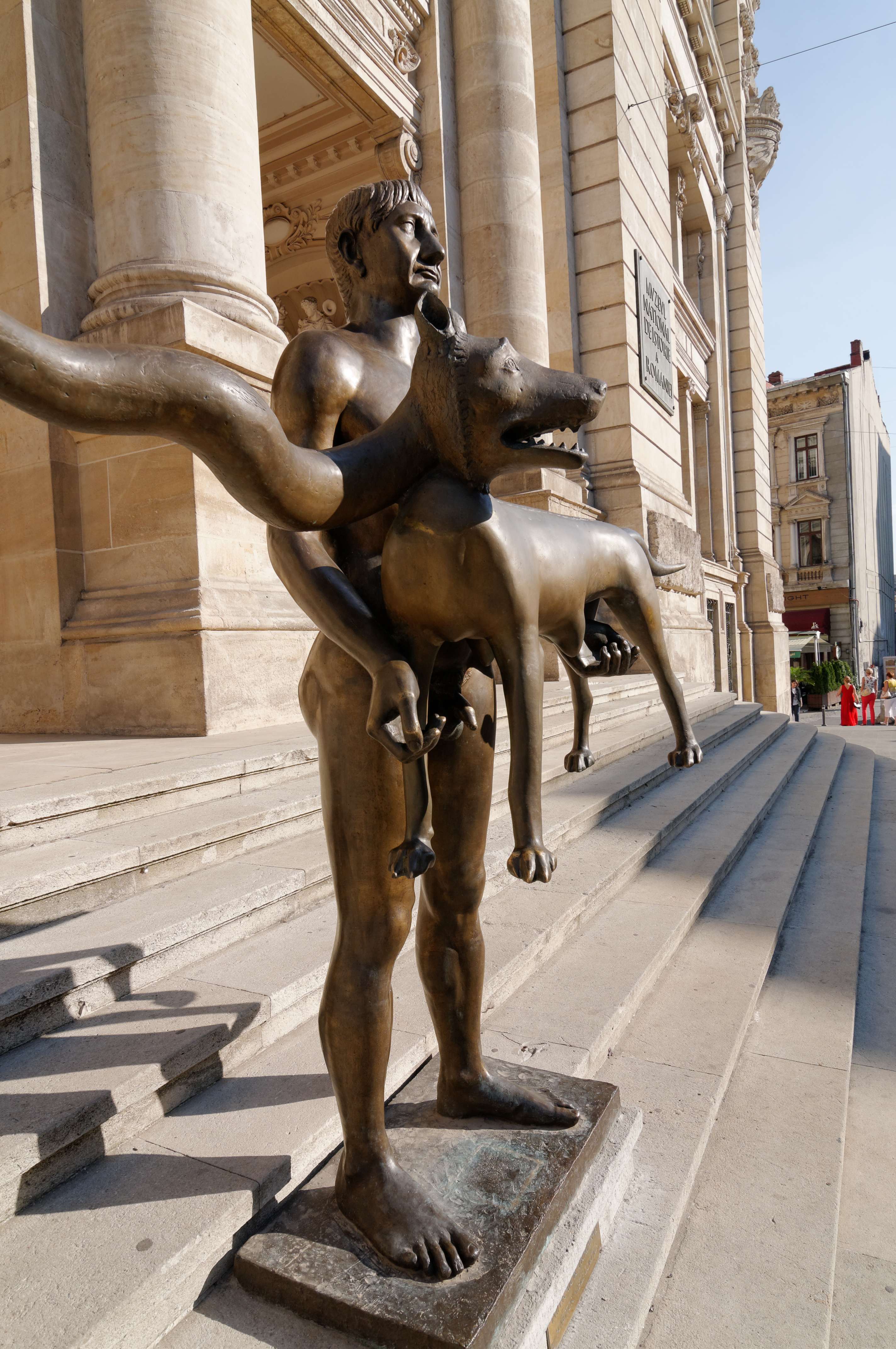
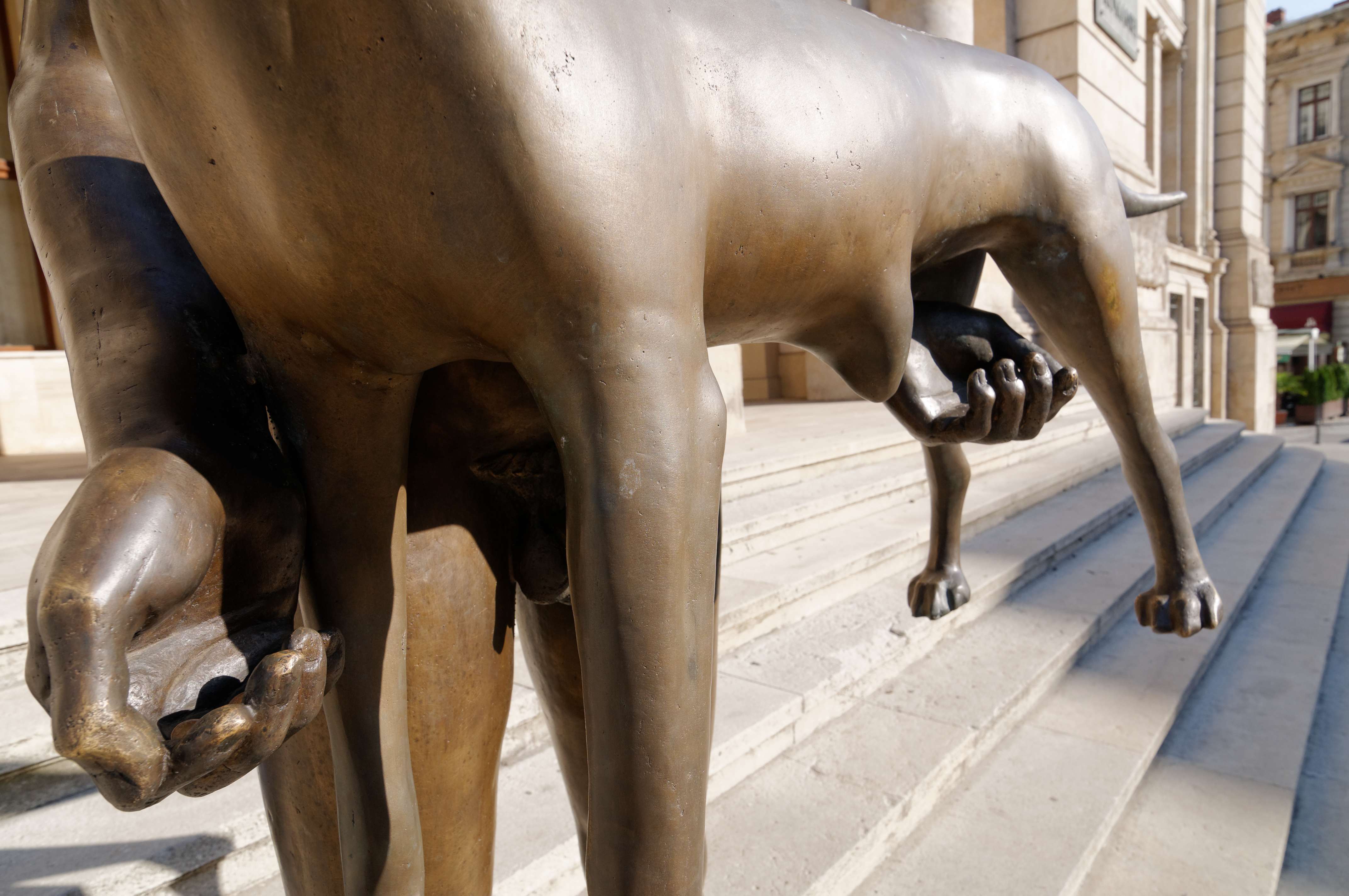
What on Earth is this?
This guy has never carried a dog before?
Or the dog was affixed to him as some-kind of a strange punishment?

 nicichiarasa