There are quite a lot of difference between cats and dogs but one of them has just came to my attention: 

Dogs are able to actively interact with the outside world almost exclusively by using their snout while cats can do this by using almost their entire bodies: they play with their paws, rub their sides against things, they bite…

Take a look at this short clip. To me it was almost tragic to see how the Doberman had nothing but his teeth at his disposal when trying to express his ‘feelings’! 

De prin anii 90 ai secolului trecut am inceput sa am impresia ca ‘bancurile’ sunt in realitate mult mai mult decat niste simple glume si ca reusesc foarte bine sa infatiseze perceptia publicului cu privire la ce se intampla in spatiul cultural in care circula.

Si nu-i asa  ca pusa sub forma asta idea mea pare aproape banala?

Mi-am adus aminte de chestia asta citind:

“Sa presupunem că… Guvernul acordă fiecăruia dintre noi cam 100.000 de lei.
Dacă cheltuim aceşti bani prin hypermarketuri, ei vor ajunge în China.
Dacă cumpărăm benzină, vor ajunge la arabi.
Dacă cumpărăm calculatoare, vor ajunge în India şi Hong Kong.
Dacă cumpărăm fructe şi legume, vor ajunge în Turcia, Spania, Italia, Egipt.
Dacă cumpărăm autoturisme mici şi economice, vor ajunge în Japonia sau Germania.
Dacă cumpărăm unul din multele gadgeturi electronice, vor ajunge în Taiwan.
Şi nu vor ajuta cu NIMIC economia românească.
Singura posibilitate de a păstra aceşti bani acasă, în România, este de a-i cheltui pe curve, pe gustosul vin românesc sau pe ţuică, deoarece acestea sunt garantat produse autohtone!
Eu aşa încerc să fac!
Dar e cam greu să-mi conving nevasta că fac aceste lucruri numai din patriotism.”

O dovada extrem de convingatoare ca ipoteza formulata de mine mai sus este corecta.

‘Intelepciunea populara’, cea care face ca bancurile sa circule, a sesizat cercul vicios in care ne aflam.
Daca procuparile noastre majore sunt betivaneala si curvasaritul intr-o atmosfera de inselatorie generalizata cum sa mai fim in stare sa ‘producem’ ceva de calitate?

I must clarify from the start that ‘yes we can’ sounds indeed more compelling but this is so only because ‘marketing’ has conditioned us to fall for ‘positive’ messages. ‘Yes we can!’ feels good because it implies that it is enough for us to set a goal and that goal will become accessible just because we declared it so. Very ‘American’ but also rather arrogant.

Besides that, how come that we are so sure that all things we have elevated to the rank of goal are worth pursuing?

On the other side of the barricade are the people who say there is no such thing as ‘progress’, that the advent of science and technology has done zilch to improve the human nature who has remained as sinful as ever.

Yes and no.

Science and technology are indeed nothing but innate tools, they cannot change anything by themselves. Human nature can change, for better or for worse, only under its own steam. It is the individual human being who is the ultimate decision maker about how those tools are going to be used.

There is another thing that needs clarifying. The sinful nature of the human being. In fact this notion is a purposefully distorted interpretation of a certain passage in the Bible:
 And the Lord God said, “The man has now become like one of us, knowing good and evil. He must not be allowed to reach out his hand and take also from the tree of life and eat, and live forever.””

As it becomes perfectly clear after reading that passage with an open mind, Adam and Eve were not banished from Eden because they disobeyed orders but because ‘they had learned to tell right from wrong’. This was not becoming sinful; it just means that from then on they had the ability to choose to behave badly. Or not. Having the ability to understated what is a sin does not necessarily mean that that sin will be committed.

So why banish them from the Paradise? First of all this is metaphor. The banishment was virtual, not real. Adam and Eve didn’t go anywhere, they only started doubting themselves and their judgments. Enough to loose one’s peace of mind. And rightfully so. As everybody knows people who have an exaggerated confidence in their own prowess are more inclined to making disastrous mistakes than people who are able to exercise a healthy dose of self control. And exactly this is the very reason for why God ‘expelled’ Adam and Eve from Eden (planted the seed of doubt into their soul): so that they’ll never have the opportunity to ‘eat from the tree of eternal life.’
Could you imagine what would happen if wrong choices would be able to last forever?

But how do people learn to behave? Through daily interactions with other people, of course. And the results of those interactions are ‘stored’ both in the individual memories of those directly involved but also in what is called ‘the collective memory’ of a group. Sociologists call that ‘culture’ and it influences individual behavior quite a lot. And that culture is also heavily influenced by the conditions in which individual interactions, those that accrue to eventually form cultural habits, take place.

Let me give you a practical example. I got my driver’s license quite late in life, I was 28 or 29 at that time, right after the fall of communism in Romania. (I had found a good job and I needed one in order to perform it properly so I took the exam and passed it). In those times the cars were rather few so the roads were relatively empty. This, correlated with the fact that policemen were treated with disrespect – they were still seen badly because in the previous regime they were used to suppress dissidence – and that after the so called ‘revolution’ had appeared quite a lot of rather aggressive ‘hot shots’ the manner of driving was chaotic to say the least. Nobody made any concession, no politeness, no nothing. But, I repeat, because the roads  were rather empty, accidents were relatively rare and bottlenecks practically inexistent.

A year or so after getting my license I had to drive to Istanbul. All my friends started to warn me ‘watch out, those Turks drive like madmen, you have to take care, etc., etc.’ I wasn’t exactly scared, in that year I had driven some 40 000 km (approx. 25 000 miles) so I wasn’t a novice anymore but still, I arrived there with more than a little apprehension.

Imagine my surprise when I realized that the Turkish drivers treat themselves with extreme consideration and foreigners with even more. OK, things were happening a lot more rapidly there but they were above all polite, something you almost couldn’t find on the Romanian roads at that time.

And it took me almost two days to understand that had they acted like the Romanian drivers acted at that time traffic would had halted in five minutes and the entire Istanbul would had become a huge bottleneck.

And you know what? Now, twenty years past, traffic in Bucharest has started to resemble the one in Istanbul at that time (I don’t know how it is now, I haven’t been there since, unfortunately). The not so surprisingly thing, for me at least, is that Romanian drivers have cleaned up their act considerably, at least inside the cities. And for good reason. Otherwise it would have been impossible to drive through the narrow and extremely busy streets we have to navigate. Things are not perfect – the Germans or the New Yorkers for instance are driving a lot nicer – but there is a huge improvement.

The point of this story is that most individuals will choose to make the right choice if and when they understands that it’s better to live and let live than to be a constant bully: sooner or later you’ll end up in very unpleasant situations.

And no, heavy handed policing isn’t enough, if the ‘guy in the street’ hasn’t reached ‘that’ level of understanding, if good behavior hasn’t become a cultural habit, people will have the tendency of misbehaving the very instant the policeman turns his head in the other direction. (Not to mention the fact that policemen come from the same community and share the same mentality)

So things can become better, progress is possible exactly because human nature is not inherently bad. Good individual choices coupled with strong interaction and a healthy dose of mutual respect can perform wonders.

Image

Romania, the country I was born in and I dearly love, is in a mess.
The US, a country for which I feel a profound gratitude, is deeply divided across numerous fault lines.
Ukrainians have such a low opinion on Russia, their former big brother, that Moscow has to resort to bribing in order to lure Kiev out of joining the EU.

How did we get here?

Romanians have elected Traian Basescu – an ex sea captain – as President, not so much because of his promise: ‘You should live better!’ but mostly because they were fed up with the arrogance displayed by his opponent. 9 years later, fed up with the way Basescu has maneuvered his pet prime minister into wrecking the economy, Romanians have brought to power a new prime minister who has promised to keep Basescu on a short leash. What was the first thing this new prime minister has done? A formal ‘non-aggression’ pact with the president, as if the constitution wasn’t a good enough to frame relations between the presidency and the government. Now the pact is already broken and for the last month or so the two are accusing each other of corruption while the EU is trying to asses if Romania is mature enough to join the Schengen group of selected countries who trust one another so much as to give up border controls altogether.

The Americans elected Obama, a charismatic leader, hoping he will lead them out of the cul-de-sac where the lackluster but rather rigid G.W. Bush has left them. Do you remember ‘Yes, we can!’? I must confess I was thrilled at the time but I was also weary: ‘What if he will not be able to fulfill all the hope his people has put on his shoulders?’ Now, six years later, Obama’s main promise – an affordable health care system to cover everybody – is in shambles and he has shifted his priorities to a ‘war on poverty’, a move seen by the conservatives as another trick intended to widen the scope of the already ‘too powerful central government’.

The Russians, disillusioned with the chaotic ways of Boris Eltsin – on whose reign the country was left to the mercy of a few oligarchs (pun intended) – brought to power an ex KGB operative. Now, 13 years later, his grip on power is almost as comprehensive as it was that enjoyed by the communist leaders while the country still depends on exporting vast amounts of energy from fast dwindling reserves. Meanwhile its neighbors see Russia as a less scary but no less spiteful version of the old USSR.

What is to be done?

A couple of days ago I took a cab, in Bucharest. The driver, fed up with the constant bickering between the Romanian political leaders, ejaculated: ‘What we need is a dictatorship. A honest guy, preferable from the military, that will clean up this mess!’. While not very common this belief – that current problems could be solved by a ‘honest and benevolent’ dictator, a “Tatuca” (Father in Romanian) – is spreading again. In fact this is exactly how Putin acceded to power in Russia.

Last night I happened to ‘stumble’ on Donald Trump speaking to CNN’s Piers Morgan. ‘What we need is more leadership. We need someone to take the bull by the horns!’ (Unfortunately the clip posted by CNN on the Youtube starts exactly after Trump had finished speaking about ‘leadership’ but you can still read the caption about the ‘bull’s horns’. Still, it is worth watching, you’ll find out about how popular Donald Trump is among the restaurant owners).

It seems that finally the Russians, the Americans and the Romanians have reached common ground.

But would this be a wise thing to do?

To me it seems obvious that while the empires/dictatorships fell/failed rather sooner than later a more stable form of running things is true democracy. After all history provides plenty examples of how peoples who organized themselves based  on mutual respect fared a lot better than those who let themselves to be bullied around. One caveat though, modern democracy seems less and less based on respect and honest efforts to find the common ground and more on tricks performed with the intent to manipulate the masses.

So what will you have, authoritarianism, demagoguery or mutual respect?

PS.
I asked the cabbie ‘OK, but how to you find the right guy for the job?’
I left him scratching his head in search for an answer.

Image

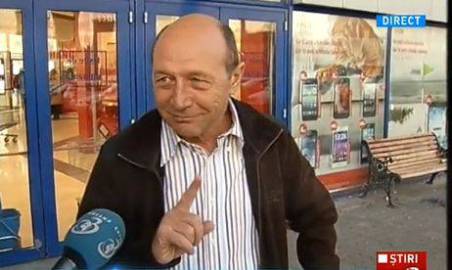
Dupa cum ne-a obisnuit, atunci cand se ingroasa treaba si Basescu simte nevoia sa se adreseze direct poporului avem parte de o vizita prezidentiala la mall unde, ca din intamplare, se gaseste si cate un reporter – sau mai multi.

De data asta presedintele ne-a atras atentia ca “Uite, pâinea nu s-a ieftinit, uite, îţi arăt pe etichetă, citeşte şi tu: 2,50 aceeaşi pâine, acelaşi preţ. Şi înainte şi acum” Vorbea despre ieftinirea ce ar fi trebuit sa se intample dupa micsorarea TVA-ului. Apropo, nu stiu de unde isi cumpara el painea dar cea pe care o cumpar eu chiar s-a ieftinit. Sa treceam peste asta…

Bine, si care e treaba, ‘de ce ar trebui sa citesc eu toate aiurelile astea?’

Trebuie sa marturisesc ca aceasta escapada prezidentiala mi-ar fi scapat cu totul daca Stanciugelu Stefan n-ar fi postat pe FB: “Tehnica de manipulare “Al nostru, dintre noi, pentru noi”: UN PREȘEDINTE LA PORTBAGAJUL MAȘINII IEFTINE, ÎN PARCARE DE SUPERMARKET
A văzut-o cineva pe Angela Merkel dând interviuri la portbagajul mașinii? Sau un alt Președinte pământean dând interviuri în parcări de supermarket?
Băsescu repetă aceleași tehnici de manipulare fără să îi spună cineva ca, în contexte diferite, ele dau rezultate diferite, uneori, chiar opuse…?”

Ideea fiind ca mai demult Basescu avea o alta imagine in ochii poporului, ca aceasta ar fi fost profund afectata de proaspata achizitie funciara a presedintelui si ca oamenii nu il mai percep la fel acum, de cand a devenit ‘mosier’. Pe cale de consecinta tehnica de manipulare ‘al nostru, dintre noi, pentru noi’ nu s-ar mai potrivi si ca rezultatele manevrei s-ar putea sa fie chiar contrare.

La inceput am fost oarecum de acord, cu nuanta ca am dat intelesuri diferite gesturilor lui Basescu in functie de ipostaza in care se afla. Pe vremuri, cand era in ofensiva, miscarea avea ca tel cresterea popularitatii sale pe cand acum ar fi fost destinata sa ii fidelizeze pe adeptii pe care ii mai are, manevra tipica situatiei in care mai toti credem ca se afla Basescu – lupta de ariergarda.

Dar daca nu e chiar asa?
Din cate tin eu minte Basescu a mai comis o nefacuta: si-a dat singur casa din Mihaileanu. Nici atunci nu a fost o fapta ilegala ci doar imorala – cum se pare ca este si asta cu creditul de un milion, cel putin actiunile familiei Basescu. Imorala rau si cu toate astea scandalul de atunci nu l-a incurcat prea tare in cursa electorala, pe care a castigat-o detasat in fata lui Nastase – cel care avea deja 4 case.

Sa fi inteles Basescu mai bine decat noi toti profilul psihologic al alegatorului roman? Sa isi fi dat el seama ca romanul inca ii admira pe oamenii in stare ‘sa se descurce’?
Nu cumva suntem cativa ‘fraieri’ care comitem de zor “eroarea fundamentala de atribuire”? Cei ce vor sa afle in amanunt despre cei vorba au la dispozitie linkul asa ca voi fi foarte scurt. Eroarea asta consta in tendinta celui care o comite de a arunca – atunci cand nu exista probe clare – vina pentru situatia in care se afla el insusi pe spinarea celor din jurul sau si in tendinta de a atribui celui care se afla intr-o situatie neplacuta responsabilitatea pentru acea situatie.
In cazul nostru noi ii atribuim lui Basescu atat vina pentru situatia in care ne aflam noi cat si pentru situatia in care credem noi ca se afla el.

Dar cum a iesit Basescu presedinte in 2008? Nu cumva l-am ales noi? Se pare ca nu ne-a deranjat prea tare afacerea Mihaileanu… Pai si atunci Basescu ce sa inteleaga?

Si inca ceva. Noi, ‘idealistii’ care insistam ca moralitatea are un rol fundamental in buna functionare a oricarei societati, se pare ca nu am inteles in 1991ca Iliescu si Roman s-or fi certat pe motive ideologice sau personale dar ca partidul, FSN-ul de atunci, s-a spart pe motive de ciolan. Pur si simplu erau prea multi si nu le ajungea tuturor asa  ca unii s-au incolonat in spatele lui Iliescu iar ceilalti l-au ‘sprijinit’, cel putin pe moment, pe Roman. Iar ulterior, cand Roman s-a aratat a fi prea moale, pe Basescu.
Bineinteles ca nu am de unde sa stiu daca alegatorii au gandit in felul asta, cert este ca atat cei care au votat PDSR-ul lui Iliescu cat si cei care au preferat FSN-ul lui Roman nu au avut nici o problema in a vota cu urmasii unui partid-stat sau mai degraba cu urmasii unui stat-partid. Poate ca cei mai tineri nu stiu iar contemporanii mei au uitat deja dar realitatea este ca Frontul Unitatii Nationale a aparut in decembrie 1989 ca organizatie revolutionara care a preluat functiile statului si abia apoi, chiar in perioada in care exercita autoritatea de stat in Romania, s-a transformat in partid politic. Intrebat cu privire la moralitatea, din nou acest cuvant obsedant, acestor fapte Iliescu a raspuns nonsalant: “Pai daca nu noi, cei care am facut revolutia, atunci cine?” Ce nu intelesese Iliescu atunci – si probabil ca inca nu a facut-o – este ca aproape nimeni nu avea ceva cu persoana lui ci cu modul sfidator in care a ales sa faca politica. El si urmasii sai din ambele jumatati ale FSN-ului istoric.

Revenind la ‘greseala fundamentala de atribuire’ nu cumva Basescu se bazeaza inca pe admiratia pe care prea multi dintre noi o mai au pentru cei in stare ‘sa se descurce’? Iar cand prinde si cate o ocazie perfecta evident ca nu ii va da drumul: cum era sa refuze oportunitatea de a apara populatia de noua acciza pe combustibil?!?
Ca pe el il intereseaza sa reduca cat mai mult fondurile aflate la dispozitia administratiei USL-iste, asta e alta mancare de peste… oamenii se simt aparati de ‘presedintele lor’, cel care dupa ce comite cate o ‘aroganta’ nu ii uita si pe ei, amaratii…

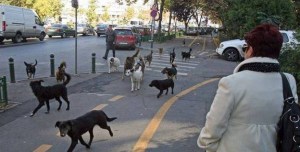
maidanezi pe strada

Am supravietuit comunismului si tranzitiei iar acum ne adaptam la viata impreuna maidanezii:

“Cifrele comunicate de ASPA arată că în perioada septembrie-noiembrie a acestui an 1.117 bucureşteni au fost muşcaţi de câinii fără stăpân, în timp ce în acelaşi interval al anului trecut cifra era de 2.290, însemnând o scădere cu 51%, notează Știrile Pro Tv.”

“Luând în calcul toate cifrele difuzate de organele abilitate, meritul pentru scăderea numărului de persoane mușcate de maidanezi nu pare să le revină decât bucureștenilor.

Locuitorii Capitalei au învățat repede regulile în interacțiunea cu maidanezii. După mediatizarea mai multor cazuri de atacuri ale câinilor, bucureștenii evita zonele cu maidanezi, nu stabilesc contact vizual cu animalele, evita mersul pe bicicletă în apropierea haitelor, folosesc dispozitive speciale cu ultrasunete, spray-uri speciale care ţin animalele la distanţă şi altele asemenea.”

Adica am reusit sa ducem zicala cu ‘capul plecat sabia nu-l taie’ pana acolo incat am plecat capul in fata cainilor vagabonzi?

Sau poate ca nu!

In corpul articolului citat se fac niste calcule, destul de fanteziste – singura cifra certa este cea de “4178” de caini capturati in perioada 1 Septembrie – 30 noiembrie, din care ar rezulta ca reducerea numarului de maidanezi ar justifica doar o scadere cu 13% a numarului de muscaturi si nu cu 51%, cat a fost raportat de ASPA.

Eu unul as reface calculele alea, plecand de la alte premise.
Moartea tragica a lui Ionut probabil ca schimbat atitudinea populatiei dar nu doar in sensul sugerat de autorul articolului.
Oamenii au inceput sa sune mai des la ASPA, incurajati si de faptul ca de data asta raspundea cineva.
Faptul ca ASPA a inceput sa stranga cainii de pe strada i-a convins pe posesorii de curti pazite cu ajutorul unor haite de maidanezi sa repare gardurile, ca sa nu cumva sa ramana fara paznici.
Si poate ca numarul initial de caini vagabonzi nu era atat de mare pe cat se vehicula, astfel incat ‘recoltarea’ celor 4100 – probabil cei mai agresivi dintre ei, exact motivul pentru care oamenii in preajma carora traiau au chemat hingherii – a avut un rezultat mult mai mare decat cel pur ‘statistic’.

In orice caz mai mult de 1100 de oameni muscati de caini in mijlocul unei capitale europene este extrem de mult asa ca toate actiunile trebuie sa continue in forta: oamenii sa ceara cu insistenta primariei sa isi faca datoria, ASPA sa ii stranga pe maidanezi – nu ma intereseaza ce face cu ei atata vreme cat nu irosesc bugetul primariei, care trebuie sa ajunga la reparat de scoli si finanta spitale – iar proprietarii de haite – Ionut a fost in realitate omorat de o haita iesita la plimbare de pe un teren privat – sa isi tina cainii in spatele gardurilor.

luciastroila's avatarAripi străvezii

Greva-totala-a-transportatorilor--Protestatarii-cer-MAE-sa-informeze-statele-vecineMult trâmbiţata şi îndelung anunţata grevă a transportatorilor s-a dovedit a fi un fiasco total. În buna tradiţie românească, unii au ales să nu participe la grevă pe motiv de contracte şi termene. Au ales să compromită credibilitatea întregii bresle pentru bani. Ce contează câţiva eurocenţi în plus pe acciză pentru marii transportatori? Nimic. Se măreşte acciza, creşte preţul transportului. Nu doar cu preţul accizei, normal, că nimeni nu-i atât de prost. Producătorii vor fi obligaţi să plătească noul preţ impus şi să mărească la rândul lor preţul, să poată acoperi pierderea. La fel şi intermediarii şi comercianţii, tot lanţul ăsta trofic al economiei de piaţă. Niciunul nu va pune la preţ doar creşterea accizei ci va încerca să-şi mai crească cumva câştigul la adăpostul acestei măsuri fiscale aberante. La majorarea previzibilă se va adăuga şi majorarea normală a TVA-ului, care, chiar dacă nu creşte procentual, se va aplica la…

View original post 747 more words

I was speaking recently about the ‘disposable income’ generating economic growth.
Now you tell me how sustainable is this situation.

No, I’m not concerned about the morality of it or other highfalutin ideals.
What I’m concerned with is what is going to happen with the properties that won’t be able to find a tenant.

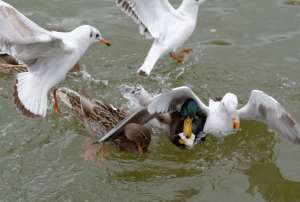
OK guys, I'll protect you...

My wife just wanted to feed some ducks but she forgot about the gulls.
Here is what came out of it!
Click on the picture and you’ll get the whole aerial show.

Sau despre cum sa moara, la propriu, bolnavul din vecini.

Faza cu am fost prost inteles nu tine. Fiind om de cultura ar trebui sa ‘le aibe’ p-astea cu comunicarea, nu?