Archives for category: Trust

My close friends know that I’m a strong supporter of the Second Amendment.

In a mature enough society, gun ownership promotes both individual responsibility and social cohesion. As intended by the Founding Fathers.

“A well regulated Militia, being necessary to the security of a free State, the right of the people to keep and bear Arms, shall not be infringed.”

At the time when the US Constitution was drafted, the American state didn’t have a proper army, nor any real need for one. The neighbors were few and very far away, in contrast to what was going on in Europe at that time.
It didn’t make sense, at that time, for a strong army to be mentioned in the Constitution but the Founding Fathers very aptly told their constituents to build up a strong self defense capability. You never know what might happen in the future.
Hence the “well regulated Militia” which was deemed “necessary to the security of a free State”. NB, for a “free State”, not for any random individual citizen who wishes to free himself from a democratically elected government…

In this sense, the Second Amendment should be primarily defended as a stringent need of the entire society, instead of being promoted mainly as an ‘individual right’.

And it should be enforced accordingly. Keeping in mind the needs of the entire society, not only those of particular individuals.

Periodically, we are reminded of what may happen when society forgets to actually ‘regulate’ itself. When rules which have been agreed upon are put in practice in a ‘creative’ manner.
One has to pass ‘back-ground checks’ if he wants to buy a gun from a store but he can also buy one anonymously from a gun show.
Assault guns have been forbidden yet until this very morning those who ‘needed’ one could legally  buy a ‘bump stock’. A “device” which “causes the gun to buck back and forth, repeatedly “bumping” the trigger against the shooter’s finger. Technically, that means the finger is pulling the trigger for each round fired, keeping the weapon a legal semi-automatic.

Not only that people kill themselves using their own guns. Not only that gangsters kill each others in turf wars. Not only that policemen get killed in the line of work.
Not only that from time to time individuals attempt a particularly murderous form of suicide – by indiscriminately shooting people and waiting for the police to shoot them back.
Time and time again students, some of them very young, are brought back from school in coffins.

And after each of such incidents, various ‘authors’ attempt to put things into ‘perspective’.

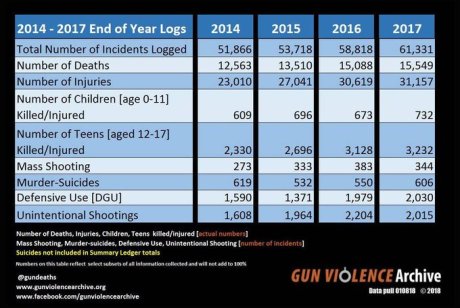
In 2017, with 300,000,000-plus guns in the hands of Americans, there were 15,549 gun deaths. This ranks less than half the number of automobile deaths even though there are fewer cars in existence than guns. In 2017, there were 253,000,000 cars in existence and 41,000 auto deaths.

It’s exactly this kind of warped perspective which makes it perfectly intelligible what’s going on. Some people would say anything which seems to prove their point. Only to make it obvious how wrong they are.

Cars are meant for transportation and are widely used by their owners. For the reason they were meant to. Therefore, death by car accident is just that, an accident.
Guns are meant to be deadly. Reasonable people use them for for practice and, only when they absolutely have to, to defend themselves. In theory, death by gun shot would exclusively be accidental or as a result of people rightfully defending themselves or their property.

So, should we compare those two numbers?

15,549 more or less intended gun related murders – this figure doesn’t include most suicides, with the 41,000 of more or less unintended car accidents?

Are these two figures really comparable?

gun violence archive

If we compare apples to apples, then yes, guns are less accident prone than cars. 2,015 shootings – let’s assume all of them were fatal, versus 41,000 death by car accidents.
We can also say guns are a little less deadly than cars. According to the CDC preliminary published data, in 2016 the total number of gun related deaths – including suicides, was 38,000. Almost 10% smaller than the number of car related deaths.

But then again, how many cars have been used to intentionally kill someone? Or to commit suicide?

And since it’s true that guns don’t kill by themselves, it’s obvious that’s up to us to solve the situation. For no other reason than ‘we are the ones who might get killed otherwise’!

culture of violence


Remember Midas, the character who, after being granted a wish by a grateful Dionysus, “asked that everything he touched would turn into gold“?
And who was happy as a pig in mud after his wish was fulfilled … only to find out that he was going to die of hunger since everything he touched did turn into gold? Including his beloved daughter who had enthusiastically embraced her father upon his return from the fateful meeting with Dionysus?

Under the Violent Crime Control and Law Enforcement Act of 1994, the “Three Strikes” statute provides for mandatory life imprisonment if a convicted felon: (1) has been convicted in federal court of a “serious violent felony”; and (2) has two or more previous convictions in federal or state courts, at least one of which is a “serious violent felony” (the other offense may be a serious drug offense). The sentencing enhancements in this law can have a significant impact on a criminal defendant.

Now wait a minute! What has this got to do with anything?

Well, more than two and a half millennia after Midas had driven himself into a tight corner we continue to ignore his lesson. As a species…

And the key words here are ‘continue to’.

The axe.

Very soon after our flint knapping ancestors discovered that a shaped stone is very useful at chopping wood they tied it to a shaft and started bashing the heads of their neighbors with it.

stone axe

‘Corrupting’ tools into offensive weapons, strike one.


Articulated language.

Soon after learning to fight our fellow humans, we started to speak to each-other.
It might have started while hunters tried to coordinate their efforts or when strangers tried to barter things… Does it really matter?
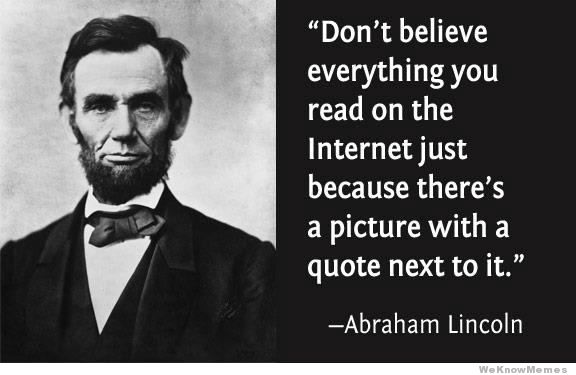
For me, it’s enough that very soon after we learned to speak we were masters in the art of lying.

internet lies lincoln

Corrupting words into lies, strike two

Money.

At some point in our more recent history, we discovered that it was easier for each of us to learn a particular skill and to exchange goods among rather than each of us providing for all his (family’s) needs. Eventually we invented money and replaced barter with proper trading.
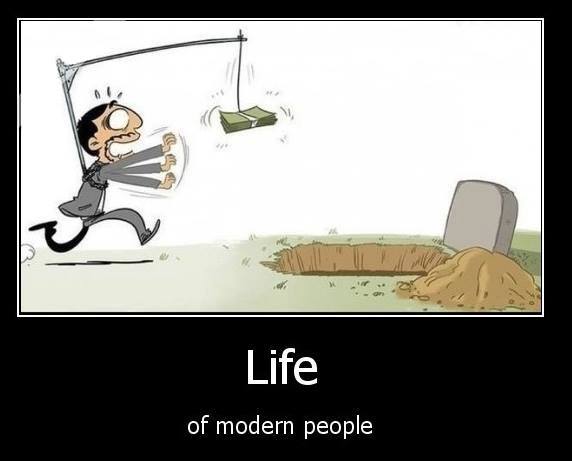
Soon after, some of us forgot that money was meant to facilitate trade and started to hoard it.

follow the money

Elevating money to stardom against all historical advice, strike three.


Are you wondering whether I’ve lost it entirely?
Neah… just came home from the movies…

All the money in the world

Since the movie ended on the bright(-ish) side, I’m going to remind you that Midas also found a way out of his predicament.
The ‘golden’ King begged Dionysus to lift the cursed blessing bestowed upon his head, was instructed to wash his hands and everything else he wanted turned back to its original state in the Pactolus River – in present day Turkey, and presto, everything was fine again.

There’s only one small problem left.
Where are we going to wash our hands…. or should we cleanse our minds first?

Hopefully, before experiencing the hunger pangs which had driven Midas to wisdom…


The early believers were convinced that God’s ‘real’ name could not be uttered by their ‘mortal’ lips.

Their logic was simple. Using a single word to ‘differentiate’ something from everything else is somewhat arrogant. It implies that the ‘god-father’ knows all that there is to be known about that something – or at least enough to give credence to that naming.

As faith became stronger, so did the self confidence of those involved in the process.
When writing about their beliefs, some of them circumvented the initial shyness by using multiple names to describe the object of their adoration – hoping that in this manner they’ll get close enough to the real thing.
“To begin with, God is referred to by a number of names in the Bible—not just a single name. By some counts there are more than 20 different names for God mentioned in the Bible. And each of these names has great significance. Each one tells us something important about God—His character and how He relates to us.”
Others still stick to the ‘no name’ policy, refer to their God using a title, Allah – the ‘One and Only Who Deserves to Be Worshiped’ – instead of a ‘proper’ (?!?) name, and use a number of attributes to describe him. Such a large number of attributes as to make it evidently clear that stringing attributes is in no way enough to ‘exhaust’ the inner nature of any god. Of anything, really.
“”If We had sent down this Quran upon a mountain, you would have seen it humble itself and shatter out of fear of God.  Such are the parables which We put forward to mankind that they may reflect. He is Allah, there is no deity but He.  He is the Knower of the unseen and the seen.  He is ar-Rahman (Most Compassionate), ar-Raheem (Most Merciful).  He is Allah besides Whom there is no deity.  He is al-Malik (Sovereign), al-Quddus (Most Pure), as-Salaam (Giver of peace), al-Mumin (Giver of security), al-Muhaiman (Vigilant), al-Aziz (Migthy), al-Jabbar (Overpowering), al-Mutakabbir (Glorious).  He is pure from whatever they ascribe to Him.  He is Allah, al-Khaliq (Creator), al-Bari (Perfect Maker), al-Musawwir (Fashioner); to Him belong the most beautiful names.  Whatever is in the heavens and the earth glorifies Him.  He is al-Aziz (Mighty), al-Hakeem (Wise).” (Quran 59:21-24)”

After writing for long enough about their beliefs, the worshipers had become emboldened enough to transform their convictions into precepts. To be not only followed by the believers themselves but also imposed upon others.

And this is how various groups of people have traveled from “The Truth Shall Make You Free” to defining heresy as being the most heinous crime… so heinous that the congregations felt the need to punish it in the most eloquent manner.
Does it seem logical that heretics were burned alive, with their mental faculties intact, to give them one last chance to repent before being sent into the “eternal fire”? Could it be that burning an individual at the stake was seen as a merciful death, as a means of giving that person one last chance to save his or her soul before final damnation??? I have read that “burning at the stake was believed by some medieval authorities and scholars to liberate the sinner from his or her formerly damned state and offer some hope of salvation to the now ‘cleansed’ soul”.

After some of us have somehow survived that era, a few parts of the world have become ‘the lands of the free’.
The countries where a majority of the inhabitants believe that “your right to swing your arm leaves off where my right not to have my nose struck begins.”

It’s here that things get really interesting.

The quote defining freedom as stemming from the relation between your fist and my nose logically leads us to observe that those who define liberty in this manner are a bunch of tired, and maybe wised up, fist-fighters.
Who have finally reached the understanding that it’s better to negotiate it rather than fight over it.

‘Negotiate? What is here to be negotiated?’
‘The distance between our noses? How close am I allowed to bring mine to yours before you becoming allowed to defend your intimacy?
After all, if my nose is so far away that you’ll never be able to touch it, this particular definition of liberty ceases to make any sense while if you’re never allowed to punch mine then I’ll be able to use it to crowd you out of your own life.
And vice-versa.
Capisci?’

Which points out the cruel reality that we cannot negotiate everything.

To start any negotiation we must first have something in common.
A common language would be fine indeed but I have something else in mind.
Both sides involved in any negotiation need to share the same attitude.

This is the hardest thing to convey.
To convince the other side that you’re going to keep your end of the bargain.
Only after both sides have reached this ‘belief’, they will feel free enough to discuss the real issues.
This is where ‘religion’ comes in handy. It teaches us that all people are to be treated equally – all of them have been molded in a single cast, and that they share a spark from the same divine fire.
God created mankind in his own image, in the image of God he created them“.

“I am astonished that you are so quickly deserting the one who called you to live in the grace of Christ and are turning to a different gospel, which is really no gospel at all. Evidently some people are throwing you into confusion and are trying to pervert the gospel of Christ. But even if we or an angel from heaven should preach a gospel other than the one we preached to you, let them be under God’s curse! As we have already said, so now I say again: If anybody is preaching to you a gospel other than what you accepted, let them be under God’s curse!

Am I now trying to win the approval of human beings, or of God? Or am I trying to please people? If I were still trying to please people, I would not be a servant of Christ.” (Galatians, 1:6-10)

 Which brings us back to the original question.

Is any liberty possible, outside the one we continuously build ourselves, through constant negotiation?
Is any bona-fide negotiation possible without a healthy dose of mutual respect among all those involved in it?
Why do we, grown-ups, still need our father to constantly remind us to stop bickering?

a-mans-ethical-behavior


(http://www.bibleinfo.com/en/questions/names-of-god)

https://www.islamreligion.com/articles/10827/chapter-59-verses-21-24/

http://biblelight.net/burn-heretics.htm

https://quoteinvestigator.com/2011/10/15/liberty-fist-nose/

http://biblehub.com/niv/galatians/1.htm


“If you say that an idea or action goes against the grain, you mean that it is very difficult for you to accept it or do it, because it conflicts with your previous ideas, beliefs, or principles.”

In other words, going ‘against the grain’ – if you do it sensibly, of course, is a better survival strategy than ‘going with the flow’.

Simply because going against the grain will prod you to discover a solution for the next challenge while going with the flow will hone your expertise in solving the last problem you have encountered.

Autumn of 2008.
The Bucharest Stock Exchange assembled a conference for the investors where some relatively junior guys working for the ‘Global Banking Establishment’ tried to uplift our mood by outlining their bosses’ envisioned reaction to the crises. Something which would later be known as  ‘quantitative easing’.
I asked one of them:
‘The current crises is the straight consequence of money having been used improperly. Are you sure that throwing a fresh amount of it on the market would make things any better?’.
‘Well, nobody has come yet with a better idea…’

Almost ten years later, it seems that ‘throwing fresh money at it’ did revive the market.
Dow Jones has climbed through the clouds, unemployment is low, inflation is low, interest rates are also low…

Some 120 economies, accounting for three quarters of world GDP, have seen a pickup in growth in year-on-year terms in 2017, the broadest synchronized global growth upsurge since 2010.“, according to the IMF.

Only the very same words could have been used to describe the 1990’s…

But there is something that at least some of us have noticed.

income-inequality-08

©Elliot Wave International (www.elliotwave.com)

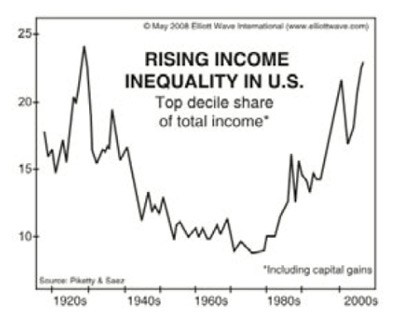
Both major economic crises which have scarred us in less than a century have been closely predated by spikes in ‘income inequality’.

To make things worse, we are confronted by yet another fast moving development which pushes us towards uncharted waters.
Large scale replacement of ‘human capital’ by industrial robots, some of them driven by ‘artificial intelligence’.

Reaction has been mixed.

Some of the very rich have pledged to make available to charity important chunks of their estates while other ‘concerned parties’ promote  heavier involvement of the government – ‘guaranteed universal income’, etc., etc…
All these in the name of an illusive ‘equality’.

‘On the other side of the isle’, where inequality is seen as being not only natural but also harmless, people are happy with what’s going on and see no problem in everything continuing to march to the same beat.

I argued earlier that ‘heavy involvement of the government’ has already been experimented. And failed. Check the fate of every communist dictatorship.
Actually, check the fate of all dictatorships.
You’ll find that whenever a society becomes too centralized, that thing alone considerably diminishes its survival chances.
Same outcome whenever people in a group/community evaluate things using a single yardstick/from a single perspective.
To make things worse, the speed of the degenerative process becomes catastrophic when decision making becomes centralized while the reduced number of decision makers are partially blinded by too many of them using a single yardstick to do their job.

We are fast approaching that situation.

Extreme wealth polarization means that economic resources become concentrated in very few hands. Hence economic decision making.
And since policies cannot be put in place without resources…

The funny thing is that this concentration of power/decision making take place regardless of property remaining private or communism taking over.
As long as those who control the whole system are too few, ‘who owns it’ makes no difference.
Absolute monarchies faltered in the very same way as their communist successors.

It doesn’t matter whether an universal basic income would be supported by a tax exacting government or by a small coterie of ‘concerned investors’, sooner or later any such arrangement would become sour.

One other thing.
Claims for equality might become so deafening as to impede clear thinking.

Just as money is a very good tool/servant but a lousy goal/master, equality is a commendable goal but a lousy tool.
Human beings ‘work best’ as autonomous individuals who cooperate freely inside what has been described as ‘free market’.
Whenever that market was cornered, either from outside – by the government, or from inside – too many of the players acting in ‘concert’/sync because they had been ‘mesmerized’, remember the ‘Tulip mania” of yore? – it had faltered. Sometimes abysmally.
Attempting to fit everybody in a ‘one size fits all’ mould would be catastrophic.
Just as catastrophic as when less and less people can develop and express their true potential. Remember that we haven’t changed, biologically, during the last 50 000 years or so. But, generation after generation, we’ve been able to do more and more things simply because each generation made it easier for the next one. Most of the times, anyway.
Let’s not change this.


I keep hearing about this issue and I can’t stop wondering about how parallel to each other are those defending this idea with those denying its merits.

Pro:

-Robots are eating more and more jobs so more and more people will end up hungry.
-AI will make robots so productive that it will be far more efficient to use robots than human workers.
-A decent income is a human right.

Con:

-This is a socialist move, hence it will end up in failure – no other reason offered.

As it is obvious to all, both sides score big.

Yes, including ‘a decent income is a human right’ and ‘all socialist ideas end up in failure’.

Then what are they fighting each-other about?!?

Let me rephrase that.
WHY are they fighting, in the first place?

Because neither listen to what the other has to say… as simple as that…

Let me discuss some of the practicalities involved.

Robots eating up jobs and AI being able to continually increase financial efficiency are so evident that they do not deserve much consideration.

‘All socialist moves ended up in failure’.
We need to define socialism in order to make sense of this sentence.
Mainly because ‘socialism’ is one of the most abused words nowadays, on a par with liberalism. Sometimes they are even considered synonyms…
Well, ‘liberalism’ comes from liberty and  bona fide liberalism is concerned with individual freedom.
Socialism, on the other hand, comes from social. And is concerned with the the workings of the entire society.
The point being that there are two types of socialism. One which is ‘somewhat’ synonym with liberalism – the ‘reverse’ side of liberalism, actually, while the latter is the exact opposite.

I’m not making any sense?

Let me start from the other side.
All forms of socialism which have failed have been excessively centralized forms of government. And it was because of that excessive centralism that they had failed, not because of being ‘socialist’. The evident proof being that the same thing has happened with all right-wing dictatorships, which had used the very same excessively centralized decision making mechanism – the totalitarian government …

Which brings us back to the problem at hand.

For Universal Basic Income to work – or Guaranteed Basic Income, as some insist on calling it, it has to be financed.
Through taxes, right? Which means that those owning the robots would have to be somehow convinced to give up a huge proportion of their profits… Then why bother in the first place…? Why start any businesses, at all?
We’ll have the government run the whole show? Remember what history teaches us about centralized decision making?

So?!?

Well, not all is lost while there’s still hope!

Let me rearrange the arguments.

We not only live in an inherently limited space, with inherently limited resources, but we’ve also finally started to understand our predicament. Which calls for as much efficiency as possible.
Only for a different kind of efficiency than that we’ve accustomed ourselves to.

Until recently, we’ve been trying to get as much money under our belts as possible. Without much regard for anything else.
That’s why we’ve been cutting down secular forests, feeding almost all the fish we’ve been pulling from the oceans to the domestic animals we were raising for their meat, polluting our breathing air, selling our fellow humans which happened to had a different skin color than ours into slavery… As if there was no tomorrow…

Slowly, we’ve started to realize that this won’t work for very much longer.

That no matter whether we’re responsible for the global warming – or if it’s real at all, sooner or later we’ll exhaust the planet.
OK, it is highly plausible that we’ll discover/learn to use new classes of resources.
But this eventuality doesn’t constitute, in any way, a valid reason for us to continue squandering the meager resources we have at our disposal.

Hence the need for increased efficiency.

Only this has to be a different kind of efficiency. The kind that focuses on minimizing waste instead of maximizing profits. The kind that recycles because it makes obvious sense, not because it is cheaper.

Along the same path we’ll discover that it would make a lot of sense to help the less developed nations to catch up with the most advanced ones.
For starters, because the ‘advanced economies’ no longer need cheap workers. They use robots instead.
Secondly, because better living people tend to have less children than those struggling to survive. And we’ve already agreed about the planet being rather limited…

Nothing too fancy… until now, right?

Well, the next item will be trickier..

Remember that Ford had raised dramatically the wages he paid to his workers?
With tremendous results?

OK, his reasons were not the ones, generally but erroneously, attributed to him.
He didn’t do it to ‘encourage’ his workers to buy cars from him… or because of philanthropy…

Actually, it was the turnover of his staff.

At the time, workers could count on about $2.25 per day, for which they worked nine-hour shifts. It was pretty good money in those days, but the toll was too much for many to bear. Ford’s turnover rate was very high. In 1913, Ford hired more than 52,000 men to keep a workforce of only 14,000. New workers required a costly break-in period, making matters worse for the company. Also, some men simply walked away from the line to quit and look for a job elsewhere. Then the line stopped and production of cars halted. The increased cost and delayed production kept Ford from selling his cars at the low price he wanted. Drastic measures were necessary if he was to keep up this production.”

But, whatever Ford’s reasons were, the long term results have been abundantly clear.
Nowadays people who build cars are being paid well enough to afford buying the same kind of cars they are building. At least in the advanced economies…

What happened was that Ford, in order to keep the assembly line going, paid his workers as much as he afforded to. With spectacular results.
While nowadays most employers tend to ‘compensate’ their employees with as little as possible. Which makes perfect economic sense… doesn’t it?

The same economic sense which used to drive us into “cutting down secular forests, feeding almost all the fish we’ve been able to pull from the oceans to the domestic animals we were raising for their meat, polluting our breathing air, selling our fellow humans which happened to had a different skin color than ours into slavery… As if there was no tomorrow…”

See what I mean?
Instead of attempting to mandate a ‘Guaranteed Basic Income’, calculated by the central government and financed through forcefully levied taxes, how about hiring as many people as it would make sense, let them work as little days per week as they want and pay them as much as we can afford to instead of programmatically replacing as many of them with robots and paying the remaining ones as little as we possibly can?

OK, some of us won’t get as rich, as fast, as our grand-fathers did… So what? None of us can eat even close to what our grand-fathers used to… and food is a lot cheaper, anyway…

This is would be a considerably shorter way to get more people out of poverty than any scheme concocted by any government and it would have the same snow-ball effect as Ford’s wage increase had.

Economists describe this as Rostow’s ‘take off effect’.


For attaining adequate finance for take off it is necessary that:

(a) The community’s surplus over consumption does not flow into the hands of those who will utilize it by hoarding, luxury consumption or low productivity investment out-lays;

(b) Institution for providing cheap and adequate working capital be developed;

(c) One or more sectors of the economy must grow rapidly and the entrepreneurs in these sectors must plough back a substantial portion of their profits to productive investment; and

(d) Foreign capital can profitably be utilized for building up social and economic overheads.”


Obviously, any attempt to instate a guaranteed basic income, (except for those too young, too old or otherwise un-able to pull their weight, of course) would grind any ‘take-off’ to a stand-still.

And no, getting people out of poverty is not a valid goal, per se.
Poverty is a relative thing, which relies more  on feelings than on hard reality.
The real problem with poverty is that it reduces the ability of poor individuals to lead meaningful lives. Poor people are a lot less autonomous than self sufficient ones, meaning that decision making ability is impaired by the fact that they need to focus their attention on the short term time span.

This whole thing has long term consequences on societal level.

Remember what I said about centrally planned socialist countries constantly failing.
About all dictatorships eventually crumbling under their own weight, because of too much decision power being concentrated in too few hands?

Excessive wealth polarization produces the same results. Economic decision becomes too concentrated, political decision follows through and…

What next?
The world has already experimented with communism. Didn’t work.
It also experienced two economic meltdowns, exactly when wealth polarization was at relative peaks.
income-inequality-08

When are we going to learn anything from what happens to us?
Why do we continue to waste the accumulated lessons collectively known as ‘history‘?

 

The current President of the United States describes himself as a man always making good use – as a manner of speaking, anyway, of all opportunities he ever identifies.

grab them by the pussy

Erotically as well as financially.

trump eminent domain

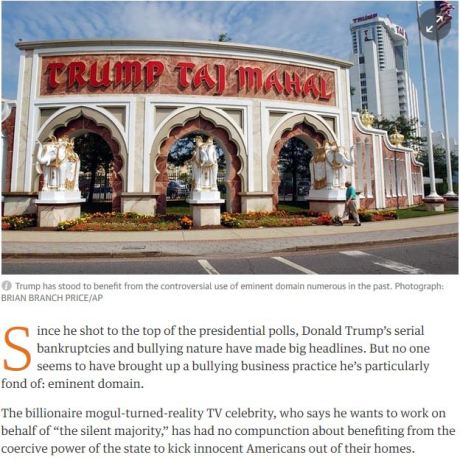
“Trump turned to a government agency – the Casino Reinvestment Development Authority (CRDA) – to take Coking’s property. CRDA offered her $250,000 for the property – one-fourth of what another hotel builder had offered her a decade earlier. When she turned that down, the agency went into court to claim her property under eminent domain so that Trump could pave it and put up a parking lot.

Peter Banin and his brother owned another building on the block. A few months after they paid $500,000 to purchase the building for a pawn shop, CRDA offered them $174,000 and told them to leave the property. A Russian immigrant, Banin said: “I knew they could do this in Russia, but not here. I would understand if they needed it for an airport runway, but for a casino?” “

Now, after climbing a new pinnacle of popularity, he has become, himself, a very lucrative opportunity.

donations for coming out

“The Hill reported Friday that Bloom worked with campaign donors and tabloid media outlets to arrange compensation for the alleged victims and a commission for herself, offering to sell their stories. In one case, Bloom reportedly arranged for a donor to pay off one Trump accuser’s mortgage and attempted to score a six-figure payment for another woman. The former ultimately declined to come forward after being offered $750,000, the clients told The Hill.”

The first question which crossed my mind after reading this was:
‘OK, so why would any one bring all this up? What difference does it make if those women get some money for telling their stories? It’s the facts themselves which are really important here, right?

‘But what if?’ was the second one…
What if, after seeding enough ‘oblique doubt’ into people’s minds, facts start to look rather different than at ‘face value’?

I told you so

Remember that XX-th century aphorism, “The best defense is a good offense”?
And the smoke screen tactics pioneered by the military but also very important to those who study the Bible?

“When studying the Bible with teens, the term “smoke screen” refers to a commonly deployed tactic designed to avoid exposure of the heart. Smoke screens, though not unique to teens, are important to understand and overcome.

Each of us have areas in our lives and places in our hearts we do not want exposed. Sometimes we are afraid of what others may feel about us; sometimes we realize these areas in our lives and places in our hearts need to change, but we don’t want to change them or even believe that we can.

Practically, smoke screens are often the emotion we express, the issue we lead with, or the confusion we claim, in order to deflect what is really going on in the heart. When emotions are present, the words that are flowing out of a teenager’s mouth are rarely communicating what is actually driving them.

Getting past a smoke screen takes understanding and the willingness to go deep. It takes understanding and depth to remain calm when our teen is using emotions to derail a conversation that might be getting to the heart of the matter at hand. We learn depth when we are willing to look into our own hearts and be honest about the smoke screens we use.”

From the airlift which kept the flame of liberty alight in West Berlin to “Trump’s decision (to stop supplying arms to Kurdish fighters in Syria) appeared to catch both the Pentagon and the U.S. State Department off guard. Officials at both agencies, who would normally be informed of changes in U.S. policy toward arming the Syrian Kurds, said they were unaware of any changes. The officials spoke on condition of anonymity. It was unclear whether the Trump administration notified the Kurds of the move before telling the Turks. Nor was it how much significance the change would have on the ground, considering the fight against Islamic State is almost over.

Ich bin ein Berliner

What happened to “Ich bin ein Berliner”?!?

I’m afraid that  too many people continue to not understand what’s ‘the big issue between the free world’ and the authoritarianism which still encroaches it. They should indeed ‘go to Berlin’!

Fake news

“Federal lawmakers on Wednesday released samples of 3,000 Facebook ads purchased by Russian operatives during the 2016 presidential campaign. The ads conveyed the wide range of influence Russian-linked groups tried to enact on Americans…”

Let’s zoom out in order to gain some perspective over all this.

Fake news are defined by Oxford Learner’s Dictionaries as “false reports of events, written and read on websites“.

The way I see it, “fake news” have a lot in common with counterfeit currency.
In more ways than one!

First of all, most money in current use is ‘fiat money’.
We are dealing with either printed pieces of paper or otherwise useless pieces of metal.
We ‘trust’ them for trading purposes simply because we are convinced that the institution which stand behind them – Central Banks, free(ish) markets and law enforcement, will do what they are meant to do. We trust that the Central Banks will not print too many of those pieces of paper, that the free(ish) markets will set a reasonable price to everything and that the police will manage to weed out (most of) those who try to circulate fake money.
Not even a return to ‘real’ money – a.k.a. gold,  wouldn’t insulate us from crooks. Gold coins can be, and had been, tampered with in so many ways. Human greed is a very powerful motivator but not necessarily a good mentor.

Which brings us to the reason for why fake money came to be.
Simply because some ‘industrious’ people ‘make’ them and some other, equally greedy, people knowingly distribute them.

In conclusion, we wouldn’t have to deal with fake money if money wasn’t essential for an efficient free market and we would have a lot less of it if greed were not such a widespread attitude. And no, a cash-less economy would not solve the problem. A printing press is no longer essential for faking money. Hacking skills have become  a good enough substitute.

Let’s translate this rationale to (fake) news.

We need to know what’s going on around us so we’ve developed an equivalent to the financial system. The mass media.
Which has a more or less equivalent set of ‘guardians’.
The ‘printers’ are responsible for the equivalence between their ‘product’ and the reality it represents while the market (readers, that is) is responsible for ‘setting the price’.

Of course, there are also differences.
‘Law enforcement’ has indeed a role to play in the news industry but its scope is a lot narrower than in the first case. And rightfully so. The ‘information’ market needs to be a lot more ‘flexible’ than the one dealing in ‘economic goods’. There’s a lot to discuss on this subject, I’ll leave it here.
There’s also no Central Bank to ‘tug at the sleeves’ of those who ‘jump the shark’.

As a consequence of these two differences, the ‘counterfeiters’ have an easier life and the consumers/victims a far greater responsibility for what’s going on. Simply because the consumers/potential victims cannot rely on any third party to do their job. To sniff out the ‘bad thing’.

But what if ‘it’s the thief who plays the victim’?
That very much depends on who the ‘thief’ is!

Let’s go back in time for a short while.
First to the American Revolutionary War. During which the British attempted to crash the American economy by injecting in it enough counterfeit money to cause hyperinflation. “No economy, no more war.” The British did manage to produce and distribute a huge amount of fake money yet the outcome was not the intended one. “Even when at one point the amount of counterfeit currency in circulation may have exceed the amount of legitimate currency, the economy hung on by its eye teeth and never fully collapsed.”
One and a half centuries later, the British had found themselves at the receiving end of the same game. “…during World War II the Nazis almost destroyed the credibility of the British pound sterling by producing near-perfect forgeries, The Telegraph reports. By the end of the war the forgeries were so rife that Bank of England notes would not be accepted by any neutral country on the Continent “except at a very large discount…”.
Hitler was even less successful than the British had been but the inflicted injuries were huge nonetheless.
Now, would Hitler have attempted this on his own, without the British establishing a precedent?
We’ll never know… Sufficient to say that the US has also used fake money, obviously fake this time. For propaganda reasons and not as an attempt to ‘crash the economies’ of the countries they were fighting.

To close the circle, we must ask ourselves how successful would Putin’s trolls have been if Trump wouldn’t have beaten so hard the ‘birther’ drum…

Seriously now, propaganda is a very efficient weapon. Maybe more efficient than guns.
But, and in total contrast with a gun, propaganda is useless against really determined people.
“Sticks and stones may break my bones but names can never hurt me” is true. But only as long as those being called names are in the right state of mind. As soon as they start feeling hurt, all hell comes loose.

If you think of it, Trump’s birther campaign, fake as it was – he had admitted that much, eventually, was a very successful ‘fake news campaign’. It had established Donald Trump as  shrewd  media manipulator.
Unfortunately, it had an even worse outcome. It had very much helped those who wanted the American public split into warring parties.

And who are now pushing these parties further and further apart.

PS. While researching for this post, I found out that “fake news” has been declared ‘word of the year’ for 2017. A fitting development… last year’s ‘champion’ was “post truth”…
What next? Doublethink?

Everything any (most?!?) of us cares about is:
‘What each of us gets, and when.’
Emphasis on ‘each of us’.

All of us?