Archives for category: Trust

He has the opportunity.
He feels good doing it.
And he doesn’t care. About the consequences experienced by those affected.
As long as those affected are not able to affect him back, of course!
And if you analyze the whole thing in a dispassionate manner,
this is a perfectly rational behaviour!

There is a difference. Between differences.
There is a quantitative difference and a qualitative difference.

There is a quantitative difference between moral and immoral behaviours/persons. An immoral person is someone who cannot restrain themselves in certain instances. Who knows the difference between good and bad and yet cannot resist. Cannot resist doing the bad thing.
And there is a qualitative difference between a moral/immoral person and an amoral one. The amoral one’s actions are not affected by morals. That person does anything they want to do as long as they is not affected by the consequences of their doings. Regardless of whatever consequences may have to be endured by others.

Which brings us to the difference between bad and evil. Also a qualitative one.
Which difference has nothing to do with the amount of damage caused to the bystanders. And everything to do with the attitude of the perpetrator regarding their actions!

As an aside, I have to remark that we are all ‘bad’.
In the sense that all of us commit bad things. That none of us is able to completely restrain ourselves from doing immoral things. From knowingly performing ‘bad’ things. Bad for ourselves or even bad for other people.

The difference between us, normal immoral people, and the evil amoral ones being simple.

The immoral perform things which are potentially bad. For themselves and for others.
For example we smoke. Which is bad. Both for us and for all those who breathe our smoke. But the damage isn’t obvious. We might die before developing a cancer, right?
And most of us have driven a car after having enjoyed one drink too many. With no intent to commit an accident, obviously.
Meanwhile, the amoral may commit things which will certainly cause harm to other people. Regardless of whatever rationales the perpetrators invent to justify their actions. From Ponzi schemes to terrorism.

I’ve saved the juiciest bite for the end of my post.
While immoral is necessarily bad, amoral is morally neutral. Anything in between necessarily bad and necessarily good.
For instance, using weapons of mass destruction and compulsory vaccination/quarantine are amoral. Both are used with a blatant disregard towards the feelings of all those who have to endure.
The first is ‘a certain killer’ while the latter has saved entire populations… go figure!

“All governments suffer a recurring problem:
Power attracts pathological personalities.
It is not that power corrupts but that it is magnetic to the corruptible.”

Frank Herbert, Chapterhouse: Dune

Some people are convinced that all they have to do is to follow the rules.
Other people are convinced that freedom – their freedom, in particular – is the most important thing.

Apparently, these two convictions are incompatible.

Which is not true.

Those convinced that following the rules is the only way to ‘get there’ – wherever that might be – forget one thing. Two things, actually…
That no journey starts until the traveler makes the first step. And decides where they want to go…
Those convinced that freedom is the only important thing forget one thing. One thing only.
That whenever the traveler breaks a rule… there will be consequences!

The fact of the matter being that freedom is a human achievement.
Achieved during the long journey towards the future.
Achieved as a consequence of the process through which we have learned about rules.

‘Rules’ is our definition of ‘possible’. Defines a space where things can happen. As long as the pertinent rules are being observed, of course.

At first glance, flying is possible. For birds…
After learning the pertinent rules – and mastering certain skills – we have learned to fly. But we can continue to fly for only as long as we keep observing the pertinent rules!

At first glance, walking a rope strung between Manhattan’s Twin Towers was impossible.
Not for Philippe Petit. He had the skills and he was crazy enough. He even didn’t ask for permission… Click on the picture and read ‘all about it’. My point being that he remained alive because he had observed the laws of physics. All of them! And because the human laws he had trespassed didn’t involve the capital punishment…

I believe you already understand what I want to convey.
Have a nice week-end.

Trump did what he had promised.
The EU still debates among themselves how to respond.
Britain has already said it will wait for a while.
“Nearly 50 countries want tariff deals”.
Canada is ‘leading the charge’ against Trump’s trade war with $60 billion worth of counter tariffs on American goods, and is urging Europe to retaliate too, Canadian Foreign Minister Mélanie Joly told Euronews in an exclusive interview.” But…

China, on the other hand….
Am I wrong or Trump’s tariffs have been used by the Chinese leaders as an opportunity to position themselves as ‘champions of the free world’? Free from Trump’s version of America…

https://www.sas.upenn.edu/~haroldfs/540/handouts/french/unintconseq.html

“If the only tool you have is a hammer,
you tend to see every problem as a nail”

Abraham Maslow

“The answer: Free market capitalism”?!?

I was arguing in the previous post that we think using images stored in our memory. While we are convinced that we deal with real ‘objects’… ‘Hammers’ versus ‘nails’…

As you should have already noticed, Abraham Maslow had said more or less the same thing sometimes in the first half of the previous century… Well, he was a ‘clinical’ psychologist while I’m nothing more than an engineer. He was interested in how our mind works, I’m interested in the consequences of how our minds work. If you understand what I mean…

‘And what about the pretext you used for today’s post?’

Free market capitalism is nothing but an environment. Man made, for sure, but also ‘natural’. As in ‘evolved’ to the present state as opposed to ‘designed’ in the present state.
Free market capitalism doesn’t do/cause anything. People toiling in this environment do whatever happens here.

Gravity doesn’t cause any falls.

Gravity pulls us, all of us, towards the center of the Earth.
Regardless.
Of us walking sober in the middle of the town versus skating ‘under the influence’ on a thin iced lake in the middle of nowhere.

What would the world do if…?

Which of the worlds are we talking about here?

Recent developments have helped me to understand something.
And no, not the fact that there are more worlds out there. One happy about what’s going on, one horrified and a few rather indifferent.

Trump being elected for a second term as President of the United States hasn’t changed much in the real world. Not yet, anyway.
What it had changed, dramatically, was our image of the world. Of the US, in particular, but also of the world as a whole.

This development has helped me to understand that we don’t deal in realities.
We don’t consider things, make decisions, by examining the things themselves. No!

We consider things by examining the images we have in our minds.

We look at things and we get a ‘set of data’. A virtual image.
We recollect from our memory whatever other information we have on the subject. Another image.
We put two and two together. And we reach a conclusion.
Most of the time ignoring the fact that we’ve been dealing with images instead of the real thing.

Until we are forced to acknowledge that our image was incomplete. Inaccurate…
Or that, simply, we’ve chosen to see what was more comfortable for us!

It’s one thing to be able to see white from black.
And a lot more complicated to see black and white…

Being reasonable means listening to what the world has to say about things.
Being reasonable means being open minded.

Being rational means balancing your means with your wishes.
Being rational means actively identifying resources which might help you attain your goals and the pitfalls you need to avoid.

Being reasonable means choosing goals which ‘do not disturb’.
Being rational means transforming things into what they should be. Into what you think they should be…

Being reasonable means getting along.
Being rational means going alone.

Being reasonable means trying to get all in.
Being rational means being able to get to the bottom of it.

The point being that evolution is about the species, not about the individual.
And this point can be made out but individually…


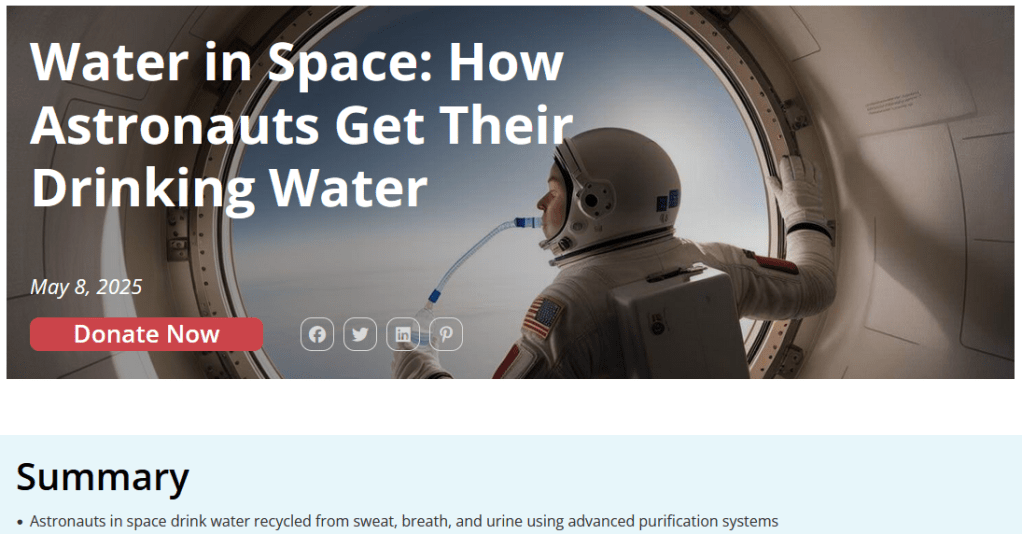
Total BS. ISS distance from Earth is 408 km.
So, the Moon should be…
I don’t know. You do the math.
In this picture, it looks like ISS is orbiting the Moon, not the Earth.”
Somebody on the Internet

“I don’t know. You do the math!”
But you do have the right to express your opinion, right?

Me

„I disapprove of what you say,
but I will defend to the death your right to say it

Voltaire

Oui maître, mais…
‘I will defend to the death your right to make a fool of yourself. To demonstrate your ignorance…’
OK, I get it. Only your attitude stems from your conviction that everybody who is able to read is also able to understand the meaning of what they read…
Which is no longer valid!

What do we need to do?
Educate? The readers…
Censor? The aberrant? And who will ‘put the stamp’?!? Who will be the trusted arbiter playing God?
Wait till the consequences of our laisez-faire will rattle their skulls against our crossed bones?

Or simply wake up?
Remember that mutual respect is paramount for our collective survival.
And that asking before sentencing is the smart thing to do….

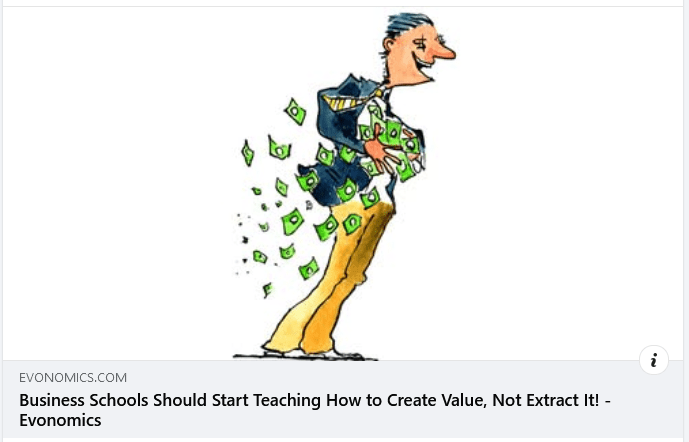
None other than Jack Welch, former chairman and CEO of General Electric,
has called shareholder-value ideology ” the dumbest idea in the world.”
Yet business executives still pretend that maximizing shareholder value
is their primary fiduciary obligation,
which is nonsense except in few restricted cases,
such as when a company is going to be sold.

Value… What is that?!?
Does it exist on its own?

Something must exist if anybody is to extract it, right?
If that something may be created, then it would be a no brainer to make some before attempting to extract it… if you want to be involved in a sustainable process, right?

How do you make value?
How does anybody establish that something is valuable in the first place?

– I declare this to be valuable.
– Who owns it?
– I do.
– How much do you want for it?
– xxx
– OK

That ‘this’ had became ‘valuable’ only when ‘OK’.
Before its value had been agreed upon, it being valuable was on the declarative level only.
‘Virtual’ versus ‘real’.

Only after two interested parties had negotiated about and agreed upon the value of something the value of that something has become established.

Jack Welch again:
“Shareholder value is a result, not a strategy…

your main constituencies are your employees, your customers and your products.
Managers and investors should not set share price increases as their overarching goal. …
Short-term profits should be allied with an increase in the long-term value of a company.”

As an engineer, as down to Earth as it gets, I tend to agree with Jack Welch. A company should be managed as a long term project. It needs to satisfy the natural interests of the investors – profit – in a sustainable manner. Providing something useful to both parties involved. A useful ‘thing’ to the buyers and a satisfying profit to the investors. While creating little to no damage to the ‘environment’ in order to remain acceptable to those living on the same planet…

But who am I to judge… even if I have the blessing of Jack Welch…
Who am I to tell anybody – any investor and/or any manager – how to run their business?!?

Are they blind? Don’t they see this economic model doesn’t work?

Inequality holds back the growth of the entire economy,
as research supported by INET has shown.
Even today’s business elites are worried about its impact:
In a 2015 poll of over 2,700 Harvard Business School alumni,
respondents said that they were more concerned about growing inequality than ever before.

Hm…
“Share holder value is a result, not a strategy”, remember?
Same with ‘inequality’.
Let’s focus on sustainability. On the process.
And notice that the process sputters!
As a consequence of our own decisions!

We have told/allowed the investors and the managers to run the business – not their businesses, the entire business environment – in the current manner.
And we are the ones bearing the brunt. Having to deal with, among other things, the current level of inequality.
We, our decisions, have produced the current situation. Inequality is but one of the consequences.
One, among many, of the consequences engendered by our own weltanschauung.

OK, I can give you this.
God may have done all this.
But is He aware of His creation?

But He loves us!
Otherwise why make us in the first place
?!?’

What if it was us who had come up with this notion?
The way I see it, we may very well be an unintended consequence of His activity. So unintended that He isn’t even aware of our existence…

But He knows everything…

That’s what we think… about Him. And about the relation between Him and His Creation.
Take us for example.
Do we know everything? About our body. About what’s going on inside us.

No, of course we don’t!’

Think again.
For an outside observer – specially one that lives significantly less than we do – our bodies are ‘perfection in motion’. They work ‘perfectly’. As if minutely controlled by somebody who perfectly knows what they’re doing. Right?
We know this isn’t the case… because we are the ones who ignore what’s going on inside our bodies…
Well, ignore is too strong. Not fully aware, at least for as long as things go on in an acceptable manner, would be a more accurate description.
Same might be happening with God.
And this is a far more sensible explanation for what’s going on. We’re the ones responsible for our behavior, not an inscrutable God.
Who, despite being our Creator, allows us to defile His Creation.

‘Somewhat’ true, right?
Nietzsche did say it. And he is dead…

On the other hand, what Nietzsche had actually said was “we killed God”.
Quite a difference, don’t you think?

“God is dead. God remains dead. And we have killed him. How shall we comfort ourselves, the murderers of all murderers? What was holiest and mightiest of all that the world has yet owned has bled to death under our knives: who will wipe this blood off us? What water is there for us to clean ourselves? What festivals of atonement, what sacred games shall we have to invent? Is not the greatness of this deed too great for us? Must we ourselves not become gods simply to appear worthy of it?”

‘We killed God and we now have to face the consequences’.
That’s what Nietzsche told us. And then died. Like everybody else.
Is this consistent with the notion of an all-powerfull and omni-scient God? As suggested by the second image?

The only God we know is the one we talk about. Among ourselves.
During the ‘Middle Ages’ some of our ancestors killed each-other over their particular interpretations of the Bible. But they all agreed about one thing. For them, there was only one God.
And they killed a lot of unbelievers attempting to convince them.
At some point, and Nietzsche witnessed that, people had stopped believing there was only one God.
God was no longer seen as an unifying principle and had become a mere representation.

I don’t know whether there is a god. A ‘real’ one.
But is has become obvious that the one we talk about has stopped playing its role.
It no longer unites us. We’re no longer children of the same father.

We have splintered ourselves into clans.
Each wielding their own representation of God.
Each wielding their own ‘hand made’ idol.

And we have been warned about this…