Archives for category: The kind of world we live in

Most people tend to be passionate about what they do, parents in particular.
This is absolutely normal, what could be more important than ‘the future of mankind’?

And the more passionate we are about something, the more we want to reach the best results in what we do, right?

Only sometimes we are so busy trying to demonstrate that our best is the best there is that we neglect some of the basic aspects of the day to day reality.
The most neglected one being that very seldom ‘one size fits all’.

http://www.huffingtonpost.com/chris-routly/where-similac-and-the-mother-hood-go-wrong-and-why-it-matters_b_6536280.html

Interesting .
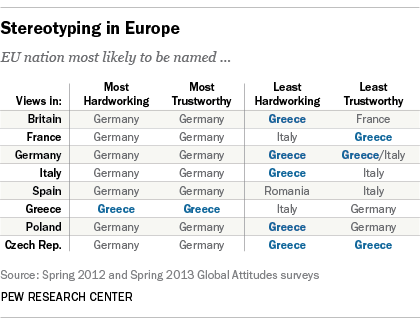
Cannot stop wondering how is it to belong to a people/tribe and reach the conclusion that the members of another people/tribe are more trustworthy than your own ‘mates’?!?

http://www.pewresearch.org/fact-tank/2015/01/27/greek-election-reflects-countrys-differences-with-the-eu/

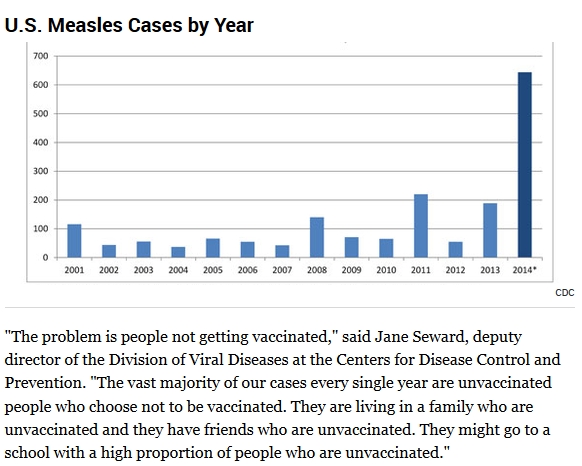
Vaccines work.
OK, there are exceptions. Some batches are botched, some people develop allergies, some viruses mutate so fast that in those cases vaccination isn’t very effective.
But as a principle vaccination works as intended.

Despite all that, some people choose to deny their children the protection offered by vaccines, without any specific reason – such as an allergy or something similar. Just because they have heard that vaccination may cause autism. Or other equivalent baloney. Against advice vehemently pressed by most doctors.

As a consequence, people have re-started to die. After contracting perfectly preventable diseases.

vaccination

I have a rather ambivalent attitude towards Ayn Rand. I admire her razor sharp mind yet I find her a little too callous for my liking.

But sometimes it’s exactly this combination of traits that helps her pin point the essence of a situation:

http://www.theatlantic.com/health/archive/2015/01/the-new-measles/384738/

Cheadle slaves

Click on the picture to read the article.

Don Cheadle learns that his ancestors were owned as slaves by the Chickasaw Nation and that after the end of the Civil War the five ‘Civilized Nations’ refused to liberate their slaves. Further more, after the Chickasaw agreed to liberate their slaves they didn’t offer them citizenship.

It seems that the ancient Romans were right when they said that ‘homo homini lupus’ – men act like wolves do towards other people.

Only his can be interpreted in two apparently conflicting ways:
‘Man predates on other people’
or
‘Man helps his mates, just as wolves do’.

In reality both interpretations are valid simultaneously.
Men coagulate into packs, just like wolves do, and then go prey on other human packs, called ‘herds’ by the ‘hunters’. Somewhat similar to what wolves do, only that wolves do not prey on members of their own species.

And something else. Wolves do this mostly by instinct and on a ‘need to do’ basis. We do it knowingly and because we feel there’s something wrong in there we have to find ‘excuses’ for our acts. Some of us almost never fail to come up with new ones.
‘Ideology’ being just one of the many currently available.

Or we may choose to act the better side of ourselves.

we-carry-kevan-2

http://wecarrykevan.com/

.Other quite interesting ideas on this subject can be found here:
http://associatesmind.com/2013/05/09/homo-homini-lupus-est-man-is-a-wolf-to-his-fellow-man/

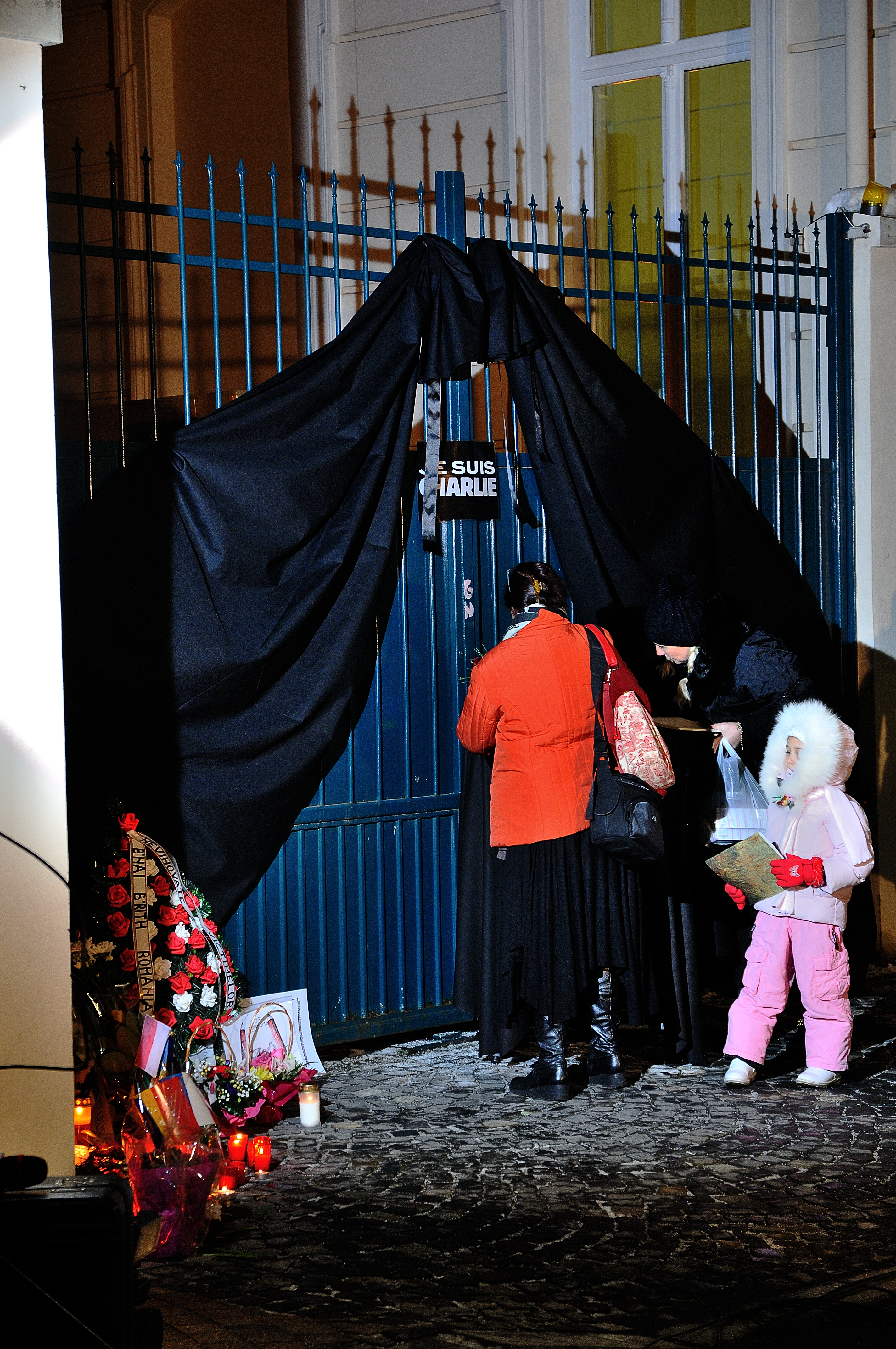
Yesterday I went to the French embassy in Bucharest and lighted a candle in mourning for the people killed during the Charlie Hebdo terrorist attack.

I, an agnostic, using a religious symbol in remembrance of a group of people killed by a couple of (intolerant self proclaimed) defenders of religious values for poking tasteless fun at some religious symbols.

Je suis Charlie

While there I noticed a mother who brought her very small child to a ‘shrine’ build in the memory of people who authored such extreme works of art that some of them cannot be shown, under any circumstances, to underage audiences.
(I really do consider that what those people created were indeed works of art. Only not all art is contemporary with the moment of time when it was created so, maybe, it should be saved for ulterior audience… and, hence, shown to a very limited selection of the people currently roaming the Earth.)

Mai multi prieteni de pe FB au ‘shared’ un status postat de Dan Alexe despre atentatul oribil savarsit aseara la Paris asupra redactiei Charlie Hebdo. Le inteleg si impartasesc oroarea. Numai ca e ceva aici care ‘ma roade la radacina’.
Respectul fata de ce?
Am auzit parerea ca asasinatele oribile de ieri au reprezentat un atac la libertatea presei. Pot fi interpretate si asa.
Revin la ‘respect’ si ma intreb cum vine asta? “Trebuie sa respectam ‘libertatea presei/de opinie’ si in acelasi timp trebuie – la fel de absolut – sa ne batem joc de ‘religie/dogma’? Nu cumva insusi ‘trebuie’ asta ne plaseaza in tabara intolerantilor? De orice fel?
N-ar fi mai bine sa ne respectam intre noi, ca persoane, in loc sa cautam tot felul de ‘valori’ de la care sa ne cautam apoi validarea?
E intr-adevar o diferenta fundamentala intre credinta in ‘libertatea presei’ si credinta in ‘Dumnezeu’ – asa cum este (ne) inteleasa acum de catre foarte multi dintre noi.
‘Libertatea presei’ functioneaza intr-adevar mult mai bine, in conditiile din lumea ‘vestica’, decat ‘Dumnezeu’.
Numai ca asta se intampla doar in anumite conditii si doar pentru ca ‘Dumnezeu’ a ‘murit’ (cel putin in sufletele noastre). In alte conditii si in sufletele celor care nu l-au omorat inca pe ‘Dumnezeu’ genul asta de ‘libertate a presei’ – si mai ales atunci cand aceasta este utilizata provocator – pare, pentru ei, o aberatie care trebuie ‘stearsa’ de pe fata pamantului.
A respecta diversitatea nu justifica cu nimic asasinatele de ieri si de astazi dupa cum nici a cauta explicatii despre cum a ajuns sa fie comis un fapt abominabil nu inseamna a-l scuza. In acelasi timp a impune altora, folosind orice fel de forta, un anumit comportament, indiferent care este acela, este o dovada de totalitarism/intoleranta.
De fapt, esenta libertatii presei consta in aceea ca nici o persoana nu trebuie sa fie ‘pedepsita’ (de nimeni, nu doar de catre stat!!!) pentru simplul fapt de a-si exprima parerile. N-are nimic cu ‘obligatia’ cuiva, si cu atat mai putin a presei, de a face misto de parerile, opiniile si nici chiar de credintele altcuiva. Si mai consta in obligatia statului de a pedepsi pe oricine atenteaza, in orice maniera, la aceasta forma de libertate.
Adica la obligatia reprezentatilor statului de a pedepsi pe oricine incearca sa impuna celorlalti, in orice fel, o anumita parere sau un anumit mod de comportament. Si asta tocmai pentru ca populatiile moderne au invatat sa respecte diversitatea, inclusiv in ceea ce priveste opiniile, si impun respectul diversitatii cu ajutorul statului care le reprezinta.
‘Avem nevoie de POSIBILITATEA de a rade, in siguranta, de orice, inclusiv de religie si de Dumnezeu!’.
Asta parca suna altfel, nu? Dar tot nu justifica actiunea in sine. Dupa cum simplul fapt ca putem, fizic, lua jucariile unui copil nu justifica, cu nimic, gestul.
La fel cum simpla posesie a armelor si abilitatea de a le folosi nu justifica cu nimic oroarea comisa de cei trei la redactia Charlie Hebdo. Indiferent de cat de jigniti s-au simtit de materialele aparute in acea revista.
Respectul persoanei celuilalt, despre care vorbeam mai sus, este singurul punct de plecare care nu trebuie sa fie validat de vreo valoare superioara si ca atare ar putea fi acceptabil tuturor, indiferent de convingerile fiecaruia. Religioase sau de alta natura. Iar de la respectul reciproc la ‘primum non nocere’, “in primul rand sa nu faci rau”, si astfel la adevarata libertate – aceea pe care ne-o aflam impreuna cu toti cei aflati in jurul nostru si nu impotriva tuturor acestora – mai este doar un singur pas.

“Shooters storm Paris headquarters of satirical weekly Charlie Hebdo, which has stoked Islamist anger over its depictions of the Prophet”

In 1914 WWI started just because European countries had backed themselves into so tight corners that they weren’t able to ‘leave them behind’ and ‘come up into the open space where some mutual ground could have been found’  while the entire ‘house’ ‘went up in flames’.

So what do we do now, a century later?

Some people heap ‘fun’ (?!?) on the ‘others’ and ‘the others’ reply with bullets.

Regardless on which side of the many divides that crisscross our society (societies) each of us belongs to we all try to find explanations, and culprits, for what is happening. Only none of the explanations that have been proposed until now has been found acceptable ‘for the other side’.

I propose something else.

If we look closer all this can be boiled down to (mutual) ignorance intensified by intolerance and arrogance.
While real people bleed in the streets some callous puppeteers/mindless ‘activists’, from all sides, laugh contentedly in their hideouts and plan new ways to prod the rest of us into even more reckless extreme actions.

There are two ways out of here.
We can fight it off, like the Germans and the French did. But they needed 150 years of gruesome warfare (from the Napoleonic wars to the end of WWII) to understand that there were no insurmountable differences between them.
Or we could try something new.

All we need is some mutual respect. The rest would come naturally.

Read more: 12 killed in attack on offices of French newspaper | The Times of Israel http://www.timesofisrael.com/10-said-killed-in-attack-on-offices-of-french-newspaper/#ixzz3O96OfXZa
Follow us: @timesofisrael on Twitter | timesofisrael on Facebook

Nature.com  tells us that “Mice infected with toxoplasmosis lose their instinctive fear for the smell of cats — and the parasite’s effects may be permanent.”

Now what on Earth… You pretend to be running a blog about how people think and now you come up with wild stories about rats?!?

Well… the problem is that Toxoplasma Gondi, the parasite that is ‘behind’ all this has somehow found a way not only to influence the behavior of the rats it has infected but also to make sure that the alteration remains in place even after the infection was cured.

So what do we care if a bloody parasite manages to twist the simple minds of rodents? Permanently even?

“In humans, studies have linked Toxoplasma infection with behavioural changes and schizophrenia. One work found an increased risk of traffic accidents in people infected with the parasite2; another found changes in responses to cat odour3. People with schizophrenia are more likely than the general population to have been infected with Toxoplasma, and medications used to treat schizophrenia may work in part by inhibiting the pathogen’s replication.”

OK, OK, ‘correlation is not causation’, I know that, but don’t you find it ‘fascinating’ that behavioral patterns could be permanently altered from the outside the brain by something having a ‘material’ nature? Learning, acquiring new information, also involves something from outside the brain but ‘information’ doesn’t have a ‘material’ nature, right?

And something else. Don’t you find it rather interesting that so many people post pictures of cats on their FB walls?

http://www.nature.com/news/parasite-makes-mice-lose-fear-of-cats-permanently-1.13777

The recent shift on how both the scientific community and the press relate to cancer is just another proof that we are currently undergoing a subtle change in the way we understand the world.

Yes, we continue to be fascinated with the notion of ‘the primordial cause’ and to go way out into the improbable in search for that cause while we still tend to ‘forget’ – or even actively chose to neglect – that most things, cancer included, usually are the result of a string of events and not of a single occurrence. Identifying only one event in that string as ‘the cause’ is rather ‘dense’, don’t you think?

Yet, despite of all of the above, this development has a bright silver lining. For the third time in the history of science and for the first in the history of popular media lady luck is being presented as a valid scientific explanation of anything. This very fact is a huge step towards a new understanding of how vast the world really is and of what we, mere human beings, might or might not be able to do/understand in/of it.

The first two instances when this has happened – Charles Darwin mentioning the role of hazard in biological evolution and Schrodinger using his famous cat to explain the intricacies of subatomic physics – the general public (and a considerable portion of the scientific community) somehow managed to avoid grasping the huge importance of hazard in nature and, frightened, found solace in the welcoming arms of God.

This is the first time, in my knowledge anyway, that God was not mentioned, yet, in connection with such an important subject for us all.

Good news, isn’t it?

For those who want to find out more about chance and cancer these two recent articles are a good starting point into the matter:

“Majority of cancers occur because of random mutations…” offers a succinct presentation of the development while
“Are two thirds of cancers really due to bad luck” brings welcome clarifications on the limits of the scientific method – statistical analysis – used by the authors of the original study.

New York Times has published recently an article about various unexpected effects of automation. The way I see it the whole thing can be boiled down to:

“Artificial intelligence has become vastly more sophisticated in a short time, with machines now able to learn, not just follow programmed instructions, and to respond to human language and movement.

At the same time, the American work force has gained skills at a slower rate than in the past — and at a slower rate than in many other countries. Americans between the ages of 55 and 64 are among the most skilled in the world, according to a recent report from the Organization for Economic Cooperation and Development. Younger Americans are closer to average among the residents of rich countries, and below average by some measures.”

The point is that ‘classic’ automation freed the individual from the repetitive chores that transformed man into a machinery, as depicted by Chaplin in ‘Modern Times’, and allowed him to pursue more challenging/interesting ways to ‘make ends meet’. The current phenomenon turns the tide in exactly the opposite direction, demeaning the individual to the role of a ‘servant’ for the almighty machine. That’s why people become less and less skillful and, even worse, less and less proud about what they do for a living.

Dangerous situation.