Archives for category: Psychology

Just saw this picture:

giraffe, coffee

Couldn’t resist adding this comment:
‘Cold’ as in less hot than it was when it first touched the giraffe’s lips, not cold as in colder than the giraffe itself, right?
Anyway what kind of people would ever think about a giraffe drinking coffee?
The kind of self centered joker who twists his mind in constant search for new and devious ways to pester the others?
😀 😀 😀

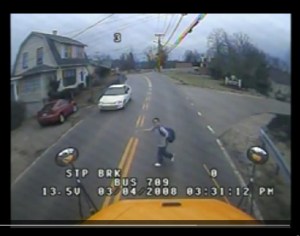
 check first    stop for the school bus
‘Supposed to stop’ and ‘will stop’ are two completely different things. We dearly need to teach our children that their safety is primarily their responsibility and that they need to check first (that the incoming driver has stopped, for instance) and act only when the circumstances allow it. Hoping that the adults will behave in a responsible manner is a legitimate wish but nothing more than that.
Educating the reckless drivers (punishment is a legitimate teaching tool) can make a difference indeed so we should pursue this venue also but there is a catch here.
Don’t you think that our current attitude towards the children conveys some sort of indifference about ‘tomorrow’?
Treating our children like they were totally irresponsible morons only encourages them to behave as if they really were so. And do you honestly imagine they’ll morph into ‘grown-up adults’ in a jiffy when they’ll reach the ‘magical’ age of legal drinking after being treated like that?
And something else.
People not only don’t stop for the school buses but also rip off children financially (high tuition and huge public debts that will fall in their laps), nutritionally (kids are among the preferred targets for the advertisers who promote junk food), emotionally (we abandon our kids in front of their computers, laden with stupid video games we sell to their parents for a hefty profit) and even sexually [ (long time) “Child abuse victims in Britsh town claim compensation” ] .

Is it because we don’t care anymore? Have we lost all our hope for tomorrow and trust in our fellow human beings?

“Procurorul DNA a cerut joi, la Tribunalul Ilfov, să fie făcută o nouă expertiză psihologică în cazul lui Adrian Năstase și a depus la dosar copii ale unor articole de pe blogul fostului premier. El a cerut să fie respinsă propunerea de eliberare condiționată. În pledoaria finală în faţa instanţei, Adrian Năstase l-a asigurat pe procurorul DNA, pe un ton ironic, că nu poate repeta faptele din dosarul “Trofeul Calităţii”, întrucât nu va candida la prezidenţiale.”

M-am mai laudat pe aici ca am fost in concediu. Tocmai in Grecia.
Pentru ca nu-mi permit sa mananc prea des la restaurante unde se gateste mai bine decat sunt eu in stare mai bucataresc si cand sunt in ‘deplasare’. Asa ca dupa ce ajung undeva primul drum il fac la cate un supermaket. Cel mai aproape a fost, de data asta, un Lidl.
In magazinele de genul asta singurul contact dintre clienti si personal are loc la casa. La ei casierele erau degajate, vorbeau cu clientii, se miscau normal… La noi parca sunt contracronometru. Se misca precum niste robotei si se uita urat la tine daca nu reusesti sa pui lucrurile inapoi in cos la fel de repede pe cat reusesc ele sa le scaneze.
OK. am inteles, productivitatea muncii este foarte importanta dar oare de ce ne lasam noi, romanii, calcati pe cap mai usor decat restul europenilor? Somajul e mai mare in Grecia decat in Romania iar cu toate astea vanzatorii de aici sunt platiti mai prost si lucreaza sub un stres mai mare decat cei de dincolo… In conditiile in care preturile la mancare si benzina sunt mai mari aici… Si inca o chestie foarte interesanta… de foarte multe ori dimineata devreme observ cum se aduna cate o echipa de nemti la Lidl-ul din Colentina in jurul sacului cu fistic si mananca de zor… de parca n-ar mai fi vazut asa ceva… N-am observat nici un vanzator obisnuit facand acelasi lucru (probabil ca ar fi dat afara imediat), doar barbati in tinuta business care dupa 5-10 minute incep sa dea tot felul de ‘indicatii pretioase’ in limba germana sefului de magazin care asculta atent…, cu capul plecat…

Ce legatura are treaba asta cu ce a inteles sau nu Nastase?

Pai Nastase nu a venit cu harzobul din cer. S-a nascut si a fost educat aici. Aroganta de care da in continuare dovada, ‘Nastase l-a asigurat pe procurorul DNA, pe un ton ironic, ca…’ si-a cultivat-o aici, printre cei care l-au votat.
E adevarat, doar pana la un moment dat.

Si tocmai de asta spun ca nici noi n-am inteles nimic. Uite pe cine am ales cand ne-am saturat de Nastase. De doua ori…

Aseara toate televiziunile au profitat de prilej si au facut o trecere in revista a carierei sale politice. Indiferent de orientarile si simpatiile respectivelor posturi aproape toate au fost de acord cu privire la trei lucruri: Nastase ne-a bagat in UE, pe vremea lui Nastase s-a consolidat sistemul baronilor locali, Nastase este un intelectual de marca.
Foarte interesante aceste trei asertiuni. De fapt ele spun mai multe despre noi decat despre Adrian Nastase.

Intrarea in UE.
Pai asta a fost mai degraba o realizare colectiva decat orice altceva. Sa fi fost Nastase mai destept decat Einstein si mai frumos decat Marlon Brando, daca intreaga tara n-ar fi facut ce a trebuit sa fie facut si ‘Europa’ n-ar fi considerat oportun sa ne ne primeasca apoi… Ca sa nu mai vorbim despre preturile pe care a trebuit sa le platim. Noi, nu Nastase. Printre altele: contractul cu EADS, cel cu fregatele, autostrada Transilvania…
Despre fenomenul baronilor locali nu e nimic de comentat. Evidenta nu are nevoie de prea multe cuvinte.
Am lasat la urma asertiunea cu privire la statura intelectuala a profesorului Adrian Nastase, cea mai interesanta – dupa parerea mea – dintre cele trei.
Cand eram pustan am auzit un banc care m-a marcat. Cica un cioban sprijinea un toiag pe marginea soselei si se uita, impreuna cu fiul sau de vreo 15 ani, la oile ce pasteau prin sant. La un moment dat se opreste o masina – bancul era de pe la sfarsitul anilor 60, cand incepusera relatiile cu Europa de Vest – cu numere straine. Soferul coboara, se duce la cioban si il intreaba, in engleza, franceza, germana si italiana, daca e pe drumul bun catre …. Ciobanul ii raspunde, de fiecare data, ridicand expresiv din umeri si din sprancene. Soferul se scarpina in cap, se urca inapoi la volan si pleaca. Copilul isi intreaba, plin de respect, tatal: “Ai vazut bre cate limbi stia omul asta?”. Ciobanul concluzioneaza nedumerit: “Si la ce i-a folosit?!?”
OK, Nastase a scris carti in puscarie si a impartasit colegilor de suferinta din vasta sa cultura iar toate astea au contribuit la eliberarea sa inainte de termen. Dar n-ar fi fost mai util, pentru toata lumea, daca abilitatile sale intelectuale l-ar fi ajutat sa inteleaga ca un pic de modestie nu strica niciodata? Sau l-ar fi ajutat sa nu faca greselile pentru care a intrat inauntru?
Si inca ceva.
Una dintre ‘diversele idei extravagante’ cu care a iesit si pe care a impartasit-o ziaristilor care il inconjurau la poarta puscariei ca pe oracolul de la Maglavit a fost “… ar fi nevoie de alegeri anticipate in 2015, pentru profesionalizarea Parlamentului, cu revenirea la votul pe liste, avand in vedere ca acum “statul roman nu mai are decat doua puteri – cea executiva, presedinte si guvern, si justitia”.
Chiar asa sa fie?
OK, justitia se pare ca a devenit intr-adevar profesionista. Macar in sensul ca nu se mai lasa asmutita intr-o parte sau alta a spectrului politic si a inceput sa ii ia pe toti la rand. (Iar asta s-a intamplat in timp ce presedentia era ocupata de Basescu…)
In ce priveste administratia publica…imi permit sa am anumite indoieli… Nu in sensul ca nu ar fi suficient de multi profesionisti acolo ci pentru ca interventia politica in administratie e prea brutala si prea insidioasa. Cu alte cuvinte baronii locali (tineti minte, sistemul acela perfectionat chiar pe vremea guvernarii Nastase) au prea multa putere in teritoriu si, dupa fiecare runda de alegeri, profesionistii din administratie sunt rotiti prin posturi pana ametesc.
Asta isi doreste intelectualul de marca Adrian Nastase sa se intample si cu parlamentarii? Sa devina niste trupe disciplinate la dispozitia liderilor de partid? N-ar fi mai potrivit ca aparatul Parlamentului sa fie bine dotat cu o seama de consilieri cu adevarat profesionisti – mai ales in materie de tehnica legislativa – care sa ii poata ajuta pe parlamentari sa formuleze niste legi inteligibile? Parlamentarii in sine chiar nu ar trebui sa fie ‘profesionisti’, ba dimpotriva. Nu tocmai asta este rostul democratiei? Sa ajunga cat mai multi oameni, si cat mai diversi, sa isi spuna parerea astfel incat sa avem de unde alege? Daca se ‘profesionalizeaza’ intrega clasa politica vom ajunge sa traim intr-un sistem de caste, ca in India feudala…

Ca sa inchei intr-o atmosfera apoteotica, de ‘tara arde si baba se piaptana’, iata ce probleme arzatoare ii preocupa pe ziaristii de la HotNews:
“Intrebat daca are de gand sa renunte la barba, odata cu iesirea din inchisoare, Nastase a precizat ca nu: “Am ajuns la concluzia ca imi sta foarte bine asa. Mi s-a spus ca as putea sa obtin cu usurinta un rol intr-un film, astept oferte”.”

Ma bantuie de ceva vreme ideea unui articol despre ce rol mai are religia in viata ‘omului modern’.

Cel de acum este doar un ‘amuse-gueule’ starnit de o intamplare povestita de Simona Tache in Jurnalul ei Roz de Cazarma:

“Bunicile neortodoxe nu se mantuiesc…”

Cuvantul ‘Religie’ vine de la latinescul ‘reliegare’, care inseamna ‘a fi conectat la’/’legat cu’.
Mai pe romaneste fiecare credinta religioasa este, in realitate, doar un bagaj cultural (adica acumulat in timp) care l-a ajutat pe posesorul sau (comunitatea care are grija de el) sa supravietuiasca incercarilor la care a fost supus. Tocmai de aceea respectivele comunitati au, in general, respect fata de acel bagaj – chiar daca li se pare, cateodata cel putin, destul de greu de purtat.
OK, OK, ‘bagaj cultural’, ‘supravietuire’…ce legatura au toate astea cu ‘a fi conectat la’ ?!?

Simplu.
O comunitate umana este un grup structurat de oameni care traieste intr-un anume spatiu, corect?
Ori pentru ca asa ceva sa supravietuiasca, adica sa continue sa existe, inseamna ca acel grup de oameni trebuie sa fie in stare sa-si pastreze/adapteze structura la schimbarile aparute in respectivul mediu/spatiu.
Adica omenii, constituentii acelui grup, sa fie in stare sa formeze/pastreze/adapteze legaturi (reguli de interactiune) intre ei si, in acelasi timp, sa stabileasca/pastreze/adapteze o interactiune functionala cu mediul/spatiul in care traieste comunitatea respectiva.
Daca oamenii s-ar certa/fura tot timpul intre ei comunitatea s-ar destrama foarte repede iar indivizii ar ajunge sa traiasca mizerabil chiar daca toate astea s-ar intampla in mijlocul celui mai fertil/mirific loc de pe Pamant.
Pe de alta parte, daca cea mai unita comunitate din lume ar fi, ca prin minune, transferata intr-un Paradis extraterestru despre care n-ar avea nici o informatie membrii acelei comunitati ar avea serioase probleme in a determina ce sa bea si sa manance inainte de a muri cu totii de foame si de sete. Asta ca sa nu mai spun ca s-ar putea sa le fie si frica sa respire daca aerul din jurul lor ar fi o ceata roz, de pilda, iar astrul de pe cer ar fi de culoare …verde. De fapt sunt convins ca marea majoritate dintre membrii acelei comunitati ar innebuni instantaneu.

Pai si atunci sa nu te miri cum de niste seturi de informatii/obiceiuri/traditii indelung selectionate in timp (comunitatile respective au supravietuit, nu?) si care au avut ca scop/obiect sa reprezinte un liant in interiorul acelor comunitati precum si legatura dintre acele comunitati si habitatul lor au ajuns sa constituie subiect de disputa aprinsa (cateodata chiar armata) atat in interiorul comunitatilor, intre comunitati cat si intre comunitati si mediul lor inconjurator?

Nu ma credeti?
Ati auzit de razboaiele religioase dintre catolicii si reformatii francezi? Dar de razboiul civil din Irlanda de Nord?
Dar de faptul ca cel mai mare dusman al Iranului este de fapt Arabia Saudita? (Unii sunt musulmani shiiti iar ceilalti suniti)
Iar povestea locuitorilor din Insula Pastelui e intr-adevar incredibila. Navigatori excelenti au colonizat insula venind dinspre Oceania. Pe vremea aceea insula era acoperita de paduri. Material excelent, atat pentru constructia de nave cat si pentru transportul imenselor statui pe care au inceput sa le construiasca. (Aproape toate civilizatiile, cand ajung la apogeu, incep sa se plictiseasca si sa construiasca chestii imense si la limita posibilitatilor lor tehnologice. Monumentul de la Stonehenge, piramidele egiptene, catedralele vest europene, zgarie-norii cu care ne laudam de vreo 70 de ani incoace …) Si au taiat padurile alea atat de repede incat nici macar nu au reusit sa termine toate statuile. Si pentru ca nu mai aveau din ce sa-si faca nici macar o barca au inceput sa moara de foame – nu puteau sa pescuiasca de pe mal – si sa se razboiasca intre ei. Cind au fost descoperiti de europeni, la vreo cateva sute de ani dupa ce taiasera ultimul copac, traiau atat de primitiv incat europenii au crezut ca statuile alea fusesera ridicate de altcineva…
Fac o paranteza. Se pare ca teoria asta, lansata de Jared Diamond in 1995 (si reeditata in 2011, http://www.amazon.com/Collapse-Societies-Succeed-Revised-Edition/dp/0143117009) nu este in intregime corecta. Cica oamenii ar fi avut o contributie dubla la respectiva despadurire, in afara de faptul ca au taiat copacii direct au mai adus cu sine, atunci cand au colonizat insula, niste sobolani care ar intensificat fenomenul. Nici nu mai conteaza daca acei sobolani au fost adusi din greseala – cam greu pe genul de pirogi de care le foloseau acestia – sau ca animale crescute pentru carne. Cert este ca interventia omului, intentionata sau nu, a fost cea care a rupt niste legaturi/echilibre care supravietuisera timp de milenii. http://www.americanscientist.org/issues/pub/rethinking-the-fall-of-easter-island/4.

Si acum?

Mai cautam pretexte pentru ‘divide et impera’ sau intelegem in sfarsit ca ‘unirea (cooperarea pe baza de respect reciproc) face puterea’?

Am fost in concediu.
La intoarcere am ‘sarit’ in media sa vad ce s-a mai intamplat.

“Purtătorul de cuvânt al Guvernului, Mirel Palada, a scris recent pe contul său de Facebook un text conţinând cuvinte jignitoare la adresa unor jurnalişti.”

Bucurandu-ma de privilegiul de a fi ‘prieten FB’ cu Mirel Palada de dinainte ca domnia-sa sa devina purtator de cuvant al Guvernului sunt la curent cu stilul sau destul de colorat si cu relativa lejeritate cu care isi permite sa atentioneze ‘o anumita parte a presei’ atunci cand aceasta sare calul.

Acesta este momentul in care trebuie sa precizez trei lucruri.
– Nu am aceleasi optiuni politice ca Mirel Palada.
– Nu il cunosc personal.
– Initial acest blog a fost gandit ca un spatiu in care sa atrag atentia tocmai asupra exagerarilor aparute in presa, de unde si numele sau, Nici chiar asa.

Sa revenim.
Am cautat textul care a starnit mania breslei jurnalistice:
“Cum apare câte un subiect politic care învârtoşează spiritul bejboinic în opinanţi, de zici că-i catastrofă şi dezastru mondial, cum mai scot capul câte doi-trei-zece-douăzeci, depinde de intensitatea subiectului, de bezmetici acoperiţi de pe lista mea care îşi fac seppuku comunicaţional şi trântesc cu cuvintele anti-guvernamentale în baltă propagandistică la mine pe wall. Şi uite aşa mai frigem nişte purceluşi anti-guvernamentali la proţap şi le dăm block şi mai bem o bere în cinstea sufletelor răposaţilor care nu mai este. În seara asta era unul care acum era reporter la Gândul, iar inainte fusese la Hotnews, şi care făcea clăbuci cu spume la mine pe pagină. Ce plăcere să-l execut electric! Câta îndemânare am să omor prin blocare ziariştii obiectivi, deci anti-guvernamentali. Pufoşilor, nici nu ştiţi câtă plăcere îmi provocaţi”.

De dimineata, in masina, auzisem la RFI ceva despre ‘purcelusi anti-guvernamentali executati electric’. Sincer sa fiu chiar ma gandisem la cat de tare trebuia sa fi fost de suparat Mirel Palada ca sa ajunga la astfel de formulari ‘dure’, scriitura sa semanand mai degraba cu o scrima eleganta (chiar daca uneori vitriolanta) decat cu un baraj de artilerie.
Ca sa aflu ca ‘executia electrica’ se referea de fapt la blocarea accesului respectivilor pe pagina sa de FB… Halal…
Si pe urma de mai miram de ce singura presa care mai trage ceva tiraje reale, adica cumparate/culese de prin metrou pentru a fi citite, este cea de scandal.

Tot invartindu-ma prin spatiul media am mai aflat si ca “Antonescu, supărat: Nu îl susţin pe Iohannis!”
Hait! Ce l-o mai fi apucat si pe asta?!?
Nu l-a apucat nimic, in realitate a spus doar ca:

Intr-un comunicat al Clubului Roman de Presa se spune “Apreciez că prezentarea de scuze publice …. este un gest necesar, care ar semnifica întoarcerea spre o dorită normalitate.”
“Apreciez” si eu ca aceasta este una dintre putinele afirmatii pe de-antregul corecte care au aparut in ultima vreme in media romaneasca.
Domnul Palada sa isi ceara scuze pentru licentele de limbaj la care poate ca ar fi fost cazul sa renunte, temporar, in perioada in care ‘functioneaza’ ca purtator de cuvant al Guvernului iar cea mai mare parte a presei sa isi ceara scuze pentru modul cel putin ‘bulevardier’ in care abordeaza chiar si cele mai importante subiecte.

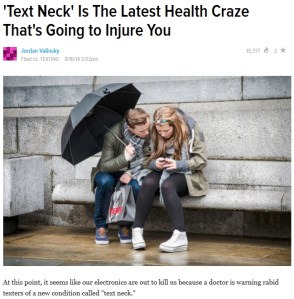
text neck

“At this point, it seems like our electronics are out to kill us because a doctor is warning rabid texters of a new condition called “text neck.” “ according to an article recently published by Gizmodo

Anyway the writer has a funny sense of humor: ‘…our electronics are out to kill us because a doctor is warning rabid texters of a new condition…’?!?
Am I to understand that ‘our electronics’ got mad at us because of the good doctor’s warning and this might constitute the reason for which “… our electronics are out to kill us…”? And it’s ‘the health craze’ that’s going to injure us, not our bad habits, eh?

Oh boy….

Maybe.
But who made this possible?
Is there an ‘armed robber’ in every store that compels us to buy one thing or another?

Read this report and find out a very interesting fact.
“Companies that control the world’s food”, 247wallst.com

10 companies are listed there. Nine of them sell things that are marginally useful. For instance even the most health conscious person in the world might, from time to time, indulge in a glass of milk, or a cup of yogurt, accompanied by a couple of Oreos.
The tenth sells carbonated, artificially flavored and acidified sweetened water, while the sweetener is sometimes obtained from corn. Yes, you guessed right, it’s Coca-Cola Company.

And now the interesting part. 8 of the other nine companies have a reasonable profit margin of around 10% (Mars hasn’t disclosed the figure) while Coca Cola has a profitability rate of 18%. Not bad, eh? Specially after considering that they have spent another 6.4% of their turnover on publicity – to remind us of their existence… while the other companies have something to communicate with their ‘audience’ (new products and things like that) Coke hasn’t changed anything of real importance in their line of products since … ?!?

Pepsi, the ‘other’ beverages company in the list, is in line with the majority of the rest when considering the profitability rate, about 10%, and publicity spending – a little less than 4% – while a few of the others try hard to improve their share market by agresivelly advertizing their ‘public image’ instead of letting their ‘considerably better and cheaper product’ become recognized (and demanded) by the happy customer: Kellogg 7.4%, Mars 6.6% but the champion of the advertizing agencies is…Unilever with 10.7%. You thought too that Unilever was more of a chemical company (Omo, Domestos, Rexona, Axe, Vaseline) than anything else? Apparently about half of it’s business is about ‘food’, if you can call it that: Hellmann’s (canned mayonaise), Becel/Flora (hydrogenated vegetable oils known as margarine)… The only really edible thing I found on their list is Ben & Jerry (an otherwise delicious ice cream) (http://www.unilever.com/brands-in-action/index.aspx)

Consumer discretion is in dear need nowadays.

PS Dove, another of the Unilever brands, is the soap I’ll use to wash my hands of this messy business once I’ve had finished this post. In fact I’ve been using it for years now.

algebra

The funny thing is that most of us use ‘algebra’ on a daily basis, unwittingly.
And no, I’m not talking about the fact that every modern appliance has a lot of algebra embedded in it during its being designed and manufactured while some of them (the ‘programmable’ ones) continue to rely on algebra while being used…

We all pretend to be logical thinkers, right?

And what else is algebra if not symbols and numbers treated in a logical way while logical thinking means treating ideas in a very algebraic mode?

Read more about this here: http://www.sscc.edu/home/jdavidso/mathadvising/whymath.html

Se spune ca gelozia este o manifestare a instinctului de conservare a speciei, a dorintei individului de a-si transmite genele catre generatia urmatoare.

Eu as spune ca este doar o manifestare instinctuala. Cu alte cuvinte ‘naturala’ la un nivel ‘primordial’.

Iar faptul ca este ‘naturala’ nu o face neaparat dezirabila … sunt multe lucruri pe care stramosii nostrii le considerau a fi naturale dar care nu mai reprezinta ‘avantaje competitive’ in zilele noastre, ba chiar dimpotriva.
Cum ar fi mamele de 12 ani sau diferente enorme de varsta intre sot (cateodata un bosorog bogat) si sotia luata (cateodata aproape pe sus) pentru a ‘improspata’ sangele (degradat prin ‘inbreeding’) al familiei ‘aristocratice’.
Cam asa si cu gelozia asta… in zilele noastre este mai degraba o manifestare de neputinta decat de de orice altceva, instinct de conservare a individului versus instinct de conservare a speciei.
Din cate am observat eu gelozia se manifesta de obicei la cei care nu reusesc sa tina pasul cu partenerul de cuplu SI care se simt amenintati de succesele acestuia, semn ca acel cuplu s-a intemeiat initial ca o ‘alianta’ intre doua persoane care aveau printre teluri o puternica dorinta de a parveni si mai putin ca o uniune intre doi parteneri care mai presus de orice se respecta intre ei…

At some point the significant individual involved in a situation will have to make the relevant decision.

And here comes the difference between a human and a horse.

The horse will wait until it becomes thirsty, no matter how ample opportunities to drink would present themselves before him while the human will first make sure that the water is safe to drink and only then decide what to do: drink pre-emptively, fill a flask, take a nap by the spring…

The point I’m trying to make here is that while animals, no matter how ‘sophisticated’, act according to their instincts (or ‘training’) we humans sometimes act instinctively/emotionally and some other times ‘rationally’ – we ‘identify opportunities’ and try to use them to further our goals.

And here lies the watershed…

Our ‘rational’ decisions can be good or bad and there is no real way to tell before hand which is which. Hence the ‘primum non nocere‘ (“first do no harm”) rule used by the professional healers of this world.
The problem with our rationality is that we  never have all the pertinent information at our disposal, enough time to process whatever information we do have nor the wisdom to realize the first two limitations. And this is why we too often proceed as if those two limitations never existed….

Why haven’t we failed miserably until now? (Miserably enough as to never be able to stand up again or to finally learn the lesson?)
Because we relied heavily on ‘tradition’/’religion’. Usually these two are taken together but I prefer to treat them separately. You see, it is true that both of them are nothing but information accumulated in time as a result of the social cooperation that takes place even without us being aware of it but there is a fundamental difference between them.
‘Tradition’ usually has to do with ‘technology’, the way we do things, while ‘religion’ (which comes from the Latin word ‘reliegare’ = ‘connecting to’) is mostly about sharing a common understanding of the world and acting, collectively, according to that ‘Weltaunschauung’.

And here comes the interesting part. Being the member of a certain religious cult/church is nothing but a set of circumstances. Each individual is ultimately/personally responsible for the path he chooses ‘inside’ his religious tradition, for the way he interprets/acts upon the religious teachings he has received during his upbringing.
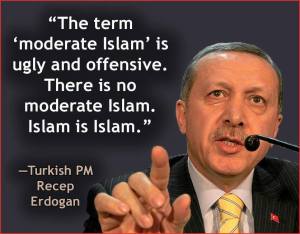
moderate Islam

And this is exactly why I am in full agreement with Erdogan: “There is no moderate Islam. Islam is Islam”.
You see, I grew up in communist Romania and in those times we had a saying that went like this: “it’s not the “ism” but the “ist” who causes the trouble!”.

When placed in a certain situation some people act naturally – they drink if they feel thirsty – or they may decide to use whatever opportunity they identify in order to further their goals.
You can study communism in a library or conspire to impose it on people exactly as you can practice Islam in your community or try to impose it by force to all your neighbors.
It’s neither  ‘communism’s nor ‘Islam’s fault, it’s the communists who cannot understand that communism doesn’t work and the hard-line Islamists who fail to understand  that by acting exactly as the Catholic Inquisitors did during the Dark Ages they’ll eventually drive their flock away from their pulpits.

The real problems arise from the arrogance that blinds those “ists”, individuals so ‘concentrated’ on their self-assumed/assigned goals (no matter if they are well intended, like trying to spread – by force – the wealth around and to – administratively – reduce social inequality, or on the contrary – obsessed with becoming filthy rich at the expense of everybody else and/or accumulating dictatorial power over those around them) that they forget/fail to realize that human rationality is inherently limited. And so they fail to understand that ‘the law of unintended consequences’ will eventually bring them back down to where they belong – with a bang!

There are three sets of social circumstances that these kind of ruthless ‘political actors’ perceive as opportunities: inflamed nationalistic feelings, strong religious beliefs, wide spread social malaise due to economic hardships.

For instance the French Revolution (remember, today is Bastille Day) was fueled by the desperation that ‘doused’, at that time, the French people. They were not only hungry but they also felt abandoned/neglected by their rulers. Marie-Antoinette, the French Queen beheaded during the Revolution, was described as being so callous/ignorant of the real life of her subjects that when informed that her people didn’t have enough bread she interjected: ‘Let them eat cake instead!’
Some historians debate whether this really happened, one of their arguments being that the same words have been attributed to many other historical figures that lived before her but the simple fact that the utterance itself was so widely circulated remains and speaks volumes.
A century later Lenin was able to manipulate the same kind of public sentiment and imposed the Soviet rule over the Russian imploded empire while Ataturk, the leader of the Young Turks, fashioned the freshly minted Turkish nationalism into the glue that held together, until recently, the modern – and secular – Turkish state that succeed the ailing Turkish empire by 1925. It is often forgotten but if we really want to understand Turkey we should always remember that until the late XIX-th century it still was a feudal empire and the social costs of such a short/hasty transformation into a modern nation state were tremendous. Unfortunately in the last decade Erdogan has been working hard, with the unwitting help of the Euro-skeptics who reject Turkey’s efforts to join the EU, to replace secular, and relatively moderate, nationalism with religious zealotry as the backbone of the Turkish republic.
Coming back into Central Europe we have the classic example of how Hitler used nationalistic tensions exacerbated by the economic crises deepened by the unwisely imposed war reparations to implement his demented dream of a Reich that was supposed to last for a thousand years.

The same process is happening again, under our own noses. This time all three ‘components’ are present. The economy of the region is in shambles, arguably because of foreign intervention, nationalistic tensions are rife while religious ones are heated way beyond boiling point.
So why wonder that the al-Baghdadi led Isis uses Islam as a pretext to impose a new dictatorship in a region that has no real need for another one?

“Though al-Baghdadi constantly invokes the early history of Islam, the society he envisions has no precedent in history. It’s much more like the impossible state of utopian harmony that western revolutionaries have projected into the future. Some of the thinkers who developed radical Islamist ideas are known to have been influenced by European anarchism and communism, especially by the idea that society can be reshaped by a merciless revolutionary vanguard using systematic violence. The French Jacobins and Lenin’s Bolsheviks, the Khmer Rouge and the Red Guards all used terror as a way of cleansing humanity of what they regarded as moral corruption.

Isis shares more with this modern revolutionary tradition than any ancient form of Islamic rule. Though they’d hate to hear it, these violent jihadists owe the way they organise themselves and their utopian goals to the modern West. And it’s not just ideas and methods that Isis has taken from the West. Western military intervention gave Isis its chance of power.”

Now it’s up to us. Just as our great fathers used the opportunity presented to them at the end of WWII and helped Germany refashion itself, both economically and socially, by including it in the Marshall Plan instead of making it pay for the rebuilding of the war ravaged Europe we should try to help the peoples in the Middle East find their own respective ways instead of impose on them whatever we might think it would be better for them. And I mean real help, not just let/prod them fight each other to exhaustion.
In fact it would serve our interests also.
The Balkans were considered the powder keg of Europe and indeed the tensions accumulated there helped ignite the WWI. After communism imploded those tensions resurfaced precisely because the previous arrangements were imposed, more or less, from ‘above’. Exactly as the map of the Middle East was drawn by Sykes-Picot.
No, I’m not advocating wholesale dismantling of borders, as it happened in ex-Yugoslavia. If they find a way, by themselves, to preserve the present situation we should encourage and help them to do so. But we should never try to impose something on them just because we consider it would serve our (short term at best) interests.

Lebanon might serve as a good example, both to them and to us.

It won’t be simple, every major power has vested interests there, including Russia, but it can, and should, be done. Specially since the the alternative would be horrible.