Archives for category: Psychology

At the beginning of Part I there’s a list of what we’ve accomplished during this century.
I’m going to remind you now some of the mistakes we’ve made.
Genocide, atomic bomb, global warming, widespread pollution… basically, we’ve turned the tables upon ourselves.

I had the first inkling of what’s going on when I started to compare what’s currently going on in Syria with the Spanish Civil War.
NB, even the name we use for this kind of conflict is an absolute aberration. War is, by definition, the opposite of civility. Why on Earth any of us might consider that war waged between co-nationals can be expected to be more ‘civil’ that the ‘regular brand’…

Spain and Syria have evolved in eerily similar manners. Multiple ethnic groups of multiple religious convictions have been forced by geography to coexist and to evolve together. Each of them had passed through very similar stages, albeit following different time-tables. The whole thing culminated with both of them passing, during the last century, through ‘revolutionary’ episodes. There are two small differences though.
Spain’s ‘revolution’ had taken place at the end of a turbulent period and had produced a dictatorship – Franco’s, while the Syrian one is the consequence of a dictatorship and has not yet yielded a clear result.

And why is any of this of any interest when analyzing the entire century? Except, maybe, that the two atrocious episodes have marked the start and the beginning of the said century?

Well, it’s how the rest of the world have chosen to react in each instance which I find extremely interesting.

First of all, let me remind you the broad picture in both cases.

Spain’s took place shortly after the end of WWI and immediately after the Great Depression. The most important ‘disruptive ferment’ was militant marxism and although not all of those fighting on the side of the revolutionaries adhered to this ideology the presence of the marxists had decisively shaped the reaction of the democratically elected governments of the world. They had chosen to basically stay out of it. Despite the fact that Franco was leading a rebellion and that the Republican Government had been dully elected to office.
At the beginning, France’s first socialist PM, Leon Blum, had assisted the Republicans but recanted shortly afterwards, “under pressure from Stanley Baldwin and Anthony Eden in Britain, and more right-wing members of his own cabinet”. Which, in a way, made some sense. Western Europe was frightened that communism might spread westwards and many of the Spanish Republicans were of communist persuasion. “Baldwin and Blum now called for all countries in Europe not to intervene in the Spanish Civil War. A Non-Intervention Agreement was drawn-up and was eventually signed by 27 countries including the Soviet Union, Germany and Italy. However, Adolf Hitler and Benito Mussolini openly ignored the agreement and sent a large amount of military aid, including troops, to General Francisco Franco and his Nationalist forces.” Stalin also ignored the agreement and send some help to the Republicans but got bored and by 1938 he practically forgot about the whole thing.
In the end, the conflict had been won by the side supported by those seeking revenge for being defeated during WWI – and for the harsh conditions imposed by the Treaty of Versailles.
That had been the ‘institutional’ reaction.
On the popular side, despite the ‘hang-over’ produced by the WWI and the Great Depression, some 60.000 volunteers from all over the world had joined the ‘fight for freedom’. The fact that they were organized by the Comintern didn’t help in the end, on the contrary, but the population at large looked at them with sympathy. Proven by the success enjoyed by the literature and art produced by some of the volunteers/sympathizers.

Guernica


We are constantly being told that we’re living in the best possible world.

I agree with that.
Of course it’s the best possible one… specially since there’s no other!

On this side of the Styx, anyway…

Let’s get real now.

This is the Century when we’ve managed to open up all corners of our round Planet. We’ve ‘conquered’ the most remote and inhospitable places – both poles, all mountain tops and most of the ocean floor, including that beneath the Arctic Ice Sheet, and, way more important, made most of the Earth solid surface accessible for almost everybody. By car, by train, by plane, by bike, by ferry …
We’ve managed to populate all the ‘cubicles’ designed by Mendeleev and we found uses for most of them.
We’ve managed to identify a vast array of natural resources. We’ve developed matching technologies to exploit each of them, to transform and combine them into what we thought it would fit our fancies and to distribute the results to whomever wished to receive them.
We’ve continued to develop already invented means of communication and we transformed them into something totally different. Practically, we’ve restored the world to it’s ‘Golden Age’. We now live in the Global Village.

Which is not that much different from the old one…

Now, with the world watching Aleppo burn, Daraya fall, and Idlib and other Syrian cities suffer so brutally, Pope Francis’s description of Syria as “abandoned and beloved” rings chillingly accurate. After Bosnia, I was sure the international community would never again stand by and watch in silence as hundreds of thousands of people were bombed relentlessly, starved, beaten, traumatized, and denied the most basic human rights, including education and medical facilities. During the height of the worst years in Sarajevo, from 1992 to 1994, you could chart the ebb and flow of the city’s hope, like the steady flow of the Mijacka River, whose shelled bridges we had to run across to avoid getting hit by snipers. Food supplies ran out; soldiers were getting slaughtered on the fronts; the hospitals’ generators went down.

Janine Di Giovanni, From Sarajevo to Aleppo, Lessons on Surviving a Siege,
The Atlantic, October 12, 2016

What happened with “only a fool learns from his own mistakes, the wise man learns from the mistakes of others“?

OK, back to square one…

1918 had seen the end of the First World War.
Which was the first ‘mixed’ war and the one which should have been the last…

‘The last’ part is obvious, let me elaborate on ‘the first mixed’ one.

Basically, people are both lazy and easily frightened. Their natural tendency is to ‘give in’, a.k.a. ‘trade in’ rather than ‘fight for it’ ‘to the ultimate consequence’.
Which actually makes a lot of sense. Just imagine what would have happened if we were just a tad more combative than we used to…

Need a clue? Click on the picture below.

sex bonobos chimps

Welcome back.

The proposition “Laziness and congeniality is our default mode (mood?)” is valid but from a ‘statistical point of view’.
On a ‘case by case approach’, the manner in which each of us reacts in specific circumstances depends both on those circumstances and on our own interpretation of what’s going on. In fact, it’s our individual consciousness which makes things even more complicated than the situation described in the video above.

During most of our history, human social arrangements have closely resembled those of the chimpanzees. Alpha males have somehow managed to climb to the top of the food chain while the ‘laziness’ of the rest kicked in and allowed the alpha males to do more or less what they pleased.
Which had included a lot of unwarranted aggression.

Up to WWI, most wars had been started by aggressive rulers who had somehow convinced their followers to attack one or more of the neighbors. Which neighbors were also organized more or less like a chimpanzee troupe – ‘lazy and congenial people’ ruled by which ever alpha male was aggressive/cunning enough to remain in power.
These social arrangements had a very interesting consequence.
All conflict was between rulers and all wars were ‘turf wars’.
The belligerents were not attempting to out-kill each-other but to establish hierarchies. More prosaically, war was nothing but ‘protection racket’. The loser had to pay a certain amount of money to the winner – ‘war reparations’, surrender a piece of the ‘turf’ or both at the same time.

In time – due to particular circumstances, some of what are currently known as ‘nations’ have learned that ‘chimpanzee social order’ leads to unnecessary suffering and have (re)invented an alternative. A.k.a. democracy.

WW1 was the first major war which pitted authoritarian regimes against democratic ones.
Yes, humankind had already witnessed some wars which had been started by more or less democratically run countries – the British Empire had attacked the Boer Republics in South Africa, for example, only this is but a blog post, not a 500 page dissertation…
Unfortunately, the democracies which had won the WWI had behaved totally inappropriately… with dire consequences. For them, as well as for the rest of the world.

The Treaty of Versailles imposed a huge amount of war reparations upon the main loser. Germany.
Two consequences have arisen from here.

The obvious one was WWII. And almost nobody disputes this.
The less obvious one was that those war reparations had transformed war itself.

A democratically run coalition imposing war reparations upon a defeated and leaderless/dispirited population had transformed war from a dispute between rulers into a dispute between nations.

This was the ‘accelerant’ used by Hitler to start the second funeral pyre which had engulfed Europe…

Democratically run nations behaving inconsiderately towards other nations also established an immensely dangerous precedent.

The first example of which had occurred less than 20 years later in Spain.


According to various theories, history is cyclical.
Meaning that we keep doing more or less the same things – or ‘errors’, until we figure them out for what they are.
And then we do them again, under a different guise…

“In China, people must use identity documents for train travel. This rule works to prevent people with excessive debt from using high-speed trains, and limit the movement of religious minorities who have had identity documents confiscated and can wait years to get a valid passport.

While this is the first time Chinese officials have used glasses to implement facial-recognition, the technology is widely used by police. China is also currently building a system that will recognize any of its 1.3 billion citizens in three seconds.”

We’ve spent most of our previously mentioned history living in closely knit and relatively small communities.
We made huge ‘progress’ during that time.
The period had started when we had climbed down from our ancestral tree – or had been made by God, take your pick, and had ended – for most of us, anyway, when we had moved to what we presently call ‘cities’.

Win some, loose some.

Apparently, ‘city-slickers’ are more ‘advanced’ than their rural cousins.
More people living together allows for a deeper division of labour, hence a higher specialization. Productivity increases faster and accumulated knowledge becomes simultaneously deeper and wider.
Unfortunately, all these come at a cost. At first for the individuals and, ultimately, for the society at large.

Living in smallish, and necessarily closer knit, groups provides a lot of ‘natural’ social solidarity. Individuals feel that they belong somewhere and, by sheer necessity, give relatively much to the community. Effort as well as attention.
Lost in the city‘, individuals are simultaneously freer to experiment/innovate and also more prone to growing alienated. So alienated as to become a danger to themselves and/or to those living around them.

On the other hand, small communities, where everybody knows everybody else, necessarily generate a lot of social conformity.
Individuals enjoy a lot of (relative) security and psychological comfort but don’t have very much lee-way.
Innovation, technological as well as social, is slower in this circumstances.
It took us some 130,000 years to ‘invent’ speech, another 65,000 to ‘invent’ writing and then, after no more than 6 short millennia we invented the printing press.
Less than another 6 centuries later we have the Internet.

Writing was invented by the Assyrians – an ‘imperial’ people who lived in cities and who needed a ‘technology’ to keep track of taxes due on the commercial trades which sustained the whole civilization.
Basically the same thing was repeated in many other places. Ancient Egypt, Ancient China, etc.
Written records and favorable geography had allowed the imperial administrations to control relatively vast tracts of land, relatively huge amounts of people and marshal considerable resources to whatever goals considered worthy by those who controlled the flow of information.
Writing down ones thoughts/discoveries also made it possible for humankind to better store its knowledge about everything. ‘Hard copies’ travel better through time than oral traditions.

Until something went wrong.
We all know that all those ancient ‘imperiums’ had crumbled, despite having been the most advanced civilizations of their times.
Other, more nimble, competitors were able to outmaneuver the older behemoths.
Maybe because the old behemoths had exercised too much social control?
‘Written’ central administration was able to marshal enough resources for the ruler to be able to impose stiffer rules towards his own personal safety. The most immediate consequence being that increased social conformity stifled innovation and, hence, created the conditions for the others to catch up, outmaneuver and eventually leave the behemoths behind…

The printing press had a relatively smaller impact than the mere pen.
OK, information was more readily available to those who wished to learn – hence the boost in science and technology, but was ‘useless’ as a ‘coercive tool’. It doesn’t make much difference to someone who wants to control a system whether the information used to do such thing is hand written or ‘pressed’. The small number of ‘insiders’ need to keep that information under tight control so…

The latest ‘gizmo’, the internet, is a totally different development than the printing press.
While the latter is unidirectional – from the author to the wide public, the former goes both ways with equal ease.

Each of us can, almost instantly, become a ‘shooting star’ and, simultaneously, all of us can be monitored by whom ever has the necessary means.

As if we’ve backtracked to a ‘Global Village‘.
In more ways than one.

In a traditional village, everybody knows more or less everything there is to be known about everybody else.
In the Global Village everybody can learn considerable amounts of information about almost anybody worth following while those with enough means can learn almost everything about everybody. Then analyze that information to whatever depth they are able to.  And store it for as long as they find any use for it.

Some of us loose our patience when in close contact with age related ‘peculiar behaviors’.

There are a few ‘real’ facts about this phenomenon and I’m going to list them before letting you in on what I feel about this whole thing.

We live way longer than our parents and grand parents. Statistically, of course.
Which means that everybody gets a fair chance at reaching well into their 80-ies, something which was ‘available’ only to those smart enough to navigate around the perils of life, rich enough to hover over them or both at the same time.
Most of the run-of-the-mill-s and the outright dumb-asses used to die long before that.

Brain is both an organ and a muscle. Like any other organ, it deteriorates with age. Like any other muscle, if trained properly, it keeps for longer.

People are lazy. Most of them don’t like to compete on their own. And, even more importantly, most of them stop training after reaching the top. Even a relative one.

Simplistically, one could say age is an opportunity each of us has to demonstrate their true nature.
Both the quality of our ‘natural endowment’ and how well each of us has treated/trained theirs.

A more comprehensive approach suggests that age might be something a little more complicated than that.

The present is a combination between whatever resources were at the disposal of our ancestors and the accumulated ‘consequences’ of our ancestors living in those conditions. Basically, a combination between nature and human decision making.

We live today in the world we inherited from our parents and our children will live in the world we’ll bequest upon them.

Yep, only living longer also means having to retire at some point.
It means having to give up calling the shots.

And this is the real litmus test.
How one behaves after they realize they can no longer call the shots but are not yet ready to die and how one behaves after being called to call the shots yet still having to care for the former ‘bosses’.

This is when people have to face the consequences of how they trained their brains during their life times.
This is the moment when people meet the real results of how they had interacted. Among themselves and with their children.
This is the moment when people meet the consequences of their former choices.

And, also, this is the moment when the children have the opportunity to prove themselves.

In a nutshell, one may say that humankind is like wine.
Both depend very much on terroir, are the results of collective efforts and age demonstrates their true nature.

Or, one could say that age is more of a social disease than a mental illness.

My close friends know that I’m a strong supporter of the Second Amendment.

In a mature enough society, gun ownership promotes both individual responsibility and social cohesion. As intended by the Founding Fathers.

“A well regulated Militia, being necessary to the security of a free State, the right of the people to keep and bear Arms, shall not be infringed.”

At the time when the US Constitution was drafted, the American state didn’t have a proper army, nor any real need for one. The neighbors were few and very far away, in contrast to what was going on in Europe at that time.
It didn’t make sense, at that time, for a strong army to be mentioned in the Constitution but the Founding Fathers very aptly told their constituents to build up a strong self defense capability. You never know what might happen in the future.
Hence the “well regulated Militia” which was deemed “necessary to the security of a free State”. NB, for a “free State”, not for any random individual citizen who wishes to free himself from a democratically elected government…

In this sense, the Second Amendment should be primarily defended as a stringent need of the entire society, instead of being promoted mainly as an ‘individual right’.

And it should be enforced accordingly. Keeping in mind the needs of the entire society, not only those of particular individuals.

Periodically, we are reminded of what may happen when society forgets to actually ‘regulate’ itself. When rules which have been agreed upon are put in practice in a ‘creative’ manner.
One has to pass ‘back-ground checks’ if he wants to buy a gun from a store but he can also buy one anonymously from a gun show.
Assault guns have been forbidden yet until this very morning those who ‘needed’ one could legally  buy a ‘bump stock’. A “device” which “causes the gun to buck back and forth, repeatedly “bumping” the trigger against the shooter’s finger. Technically, that means the finger is pulling the trigger for each round fired, keeping the weapon a legal semi-automatic.

Not only that people kill themselves using their own guns. Not only that gangsters kill each others in turf wars. Not only that policemen get killed in the line of work.
Not only that from time to time individuals attempt a particularly murderous form of suicide – by indiscriminately shooting people and waiting for the police to shoot them back.
Time and time again students, some of them very young, are brought back from school in coffins.

And after each of such incidents, various ‘authors’ attempt to put things into ‘perspective’.

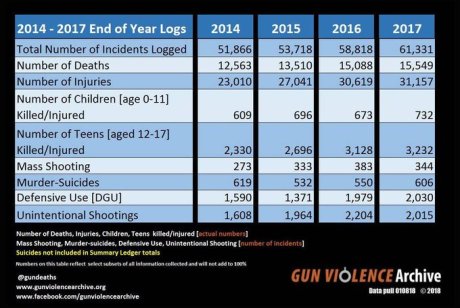
In 2017, with 300,000,000-plus guns in the hands of Americans, there were 15,549 gun deaths. This ranks less than half the number of automobile deaths even though there are fewer cars in existence than guns. In 2017, there were 253,000,000 cars in existence and 41,000 auto deaths.

It’s exactly this kind of warped perspective which makes it perfectly intelligible what’s going on. Some people would say anything which seems to prove their point. Only to make it obvious how wrong they are.

Cars are meant for transportation and are widely used by their owners. For the reason they were meant to. Therefore, death by car accident is just that, an accident.
Guns are meant to be deadly. Reasonable people use them for for practice and, only when they absolutely have to, to defend themselves. In theory, death by gun shot would exclusively be accidental or as a result of people rightfully defending themselves or their property.

So, should we compare those two numbers?

15,549 more or less intended gun related murders – this figure doesn’t include most suicides, with the 41,000 of more or less unintended car accidents?

Are these two figures really comparable?

gun violence archive

If we compare apples to apples, then yes, guns are less accident prone than cars. 2,015 shootings – let’s assume all of them were fatal, versus 41,000 death by car accidents.
We can also say guns are a little less deadly than cars. According to the CDC preliminary published data, in 2016 the total number of gun related deaths – including suicides, was 38,000. Almost 10% smaller than the number of car related deaths.

But then again, how many cars have been used to intentionally kill someone? Or to commit suicide?

And since it’s true that guns don’t kill by themselves, it’s obvious that’s up to us to solve the situation. For no other reason than ‘we are the ones who might get killed otherwise’!

culture of violence


Remember Midas, the character who, after being granted a wish by a grateful Dionysus, “asked that everything he touched would turn into gold“?
And who was happy as a pig in mud after his wish was fulfilled … only to find out that he was going to die of hunger since everything he touched did turn into gold? Including his beloved daughter who had enthusiastically embraced her father upon his return from the fateful meeting with Dionysus?

Under the Violent Crime Control and Law Enforcement Act of 1994, the “Three Strikes” statute provides for mandatory life imprisonment if a convicted felon: (1) has been convicted in federal court of a “serious violent felony”; and (2) has two or more previous convictions in federal or state courts, at least one of which is a “serious violent felony” (the other offense may be a serious drug offense). The sentencing enhancements in this law can have a significant impact on a criminal defendant.

Now wait a minute! What has this got to do with anything?

Well, more than two and a half millennia after Midas had driven himself into a tight corner we continue to ignore his lesson. As a species…

And the key words here are ‘continue to’.

The axe.

Very soon after our flint knapping ancestors discovered that a shaped stone is very useful at chopping wood they tied it to a shaft and started bashing the heads of their neighbors with it.

stone axe

‘Corrupting’ tools into offensive weapons, strike one.


Articulated language.

Soon after learning to fight our fellow humans, we started to speak to each-other.
It might have started while hunters tried to coordinate their efforts or when strangers tried to barter things… Does it really matter?
For me, it’s enough that very soon after we learned to speak we were masters in the art of lying.

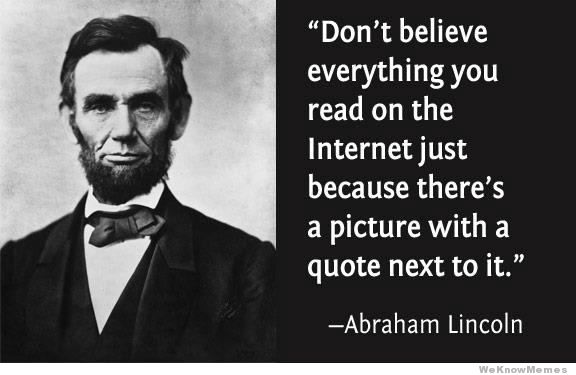
internet lies lincoln

Corrupting words into lies, strike two

Money.

At some point in our more recent history, we discovered that it was easier for each of us to learn a particular skill and to exchange goods among rather than each of us providing for all his (family’s) needs. Eventually we invented money and replaced barter with proper trading.
Soon after, some of us forgot that money was meant to facilitate trade and started to hoard it.

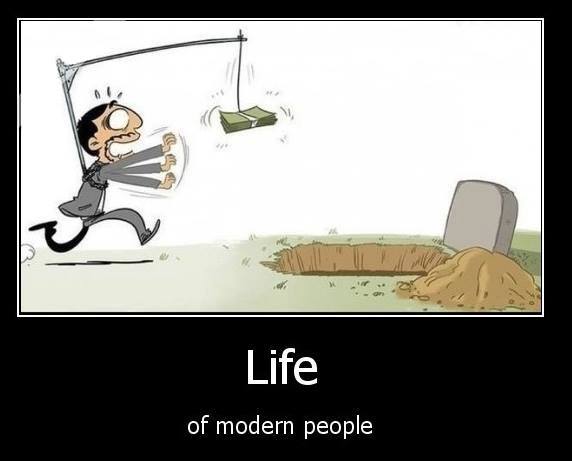
follow the money

Elevating money to stardom against all historical advice, strike three.


Are you wondering whether I’ve lost it entirely?
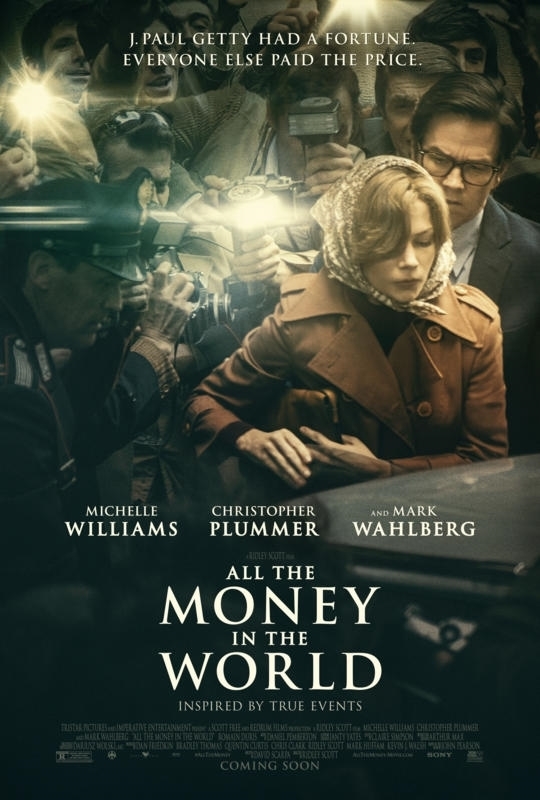
Neah… just came home from the movies…

All the money in the world

Since the movie ended on the bright(-ish) side, I’m going to remind you that Midas also found a way out of his predicament.
The ‘golden’ King begged Dionysus to lift the cursed blessing bestowed upon his head, was instructed to wash his hands and everything else he wanted turned back to its original state in the Pactolus River – in present day Turkey, and presto, everything was fine again.

There’s only one small problem left.
Where are we going to wash our hands…. or should we cleanse our minds first?

Hopefully, before experiencing the hunger pangs which had driven Midas to wisdom…


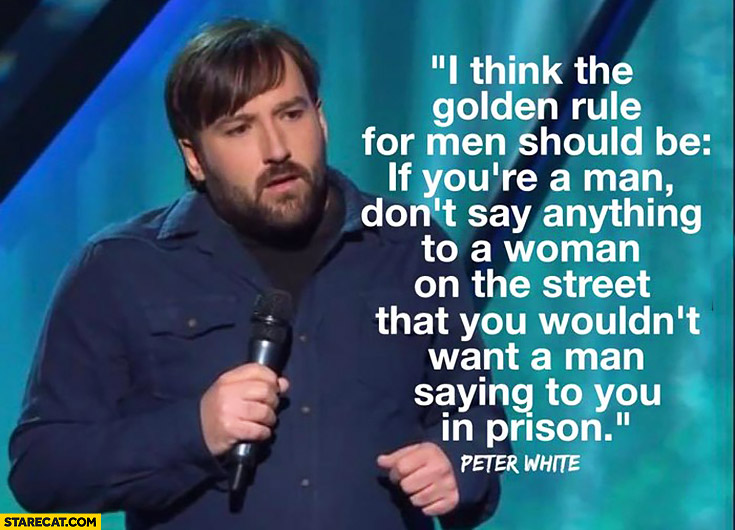
prison gender
I get the hang of it, and I fully agree with it, but I’m afraid this has to be rephrased.
Actually, I’m not at all sure that being incarcerated would automatically change my ‘gender’.
And while I fully support gender equality in the work place, I have this deep feeling that there’s something more involved here.
Functionally, which excludes any attempt to establish an hierarchy, men and women are simultaneously complementary and equal.
I’m not talking exclusively about making/raising kids here.
Otherwise we wouldn’t have been so different.
And the differences wouldn’t have been so complementary.
Insisting on any of ‘equal’ or ‘complementary’ would be worse than wrong.
It would be either neutering or disempowering.
As in counterproductive. A.k.a. dysfunctional.

Autumn of 2008.
The Bucharest Stock Exchange assembled a conference for the investors where some relatively junior guys working for the ‘Global Banking Establishment’ tried to uplift our mood by outlining their bosses’ envisioned reaction to the crises. Something which would later be known as  ‘quantitative easing’.
I asked one of them:
‘The current crises is the straight consequence of money having been used improperly. Are you sure that throwing a fresh amount of it on the market would make things any better?’.
‘Well, nobody has come yet with a better idea…’

Almost ten years later, it seems that ‘throwing fresh money at it’ did revive the market.
Dow Jones has climbed through the clouds, unemployment is low, inflation is low, interest rates are also low…

Some 120 economies, accounting for three quarters of world GDP, have seen a pickup in growth in year-on-year terms in 2017, the broadest synchronized global growth upsurge since 2010.“, according to the IMF.

Only the very same words could have been used to describe the 1990’s…

But there is something that at least some of us have noticed.

income-inequality-08

©Elliot Wave International (www.elliotwave.com)

Both major economic crises which have scarred us in less than a century have been closely predated by spikes in ‘income inequality’.

To make things worse, we are confronted by yet another fast moving development which pushes us towards uncharted waters.
Large scale replacement of ‘human capital’ by industrial robots, some of them driven by ‘artificial intelligence’.

Reaction has been mixed.

Some of the very rich have pledged to make available to charity important chunks of their estates while other ‘concerned parties’ promote  heavier involvement of the government – ‘guaranteed universal income’, etc., etc…
All these in the name of an illusive ‘equality’.

‘On the other side of the isle’, where inequality is seen as being not only natural but also harmless, people are happy with what’s going on and see no problem in everything continuing to march to the same beat.

I argued earlier that ‘heavy involvement of the government’ has already been experimented. And failed. Check the fate of every communist dictatorship.
Actually, check the fate of all dictatorships.
You’ll find that whenever a society becomes too centralized, that thing alone considerably diminishes its survival chances.
Same outcome whenever people in a group/community evaluate things using a single yardstick/from a single perspective.
To make things worse, the speed of the degenerative process becomes catastrophic when decision making becomes centralized while the reduced number of decision makers are partially blinded by too many of them using a single yardstick to do their job.

We are fast approaching that situation.

Extreme wealth polarization means that economic resources become concentrated in very few hands. Hence economic decision making.
And since policies cannot be put in place without resources…

The funny thing is that this concentration of power/decision making take place regardless of property remaining private or communism taking over.
As long as those who control the whole system are too few, ‘who owns it’ makes no difference.
Absolute monarchies faltered in the very same way as their communist successors.

It doesn’t matter whether an universal basic income would be supported by a tax exacting government or by a small coterie of ‘concerned investors’, sooner or later any such arrangement would become sour.

One other thing.
Claims for equality might become so deafening as to impede clear thinking.

Just as money is a very good tool/servant but a lousy goal/master, equality is a commendable goal but a lousy tool.
Human beings ‘work best’ as autonomous individuals who cooperate freely inside what has been described as ‘free market’.
Whenever that market was cornered, either from outside – by the government, or from inside – too many of the players acting in ‘concert’/sync because they had been ‘mesmerized’, remember the ‘Tulip mania” of yore? – it had faltered. Sometimes abysmally.
Attempting to fit everybody in a ‘one size fits all’ mould would be catastrophic.
Just as catastrophic as when less and less people can develop and express their true potential. Remember that we haven’t changed, biologically, during the last 50 000 years or so. But, generation after generation, we’ve been able to do more and more things simply because each generation made it easier for the next one. Most of the times, anyway.
Let’s not change this.


I'm not a racist

And you know what?

I believe him!

‘Cause racism is much more than meets the eye at first glance…

Dictionaries teach us that a racist is “a person who shows or feels discrimination or prejudice against people of other races, or who believes that a particular race is superior to another.
But there’s a problem with this definition.
When was the last time when you’ve met a self proclaimed ‘racist’?

‘Racist’ is label. Affixed by others, on people they do not agree with.

Meanwhile, those who entertain, or just display, such sentiments see, or just describe, themselves as ‘defenders of their own kin’.
As ‘fighters for justice’ while those belonging to ‘the other side’ see them as villainous oppressors.

In fact, there are two kind of ‘racists’. The bona fide and the con-artists. Oftentimes both inhabiting the same persona….
The bona fide are ‘somewhat scared’ about what’s going on around them and in dire need of social support – the reason for them huddling together with like-minded people while giving up a sizeable portion of their free will/intellectual autonomy.
The con-artists are those who mimic the fears experienced by the bona-fide in order to gain control over them. Or to otherwise exploit the situation. Oftentimes the con-artists interpret their roles with so much passion that they end up convincing themselves…

Donald Trump is neither.

He has convinced himself that he is so above everything and everybody that nothing will ever hurt him.
He’s not afraid of anything. He cannot, ever, be a bona-fide racist.

Neither is he a ‘fake’ one. He’s simply too smart for that. He actually knows that pretending such things would be bad for business.

Then why did he say something so awful?

It was a Freudian slip…

Back in the 1980s, psychologist Daniel Wegner suggested that the very system which aims to prevent Freudian slips may be to blame. According to his theory, subconscious processes are continuously scouring our thoughts to keep our innermost desires locked away. When such a thought occurs, instead of remaining quiet – ironically – the thought may be announced to the conscious brain, causing you to think it.

Then it’s only a matter of time before the truth slips out. “When we’re thinking about something we’re priming the relevant words, they’re being prepared to be spoken in case we need them,” says Motley. With so many options, the word we end up choosing can be revealing.

s---house

“$hithouse, not $hithole”

Let me first clear up something.
I’m an engineer. Converted to sociology, indeed, but still an engineer.
So don’t expect any fancy wording or very sophisticated philosophical considerations!

Let’s pretend, for a moment, that we’ve just arrived on this planet. Just ‘you and me’, not ‘us humans’.
Being sent by some alien civilization to see what’s going on here.
Like we, ‘the civilized people’, study the natives still living in the Amazonian forest – minimum contact and so on, no intention what-so-ever to invade the territory or any other-way purposely intervene in the natural evolution of things.

I don’t know about you, but my report would be something like this:

The most interesting aspect of the planet is the manner in which the intelligent inhabitants have evolved.
Those living in a relatively small and isolated corner of the landmass have somehow developed the most consequential culture and then imposed some very important aspects of it on most of the rest.

Even more baffling is the fact that all major religions observed on this planet start from the same tenet.

the golden rule

The only thing which singles out those who had managed to impose their culture on most the rest being that they apply the rule in a ‘pro-active’ manner.
‘Do unto others what you wish others to do unto you’ versus ‘do not do unto others what you don’t like being done unto you’. ‘Normative’ versus ‘preemptive’.

– Why are you so baffled about any of this? The universal law of evolution maintains that things which are not suitable enough for the environment where they happen to exist will eventually disappear… Each culture produces a certain civilization – modifies the environment according to its wishes/as a consequence of its mistakes, and the other cultures have to adapt/evolve to the new situation… nothing new or peculiar here…

– Nothing new, indeed, except for the fact that while most of the cultures on this planet learned to ‘live and let live’ – “do not do unto others…”, while the two most successful ones have adopted the slightly but very consequentially different “do unto others…”, a.k.a. ‘who’s not like us is against us’….

– Is there any explanation for the most aggressive attitude being the most successful one?
Until now, at least… considering that the two cultures which share the ‘do unto others what you wish to be done unto you’ attitude seem to ‘have worked themselves up’ into a rather ‘confrontational situation’… both intra and inter culturally…

– The only putative explanation I can come up with for such a divergent evolution is that Plato, the seminal intellectual figure of the ‘doers’, taught his followers not only that the world is knowable but also that he who has reached a learned state must, forcefully if necessary, lead his peers to the ‘light’ he had found while the ‘significant others’ believe that the learned ones should speak out, at their discretion, only when somebody asks them to.

.

.

– One more thing.
The immediate consequence of Plato’s teachings was that Alexander – an emperor who was tutored by Plato’s eminent student, Aristotle, had conquered most of the then civilized world only to die, untimely, a drunkard’s death… intoxicated by booze, intoxicated by power… who cares?