Archives for category: Mutual Respect

First and foremost language is perceived as a communication medium.

As such it needs clarity and consistency, otherwise information could not have been reliably exchanged and or preserved through its use.

But language is used for many other purposes than for simply ‘translating’ raw data. Where to find a certain object or how to execute a certain task.
We use it to convey sentiment – the way we are affected by the raw data that has become known to us, and to communicate our particular understanding of things. Our point of view about what has happened around us.
Furthermore we use it to convince people. To do things or to accept our points of view.

All these different uses involve a considerable amount of negotiation.

Regarding immediate goals – the things we are negotiating about, but also some that is taking place ‘under the table’ and involves the continuous fine tuning of the instruments used during the negotiating process. The words themselves.

These negotiation instruments – the language itself, in fact, have to be constantly re-calibrated for two rather obvious reasons.
For starters, the reality around us – and our understanding of it – is changing constantly.
Secondly, every negotiation involves a degree of ‘shade’. In fact that ‘shade’ is exactly the space where ‘change’ happens, where the positions of the two negotiators overlap and where the two can swap ideas.
If words would be rigidly precise than we’d have to invent new ones every time reality changes, no matter how minutely. Also whenever our understanding about things deepens, no matter how shallowly.
Simultaneously, too much ‘linguistic precision’ would kill not only poetry and our ability to convey our real feelings to other human beings but would also gravely impair our ability to influence each-other. Could you imagine how our life would be if a polite intervention would sound exactly like an SMS message of if a marriage proposal would be similar a requisition order?

More about how the linguistically mediated interplay between us has brought about our own self-awareness can be found here:

Humberto Maturana, The Origin and Conservation of Self-consciousness.


section 172

Yoshida Kenko, Tsure-Zure Gusa

I just can’t make up my mind about this.
Is it the figment of an idealist monk’s imagination, the factual description of how things happened in Medieval Japan or a wise advice coming from a great teacher?

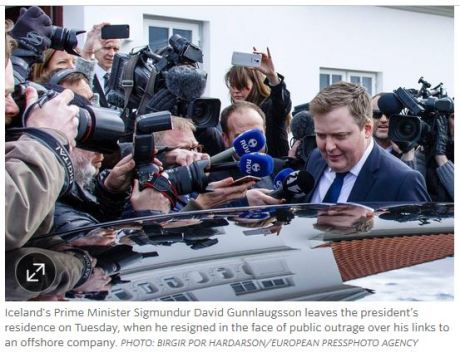
The ‘Panama Papers’ rekindled the public interest in the subject of ‘what legitimate goal could anyone have in setting up a company in a fiscal paradise?’.

Taxes, stupid!

Actually it’s quite simple.

Let’s pretend you are an alien from the outer space who has a business idea backed up by enough capital and you want to put it in practice somewhere on Earth. Aren’t you going to shop around for the best environment you might find? So that your business would have optimal conditions to grow? And when the business ripens wouldn’t you want to be able to cash on it – and end up with as much money as possible?

Rather conflicting demands, isn’t it?

First you want an ‘operational base’ with relatively low costs but secure and full of whatever amenities your business might need in order to thrive. Next you’ll need fast access to a market where to sell your wares. Last but not least it would be important for you to incorporate your business in such a way/place that you’ll end up pay the least amount of tax, both while operating the business and after the cash out moment.

While all these are legitimate demands there are a right and a wrong way to meet them.

I’ll refrain myself to discussing exclusively about the tax part, the rest being relatively easy to balance.

In this respect you can choose to incorporate the business in the same place you have selected for your operational base and pay whatever taxes are due in that place, under the rationale that those taxes cover the cost of doing business there and are nothing but a compensation for benefiting from the conditions present there at the time. After all, when you have chosen a particular place as the home of your business you have entered into an informal arrangement with that place. It lets you make good use of whatever is there to be used – exactly the things that convinced you to select that particular place, and expects you to fulfill your side of the bargain. Provide enough compensation so that that place can continue to be a good place to conduct business and, if possible, improve itself. Pay the local taxes.

Or, equally legitimate, use two different places for each thing. Organize your operational base where it would work best and incorporate your business in a place where you’ll be able to pay as little tax as possible.

And here’s the catch. No matter where you incorporate your business you’ll still have to pay some taxes in the place you have chosen as your operational base.

Then why bother?!? you might legitimately ask.
Since this is not an accounting dissertation I’ll just tell you that there might be serious financial advantages in making this choice, not the least of them having to do with the cash out moment.

And this is the very point where some people get greedy. They try to avoid altogether the taxes tied to the ‘operational base’ – by employing various semi, or even completely i-legal stratagems, and by doing so completely transform the very nature of the entire operation.

From one of fiscal optimization to one of money laundering.

There are a lot of rationalizations for this course of action. From ‘the state is a thief that uses force in order to part me from the fruit of my efforts!’ to ‘why give it to the state since the money will be squandered by the inefficient government?’.

Now let’s please remember where we started from.
OK, you are not an ‘alien from the outer space’ but what’s stopping you from conducting your business where ever you want on the face of this Earth? (My bad, this question is not valid for exactly everybody, there still are countries that don’t allow for people, or capital, to exit freely, but I’m sure you get my drift)
Oh, you like it where you are but you hate paying taxes and/or you’re disgusted by the way the government handles its finances!

Then let me remind you of two things.

First, you probably live in a democracy. Speak up. Make your concerns known. Loudly. Make sure you are listened to. Vote wisely.

Secondly, you are probably fed up not only by the fact that in your country taxes are really high but also by how little you get back in return.
Well… that’s because there are so many people who do not pay their fair share and that your government has to take more from those who do pay in order to make the ends meet.

Savvy?

iceland prime minister resigns over Panama papers

st_2015-12-09_middle-class-03


Middle income or middle class?

The terms “middle income” and “middle class” are often used interchangeably. This is especially true among economists who typically define the middle class in terms of income or consumption. But being middle class can connote more than income, be it a college education, white-collar work, economic security, owning a home, or having certain social and political values. Class could also be a state of mind, that is, it could be a matter of self-identification (Pew Research Center, 2008, 2012).”

OK, so even those who rely heavily on money as an indicator for who belongs to the middle class concede that there are other connotations to the concept.

Let’s consider the situation from a functionalist point of view. As in how the members of  various social strata react to the day to day challenges of the normal life.

‘Day to day’ meaning not only ‘normal’ things – waking up and brushing your teeth – but also things that we wish will never happen, although all of us know they are ‘normal’ occurences. A car accident, a broken leg or even having three children in one go when you were praying for one.

Usually the wealthy take them in one stride, those belonging to the middle class manage to cope – sometimes welcoming some help from their friends, relatives or even insurance company, while the really poor almost certainly sink under the burden. But not always.
Sometimes even the wealthiests loose it when faced with adversities they were not accustomed with while some of the poorest find it in themselves to rise from the ashes.

Then how about setting a slightly different system of ‘classes’: the extremely resilient, the ‘middle class’ and the very fragile?

As a rule of thumb it’s true that a certain amount of wealth does miracles when some resilience is needed so, roughly,  these two classifications look more or less the same, but, on a qualitative rather than quantitative level, we are speaking of two different things here.
When we are speaking of ‘money’ we are dealing mainly in ‘resources’ while when we’re speaking about resilience we have to take into account the attitude of the concerned individuals. It is true that the above mentioned attitude is, more often than not, heavily influenced by the affluence of the respective individuals but the function is hardly a direct one.

Based on these considerations – and on my personal experience of dealing with people, I’m going to propose the following synopsis.

The ‘resilient’ are those convinced they are able to cope, more or less on their own, with almost everything life can throw at them. Unfortunately some of them grow ‘spiritual callouses’, simply because they have never experienced any real hardships.
Or because they have over-compensated after dealing with those hardships, sometimes after succeeding to do so without receiving significant outside help.

The ‘fragile’ are those who, by lack of material resources, spiritual stamina or both,  behave more like leafs driven by the wind than like masters of their own fate – as every human being should.

By now you’ve probably figured out that  ‘my middle class’ is composed of individuals who have a certain degree of resilience but who, on the other hand, are perfectly aware that there are things on this world that they wouldn’t be able to face on their own.

In a sense, possession of money – or other resources, ‘encourages’ an individual to reveal his true nature.
If a person is naturally inclined to grow ‘callouses’ then being ‘insulated’ from the outside world by a thick wad of money will provide him with enough space to let those callouses grow but if his skin is ‘in the game’ then those callouses will be constantly shaven while interacting with his peers.
But if the stakes of the game are very meager – and the insulation provided to the players by their respective possessions is practically nonexistent,  then instead of growing callouses most of the players will be rubbed raw during the intercourse. Mind you, neither  the ‘stakes of the game’ nor the ‘individual possessions’ need to necessarily be of a strictly material nature.

In conclusion, the ‘callously resilient’ will tend to mind to their own – simply because their sensitivity towards the outside world is dampened by their callouses, the ‘fragile’ will tend to mind to their own raw wounds while those belonging to the ‘middle class’ will be the only ones really interested in maintaining the well being of the social organism. The one to which they ‘knowingly’ belong.
Because they are the only ones with enough time/energy/resources on their hands to consider the matter, the real interest to do so and the willingness to put some effort into this endeavour.

pent up anger

As you can very easily infer from the title, I define myself as being an agnostic.
I’m reasonably satisfied with the scientific explanation about how the world came to be but I cannot rule out any intervention from an out-side agent during the process.

Hence my unwillingness to commit myself to any of the extreme positions.

And hence my conundrum.

A significant portion of the theist believers are convinced that God, their God, is behind everything that takes place on the surface of the Earth. And beyond.

All scientific materialists are convinced that everything takes place according to some immutable and implacable ‘natural laws’.

Then how come any of them has enough gumption to contradict any of the others?

How come a religious believer can say to another ‘your God is false’ if he is convinced that nothing in this World can happen without the knowledge and approval of his own one? Isn’t this a form of censorship towards his own God?
How come a religious believer can say to an atheist ‘you are going to rot in Hell’?
Last time I checked all Gods were very jealous, all religious teachings I know are clear about this: ‘You do your job and let Me do the judging.’ Then how come so many zealots feel free to usurp the place of their Gods and pass judgement on their peers?

How come so many of the atheists feel free to poke fun at the believers?
According to their own creed, religion is a natural thing. It does exist, isn’t it?
And by its mere existence it necessarily observes the very natural laws the atheists so staunchly defend. As if any of them needs any defense, let alone to be imposed upon the others…

When are we going to accept that religion, any of them, is nothing but an environment, not a yoke?
Just a place with some rules, not some kind of a prison?
That the final responsibility for our acts belongs to us, regardless of any God watching or not over our fates?

Here on Earth, anyway.

661211-_uy447_ss447_


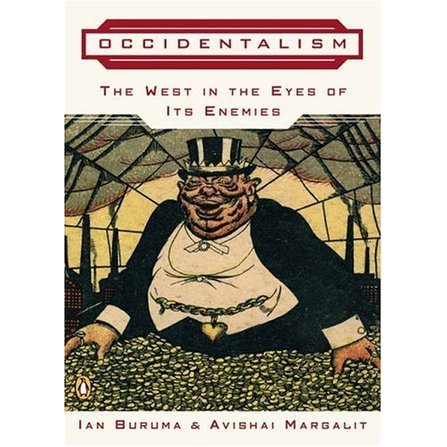
Just finished reading about the West as an object of hate.

Next in line is a book about the Orient as an object of study.

51k6n6ma-nl

Bearing in mind the fact that the Occident is still very much hated by a significant number of people residing in the Eastern part of the World it seems that we, the Westerners, have  been rather poor students of the Orient.

Or that some of us don’t give a damn about the long term consequences of their actions?

“To understand is not to excuse, just as to forgive is not to forget, but without understanding those who hate the West, we cannot hope to stop them from destroying humanity.”

I’d say these are very wise words which constitute an excellent starting point.
Towards the end of their book Ian Buruma and Avishai Margalit argue that “despite Christian fundamentalists speaking of a crusade, the West is not at war with Islam. In fact the fiercest battles will be fought inside the Islamic World.” (translation belongs to me, I have a Romanian version of the book)
How about us, in the West, helping the ‘right’ side in an innovative way?
By giving them an example.
By mending our own ways, before telling others to mend theirs!

It depends on the meanings we attach to these two concepts.

Yanis Varoufakis, Greece’s ex finance minister, is convinced that ‘Capitalism will eat democracy – unless we speak up.

Since he has some experience in this matter I’ll follow his line of thinking – for a while.

His point being that you can have successful capitalism in undemocratic societies – like Singapore and China – and that effective power has slowly shifted from the political sphere of the society to the economic one – which is undemocratic by definition.

Can’t say he’s entirely wrong, can we?

But we can say he’s somewhat confused…
So, he mentions Lee Kuan Yew’s Singapore and China as capitalistic success stories and then says that  the political sphere is gradually falling  under the yoke of the economic one… Well, last time I looked, in China the state was still in full control of everything that moved and the state was firmly in the hands of the politicians. Same thing was happenning during Yew’s tenure as Singapore’s good willed dictator.

Unfortunately there is some truth in his words when we look at what’s going on on the both sides of the Atlantic and that’s why I’m going to examine whether we have the same kind of capitalism in both situations.

By Google-ing the word I got two definitions for the concept.

The first definition that was offered by the search engine came from Oxford Dictionaries, “An economic and political system in which a country’s trade and industry are controlled by private owners for profit, rather than by the state” and the second one came from Merriam Webster: capitalism is “an economic system characterized by private or corporate ownership of capital goods, by investments that are determined by private decision, and by prices, production, and the distribution of goods that are determined mainly by competition in a free market“.

Putting them together we have private ownership, private decision, free market and profit as a goal.

Are these enough to describe a reasonably well functioning economic system?
I’m afraid not.

Let me give you some examples.
The French state has a controlling interest in Renault and the land of Bavaria quite a sizeable one in VW. Renault is in good shape and VW was too, until very recently. So private ownership is not an absolute necessity.
In the US we had quite an interesting situation. Two out of the three big car manufacturers  had to be bailed out by the state. All three were privately owned so we must look somewhere else: the Ford family still has a powerful word in the management of the single one which didn’t had to be bailed out. In Europe the best run auto company seems to be BMW – again controlled by a single family, the Quandt’s. It seems that it helps a lot if those who call the shots have a long time interest in the well being of the company versus the situation in which the top management has (short time) profit as the single/obsessive target.
Coming back to Renault and VW, they can be compared to Singapore, China and, maybe, Spain. Singapore was able to develop a ‘capitalistic’ economy despite it being an authoritarian society simply because Lee Kuan Yew was a very special kind of ‘dictator’ – one that not only cared sincerely for the greater good of his people but also didn’t loose his head during his long stage at the helm. A similar thing happened in Spain – Franco was the sole dictator who had made preparations for a democratic evolution after his demise, while China had to wait for another good-willed dictator to grab the power – Deng Xiao Ping – before it could steer towards the present course. No other authoritarian regimes but these two have ever managed to replicate this feat – we still have to wait a little before pronouncing Vietnam as the third, and very few other publicly owned companies fare so good as Renault does.

So, we have rather strong evidence suggesting that ‘skin in the game‘ trumps blind insistence on short time profit and that a free, democratic, society offers greater chances for economic development than a authoritarian one. In fact the politicians that need periodic confirmation from the people they govern do have some skin in the game while the authoritarians are in a position that is somehow equivalent to that of the CEO’s of the huge corporations whose stock owners are so disspersed that practically don’t count much – the members of the board practically slap each-other on the back and are able to do practically what they want with the companies. Look what happened at GM, Chrysler and, for example, ENRON.

But how free should be that society in order for capitalism to thrive?

Could it be so free that a guy could come from the street and claim your house as being his own? No?

So we need a free but orderly society. One where private property changes hands only when its owner says so – or has previously entered into a contract which stipulates that in certain conditions that transfer has to take place.

Meaning that in order to have a functioning capitalist society we need not only private ownership but also private owners who have enough trust in each other to start making business together.

You see, the feudal lords of the Dark Ages did have a lot of private property but capitalism couldn’t take hold in earnest as long as the (absolute) monarch could strip a man of his property and give it to somebody else. They couldn’t enter into (longish time) contracts because the era was dominated by huge uncertainties regarding various aspects of the social and economic life.

In fact it is exactly this well tempered freedom that is the crux of functional capitalism. Enough freedom so that everybody could feel confident that he is his own master but tempered by rules enforced in a pwerfully enough manner to give everybody sufficient trust that most contracts will be executed faithfully.

In this sense for capitalism to work properly we need to have a market that is free in more dimensions that one.

It has to be free from political intrusion in the sense that the government should leave it alone as a rule of thumb but also that the same government should keep it free from becoming cornered by a single group of interests.
In fact there is no difference from a market that is run by a governmental agency or by a monopolistic corporation – no matter if the latter is private. As soon as decision making becomes concentrated in too few hands mistakes starts happening. And their effect accumulate until the system finally collapse. Or is dismantled by some ‘exasperated’ more powerful agency – as Standard Oil and  ‘Ma Bell’ were dismantled by the US government. Which, by doing so, created the premises for  the huge development of those two respective markets – oil and communications.

Only this freedom of the markets can seldom be preserved by an authoritarian regime. Yew’s Singapore and contemporary China are exceptions, not the rule. Most authoritarian regimes cannot resist temptation and start meddling in the economic life of their countries. By doing so, they introduce a lot of ‘noise’ into the system. Eventually, this noise drowns the useful signals and ‘blinds’ the decision makers.

Same thing happens – and here Varoufakis has a valid point – when economic agents become so powerful that they can dominate the policy makers. The politicians can no longer preserve a balanced stance towards the economy and give in to ‘special interests’. This way the markets loose their freedom, with all the malign consequences that come with this situation. Among them, the lack of trust that slowly creeps in the souls of those who have to do business in the no longer free markets. Which lack of trust is very bad for all those involved.

And another thing about which Varoufakis is absolutely right. A lot of money are not being moved through the ‘front doors’. Not that they are not invested at all but because they are kept somewhat hidden they do not contribute as much to the well being of the world economy as they could/should.

2.1 $ trillion have been accumulated, as of  October 2015, in off shore accounts by the top 500 American companies in order to avoid taxes and
Between $21 an $32 trillion have been hiding in 2012 in various offshore jurisdictions.

Why is that? Simply because those who are called to decide about these money do not ‘trust’ that by bringing these money home and by investing them there, after paying the taxes, will be able to generate profits equivalent to those produced by leaving them off shore?

So what should we do? Tell them ‘democratically’, by electing somebody who is crazy enough to implement such a measure, to bring them home? Or even  confiscate them, one way or another?

I’m afraid that here I part again ways with Mr. Varoufakis. And with Aristotle: the way I see it democracy is not ‘the constitution in which the free and the poor, being in majority, control government‘. That would be ‘mob rule’.
A truly democratic process starts before the vote. When every stakeholder can make its point known to those who are going to cast a ballot so they’ll be able to do that having a reasonably clear understanding about what’s going on.

Frankly I’d rather rephrase Varoufakis’ message. ‘Corporatism has a tendency to disembowel democracy and transform it into ‘mob rule’ – the situation where the poor are no longer that free simply because they are convinced through ‘unholy’ methods to vote one way or another.

What can be done? Explain, loud and clear, that if jobs disappear the same thing will happen with the aggregate demand?
Explain that by giving their workers as little money as they can in reality the results are way worse than if the wages were as high as the companies could afford?
Ford didn’t give his workers more money because he loved them but simply because he had understood that in the long run he would be better off himself by doing this, you know!

“When the last tree has been cut down, the last fish caught, the last river poisoned, only then will we realize that one cannot eat money.”

Some people attribute this quote to the Apache Leader known as Geronimo.

Quoteinvestigator.com says it is highly probable that it belongs to a guy called Alanis Obomsawin.

But what is more important?
Who said it or what we make of it?

Dede Suryana

I’m not a huge fan of the EU but I have a mostly positive opinion about it.

This morning my stance on this matter was about to change, dramatically.

I had found in my email a link towards a newspaper article, in Romanian, which said ‘the European Court for Human Rights in Strasbourg had ordered that starting with March 1 2016 people in Europe are no longer allowed to baptize their under-aged children‘.

Hard to believe something like that, isn’t it?

Are you really sure about that?

Now try to read articles like this – which are reasonably ‘well’ written, using the right lingo and having enough details thrown in to make them sound credible – through the eyes of a guy already worried by the so much hipped ‘migrant invasion’. Who was already pissed off by the various rules and regulations handed over from Brussels and acquiesced by the local, and supposedly sovereign, governments without any fuss.

Most people do not have the exercise of doubting everything they read, specially if the message comes from somebody they trust – a friend, for instance, or if the site where they read it seems legit.
OK, a certain proportion of them – not all, will exert some discretion if money is involved. That’s why phishing has a limited, yet certain, impact.
But when a particular piece of information apparently confirms an already entrenched stereotype – the bossiness of the EU, for instance – quite a large number of readers will fall for it.

Yesterday evening I was reading a comment added by Nassim Nicholas Taleb on his own Facebook wall: What social media finally did: destroy the press. It is more organic to get information from word-of-mouth, which it accelerated.
Corroborate that comment with a quote from an excellent article published by the same guy on Wired.com: “I am not saying here that there is no information in big data. There is plenty of information. The problem — the central issue — is that the needle comes in an increasingly larger haystack.” (Nassim N. Taleb, Beware the Big Errors of ‘Big Data’, Wired.com, 08.02.2013) and things start to gain some perspective.

What we’re dealing here is the famous lack of symmetry that currently bothers the strategic planners who presumably shape the future of the humankind.

In the ‘good ole’ days’ – when we had writers, publishing houses (newspapers, magazines, you name it) and ‘specialized’ readers, things were a lot simpler.
The writers had a certain notoriety and most of them didn’t want to jeopardize it by publishing bullshit.
Publishing houses didn’t dare to publish bullshit – except for those that did it on purpose, because most of their readers would no longer have bought their papers.
The specialized readers – those who usually bought a certain kind of magazines or books – were able to recognize most bullshit when they saw it, simply because they had some experience in the fields that used to elicit their interest.

Bullshit was being pushed in those days too, for sure. But it was a specialized job, that had to be done carefully.
And in that era, for bullshit to be effective, you had to have very ‘favorable’ circumstances.
Communism didn’t take hold but in very poor countries and fascism only in war torn Italy, Germany and Spain.

Nowadays, “…any simpleminded partisan with a political ax to grind can find an online community of like-minded whack-jobs who’ll be happy to provide him with plenty of ideological ammunition (e.g., bogus stats, pre-fab arguments, etc.). Before long, what was once a more-or-less harmless, single-issue troll has morphed into something far more monstrous and formidable: a veritable Swiss-army knife of bullshit, a perfect storm of bad ideas, a walking Wikipedia of stupid.” (John Faithful Hamer, From Here (2016) )

And since it’s very hard to police the Internet – even harder if we are determined to preserve the ‘freedom of expression’, we are in a very delicate position.

Is there anything to be done about this? Considering that there will never be a real shortage of ‘simpleminded partisans with political axes to grind’?

I think there is.

I started this post by mentioning three related concepts.

Freedom, responsibility and discretion.

We should not tamper with Freedom. Basically this is everything we’ve got, our most precious achievement.

So, we are left with ‘responsibility’ and ‘discretion’.

How is it that most sites manage to stay on line?

They are either sponsored by somebody or they sell advertising space, right?
Who provides that money? Who buys those advertised products? Who spreads around the news about those sites?

Who reads those bullshit laden articles and swallow them hook, line and sinker, simply because some of the (seemingly legit) arguments presented there happen to be consistent with our previously held convictions?

So, if you wish that your kids will be able to live in a better world, stop distributing bullshit through social media, stop buying things advertised on bullshit peddling sites – or, even better, stop going there altogether, and, above all, learn your kids to think with their own heads.

Even if that means they’ll end up contradicting us. As long as they’ll do it in a respectful enough manner – the second most important thing we’ll have to teach them about, all will be OK.


Update. A friend of mine, thanks Lucian, has done some digging over the Internet and found out where all this has started from:

baptising

Read the comments to any article that deals with the European Community and you’ll certainly find something to this tune:
“This is the end of the EU”

That might happen anytime, of course, but I’d still like very much to know why so many contemplate this possibility with so much glee? And I’m not talking here about those who think they have something to gain from a weaker Europe. Putin, for instance. Or Erdogan.

Why so many ordinary Europeans are so angry towards the very idea of a closely knit European Union?

How about reading the entire history of this continent as a long story of individuals striving hard to become more and more autonomous?

Some would say that Europe was about individuals becoming free, and I can agree with that. Only that freedom had strings attached.

“My freedom stops where your freedom begins”.

Meaning that none of us is really free unless each of us respects the liberty of all the others. That our individual liberties depend on each-other. Well, that’s the definition of autonomy, not that of ‘absolute freedom’ but let’s not be bogged down by words.

In fact what helped Europe become what it is today is an unique combination of ever growing individual freedom made possible by an ever stricter respect for the rule of law.

This was not at all a smooth process.

From time to time some individuals garnered a lot of liberty for themselves precisely by depriving all other of theirs and sometime even succeeded in writing this into law. For instance, until 1848 it was still lawful to own slaves in France.

Another type of ‘garnered’ freedom is what happens in a dictatorship. The dictator and his henchmen are freer than the rest of the people, but none of them as free as the people living in a truly free country. And Europe had witnessed a considerable number of dictatorships.

Which all eventually failed.

But something lingered in the collective memory of the Europeans. Their disdain for being told what to do. Their mistrust for rules imposed from above, for regulations that did not have the opportunity to become evident, through the passage of enough time, for those called to follow them.

This is why the ‘enthusiasm’ with which “l’aquis communautaire” was peddled by the Brussels bureaucrats to the new entrants has been met with such reticence.
This is why the measures being practically imposed by the more powerful members of the Union to the rest of the gathering are met with such scorn.

Very little real consideration is being given to the manner in which these measures are adopted and then communicated ‘from above’  and, simultaneously, very little attention is paid, by those called to put them in practice, to what their real effect would be – if they’d be applied in earnest.

And, unfortunately, there is no real shortage of callous political mavericks who eagerly try, and sometimes succeed, to capitalize on these misgivings.

As if we didn’t know any better.