Archives for category: Mutual Respect

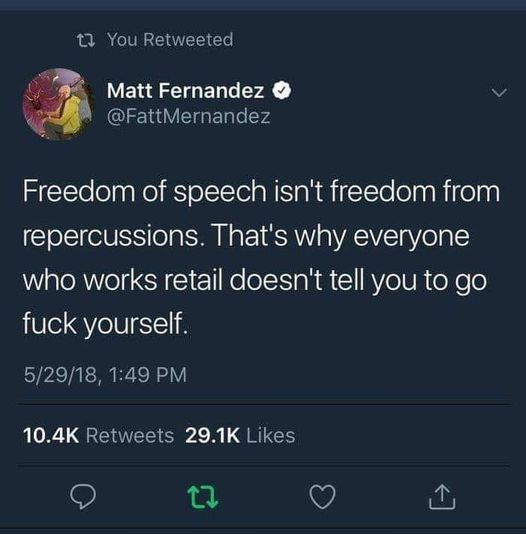
“Only freedom of speech with repercussions isn’t anything special.
That has existed throughout every dictatorship.
If we consider freedom of speech as a value,
it must be something else.”

Whenever somebody opens their mouth, they reveals things about themselves.

That’s a repercussion.

Whenever somebody acts upon information gleaned this way, those acts also have repercussions.

The repercussions belonging to the second category are the ones which ensure that, in the end, every dictatorship ends up in failure. In abject failure.

Out of fear, everybody shuts up. So nobody yells anymore ‘The emperor is naked. And about to be run over by a bus’. So the emperor, and his henchmen, end up hanged by an angry mob. Process usually called retribution. Or revolution?

““We are not extremists. We are just angry,” explains Lazar Potrebic, a 25-year-old from a Hungarian minority in Serbia who is entitled to vote.

He – and many of his peers – are worried about the future, and feel that the more traditional parties are not listening to their concerns.

“We feel like our needs are not being met. People our age are taking really important life steps. We’re getting our first jobs, thinking about starting a family…but if you look around Europe, rent prices are going through the roof – and it’s hard to get work.”

.

.

Of course the feeling of not being listened to when you’re young, of not being part of the equation, is nothing new. But many of the parties on the far right are actively courting the young vote, says Dave Sinardet, a professor of political science at the Free University of Brussels.

“The radical right channels anti-establishment feelings,” he told the BBC. “They have a bit of a rebellious vibe – especially when it comes to their anti-woke agenda – and that appeals to young people.””

The world is nothing but change.
Our life is nothing but perception.

Marcus Aurelius.

Killing is the most definitive thing available to man.
To humans in general and to men in particular.

We cannot create life!
We can make love, our wives can give birth but other than that…

Yet we can kill!

You see, most animals feed on other living organisms.
We describe the process as ‘the law of the jungle’ but for them it’s only natural. That’s how they feed. That’s how they get their sustenance.
None of them gives much thought about it. When hungry, they do what they have to do. And then they stop.

We are the ones who get to choose. To kill or not to kill…
We are the ones who, once aware, have introduced thinking into all these.
We are the ones who, through our awareness, have transformed sensation into perception.
We are the ones who, in our attempt to create/maintain congruence – to keep things together, have attached meaning to sensation.

We are the ones who, once we have learned the difference between good and bad, have invented the notion of evil.

We are the ones who, once we have learned the difference between good and bad, have tried to separate them.
To separate what we have perceived as good from what we have perceived as bad. And called it evil…

And now, that we’ve reached the stage where we currently are, we’ve set our minds to determine which had come first.
The egg or the chicken…
The Good or the Bad?!?
Matter or Spirit?

When we’ll grow up, when we will have caught up with Marcus Aurelius, we’ll remember that there’s no clapping with one hand.
That while it may be natural to feed on other animals, there’s no escaping the consequences of our killings.

An inhabited planet where some of the people have finally figured out the inherently limited nature of their world.
Global warming, pollution, soil erosion, loss of biological diversity, dwindling and unevenly distributed natural resources…

Two hot wars. And a huge trilateral economic contest involving a third of the population which leaves the other two thirds in relative misery.

Most of the conflict – hot and cold alike – can be pinned down to old people doing their best (worst, more likely) to conserve their status. Wealth, power, influence…

As things happen, currently there is one collective agent which yields enough power to decisively influence the outcome of the two hot wars. And to negotiate the economic contest.
The attention of the people constituting that particular collective agent has been hijacked by an insurrectionist ex-president attempting to regain that position.
The ex-president has curried the favor of significant political party by making it possible for the party-activists to succeed in their attempt to limit women’s access to abortion.
The ex-president and soon to be presidential candidate is currently involved in a penal process. The trial attempts to determine whether the hush money he had used to silence a porn actress regarding a ‘close encounter of the third kind’ had been spent legally.

The Dunning-Kruger effect occurs
when a person’s lack of knowledge and skill in a certain area
causes them to overestimate their own competence.

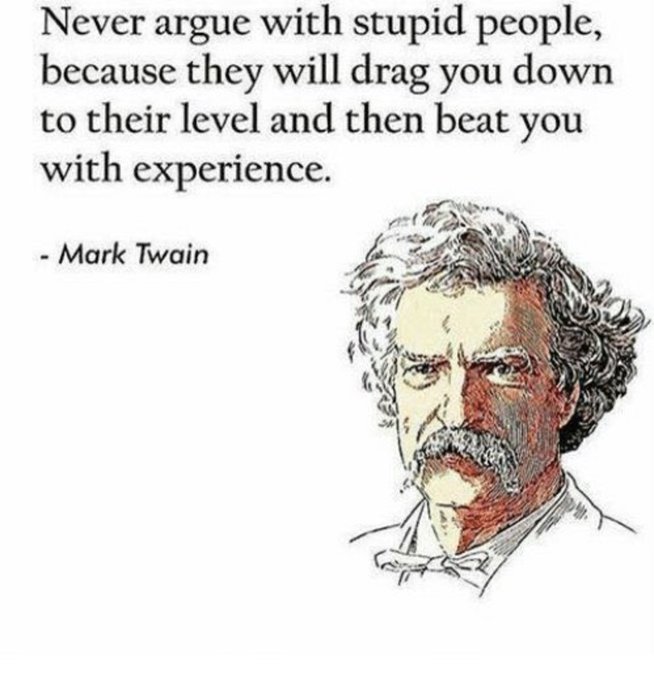
‘Experience’… as in “drag you down to their level and beat you with experience”…

But is this even possible?
For a really stupid individual to survive for so long?!? For long enough to become ‘old and experienced’…

Maybe we need to reconsider the whole thing!

My own experience – ‘Trust me, I’m an engineer!’ and I’m not kidding – strongly suggests that ‘bona fide’ stupidity is far less abundant than currently advertised.
The hard reality we have to deal with is the one described by the Dunning-Kruger effect.

Whenever we don’t understand other people’s actions, or motives, we tend to consider them as being stupid. Actions, motives and even the people themselves.
Specially when we experience the slightest discomfort as a consequence of such actions.

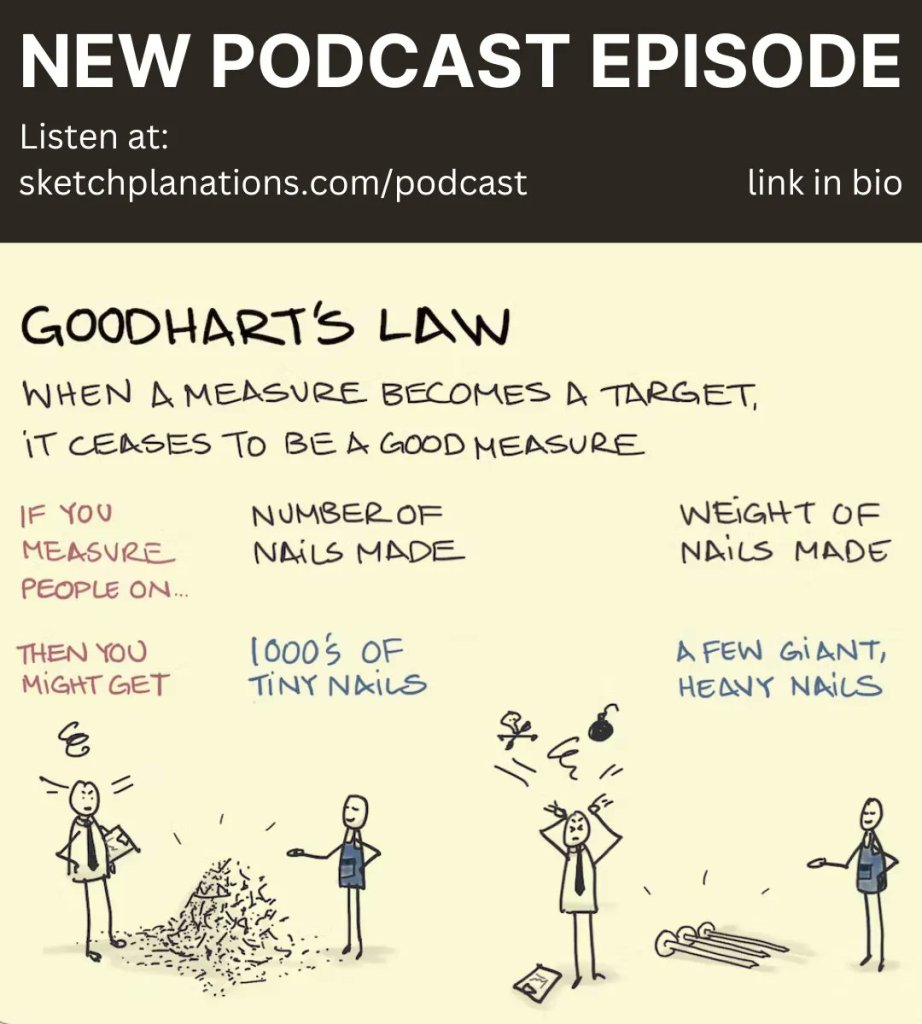
Furthermore, much of what is currently considered to be a consequence of stupidity is rather the result of accrued ‘misguided smartness’.

The law of unintended consequences
was first mentioned by British philosopher John Locke
when writing to parliament about the unintended effects of interest rate rises.
However, it was popularized in 1936 by
American sociologist Robert K. Merton who looked at
unexpected, unanticipated, and unintended consequences
and their impact on society.

On the other hand, never underestimate what mere happenstance can accomplish!

“Despite this advancing scientific knowledge,
there is much that remains unknown about both sleep
and dreams.
Even the most fundamental question
— why do we dream at all? —
is still subject to significant debate.”

Dreaming is normal and healthy, but frequent nightmares can interfere with sleep.

So.
We’ve figured out that dreams are something which happen inside our heads. When sleeping.
Then called them names. ‘Dreams’ if they were OK, ‘nightmares’ if not.
Interesting, isn’t it?
Then we have hallucinations. A sort of daydreaming – if you think of it – only less pleasant.

My point being that our consciousness – “our ability to observe ourselves observing” – opens up a new realm inside what we call ‘reality’.
That we live, in fact, inside a world of our own making.

‘But this is valid for all living things, right?’

In the sense that all living things collaborate – albeit involuntarily – towards the continuous reshaping of what we call ‘biosphere’… yes! Life does indeed reshape the portion of space/time where it happens.

The way I see it, life is responsible for the ‘second layer’ of what we call reality.
While we, the conscious observing cum living inhabitants, are responsible for the ‘third layer’ of what we call reality.

‘You keep saying “what we call reality”.
Would you care to elaborate?’

You see, we have developed two concepts.
‘God’ and ‘Reality’.
God is something which had suposedly made us. According to those who believe in God, we have been brought to life – along with the world we inhabit, in a voluntary manner, by the agent we call God.
On the other hand, reality – according to those who believe in ‘science’ – is the ‘place’ where we have happened to ‘evolve’.

God is something we are told about by others. Something the ‘worthy among us’ might experience first hand through ‘rapture’.
Those who believe in God consider that the original information about God had been delivered, through divine inspiration, to ‘prophets’. Or had been acquired one way or another by ‘elders’.
Those who believe in God consider that God – and his will – are inaccessible to humans. That we, ordinary human beings, are only meant to simply experience ‘God’s will’. And adapt our behaviour accordingly.

Reality is something we, the present ones, are told about by our predecessors. And something we experience through observation.
Those who believe in science consider that nobody – individually and collectively – will ever be able to know everything. Basically, those who believe in science are also convinced that reality is ultimately inaccessible to us.
Those who believe in science consider that it’s our job, as conscious human beings, to find out as much as we can about ‘reality’ and adapt our behaviour accordingly.

For somebody unwilling to take sides, there’s not much practical difference between the two sides mentioned above.
Both are states of mind. Convictions. Weltanschauungs which shape human action.
Furthermore, both mandate us to do the very same thing. Adapt our behavior to what we ‘see’!
Does it really matter whether what we ‘see’ was handed out to us by somebody or is the consequence of happenstance? Would our reaction be different? Why?

‘But God has handed out a series of commandments! For us to follow in order to be saved.
Science doesn’t provide any ‘spiritual guidance”!

I beg to differ.
The Bible – and all other sacred texts – have been written by people. Taught by people to other people.
Science – everything we know about things, including what we call ‘best practices’ – has been put together by people. And taught by people to other people.
Furthermore, technology – the manner in which we have put in practice what we know about the world, regardless of how we have acquired the information – has been put together by us. We’ve designed each and every tool we have used to transform our world into what it is today.
And it was still us who have use those tools according to our own goals.

So it is us, collectively, who are responsible for the world we live in.
For the dream we live.
And for the nightmares experienced by some of us.

I hated all the things I had toiled for under the sun,
because I must leave them to the one who comes after me.

Ecclesiastes 2:18

Our hunting/gathering ancestors had been very successful. So successful that hunting/gathering has survived to this day. Not only that most hunter/gatherers continue this lifestyle even when offered an alternative but a few ‘civilized’ persons have also decided to embrace this manner of ‘making ends meet’.
According to many sociologists, it was during this stage of development that humankind had ‘invented’ spirits and totems in their quest to make sense of the world.

Agriculture – the ability to grow/raise a far more predictable amount of food than that available to the hunter/gatherers – had been the first game-changer.
Specialization is natural. Individuals are different hence each of them is better at doing diverse things.
And this was valid from the very beginning. Some of the hunter/gatherers were better at knapping others at curing hides. But because food had to be gathered constantly, by essentially every member of the clan, the specialists didn’t have many opportunities to advance their craft.
Agriculture had changed all of that.

Work specialization had given birth to social division.
Tools had been transformed into weapons and used to defend stashed crops. This process had engendered ‘landlords’ and had transformed some of the peasants into soldiers. Temporarily at first and professionally later.
Meanwhile, the specialists could stop gathering/growing food and offer the results of their toil in exchange for whatever they needed.
Trade had appeared naturally and the notion of property had to be invented in order for things to remain orderly.
A new narrative was needed to provide meaning and social cohesion.
Productivity had shot up and societies had started to produce more than they needed for day to day life
‘Left over’ resources had started to be accumulated and then used to ‘make things’.

Among other things, accumulated ‘left over’ resources had allowed local ‘rulers’ to hire more soldiers and to enlarge their fiefdom.
To put more and more (social) distance between them and the ‘common people’. And to ‘hire’ ‘thinkers’ whose job was to make sense of what was going on.
Hence organized religion and, simultaneously, ‘science’.

At some point, technology – the practical side of science – had become sophisticated enough to have a huge impact on trade.
When people have enough ‘spare time’ in which to think about ‘meaning’ they also have enough time to look for and design easier methods for doing things. For achieving practical goals. To fabricate things, to transport them, to preserve food… That was how a new profession had been invented. The trader!

Who needed a specialized tool! Money.

Trading, more and more intense and reaching farther and farther away, had furthermore increased social productivity.
Having more diverse resources at their disposal meant that people had to learn more crafts. The longer and longer distances which had to be covered induced a new technological leap in this realm.
More and more things which had to be learned, understood and made sense of enticed the birth of ‘real’ science

Science, what we call ‘science’, has again played havoc with the established order of the world.
Not only that the innumerable new technological breakthroughs have vastly increased productivity, modern science has also proposed new meaning. A new narrative for making sense of the world.
An impersonal one. Devoid of any almighty and fully responsible agent.
Abruptly, people were left without any ‘origin’ on which to peg their understanding.

‘Man as a measure for all things’ had acquired a totally new meaning.
For those who could ‘afford’ it.

If ye continue in my word, then are ye my disciples indeed;
And ye shall know the truth, and the truth shall make you free.

John, 8:32

Bruno, Giordano Bruno, was speaking the truth.
Something we consider to be true…
Yet he ended his career as a definitely unfree person! At the hands of people who considered themselves to be disciples of Christ…

Something doesn’t add up!
Either at least some of the truth mentioned here isn’t actually true… or we’re dealing with altogether different truths!

The way I see it, Giordano Bruno had died because he was defending an absolute truth while his killers had never realized that the truth pronounced by Christ was relative.

Let me elaborate.

An absolute truth – there are many – is a piece of truth of the kind which will eventually trips over you.

‘Reckless driving will kill you’.
‘High water will knock down the levy’.
‘A red hot iron will brand a cow’.

Relative truth, which has many faces but is essentially one, depends on us.
According to Christ, those who follow his word – who remain his disciples – will know the truth. And will become free.

According to Christ, it is not possible for an individual to know the truth – nor become free – in an individual manner. To accomplish the feat, WE have to follow his word.

We have to ‘love’ each-other. To respect each-other!
To turn the other cheek…

For us to be able to get near the truth – near the many absolute truths that are there – we need to share whatever knowledge we have.
Keeping anything hidden from our brethren – not turning the other cheek for ‘inspection’ – means disrespect. Means distrust. Lack of love. Inability to be in communion with the rest. Incapacity – or unwillingness – to partake in the same piece of reality. To partake in the same piece of absolute truth.

This is why Christ, who was right, has been killed. By those who didn’t want to share freedom. Who wanted to keep freedom for their own use. Who wanted to restrict the freedom of others.
This is why Bruno, who was right, has been killed. By people who behaved exactly – and for the same reasons – like those who have killed Christ. Despite declaring themselves to be the disciples of Christ…

Truth and freedom are human concepts. Words.
Both need us, human action, to become reality.
Both need us, working in communion, to become practice!

Individual absolute truths are relative to us. Are relative to us noticing, formulating, sharing and validating each of them.
‘Relative truth’, the ‘only one’, is absolute. In the sense that the only absolute – and definitive – truth is the fact that we can learn, and become free, only in concert. Respectfully helping each-other.

The Supreme Court on Monday ruled that states cannot disqualify former President Donald Trump from the ballot for his role in the Jan. 6, 2021, attacks on the U.S. Capitol.

The Supreme Court on Friday eliminated the constitutional right to obtain an abortion, casting aside 49 years of precedent that began with Roe v. Wade.
the decision permits states to implement far more restrictive abortion laws

I’m not going to discuss any of these ‘calls’.
In a normal world, it doesn’t matter who makes a decision. At which level.

In the present world, which is far from normal, something jumps at any open minded observer.

‘States are good enough when it comes to setting rules about when a woman might have – or rather not – an abortion but they shouldn’t be allowed to decide, individually, whether a would-be president has been involved in insurrection.’

I agree with the legal minded among my readers that there are sound arguments, legal-wise, for each of those decisions. Unfortunately, most people are ‘legal-blind’. Instead of delving into the obscure paragraphs which shed light into the nook and crannies of any judicial sentence they prefer to decide based on what they see at the first glance.
And what’s staring at us is the fact that the President of the USA is elected state-side. Each state sends a number of people to Washington with a clear mandate about who should be the next POTUS. Which means that candidates need to ‘win’ more delegates, not necessarily more individual votes from the general public. States play a critical role in this process.
Equally staring at us is the fact that ‘individual rights’ are defined and upheld at the federal level. States no longer have anything to say about an individual right as soon as a particular ‘something’ is assumed – at the federal level – to pertain to the realm of the ‘individual human rights’.

It is a truism that almost any sect, cult, or religion will legislate its creed into law
if it acquires the political power to do so,
and will follow it by suppressing opposition,
subverting all education to seize early the minds of the young,
and by killing, locking up, or driving underground all heretics.
Robert A. Heinlein, Postscript to Revolt in 2100.

Religion is the metaphusical ‘thing’ inside which people who hold a set of tenets to be true are able to build a community.

Religion is sociological phenomenon. Something belonging to the realm studied by those who try to understand how large number of people work together.

Religions – on the other hand – are ‘sets of tenets’ put in practice by various groups of people.
Sets of tenets which survive for as long as they continue to help the people who uphold them in their quest to survive as a group. As a community.

Religion cannot be ‘changed’.
Religion can be studied. May be better understood.
Like physics. You can’t ‘change’ physics! With what? With chemistry? Things don’t work like this. The only thing you may do about physics is to ‘deepen’ your knowledge about it.

Religions can, and sometimes have to, be changed.
By the very people who ‘use’ them to survive.

Since nobody can survive on their own, each and everyone of us needs to belong.
To a community.
To a religion, actually!

And what do people do when they realize survival is impossible in certain conditions?
Die or do something about it, right?

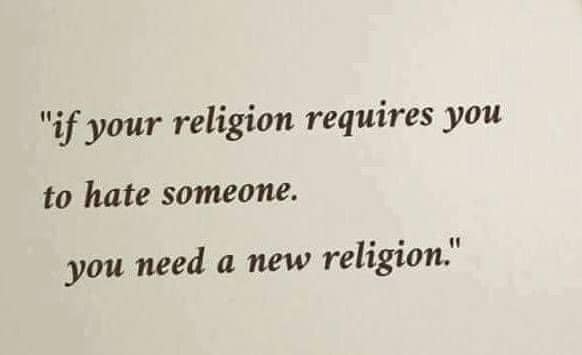
Now, which community can survive based on hate?
It doesn’t matter whether you are asked to hate somebody inside or outside your community.
Whether you hate individually or collectively.
Hating – or despising – somebody blinds you and exhausts you. Puts a huge burden on your back. Focuses your attention so tight that you are no longer able to notice the real dangers.
Those which actually make you less likely to survive.

And this is valid both for you as an individual and for you as a hating community.

It’s absolutely normal, and perfectly OK, for magnolias to be in full bloom on the First of March.
In Bucharest.

Climate change is a leftist hoax!