Archives for category: man as a measure for all things

And the LORD God said,
Behold, the man is become as one of Us,
to know good and evil.

Genesis, 3:22

The point of this post is simple.
The difference between ‘bad’ and ‘evil’.

‘Good’ is straightforward.
It doesn’t matter – evolution wise – whether the ‘good’ has happened ‘naturally’ or ‘intentionally’.
But it makes all the difference in the world whether the ‘bad’ only happened or it was the consequence of somebody planning it to happen.

Even if that difference is visible only to us.
Conscious humans beings who use language to communicate and to consider.

Visible as well as ‘accessible’.
How many among you consider that anybody else but us, human people, is capable of ‘evil’?

And what about the perpetrators?
How many of them consider themselves to be ‘evil’? To have become evil, as they had intentionally hurt somebody?

And how come this simple ability was enough to elevate us to “one of Us” status?

The world is nothing but change.
Our life is nothing but perception.

Marcus Aurelius.

Killing is the most definitive thing available to man.
To humans in general and to men in particular.

We cannot create life!
We can make love, our wives can give birth but other than that…

Yet we can kill!

You see, most animals feed on other living organisms.
We describe the process as ‘the law of the jungle’ but for them it’s only natural. That’s how they feed. That’s how they get their sustenance.
None of them gives much thought about it. When hungry, they do what they have to do. And then they stop.

We are the ones who get to choose. To kill or not to kill…
We are the ones who, once aware, have introduced thinking into all these.
We are the ones who, through our awareness, have transformed sensation into perception.
We are the ones who, in our attempt to create/maintain congruence – to keep things together, have attached meaning to sensation.

We are the ones who, once we have learned the difference between good and bad, have invented the notion of evil.

We are the ones who, once we have learned the difference between good and bad, have tried to separate them.
To separate what we have perceived as good from what we have perceived as bad. And called it evil…

And now, that we’ve reached the stage where we currently are, we’ve set our minds to determine which had come first.
The egg or the chicken…
The Good or the Bad?!?
Matter or Spirit?

When we’ll grow up, when we will have caught up with Marcus Aurelius, we’ll remember that there’s no clapping with one hand.
That while it may be natural to feed on other animals, there’s no escaping the consequences of our killings.

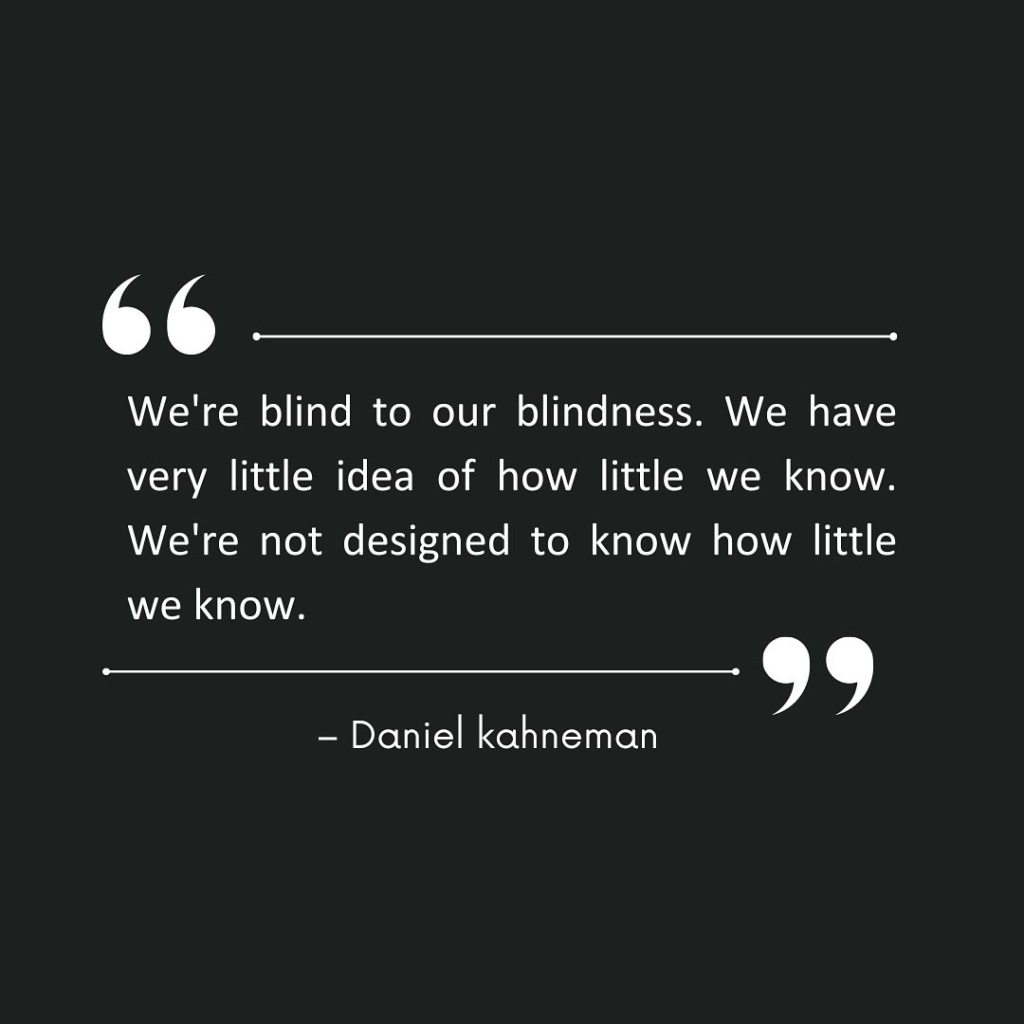
I’m acquainted with a relatively large number of people. From all walks of life. My experience suggests that it’s not the ignorance which is the problem but our (collective) unwillingness to accept/assume it. After all, we are ignorant. All of us, albeit in various degrees. Even the smartest amongst us ‘controls’ more ignorance than knowledge.

The real problem stems from us being cock-sure about things. Across the board!

Some of the smart ones are fully aware about the fact that they don’t know everything. But only some.

Some of the ‘ignorant’ are aware of their ignorance. Not all of them, but way many more than the smart ones. Simply because it’s easier to notice how much more you have to learn when you are at the start of the process.

And the problem is compounded by the fact that some of the smart ones who have chosen to ignore their ignorance team up – or more exactly organize – the ignorant who refuse to learn. This being the reason for so many actual human beings behaving as if they were some faintly intelligent ‘bots’.

A process, a space and some consequences.

The process through which individual agents transmit and receive information.

The space inside which the above mentioned individuals do what ever they set their minds to do.
The stage used by each of us, according to our own goals and abilities, to perform our self assigned roles. Inside and/or outside the roles bestowed upon us by ‘fate’.

Consequences?
The shapes and content of our individual consciences.
Consciousnesses.
Culture, as the historically accrued trove of knowledge more or less accessible – through language and subjected to interpretation – to each of us.
Civilization, as the result of our cooperative effort to ‘make good’ the knowledge we have inherited and/or gleaned ourselves.

On the other hand… letting go, emotionally speaking, may not be as beneficial as advertised.
We might lose some bitterness but we might become more liable to ‘repeat the experience’

As in …

Forgive but don’t forget is a lot easier to be said than done, you know…

Which brings us to:

Do we really need ‘a purpose’?
As in ‘an ideologically determined goal’?
Remember Marx’s “The philosophers have hitherto only interpreted the world in various ways. The point, however, is to change it.”. Then the consequences produced by those who had followed Marx’s teachings…
But not only Marx’s!

All set goals which go ‘against the grain’ incur costly consequences.
Which are detrimental to survival! Of the leading trespasser, of those in the following or of those hapless enough to be too close to that particular goal being pursued.
Remember Marx? Nothing unpleasant had happened to him. Not as a consequence of his attempts to change the world! But to others…
Which is equally valid for all other ‘world changers’. Along with all ‘world preservers’ who run along ideologically drawn paths.

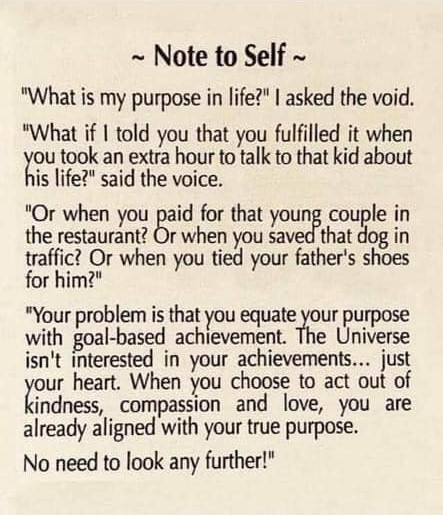
Then what should we strive for?
Simply ‘follow the heart’ to achieve ‘peace of mind’?!?
Would that be enough?

Enough for what?!?

https://www.goodreads.com/book/show/56083.In_Dubious_Battle

An inhabited planet where some of the people have finally figured out the inherently limited nature of their world.
Global warming, pollution, soil erosion, loss of biological diversity, dwindling and unevenly distributed natural resources…

Two hot wars. And a huge trilateral economic contest involving a third of the population which leaves the other two thirds in relative misery.

Most of the conflict – hot and cold alike – can be pinned down to old people doing their best (worst, more likely) to conserve their status. Wealth, power, influence…

As things happen, currently there is one collective agent which yields enough power to decisively influence the outcome of the two hot wars. And to negotiate the economic contest.
The attention of the people constituting that particular collective agent has been hijacked by an insurrectionist ex-president attempting to regain that position.
The ex-president has curried the favor of significant political party by making it possible for the party-activists to succeed in their attempt to limit women’s access to abortion.
The ex-president and soon to be presidential candidate is currently involved in a penal process. The trial attempts to determine whether the hush money he had used to silence a porn actress regarding a ‘close encounter of the third kind’ had been spent legally.

What? When? Where?
Opportunity Evolving in Time.

‘OK, I can accept the concept of opportunity evolving in time.
After all, the whole thing is nothing but a truism.
Opportunity is fluid by definition. Evolution is its natural destiny. And time is the natural consequence of evolving opportunity.
But where does this whole process take place?!?’

In our heads, where else….

Opportunity, evolution, time and, yes, ‘space’ are concepts.
Ideas coined by us, conscious human beings acting as thinking agents who use contextualized observation to further our understanding of what’s going on around us.

‘Huh?!?’

Consciousness is a state of mind.
A mind is like an AI machine. Something more than a live brain but not yet a wake, conscious, entity.
The closest thing to a ‘mind’ is a sleeping human conscience. Sleeping – hence not doing its ‘thing’ – but able to be awaken. Able to do what it’s capable of doing.
A brain is nothing but hardware. A mind is like a computer. Hardware and software put together. The only difference between a mind and a computer is that a mind is an expression of natural evolution while a computer is an expression of human ingenuity. Another thing minds and computers have in common is that both need a will to start them. To point their attention towards a goal.
This being where consciousness takes over. A mind which is aware of its own ‘wokeness’ is a conscious mind. It can pay attention, do things and generate meaning.

‘Hardware, software, natural evolution… aren’t you throwing too much ‘content’ into a single post?’

I’ll try to keep it simple.

We, humans, are the pinnacles of ‘natural evolution’. According to our interpretation of the information we have gathered until now.
As you already know, a pinnacle is a small thing perched on top of something way bigger. And for pinnacles is far easier to notice other pinnacles than to perceive what lies under them.
Our bodies – including our brains – depend on what’s going on ‘beneath’ us. In fact, ‘our’ whole world – the world we depend on, the one we live in – is working ‘in the back ground’.
Yet most of the time we’re interested only in what the other ‘pinnacles’ are doing… ‘Cause they are the ones which grab our attention!

Well, the ‘cool’ fact is that this is only ‘natural’.
In the sense that this is how we’ve become human in the first place. That’s how our minds got their ‘software’.
We’ve learned self-awareness by interacting with other human beings. We’ve built our culture by remembering the lessons learned by our ancestors. And we’ve built our civilization in concert with our brethren.
Individually, we may know little. But together we can move mountains. As we did.

And got cocky.
Our success has narrowed our attention span.

Somewhere inside the book which metaphorically recounts how we’ve learned self-awareness – the Bible – Mark, one of the evangelists, quotes Jesus:
Because of your unbelief; for verily I say unto you, if ye have faith as a grain of mustard seed, ye shall say unto this mountain, ‘Remove hence to yonder place,’ and it shall remove. And nothing shall be impossible unto you.
I’m not a psychologist. But I find this idea as being very explicit regarding the manner in which our minds work.
We cannot start anything, in a voluntary manner, before ‘believing’ in the outcome. We need to have ‘faith’ in that action. No matter how simple.

How do we get that faith?
We don’t get it, it’s being built into our conscience during the process. Continuously.
There are two factors which build our faith. Experience and reason. Past interactions we had with the wider world and the meaning we’ve derived from them. Putting it bluntly and oversimplifying things, based on previous experienced we convince ourselves, involuntarily, that it was us who were entitled to claim the merit for what had happened. Either we’ve done something right, ‘believed’ in the right things/gods or both at the same time.

Up to not so long ago, we have evolved in a religious manner.
In the sense that faith was shared amongst us. We used to share a ‘core faith’. That things not only work in a certain manner but also that things should go in a certain direction.

Success has changed that.
We’ve become so confident in our ability to generate meaning that we have emptied what’s left of the core faith.
We, the pinnacles, have reached such heights that we’re no longer aware of our link with the rest of the mountain. We’re racing ourselves for the top forgetting that we need fuel and spare parts. That our very racing completely changes the ‘racetrack’. For better or for worse…

And everything described here takes place inside our heads!
Happens inside our heads and changes, through our actions, the very world which keeps us alive.

About which individual are we talking about here?
About me? The ONE above all?
About us? The only ones who ‘belong’?
About all individuals? Regardless of age, gender, ethnicity …

“Plato suggests, and all later collectivists followed him in this point, that if you cannot sacrifice your self-interest for the sake of the whole, then you are a selfish person, and morally depraved.
But this is not so, as glance at our little table may show. Collectivism is not opposed to egoism, nor is it identical with altruism or unselfishness. A collectivist can be a group-egoist. He can selfishly defend the interest of his own group, in contradistinction to all other groups. Collective egoism or group egoism (e.g. national egoism or class egoism) is a very common thing. That such a thing exists shows clearly enough that collectivism as such is not opposed to selfishness.
On the other hand, the individualist or anti-collectivist can at the same time be an altruist. He can be ready to make sacrifices in order to help other individuals. (….) To be an individualist means to see in every human individual an end in itself, and not merely a means to further other interests, for example, those of the state. It does not mean to take one’s own individuality particularly seriously, or to lay more stress (or even as much) on one’s own interests than on the interests of others.”
Karl Popper, ‘After The Open Society’, Chapter 7.”

“On the other hand, the individualist or anti-collectivist can at the same time be an altruist…”

Sir Karl Raimund Popper had died in 1994.
Long after all of the so called collectivist regimes of the XX-th century had shown their true colors.
Long after all the self styled collectivist regimes had unveiled their murderous nature.

And murder, by definition, is the most individualistic attitude available to a human being.

Let me be absolutely clear.
I’m talking about murder here.
That thing perpetrated by an individual, alone or in cahoots with others, against other individual or individuals.
Self defense – the minimal action meant to save one’s own life, which stops as soon as its goal has been fulfilled – has nothing to do with murder. Criminals can, indeed, try to camouflage murder as self defense but their actions are obvious for all level-headed observers.

My point being that individualism cannot be defined as being anti-collectivist.
And what’s bothering me is the fact that Popper himself had fallen into this trap.

If I get this right, Popper’s main contribution to our understanding of the world is the notion of ‘falsifiability’. The idea that human knowledge – science – grows in fits and starts.
That individuals notice things, formulate their observations as theories and put them forward for public examination.
And that even the theories which hold water, for a while, will, by definition, be proven false – or at least incomplete – at some point in the future.
The way I understand this process – I’m an engineer converted to sociology – is as a continuous dialogue between individuals and the community which nurtures them.

Just as you can’t have a working engine – I’m a mechanical engineer – without all the pieces fitted in the right places and without a tank full of fuel, you can’t have a ‘healthy’ collective without ‘established’ individuals.
Symmetrically, no individual can survive – let alone thrive – alone. A baby needs to be fed and taught to walk/speak/think in order to become an individual. A conscious human being.

Collectives, currently known as nations, fare according to the opportunities enjoyed by the individuals comprising those collectives/nations. AND according to how each of the individuals understand to enjoy each of those opportunities.
The members of the North Atlantic Treaty Organization – who treated their citizens far better than how the Soviet citizens used to be treated by their self styled collectivist leaders – have fared a lot better than the defunct Soviet Union. Democratic and free-market capitalist countries fare a lot better than those run in a more or less centrally planned manner by authoritarian regimes.

And the explanation is simple. Democracy and free market capitalism mean that many more individuals have many more opportunities to contribute to the well being and the ultimate survival of their community than what’s going on inside authoritarian regimes. Where the decision making is concentrated in a very few hands. Where most opportunity has been confiscated by a handful of self chosen few individuals.
In fact, the democratic and free market capitalist countries are far more collectivist minded than the self-styled collectivist authoritarian regimes. Where only the high ranking officials count as individuals!

And no, Plato wasn’t exactly right either. His ideas haven’t reached us in their intended form… or it is us who can’t read them in an appropriate manner…
“Plato suggests… that if you can’t sacrifice your self-interest for the sake of the whole, then you are a selfish person, and morally depraved.”
‘Suggests’ already comprises a healthy dose of individual latitude. A healthy dose of individual lee-way when it comes to interpreting each individual situation. Furthermore, this is rather a matter of how a collective deals with each individual situation than an individual being selfish or morally deprived.

All situations which determine the fate of a collective are experienced, interpreted and dealt with by individuals. No collective exists as a ‘unit’. Nor reacts as one, regardless of whatever efforts have been made, under whatever disguises, by ultimately individual dictators to implement such ‘unity’. Around the ‘individuality’ of the dictator….
And whenever the individual called to solve a particular situation considers his individuality as being superior to the fate of the collective… then that individual actually lights a fuse. Which might or might not detonate a charge. Which charge might or might not destroy much… but…
The main problem here residing in the fact that many individuals haven’t figured out yet that their own individual fates are inexorably linked to that of the collective.

That if it’s not peer-reviewed, it’s not science!
That being a bona fide individualist “does not mean (that the concerned individual is entitled) to take one’s own individuality particularly seriously, or to lay more stress (or even as much) on one’s own interests than on the interests of others.”

“Despite this advancing scientific knowledge,
there is much that remains unknown about both sleep
and dreams.
Even the most fundamental question
— why do we dream at all? —
is still subject to significant debate.”

Dreaming is normal and healthy, but frequent nightmares can interfere with sleep.

So.
We’ve figured out that dreams are something which happen inside our heads. When sleeping.
Then called them names. ‘Dreams’ if they were OK, ‘nightmares’ if not.
Interesting, isn’t it?
Then we have hallucinations. A sort of daydreaming – if you think of it – only less pleasant.

My point being that our consciousness – “our ability to observe ourselves observing” – opens up a new realm inside what we call ‘reality’.
That we live, in fact, inside a world of our own making.

‘But this is valid for all living things, right?’

In the sense that all living things collaborate – albeit involuntarily – towards the continuous reshaping of what we call ‘biosphere’… yes! Life does indeed reshape the portion of space/time where it happens.

The way I see it, life is responsible for the ‘second layer’ of what we call reality.
While we, the conscious observing cum living inhabitants, are responsible for the ‘third layer’ of what we call reality.

‘You keep saying “what we call reality”.
Would you care to elaborate?’

You see, we have developed two concepts.
‘God’ and ‘Reality’.
God is something which had suposedly made us. According to those who believe in God, we have been brought to life – along with the world we inhabit, in a voluntary manner, by the agent we call God.
On the other hand, reality – according to those who believe in ‘science’ – is the ‘place’ where we have happened to ‘evolve’.

God is something we are told about by others. Something the ‘worthy among us’ might experience first hand through ‘rapture’.
Those who believe in God consider that the original information about God had been delivered, through divine inspiration, to ‘prophets’. Or had been acquired one way or another by ‘elders’.
Those who believe in God consider that God – and his will – are inaccessible to humans. That we, ordinary human beings, are only meant to simply experience ‘God’s will’. And adapt our behaviour accordingly.

Reality is something we, the present ones, are told about by our predecessors. And something we experience through observation.
Those who believe in science consider that nobody – individually and collectively – will ever be able to know everything. Basically, those who believe in science are also convinced that reality is ultimately inaccessible to us.
Those who believe in science consider that it’s our job, as conscious human beings, to find out as much as we can about ‘reality’ and adapt our behaviour accordingly.

For somebody unwilling to take sides, there’s not much practical difference between the two sides mentioned above.
Both are states of mind. Convictions. Weltanschauungs which shape human action.
Furthermore, both mandate us to do the very same thing. Adapt our behavior to what we ‘see’!
Does it really matter whether what we ‘see’ was handed out to us by somebody or is the consequence of happenstance? Would our reaction be different? Why?

‘But God has handed out a series of commandments! For us to follow in order to be saved.
Science doesn’t provide any ‘spiritual guidance”!

I beg to differ.
The Bible – and all other sacred texts – have been written by people. Taught by people to other people.
Science – everything we know about things, including what we call ‘best practices’ – has been put together by people. And taught by people to other people.
Furthermore, technology – the manner in which we have put in practice what we know about the world, regardless of how we have acquired the information – has been put together by us. We’ve designed each and every tool we have used to transform our world into what it is today.
And it was still us who have use those tools according to our own goals.

So it is us, collectively, who are responsible for the world we live in.
For the dream we live.
And for the nightmares experienced by some of us.

Conserving the subjective self-perception

“Objective through shared subjectivity”

‘Popular belief’ posits that ‘objective’ is based on facts while ‘subjective’ is based on whim.
True enough but facts need to be identified as such first and then agreed upon before they become ‘facts’. Before they are recognized as facts by the interested parties. Before they become the foundation for objective knowledge.
On the other hand, ‘subjective’ is indeed personal. A personal ‘take’ on something which has happened inside the same reality where facts take place. In fact, all the facts we agree upon have started their lives as subjective impressions. Which had been shared with other people and eventually stated as facts after ‘negotiation’.
Furthermore, no matter how subjective a perception, all perceptions are perceived using the same senses. And ‘processed’ using the same brains. According to culturally accrued ‘habits’.
Even a hallucination will conserve some degree of normalcy. If of a visual nature, for example, the hallucinatory perception will be experimented and described in visual terms. Pondered upon and discussed with others using the same brain which usually deals with facts. Shared with others using language and evaluated according to ‘customs’.

Self-preservation

According to the Cambridge Dictionary, a rationalization is “an attempt to find reasons for behaviour, decisions, etc., especially your own“.

According to my research, all conscious agents will first attempt to arrange all information at their disposal in such a manner as to conserve the subjective impression they have already acquired about themselves.

Salvation

According to Merriam-Webster, salvation is “deliverance from the power and effects of sin
Having to do with religion, some people will say salvation is subjective by its very nature.
Being understood in the very same way across various cultures and religions, salvation becomes objective.
Not real in the materialistic sense of the word but real in the sense that belief in salvation has very real consequences. Real enough to become material. Set in stone!
Shared belief in Christian salvation has driven people to build churches while shared belief in Buddhist salvation has driven people to build monasteries. The fact that people involved in so different religions as Christianity and Buddhism share their faith in salvation makes salvation an objective ‘thing’.
Makes salvation something ‘natural’.

Self-actualization

According to Abraham Maslow, an American psychologist, for a person to be able to attempt self-actualization that person must have fulfilled all other needs they might have had.
Having fulfilled those ‘previous’ needs is no guarantee for self-actualization being a success, only a prerequisite.

Copernican Revolutions

In a sense, each Copernican revolution humankind has sailed through – of which there have been many – has been a self-actualization.
I’m going to mention three and wrap up this post.

Instrument and possession

Many animals – relatively speaking, are able to use tools. To purposefully alter pieces of matter in order to be more useful towards the intended goal. But nobody except us carry them around.
Furthermore, a lion will defend its pray. And its hunting ground. In a sense, a lion behaves as if it defends its possessions. But only us, humans, talk about possession.
It was us who have conceptualized possession. Who have instrumentalized the notion of property.
This has happened more or less simultaneously with the advent of organized agriculture. Which needs instruments and order. Tools to work the land and the expectation to be able to enjoy at least some of the end-results of your work.

Money and nation

Systematic agriculture has thoroughly transformed human society.
Or, more exactly, the humans who had invented systematic agriculture had to adapt themselves to the new reality brought upon their heads by their own invention.
The spoils of systematic agriculture – abundant food – have created vast opportunities. Some of the people involved in the process were ‘free to do other things but toiling the fields. Hence specialization of work and social division. ‘Professional people’, priests, soldiers.
The source of this new found abundance, and the spoils themselves, had to be protected. And organized…. a.k.a. taken advantage of! Hence ‘rulers’. Arable land had been taken into possession along with the people working the fields. Nation building had begun.
The hoarded produce could be traded. Hence they were. Along with the ‘things’ produced by the ‘professionals’ fed with the accumulated ‘excess’ food.
Trading would have been easier if money was available. Hence it was invented. And used. By traders as a tool for trading merchandise and by rulers as a tool for ruling ‘their’ nations. Which weren’t yet called as such. Only functioning as such…

Rights and reason

Systematic agriculture and trading had been the stepping stones for the advent of ‘industry’. For professional people producing things for sale.
Oekonomy – the art of making ends meet on a yearly bases, as understood by the Ancient Greeks – had become ‘the Economy’. The engine moving society along the passage of time. A process so complicated that a single agent was no longer able to control it. L’etat had become so complex that even Louis XIV could no longer claim it as his own. For the ‘system’ to maintain its ability to function, to go forward, individual agents had to be freed.
Hence the freedom of the market and the human rights.
Hence individual human beings indulging in the habit of thinking for themselves…

Salvation no longer came in an organized manner. According to rules.
To each their own. Reason had been freed once and for all.
Each of us has assumed the freedom to rationalize according to their own wish.
To their own purposes.

To which end?
Only history will tell…
But before proceeding we’d better remember Ernst Mayr’s words.
‘Evolution has nothing to do with the survival of the fittest.
There’s no such thing as ‘the fittest’! The fittest to what since everything changes all the time?!?
Evolution is about the demise of the unfit.’

Until now, evolution has been ‘blind’.
Increasingly, some have become cocky enough to consider they know better. To consider they know where they should lead ‘their subjects’. Lenin, Hitler and Stalin are but a short selection from a long list.
Those who have followed the advice and have facilitated the ‘pestilence’ put in practice by this kind of people are those who have forgotten the deeper meaning of “You must not make any idols. Don’t worship or serve idols of any kind, because I, the LORD, am your God”.

Which ‘God’ brings us back to where we started.
To ‘objective as something agreed upon by many subjective agents’.
You see, I quote the Bible and I mention God quite a lot. And still define myself as being ‘agnostic’.
The fact that I don’t know whether God had actually created the world doesn’t alter the fact that the Bible is a trove of knowledge. As for God’s very existence… things are complicated!
How do you determine whether something exists? You check for the consequences of its existence, right?
A table exists only if you can ‘touch’ it. Since you cannot touch something which doesn’t exist, the fact that you can touch it is a consequence of its existence.
Same with God. Irrespective whether it has actually created the world – or anything else, as a conscious agent – God does exist. People acting as if God was real – people’s faith in God – had and continue to have consequences.
People acting as if God was real have brought God to life. The God we know, talk about and have faith in…

My last affirmation is rather hard to swallow?
Then how about money?
What makes them so valuable? Except for our ‘faith’ in them? Except for our belief, our shared belief, in the ‘fact’ that we are able to get things by paying for them?
And how about ‘rights’?
Do we respect human rights because we believe in them? Or only because ‘that’s the law and there is no other alternative, at least in public’?

See what I mean?
We live in the reality of our own making. And we tinker with it incessantly.
Attempting to make it more and more comfortable. To us!
Each of us tries to make the world ‘a better place’. Each of us working for themselves, each of us according to their ‘own advice’.

Which brings us to ‘how things work’.

Time and time again, reality has told us that we cannot survive, let alone thrive, individually.
That everything we have done is the consequence of us working in concert.
It was our shared belief in ‘money’ which has given us capitalism. Economic effervescence and elevated life standards.
It was our shared belief in God which had convinced us that ‘we were brothers’. And, as brothers, that we should respect each-other. That we should respect each-other’s rights.

Now, that ‘God is dead’ and it has become obvious that ‘capitalism is no better than those who put it into practice’, we have arrived at an inflection point.
Are we able to preserve the true nature of the things which have brought us here?
Or are we going to transform them into idols?