Archives for category: evolution

“statuuntque latiores terminos scientiae Dei quam potestatis,
vel potius ejus partis potestatis Dei (nam et ipsa scientia potestas est)
qua scit, quam ejus qua movet et agit:
ut praesciat quaedam otiose, quae non praedestinet et praeordinet”

Francis Bacon, 1597
“and they set wider limits for the knowledge of God than for power,
or rather for that part of God’s power (for knowledge itself is power)
by which he knows, than that by which he moves and acts”
Google Translate

scientia potentia est
Thomas Hobbes, 1668

E=mc2
Einstein, 1905

In fact, power produces; it produces reality;
it produces domains of objects and rituals of truth.
Michel Foucault, 1991

“They” – as in ‘the knowing people’ – ‘set the limits for the knowledge of God’.
Then it was ‘they’ who had the real power over (their) God…

A little later, another thinker simplified the whole thing into ‘knowledge is power’.

Which, already collective, state of mind morphed into the socio-cultural environment into which Einstein was able to notice that E=mc2. That apparently different things can morph one into the other, given the right circumstances.

Which brings us to Foucault noticing that power produces reality. Including knowledge…

But is there a real difference between ‘power produces reality’ and ‘they set different limits for God’s knowledge than for God’s power’?
In fact, there is.

According to Foucault power is exercised directly.
According to Bacon, people exercise power by ‘fine tuning’ their ultimate tool. Their God. Which god, like all others, acts like an agent. Its powers might be limited – it is able to do/know only as much as those who have faith in it believe it to be able to know/do – but inside those limits it is as free as each of those who believe in it.

And the difference is huge.
As soon as Nietzsche had noticed that ‘God was dead’, ‘reality’ had shattered.
While God was alive, power created one reality. Also known as “God”.
As soon as there was no more God to mediate between reality and those gathering knowledge about it and exercising power while recreating it… reality became many!

And not only many versions of reality are competing for our attention, each of these realities are farther and farther away for the ‘hard’ one. The one harboring Einstein.

“People know what they do; frequently they know why they do what they do; but what they don’t know is what what they do does.”

Michel Foucault, Madness and Civilization:

“Until philosophers rule as kings or those who are now called kings and leading men
genuinely and adequately philosophize,

that is, until political power and philosophy entirely coincide…
cities will have no rest from evils…
there can be no happiness, either public or private, in any other city.”

Plato, circa 375 BC

The philosophers have only interpreted the world, in various ways.
The point, however, is to change it.

Marx,1845

“God is dead. God remains dead. And we have killed him.
How shall we comfort ourselves, the murderers of all murderers?
What was holiest and mightiest of all that the world has yet owned has bled to death under our knives: who will wipe this blood off us?

Nieztsche, 1882

The Social Responsibility of Business Is to Increase Its Profits
Milton Friedman, 1970

“Real life, says Heidegger, happens when beings become ‘unhidden’,
when we help bring things out of their hiding places
and step out of our own along with them, into the light of being itself.
It happens in rare moments when we see links between
‘beings themselves, the human world, the work of God.’
It can only occur, he says, when you’re disturbed by a sense that real life is elsewhere.”

Peter Holm Jensen, 2023

Wood is the raw material we use to make timber. And paper.
Steel is the raw material we fashion into tools. And weapons.
Words are the raw material we shape into ideas.

We use timber to build houses.
Paper to print poetry.
Tools to transform nature into civilization.
Ideas to make sense of the world we live in. And of ourselves.

When angry, we burn houses. Print lies. Transform tools into weapons and use them to destroy.
When angry, we no longer see eye to eye about meaning.

Almost two and a half millennia back, Plato told us us that “until political power and philosophy entirely coincide…
We had chosen, while ‘angry’, to interpret Plato’s warning as being a ‘blue print’. A ‘boiler plate’ for ‘how to breed appropriate rulers’. https://www.britannica.com/topic/philosopher-king.

Karl Marx, while terribly angry – and not without reason, had chosen to put in practice, tentatively, the generally accepted version of Plato’s work.
The Communists, therefore, are on the one hand, practically, the most advanced and resolute section of the working-class parties of every country, that section which pushes forward all others; on the other hand, theoretically, they have over the great mass of the proletariat the advantage of clearly understanding the line of march, the conditions, and the ultimate general results of the proletarian movement.“.

Nietzsche confessed, publicly, “God is dead. God remains dead. And we have killed him“.
We have chosen to place the onus on him. As if it had been he who killed God. Alone…

Friedman – Milton Friedman the economist, not a word-smith nor a philosopher – had formalized the public opinion prevalent during his ‘tenure’. That corporations should stick to what they were good at – producing things in an efficient manner, hence being profitable – and leave social intervention to those concerned with solving that line of specific problems.
NB. I’m not suggesting Friedman was right. More about ‘being right’ in a short while. I’m only stating that both Friedman’s sycophants and detractors – including me – have been near-sighted.

Heidegger was the guy who brought back into discussion the notion of Aletheia. “the presocratic way to truth, as unconcealment.
Truth as the the ‘politically’ sanctioned expression of reality. “until political power and philosophy entirely coincide…

In a sense, we’ve spent the last two and a half millennia updating Plato’s to Heidegger’s wording of how to make sense of truth.
We haven’t been able to come up, yet, with a convincing version because we’ve chosen to ‘ignore’ Buddha’s “truth that misery originates within the craving for pleasure“. That ‘misery’ originates from our ‘rational’ desire for ‘being right‘.

That misery originates from us being angry, collectively, for not being able to reach ‘the truth’ individually.
That misery originates from each of us, individually, craving to be ‘right’. Each on our own…

The Buddha taught that nothing is permanent and that everything is impermanent.
Therefore, people should avoid getting attached to things as eventually everything will change.
People suffer when they crave and when they get attached to people and objects.

Being right, individually, is both incomplete – as Heidegger pointed out – and temporary. According to both Siddhartha Gautama and Karl Popper.
Being angry about not being right is not helpful. On the contrary…
It compels us to defend our version of truth and it blinds us towards all others. Regardless of how they complement ours.
Renders us incapable to politically sanction a comprehensive version of truth. Renders us incapable to build Aletheia.

“I suppose it is tempting,
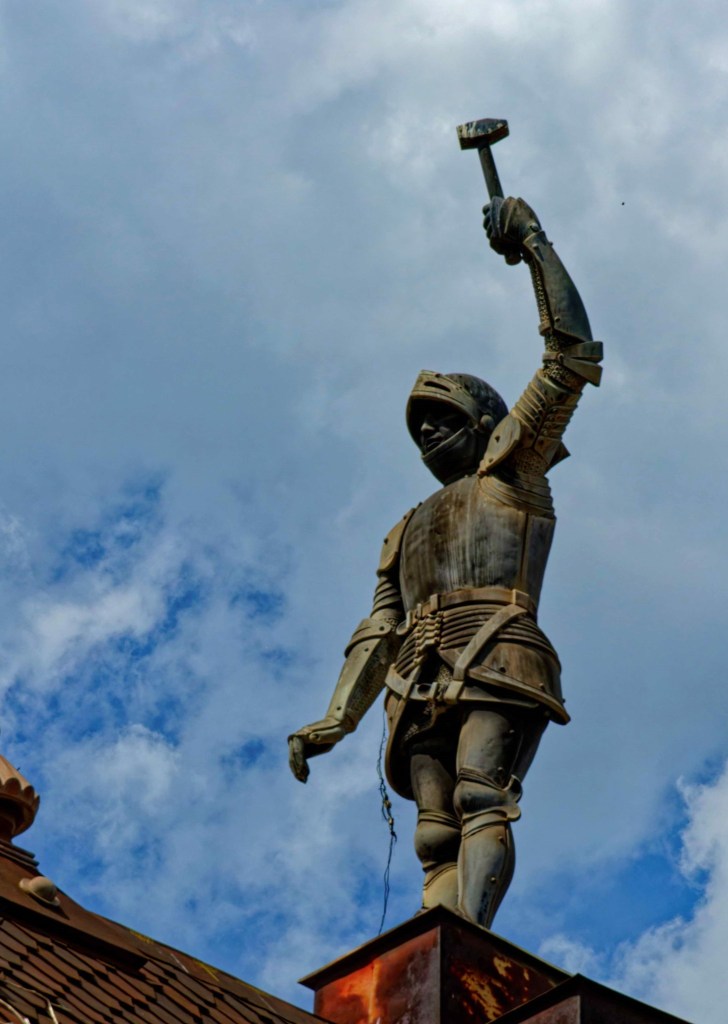
if the only tool you have is a hammer,
to treat everything as if it were a nail”

Abraham Maslow

I write this blog in the hope that ’embodying’ my thoughts will somehow help me.
Help me solve some of the quirky questions which have been haunting me for sometime now.

Why so many people have been convinced that thinking may help them make sense of things?
Why so many otherwise smart people have convinced themselves that thinking ‘in solitude’ would take them to the ‘right’ place?
Why so many seemingly reasonable people have somehow become certain that their version of things was the only one valid? To the tune of trying to impose it to those happening to be around them?

The first answer was easy to find.
Because that’s how we make sense of things.
And because that’s what people do when they have no other alternative.
They start thinking about how to get out of the mess into which they have entered by not thinking! Enough…

The second one was also easy. Ish… specially after I did come up with the question formulated like this.
Apparently, to shield their minds from ‘distraction’. From the mundane ‘minor’ problems which might have wasted their ‘brain power’.
In reality, simply because they could do it. They had a great time doing it – thinking, that was – so they indulged on every occasion they had. And smart as they were, they made it possible for them to have more and more time available for thinking.
And they cut themselves off from the rest of the world because the few people able to partake in the process not always shared the same opinion. Thus otherwise smart thinkers ended up in the company of sycophants…

Having found the answer for the second question opened, wide, the door for the third answer.
No, it wasn’t the presence of the sycophants which convinced the otherwise reasonable thinker that their was the only valid solution for whatever problem they had in mind at anyone time.
Sycophants showering praise were only a ‘favorable circumstance’. A mere opportunity for it to happen.

Unhindered by any outside intervention, the tinkering thinker turned his tool to his own head.
And hammered out all the remaining doubts his mind was still harboring.

I also believe that people – well, some of them – are able to change their minds if presented with the right arguments at the right time, in the appropriate manner and in auspicious circumstances.

People are not robots. And, for certain, not rational!

We are rationalizers. We use rational arguments to fortify our already held conclusions. And the more we love those conclusions, the further we go in our quest to find the ‘right’ arguments in our favor.
But given enough time and if the arguments which contradict our convictions are presented in an un-injurious way, we might be persuaded.

And here’s the catch.

For quite a while now, some of those familiar with how rationalization works have used their knowledge about the innards of our minds to further their own goals.
Nothing wrong with that?

Are you familiar with ‘divide et impera’?
That’s the strategy used by every would be dictator to breed trouble in the population they planed to take over.
Divide and conquer. Make your followers despise everybody else. To the tune of transforming ‘the others’ into sub-humans.
Make your followers believe they are ‘special’ while the others, all of them, are nothing but vermin.

‘And what’s wrong with believing yourself to be rational?!?’

It’s not wrong. Only delusional.

Making your mind up only after carefully considering all of the available ‘arguments’ means having a scientific attitude.
You know? Science, the fad currently popular among many of us…

The problem with the scientific attitude being the fact that this attitude has been developed in the context of hard facts. The scientific attitude has been ‘minted’ by those studying physics, chemistry, biology… fields where every minute transgression becomes evident in real time! Where people could not ‘fall in love’ with their own conclusions. For the simple reason that those conclusions had to be changed along with the new facts continuously discovered in the process of learning.

The concept of rationality had been minted late in the development of human thought.
Sometimes during the XVIII-th and the XIX-th centuries. When philosophers had started to concern themselves with ‘how we think’ on top of ‘what we should be thinking’.
When philosophers – and lately psychologists – have started to understand how we reach/build meaning.

Some of those philosophers have reached rather strange conclusions.

Nietzsche posited that ‘God is dead’ while Marx rationally convinced himself, and others, that there was a way – and only one way, his – to make everybody happy.
Nietzsche opened the gate and Marx led us through.

And now, that we’re dwelling in no-God’s land, everything is up for grabs.

Including reason…
What is here to prevent us from using our knowledge of how mind works in order to further our own, personal, goals?

Goethe did warn us.
The Sorcerer Apprentice made the very same mistake. Overconfidence in his own ability to ‘play the rules’. To fidget with reality.
The difference between Goethe’s poem and what we’re currently doing is the fact that Goethe’s was a work of fiction while we’re playing with our own future.

I’ll wrap up highlighting the extreme perversity of the message.
‘I have a mental illness…’
Loosely translated, this means that everybody who doesn’t follow those arguments to the same conclusion where I have arrived myself must be (also) mentally ill.
And now, that we’ve reached the conclusion that at least one of us is ‘crazy’, it no longer matters who is on the ‘wrong’ side of the fence!

We both are!
We no longer see eye to eye. Each of us is convinced that the other is sick.
Unworthy!

We’re both ready to be taken over.

The only way out is to start listening, respectfully, to what the other has to say.
‘Respectfully’ means, first and fore-most, ‘don’t mess with GIGO‘!

Observe the abnormal.
The out of ordinary.
That’s how you might figure out the regular…

Psychology 101

We live on faith.

Without faith, one cannot even raise from their bed in the morning…
‘What’s the use?’

Animals start looking for food whenever hungry.
Human beings, for as long as they remain conscious, check whether there’s any chance of finding food before attempting to find it.

Faith in what?

Living organisms are made of matter.
Atoms and molecules stacked in a certain order and interacting according to certain rules. Rules being preserved, managed and passed over from generation to generation as ‘genes’.
Individual organisms have very little influence about the whole process, except for some ‘checks and balances’. Which checks and balances work according to some rules also contained in the genes.
Species, generations and generations of individual organisms, evolve. The genetic information passed over from generation to generation becomes slightly altered as evolution forces it to fit the changes in the environment.
According to Ernst Mayr, evolution is about the demise of the unfit. Individuals need to be able to survive in the environment where they happen to have been born. If the genetic information inherited from the parents is suitable for that environment, the individual has a fighting chance. To live and to pass over the genetic information which made survival possible.
The nature of life – the existence of successive generations and the mechanisms which pass genetic information from one generation to the next one – makes it so that genetic information may be slightly altered when copied into the new organism. The alterations appear haphazardly and ‘survive’ only if they don’t jeopardize the existence of the individual organism harboring them. If the organism survives for long enough, the alteration is passed over to the new generation. If the alteration happens to be beneficial for the organism in the context of circumstances where it needs to survive, that alteration has increased the chances of survival for the organism. And its own chances to be passed over to the next generation. Please note that no agency is involved in this process. Nobody and nothing but happenstance has anything to do with what’s going on here!

Conscious organisms are made of animals plus conscience.
You need a living organism in order to have a functional conscience.
Which conscience is nothing but a set of rules learned from the other members of the ‘species’ to which the individual belongs. In fact, conscience – individually speaking, is nothing but a set of ‘cultural’ genes.
Lumps of information passed on from generation to generation which allow us to actively interact amongst us, people, and between us and the environment where we happen to live.
Each individual conscience is like a ‘cultural’ organism riding on top of a biological one.

The difference between the cultural organism and the biological one being the fact that the cultural organism is aware of itself.
Of its mortal nature!

Being an organism, conscience has only one job. To survive for as long as it can and to pass over the information it has gathered to the next generation.
Just as a biological organism is driven by a ‘vital force’ – named ‘survival instinct’ by those trying to make sense of this whole thing – conscience is driven by hope.

Biological organisms have a symbiotic relationship with their environment. They ingest substances and excrete the consequences of their metabolism. They also notice information and react to it. Individually as well as collectively.
As a consequence, the world we currently live in is the ‘byproduct’ of 3 billion years of countless biological organisms having already lived on this planet. Without this teeming life we wouldn’t be here and the planet would be barren.

Cultural organisms have deepened and accelerated the process.
Not only they have physically transformed the planet but they have also built meaning.

As I mentioned before, consciences need hope in order to survive.
In order to have hope, you need meaning.
Things have to make sense.
Out of sheer necessity, we’ve built explanatory scenarios for what’s going on around us.

Congress shall make no law respecting an establishment of religion,
or prohibiting the free exercise thereof;
or abridging the freedom of speech, or of the press;
or the right of the people peaceably to assemble,
and to petition the Government for a redress of grievances.

Doesn’t make much sense?
Mentioning ‘God’ on money is the first step towards the establishment of an officially sanctioned religion?

Well…

In my previous post I posited that property, the concept, is the stepping stone for social order.
I’ll add to that a simple observation. Whenever too much property gets hoarded by a too small number of people, the community which had allowed that to happen is in great danger.

Same thing here.
We have religion – a social phenomenon – and religions.

We have a certain understanding of the world, shared by the members of a community – which allows the community, as a whole, to behave in a coherent manner. Not that much different from what happens when people use a common language. They can communicate. Same thing happens with people partaking in a religion. They ‘see’ things in a coherent manner. Hence can coordinate their efforts.

And we have religions…
To reach the ‘certain understanding of the world’ I mentioned before, each community had traveled a road. A particular road through the particular circumstances in which each cultural community – currently known as ‘nation’ – had had to build their culture. Their identity.
Some communities had put together certain scenarios to accompany them along this road. To help them make sense of what was happening to them.
Some communities have used more than one scenario during that journey while others use more scenarios simultaneously.

Sociologically speaking, all that matters is social coherence.
All is well as long as the community conserves its ability to function. To survive.
As long as the individuals who compose that community continue to have a common enough understanding of the world in which they live.

For the simple reason that they, we, live in the same world!
And if we, individually or in small ‘gangs’, start behaving as if the world is different for each of us…

The Founding Fathers had a common understanding of the world. They belonged to the same (functional) religion despite belonging to different ‘denominations’. For them, the First Amendment was about reigning in the powers of the Government. They had realized that a Government able to impose a certain religion – a certain scenario – upon the entire community would eventually bring destitution.
The Founding Fathers could not foresee a situation in which a few of us would deny the practical daily realities of this world. Invoking their particular scenario as an argument… As the supreme argument for refusing to see the reality.

The reality as it is.
And as it is seen by a majority of us.

I mentioned earlier that some communities have changed their scenario along their history.
They did it when they have found new meanings. They have seen new things about the reality and they have integrated those new things into their newer scenario.
By changing the scenario they have actually built a new reality.
Societies which have clung to their scenario to the bitter end… are no longer with us.
Societies which have somehow found it in their collective minds to adapt their scenarios to the reality changed by their own efforts continue to survive. To thrive, even.

“Hoarded by a too small number of people” means controlled by a handful of people.
Sometimes coordinated.
As it happens in any dictatorial regime. It doesn’t matter who formally ‘owns’ something if the use of that something is tightly controlled by somebody else.
Furthermore, a certain ideology may end up having a lot of clout without being imposed by an authority. Nevertheless, the fact that an ideology dominates, for a while, makes it so that the community which allows this to happen to experience a dictatorial regime.
For whatever reason, some people were convinced that witches were real. And burned them at the stake.
For whatever reason, a lot of people continue to believe that communism might be a good thing.
For whatever reason, some people continue to believe that they are entitled to determine whether a woman may or may not abort a fetus.

What is the difference between an ideology and a scenario?
The manner in which people relate to it.

Having been told that they were the children of the same God made it possible for the believers to stick together. To act like brothers. To respect each-other. To invent and implement capitalism and democracy. Both relying on trust. On mutual trust and on the freedom of the market. Both the market where goods and services are traded and the public forum. Where ideas are traded…

Being told that only one particular understanding of a certain text/idea/concept is correct some people remove themselves from the ‘general population’. Which ‘general population’ becomes ‘the others’.

‘The others with whom we don’t have anything in common’.

Quite an untenable situation, given the fact that the world is becoming smaller and smaller.

“To use rules or laws to get what you want in an unfair but legal way”
From Longman Dictionary of Contemporary English

Having a name for ‘it’ means that we’re aware of it’s existence.
We’re still using it, though.
It is wise?

We’re not the first ones to use the method.
The HIV virus has somehow ‘learned’ to hide itself inside our immune system.
Not only to ‘bend the rules of life’ – all viruses do that for a living – but to bend the very rules of immunity!
But we are the first ones to use ‘it’ knowingly!

Not fully aware of the consequences but nevertheless on purpose!

How did we get here?

By ‘gaming’ the laws of nature!
Our ancestors believed flying was reserved for birds. By making good use of what we’ve learned about the ‘system’, we’ve been able to overcome many of our limitations.
We’ve also overcame our common sense…

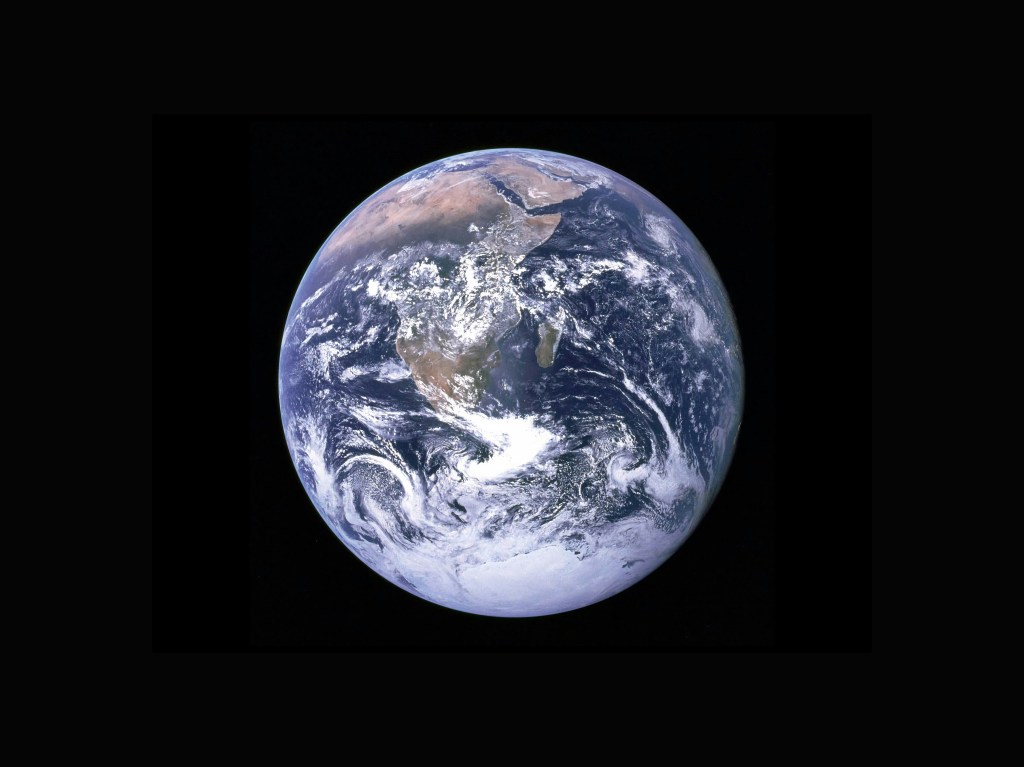
We forget our planet is limited.
Vast but still limited.
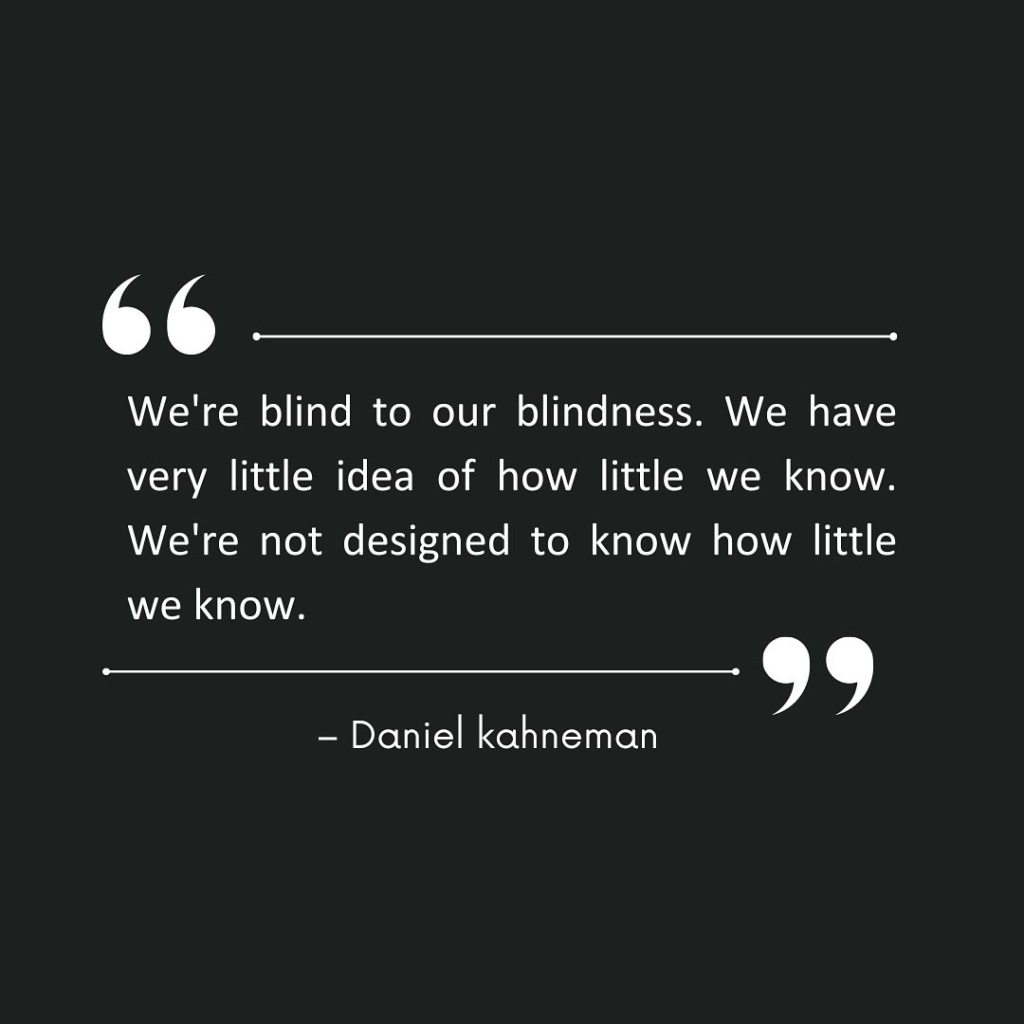
We also tend to forget that our knowledge/understanding is also limited.
We’ve become so confident in our ability to game the system that we tend to ignore the two facts I’ve just mentioned.

Even worse, we’ve given up ‘the brotherhood of man’.
We’ve become humans by talking to each-other. By hunting together. By tilling the earth together.
Then we’ve started to fight. For the same earth we’ve been tilling together…
We’ve invented ‘capitalism’. A manner of doing business which relies mostly on trust. On the rational expectation that the partners will rather fulfill their respective parts of the deal than becoming known as fraudsters.
About the same time, we’ve also invented ‘democracy’. A social arrangement relying on mutual respect.

And we “saw that it was good“.
It lasted for a while…

Recently, capitalism has been gamed into a relentless hunt for profit.
Currently, democracy is being played with alternative facts.

We’re becoming viruses!
Some of us, anyway.


Your Liberty To Swing Your Fist Ends
Just Where My Nose Begins

Now, what would you have done if this guy had started to swing his fists? In the very proximity of your precious nose?
“Stood your ground” or gave him enough ‘space to exercise’?

You’re not exactly comfortable with the current meaning of ‘stand your ground’?

Then maybe it’s high time for us to understand that ‘stand your ground’ is the direct consequence of ‘your liberty ends where my nose begins’.

Not comfortable with the current situation?

Then maybe it’s high time for us to come up with another definition for liberty.
One which brings forward the cooperative effort which made liberty possible in the first place.
Instead of the confrontational one currently in use. Which serves perfectly the interests of those powerful enough to define evolution as “survival of the fittest”.
Which serves perfectly the interests of those powerful enough to be convinced that only those able to defend their liberty are worthy to be free.

The key word here being “their”, not “liberty”!
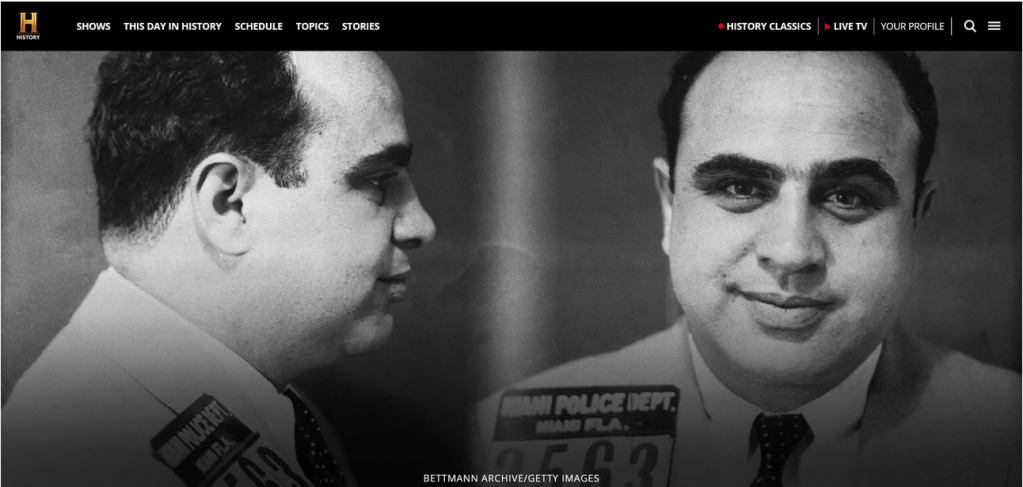
For this kind of people, for the Capones of this world, freedom – their freedom – is something to be appropriated rather than shared.

Think about it!
Do you remember the argument ‘the west has provoked the current situation’?

“Mr Farage said he had been arguing since the 1990s that “the ever eastward expansion” of the Nato military alliance and the EU was giving President Putin “a reason to [give to] his Russian people to say they’re coming for us again and to go to war”.
He added: “We provoked this war. Of course, it’s [President Putin’s] fault.””

What kind of freedom do we want?
For us and for our children?
The kind that must be constantly wrenched from the likes of Putin or one shared freely among all those present?
Built cooperatively or defended against all others?

Shaking willing hands or swinging fists?

What? When? Where?
Opportunity Evolving in Time.

‘OK, I can accept the concept of opportunity evolving in time.
After all, the whole thing is nothing but a truism.
Opportunity is fluid by definition. Evolution is its natural destiny. And time is the natural consequence of evolving opportunity.
But where does this whole process take place?!?’

In our heads, where else….

Opportunity, evolution, time and, yes, ‘space’ are concepts.
Ideas coined by us, conscious human beings acting as thinking agents who use contextualized observation to further our understanding of what’s going on around us.

‘Huh?!?’

Consciousness is a state of mind.
A mind is like an AI machine. Something more than a live brain but not yet a wake, conscious, entity.
The closest thing to a ‘mind’ is a sleeping human conscience. Sleeping – hence not doing its ‘thing’ – but able to be awaken. Able to do what it’s capable of doing.
A brain is nothing but hardware. A mind is like a computer. Hardware and software put together. The only difference between a mind and a computer is that a mind is an expression of natural evolution while a computer is an expression of human ingenuity. Another thing minds and computers have in common is that both need a will to start them. To point their attention towards a goal.
This being where consciousness takes over. A mind which is aware of its own ‘wokeness’ is a conscious mind. It can pay attention, do things and generate meaning.

‘Hardware, software, natural evolution… aren’t you throwing too much ‘content’ into a single post?’

I’ll try to keep it simple.

We, humans, are the pinnacles of ‘natural evolution’. According to our interpretation of the information we have gathered until now.
As you already know, a pinnacle is a small thing perched on top of something way bigger. And for pinnacles is far easier to notice other pinnacles than to perceive what lies under them.
Our bodies – including our brains – depend on what’s going on ‘beneath’ us. In fact, ‘our’ whole world – the world we depend on, the one we live in – is working ‘in the back ground’.
Yet most of the time we’re interested only in what the other ‘pinnacles’ are doing… ‘Cause they are the ones which grab our attention!

Well, the ‘cool’ fact is that this is only ‘natural’.
In the sense that this is how we’ve become human in the first place. That’s how our minds got their ‘software’.
We’ve learned self-awareness by interacting with other human beings. We’ve built our culture by remembering the lessons learned by our ancestors. And we’ve built our civilization in concert with our brethren.
Individually, we may know little. But together we can move mountains. As we did.

And got cocky.
Our success has narrowed our attention span.

Somewhere inside the book which metaphorically recounts how we’ve learned self-awareness – the Bible – Mark, one of the evangelists, quotes Jesus:
Because of your unbelief; for verily I say unto you, if ye have faith as a grain of mustard seed, ye shall say unto this mountain, ‘Remove hence to yonder place,’ and it shall remove. And nothing shall be impossible unto you.
I’m not a psychologist. But I find this idea as being very explicit regarding the manner in which our minds work.
We cannot start anything, in a voluntary manner, before ‘believing’ in the outcome. We need to have ‘faith’ in that action. No matter how simple.

How do we get that faith?
We don’t get it, it’s being built into our conscience during the process. Continuously.
There are two factors which build our faith. Experience and reason. Past interactions we had with the wider world and the meaning we’ve derived from them. Putting it bluntly and oversimplifying things, based on previous experienced we convince ourselves, involuntarily, that it was us who were entitled to claim the merit for what had happened. Either we’ve done something right, ‘believed’ in the right things/gods or both at the same time.

Up to not so long ago, we have evolved in a religious manner.
In the sense that faith was shared amongst us. We used to share a ‘core faith’. That things not only work in a certain manner but also that things should go in a certain direction.

Success has changed that.
We’ve become so confident in our ability to generate meaning that we have emptied what’s left of the core faith.
We, the pinnacles, have reached such heights that we’re no longer aware of our link with the rest of the mountain. We’re racing ourselves for the top forgetting that we need fuel and spare parts. That our very racing completely changes the ‘racetrack’. For better or for worse…

And everything described here takes place inside our heads!
Happens inside our heads and changes, through our actions, the very world which keeps us alive.

Conserving the subjective self-perception

“Objective through shared subjectivity”

‘Popular belief’ posits that ‘objective’ is based on facts while ‘subjective’ is based on whim.
True enough but facts need to be identified as such first and then agreed upon before they become ‘facts’. Before they are recognized as facts by the interested parties. Before they become the foundation for objective knowledge.
On the other hand, ‘subjective’ is indeed personal. A personal ‘take’ on something which has happened inside the same reality where facts take place. In fact, all the facts we agree upon have started their lives as subjective impressions. Which had been shared with other people and eventually stated as facts after ‘negotiation’.
Furthermore, no matter how subjective a perception, all perceptions are perceived using the same senses. And ‘processed’ using the same brains. According to culturally accrued ‘habits’.
Even a hallucination will conserve some degree of normalcy. If of a visual nature, for example, the hallucinatory perception will be experimented and described in visual terms. Pondered upon and discussed with others using the same brain which usually deals with facts. Shared with others using language and evaluated according to ‘customs’.

Self-preservation

According to the Cambridge Dictionary, a rationalization is “an attempt to find reasons for behaviour, decisions, etc., especially your own“.

According to my research, all conscious agents will first attempt to arrange all information at their disposal in such a manner as to conserve the subjective impression they have already acquired about themselves.

Salvation

According to Merriam-Webster, salvation is “deliverance from the power and effects of sin
Having to do with religion, some people will say salvation is subjective by its very nature.
Being understood in the very same way across various cultures and religions, salvation becomes objective.
Not real in the materialistic sense of the word but real in the sense that belief in salvation has very real consequences. Real enough to become material. Set in stone!
Shared belief in Christian salvation has driven people to build churches while shared belief in Buddhist salvation has driven people to build monasteries. The fact that people involved in so different religions as Christianity and Buddhism share their faith in salvation makes salvation an objective ‘thing’.
Makes salvation something ‘natural’.

Self-actualization

According to Abraham Maslow, an American psychologist, for a person to be able to attempt self-actualization that person must have fulfilled all other needs they might have had.
Having fulfilled those ‘previous’ needs is no guarantee for self-actualization being a success, only a prerequisite.

Copernican Revolutions

In a sense, each Copernican revolution humankind has sailed through – of which there have been many – has been a self-actualization.
I’m going to mention three and wrap up this post.

Instrument and possession

Many animals – relatively speaking, are able to use tools. To purposefully alter pieces of matter in order to be more useful towards the intended goal. But nobody except us carry them around.
Furthermore, a lion will defend its pray. And its hunting ground. In a sense, a lion behaves as if it defends its possessions. But only us, humans, talk about possession.
It was us who have conceptualized possession. Who have instrumentalized the notion of property.
This has happened more or less simultaneously with the advent of organized agriculture. Which needs instruments and order. Tools to work the land and the expectation to be able to enjoy at least some of the end-results of your work.

Money and nation

Systematic agriculture has thoroughly transformed human society.
Or, more exactly, the humans who had invented systematic agriculture had to adapt themselves to the new reality brought upon their heads by their own invention.
The spoils of systematic agriculture – abundant food – have created vast opportunities. Some of the people involved in the process were ‘free to do other things but toiling the fields. Hence specialization of work and social division. ‘Professional people’, priests, soldiers.
The source of this new found abundance, and the spoils themselves, had to be protected. And organized…. a.k.a. taken advantage of! Hence ‘rulers’. Arable land had been taken into possession along with the people working the fields. Nation building had begun.
The hoarded produce could be traded. Hence they were. Along with the ‘things’ produced by the ‘professionals’ fed with the accumulated ‘excess’ food.
Trading would have been easier if money was available. Hence it was invented. And used. By traders as a tool for trading merchandise and by rulers as a tool for ruling ‘their’ nations. Which weren’t yet called as such. Only functioning as such…

Rights and reason

Systematic agriculture and trading had been the stepping stones for the advent of ‘industry’. For professional people producing things for sale.
Oekonomy – the art of making ends meet on a yearly bases, as understood by the Ancient Greeks – had become ‘the Economy’. The engine moving society along the passage of time. A process so complicated that a single agent was no longer able to control it. L’etat had become so complex that even Louis XIV could no longer claim it as his own. For the ‘system’ to maintain its ability to function, to go forward, individual agents had to be freed.
Hence the freedom of the market and the human rights.
Hence individual human beings indulging in the habit of thinking for themselves…

Salvation no longer came in an organized manner. According to rules.
To each their own. Reason had been freed once and for all.
Each of us has assumed the freedom to rationalize according to their own wish.
To their own purposes.

To which end?
Only history will tell…
But before proceeding we’d better remember Ernst Mayr’s words.
‘Evolution has nothing to do with the survival of the fittest.
There’s no such thing as ‘the fittest’! The fittest to what since everything changes all the time?!?
Evolution is about the demise of the unfit.’

Until now, evolution has been ‘blind’.
Increasingly, some have become cocky enough to consider they know better. To consider they know where they should lead ‘their subjects’. Lenin, Hitler and Stalin are but a short selection from a long list.
Those who have followed the advice and have facilitated the ‘pestilence’ put in practice by this kind of people are those who have forgotten the deeper meaning of “You must not make any idols. Don’t worship or serve idols of any kind, because I, the LORD, am your God”.

Which ‘God’ brings us back to where we started.
To ‘objective as something agreed upon by many subjective agents’.
You see, I quote the Bible and I mention God quite a lot. And still define myself as being ‘agnostic’.
The fact that I don’t know whether God had actually created the world doesn’t alter the fact that the Bible is a trove of knowledge. As for God’s very existence… things are complicated!
How do you determine whether something exists? You check for the consequences of its existence, right?
A table exists only if you can ‘touch’ it. Since you cannot touch something which doesn’t exist, the fact that you can touch it is a consequence of its existence.
Same with God. Irrespective whether it has actually created the world – or anything else, as a conscious agent – God does exist. People acting as if God was real – people’s faith in God – had and continue to have consequences.
People acting as if God was real have brought God to life. The God we know, talk about and have faith in…

My last affirmation is rather hard to swallow?
Then how about money?
What makes them so valuable? Except for our ‘faith’ in them? Except for our belief, our shared belief, in the ‘fact’ that we are able to get things by paying for them?
And how about ‘rights’?
Do we respect human rights because we believe in them? Or only because ‘that’s the law and there is no other alternative, at least in public’?

See what I mean?
We live in the reality of our own making. And we tinker with it incessantly.
Attempting to make it more and more comfortable. To us!
Each of us tries to make the world ‘a better place’. Each of us working for themselves, each of us according to their ‘own advice’.

Which brings us to ‘how things work’.

Time and time again, reality has told us that we cannot survive, let alone thrive, individually.
That everything we have done is the consequence of us working in concert.
It was our shared belief in ‘money’ which has given us capitalism. Economic effervescence and elevated life standards.
It was our shared belief in God which had convinced us that ‘we were brothers’. And, as brothers, that we should respect each-other. That we should respect each-other’s rights.

Now, that ‘God is dead’ and it has become obvious that ‘capitalism is no better than those who put it into practice’, we have arrived at an inflection point.
Are we able to preserve the true nature of the things which have brought us here?
Or are we going to transform them into idols?