Archives for category: evolution

There are a lot of meanings attached to this concept.

Varying from “Karma is the law of moral causation” to Aaron Hapel’s “Belief in karma is the coward’s revenge.

Let me add another one.

Karma is about understanding the nature of the link between cause and effect.

Precisely the kind of understanding needed to break the vicious circle described by “The Only Thing We Learn From History Is That We Do Not Learn.”

My point being that history doesn’t play itself, over and over, mindlessly.

In fact “It’s us who play it again and again, until enough of us make enough sense of what has happened to be able to push the whole circus a little further down the road. And sometimes even that is not enough, a whole chapter becomes forgotten and we have to play it one more time….

Those of you who haven’t done so yet, try reading “The social Construction of Reality” by Peter Berger and Thomas Luckman

“The work introduced the term social construction into the social sciences and was strongly influenced by the work of Alfred Schütz. The central concept of Social Construction of Reality is that persons and groups interacting in a social system create, over time, concepts or mental representations of each other’s actions, and that these concepts eventually become habituated into reciprocal roles played by the actors in relation to each other. When these roles are made available to other members of society to enter into and play out, the reciprocal interactions are said to be institutionalized. In the process of this institutionalization, meaning is embedded in society. Knowledge and people’s conception (and belief) of what reality is becomes embedded in the institutional fabric of society. Reality is therefore said to be socially constructed.”

cz0qnrnwaaibsy2

First, some very condensed history.

Humankind evolved in Africa and then migrated around the word.

During its African childhood Man had never encountered Winter. OK, he did have to face barren desserts, dry seasons, inundations,  wild-fires, earthquakes, you name it…but none of these even comes close to watching the light of the day becoming shorter and shorter, the weather becoming colder and colder and the food becoming scarcer and scarcer.

Remember, at that time Man was a hunter-gatherer who had no notion of stashing food or any interest in astronomy. Simply because there is no real scope for hoarding large reserves of food in Equatorial Africa and no real scope for astronomy since at the Equator there are no seasons to speak of.

Now, try to imagine the horror experienced by the migrants who had climbed the Anatolian plateau for the first time and, after a while, felt the snow melting on their faces and the frost biting at their bare feet. All this while the sun kept sinking lower and lower towards the horizon.

Was it possible that those migrants did start thinking about the end of the world?

Were they pondering on whether they had entered the realm of a strange god who was trying to get rid of them by cooling the entire (or at least the ‘visible’) Earth and by making the food extremely scarce?

Did they try to placate that god? Through prayers and offerings?
Was that the very reason for which Abraham came back to Canaan after having “tarried for seven years at Harran“?

Were they extremely elated when noticing that the light of the day was becoming longer and longer? Did they throw a party to thank that God for listening to their prayers, soon after noticing that the winter solstice had passed – even before knowing what a solstice was?

And this is why in most cultures that have developed in the temperate regions of the Earth people celebrate, under various guises, the rebirth of the world that takes place right after the winter solstice.

That is why, after a while, Christians have started to celebrate Christmas on the 25th of December.

But, if you remember, those migrants didn’t take the whole thing as a gift but as a trade.
They prayed, made offerings and the God kept his side of the bargain.
Same thing here. Christ had to offer himself so that the world could be redeemed.

In time another habit had evolved. When I was a small child, even in communist Romania, Saint Nicholas was serious business. People used to eschew any formal links between Saint Nicholas – presented as an opportunity to educate the children – and Christmas. That’s why Saint Nicholas was tolerated by the authorities – and we, the kids, could discuss openly at school the presents that had miraculously appeared during the night in our socks, carefully prepared the evening before, while Santa Claus had disappeared altogether – having been replaced by a Santa-Freeze who came on the New Year’s Eve instead of during the Christmas Night.
And now I’m wondering how many of you remember that Saint Nicholas brought presents only to the good children and that those who misbehaved during the year got either a rod or a few lumps of coal instead of the candy so keenly expected by everybody.

In fact Saint Nicholas is way closer to reality than Santa Claus. He doesn’t give anything for free.
Not that he doesn’t love us.
He really does and that’s why he doesn’t indulge us with undeserved gifts.
So that we don’t become frustrated later in life when we’ll have to work, hard, for any whim we might have. Not to mention the effort to feed our belies, clothe our backs and make sure our children make it safely to adulthood.

That’s why I think it’s time for us to cut the crap. Santa Claus might be a nice gimmick for the big retailers who came up with the whole concept.
But look at what he brought to the rest of us.

saint nicholas

Yeah, I know.
“If I couldn’t have the nice childhood I dreamed about at least my children should have it.”
Only ‘nice childhood’ is one thing while ‘spoiled rotten’ is quite another one.

And ‘spoiled rotten’ can be achieved along many routes.

One of them being the one described above. Hard working parents, who consciously spoil their children, trying to compensate, through their kids, the hardships  experienced during their childhood.
Another one being followed by the parents who are so busy that they basically don’t get to know their children. And who try to compensate the time not spent with their kids by showering them with gifts. The end result being the same.

After the children have become young adults, with no marketable skills, no exercise at self control and after never trying hard at anything, the shit hits the fan:
‘We have done our best yet we’ve raised a couple of ‘good for nothing’ bummers!’

Well, your ‘best’ wasn’t good enough and, mostly, it’s your fault. Not theirs!

Just as most of our ancestors didn’t need to till the soil before migrating to the Middle East – simply because they had enough to eat even without having to work/plan hard for it, our children won’t develop the necessary skills nor the necessary mindset if we insulate them from the right stimuli. In fact, if we insulate them from the real world.

After all, our ancestors might have been ‘the children of the Humankind’ while ours are simply ‘children’ but, in the end, ‘children are children’.

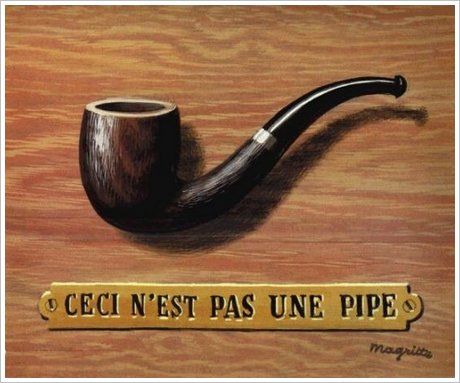
20090421-ceci-nest-pas-une-pipe-rene-magritte

As a child I was introduced to the chicken and egg paradox by my grandmother – a very wise woman, despite (because?!?) the fact that she had very little formal education.

As I grew up I found out that even the adults are passionate about it. Just Google it if you don’t believe me. Last time I checked the search engine had come up with 26 million (26 000 000 000) entries….

Then I was introduced to a slightly more interesting version of it.
Who is responsible for what is going on around us.
“Who created the World”, that is.

Apparently we have three three camps.

The theists, of various denominations – some of whom would cut each-other’s throats attempting to convince the ‘others’ that their God is the true one, believe that an outside agent is wholly responsible for the ‘Big-Bang’ and all its consequences. Or, at least, for ‘jump-starting’ the process.
The atheists, some of whom are ‘rabid’ enough to be as obnoxious as some of the theists, who blame it all on Lady Luck.
And the agnostics, like myself, who cannot make their minds one way or another.

Now, and I hope you won’t mind, I’m going to enumerate some facts.

  • We, the humans, are the ones who came up with the Big-Bang theory.
    Which is nice. It offers a generous canvas on which we might eventually thread a lot of ‘science’, but doesn’t, in any way, shape or form, offer even the slightest opportunity for the most imaginative amongst us to propose the flimsiest hypothesis about what started the whole process.
    Hence those of us who follow a far longer tradition feel free to consider that a Divine interference is the sole rational explanation. For everything that hasn’t yet a ‘scientifically proven’  one. As if science ever offered us a definitive answer to anything…
  • The Big Bang Theory was initially devised by a Catholic priest, Georges Lemaitre, as yet another attempt to understand God’s ways.
  • No matter what the various prophets and religious teachers have told us, all books – including the ‘holy’ ones – have been written by people. They might have been inspired by (a ?!?) God, there is no way of telling what happened in the minds of the writers, but all those books have been written by human hands.
  • We, the humans, are the ones who consider this problem to be a very important one.

So important, in fact, that even a newspaper otherwise busy with economic and political issues occasionally looks (up ?!?) at it.

In its Christmas Day edition the Wall Street Journal published “Science Increasingly Makes the Case for God” by Eric Metaxas.
Basically he author tells us the story of how Sagan started the hunt for ‘Extraterrestrial Intelligence’ and how the seemingly simple task ended up in a cul-de-sac.
While Good Old Carl thought “that there were two important criteria for a planet to support life: The right kind of star, and a planet the right distance from that star” in time “our knowledge of the universe increased” and “it became clear that there were far more factors necessary for life than Sagan supposed”.
So many in fact that some of us, Eric Metaxas included, now believe that “Probability said that even we shouldn’t be here”.

In this context I’d like to bring to your attention the words uttered by Lord Kelvin in 1895 – by that time already elected president of the Royal Society: “Heavier-than-air flying machines are impossible.”

“Yet here we are, not only existing, but talking about us existing here.”

Do you see the pattern?

The usual claptrap, because something can’t be explained, it must be God.” (Mark Baxter’s comment on my FB wall) Or outright impossible, I might add, following Lord Kelvin’s example.

In other words ‘if WE cannot figure it out then it either doesn’t exist or has been made by God’.

But who made ‘God’ in the first place? And why?

Are we even aware that what we call ‘God’ is nothing but an image?
I’m not going to delve far into such intricacies like reminding you that no Orthodox Jew would ever pronounce the ‘true’ name of God but this is a powerful indication that our Elders were aware of the difference between reality and our ability to figure it out.

So why do we keep making this mistake? Why do we still try to ‘invent’ an ‘outside agent’ whenever we don’t have enough information about how something came to be?

That outside agent might very well exist, of course. Someplace, ‘out there’…. Or not. For all we know some things might happen just by pure chance. However improbable that might seem. To us!

We cannot determine, as of now at least, either way.

Then why insist? Any way?

Some of you will tell me, quite appropriately,  that ‘believing’ has brought us where we are now.
That ‘faith’ has guided us through the dark nights when we would have otherwise lost our hope. That following the ‘ten commandments’ has kept us from killing each-other much more ‘passionately’  than we’ve done it.

But now that we’ve understood what religion has done good for us, what’s keeping us from behaving ‘as if’?
Without ‘God’, or whatever name you want to use for the reality that harbors us at its bosom, having to ‘strike’ us down from time to time?


coruptia ucide

Every 25 years or so Romania startles the rest of the world.

In 1989 we had to pass through the bloodiest Revolution in the Eastern Block in order to get rid of the most unreasonable communist dictator in Europe, bar Stalin of course.
In 2015 we had to be awaken by a disastrous fire in a night club to oust a prime minister who is currently under investigation for alleged corruption.

What’s going on here?

Some history first.

For the last 2000 years the Carpathian mountains have been the first obstacle that had to be negotiated by the migratory peoples that came to Europe from the depth of Asia.
Since for the first 1000 years on the plains where now lie Northern Poland and Northern Germany there was nothing to be plundered while the Northern shores of the Sea of Marmara were harboring a very rich city – Byzantium – most of those tribes transformed the area between the Carpathians and the Black Sea into a sort of highway. That’s why whatever forms of political structures the local population – the proto-Romanians – were trying to set had very short lives. They usually were fleeting fiefdoms run by chieftains from the migratory tribes whose authority survived only till the next, and more powerful, tribe arrived in the region.
After the huge Russian plains have been somewhat stabilized by the establishment of the Crimean Khanate the situation became even more complicated. The area was a battle ground for Bulgarians, Turks, Tartars, Hungarians and later Austrians and Russians. Besides the constant political instability this situation included the fact that very seldom the people who were in charge with running the place had a strong connection with the people they were leading. If any at all.
This had very insidious consequences, the most important being a huge distrust of authority. The present days libertarians would argue that this is a good thing… Well, think again.

If the people do not, not at all that is, trust those who happen to be in power and those in power do not care at all about those under their patronage you have the ‘perfect’ set of circumstances for the onset of an all pervasive corruption.

During the last five centuries the Western Europe has slowly evolved from Feudalism – the rule of he who happened to be powerful enough, tamed by some traditions inspired by religion, to what is now known as ‘The Rule of Law’. Meanwhile, in the European provinces occupied by the Ottoman Empire people lived in an almost schizophrenic manner. They passionately hated their rulers – and did their best to cheat them when ever they could, while developing a very strong respect for traditions, the only thing that kept the people together.
By the way, this is also the explanation for what has happened in the former Yugoslavia, where strong ethnic and religious allegiances were played upon by callous political adventurers.

This constant distrust/disdain between the rulers/administration and the general public has only deepened during the Soviet imposed communist rule and produced a real chasm between these two social strata. And it’s exactly this divide that is the reason for which all dictatorial regimes fail abysmally, sooner or later.
A convincing explanation for this was provided, long ago, by Pareto: ‘whenever the circulation of the elites (social mobility) is hindered, the society where this is happening is in great danger’.
Another way of explaining the unfailing demise of any dictatorship is corruption. When ever the rulers do not care about anything else but their very short term interests and the ruled do their best to cheat the system the corruption becomes so pervasive as to clog the entire social mechanism.

If left to itself this cancer can lead to implosion. The Roman Empire, for instance, didn’t fell because it was mortally wounded by the barbarous migrant tribes. It had became so weak because of wide spread corruption as to allow the barbarians to provide him with the fatal blow… Just consider what Caligula used to do for fun… The Soviet Empire did almost the same thing.
Now that I’ve reached this point I’ll have to remind you that corruption does not always have to be about money but covers all instances when people misuse, intentionally, their power.

You see, people make mistakes.
There is no way of avoiding this.
And the main difference between a corrupt society and one which is more or less ‘normal’ is that in a normal society he who notices a mistake has at his disposal enough means to report that mistake to the relevant authorities while having a decent chance to survive the attempts of the ‘perpetrator’ to ‘cover his tracks’.

The fire that started the current uprising in Romania was nothing but the final straw that broke the camel’s back. People have witnessed, individually, so many instances of corruption that had become fed up with it. But each of them wasn’t quite sure about what the guy next door was going to say/do about it. Meanwhile the authorities were more a part of the problem than providing a solution.

When this tragedy struck a lot of people have finally understood that this has to stop. And took their grief to the street.

dolce-gabbana-gang-bang

Some 30 years ago I stumbled upon a book by Desmond Morris.

The Naked Ape.

I read it overnight because next day it had to be returned to its owner. Books published in their original languages were hard to come by in communist Romania…
Little did I know at that time that my interests will slowly shift from Mechanical Engineering to Sociology and then on to decision making… Anyway…
In that book Morris tries to convince us that women have so many periods because in this way they are a lot readier to receive their mates, thus ensuring a tighter bond inside the couple. In turn this is beneficial in an evolutionary sense because a tightly knit couple is better suited for raising the kind of slow growing children that is characteristic for the human species.
In short Morris proposes that monogamy was a step forward in human evolution.
I tend to agree with him and I even have a further argument. Imagine what would happen if a small number of alpha males would ‘corral’ – one way or another – most of the available nubile women, as it’s the case with the chimps or the gorillas. Do you think the rest of the males would be able to cooperate in any way towards the survival of the community they belong to or they’d be constantly obsessing about how to get laid?

Which brings me to my subject.

Emile Durkheim used suicide as a pretext to introduce us to his theory about social solidarity and the social function played by what we consider to be a crime.
Durkheim’s research had led him to see suicide as an individual decision but one which is heavily influenced by the cultural medium to which the decision maker belongs. More over, the same line of thinking produced his conclusion that a society must keep a fine balance between ‘solidarity/intolerance’ and ‘laisez-faire’. One that is too intolerant drastically reduces its own ability to adapt to changes that occur in its ‘environment’ while those that do not care about the fate of their members will eventually auto-dissolve.

What if incidence of rape was to be studied in the same light?

Bill Cosby – a man who, let’s face it, could have had legions of willing women – is accused  to have drugged and raped some 40 women in more than 30 years before anything came to public notice.
Jimmy Savile, a British “larger-than-life character”, used “his celebrity status and fund-raising activity to gain uncontrolled access to vulnerable people across six decades” and to unabashedly rape them.
Rape not only occurs randomly in war time but has also been used as a weapon:
Sexual violence is also used to destabilize communities and sow terror”.
Meanwhile France – Durkheim’s own Motherland – has become the stage for some 7000 ‘tournantes’ every year. The English term for ‘tournant’ being gang rape.

As Durkheim said more than a hundred years ago suicide is indeed an individual act/decision but it’s incidence is heavily influenced by what happens around that person.
Same thing is valid for rape. A rape appears at the intersection between the history/experience/upbringing of the rapist, the social/cultural milieu in which he lives and his ‘on the spot’ decision.

Sex sells.
“It’s been said that as human beings, we have a lizard or reptilian brain that responds to certain primal urges. Food is one. Sex and reproduction is definitely another. This underlying, pre-programmed disposition to respond to sexual imagery is so strong, it has been used for over 100 years in advertising. And the industry, while abusing it more and more, would be foolish to ignore the draw of sexual and erotic messaging.”

How far are we willing to go in order to make a sale? As far as Dolce and Gabbana went when they published the picture above?

Morris said that our first step towards humanity was to change our very physiology in order to promote (at least an apparent) monogamy. It seems that we are now altering our culture in order to sell more…

Gang Rape taken to the next level… Manipulation went wild…