Archives for category: effective communication

Or should I say “straight”?!?
After all, not everything that comes from the right is ‘right’.
Not everything that comes from the left is ‘wrong’. Or good…
And even ‘straight’ has always been complicated but nobody seemed to care
!

Neither ignorance or education can do anything.
On their own. Education is a process and ignorance a mere situation.

It’s what the educated choose to do with their knowledge that makes the difference!

The key words in the statements above are “I always believed” and “It seems”.

It’s not ignorance that’s going to willingly destroy anything and it was the educated which had always ‘produced’. Moved things towards carefully chosen goals. ‘Rationally’ chosen goals, according to the latest fad.
Everything there is is the consequence of something initiated by educated people. The good, the bad and even the very ugly!

‘Another biased and inconsiderate post.
You completely dis-consider the ignorant. Assuming they are impotent and inconsequential.’

I’m afraid somebody else is assuming things.
First of all, there are no ignorant. Only the actual idiots are ignorant and they cannot do much. We, all the rest, start learning from the first minute of our life. Each according to how lucky we are.
Secondly, even the highest educated ignore most of the existing knowledge. But that doesn’t make them ignorant. The most important thing a person must learn before calling itself ‘educated’ is that nobody, that person included, will ever know enough.
Thirdly, all action is initiated from a piece of information. One starts to look for food after realizing they are hungry. After transforming a feeling into a resolution and making a plan to fulfill that resolution. A reaction – like pulling back your hand from a hot stove – doesn’t need much thinking indeed. But that’s only a reaction. Not at all a carefully, supposedly rationally, chosen goal.

Facts don’t care about your feelings.

It’s the act which does the trick.

It is the fact that it was you who had determined whether to keep them or not as they were given to you which actually affirms ‘it’.

Simple, actually, if you consider it with an open mind…

And here’s another question.

How wise is it for people to not care about other people’s feelings?

‘Cause I don’t expect facts to care about feelings. Mine or anybody else’s…

Ego is like dust in the eyes.
Without clearing the dust, we can’t see anything clearly.
So clear the ego and see the world.

Is this a wise thing to do?
To ride a motorcycle without any eye protection? Whatsoever?

We’re constantly being modeled by everything which happens to us. By what we do and by what is being done to us.
We are what our past has made of us.
Our ego is the intersection between ‘what we could have been’ and ‘what the circumstances allowed us to become’.
Which intersection, no matter how wide or narrow, is inhabited by our I-s. By each of us.

Those intersections, where are crammed all the pasts that have already happened to us, are the only places in the world over which we, each of us, will ever be in command.

In each successive moment of our life, in what we call ‘the present’, we have the freedom to choose where we want to be, inside the place where we can be. Inside the intersection I was speaking about just now.
Inside those intersections there’s nobody but each of us and each of our pasts.

Are we comfortable with our past?

Have we digested our past? Have we learned from it?
Have we cleared it?
Have we made it transparent enough? To see the future through it?

Are we comfortable enough with our past?
Comfortable enough to bring it, with us, into the future?

“I mean by a “fact” something which is there, whether anybody thinks so or not.“
“Facts are what make statements true or false.”

Bertrand Russell

What do you see here?
A ‘fact’ or ‘gravity in action’?
Bertrand Russell? Isaac Newton?

Or both?
After all, Earth pulling down yet another apple is (nothing but) a fact.

Yeah, but ‘Earth pulling down apples’ had become a fact only after Newton had figured it out.
And received this name, “fact”, only after Russell had coined the concept.

My point being that some things happen in the special place we call ‘conscious mind’.

“When in the Course of human events, it becomes necessary for one people to dissolve the political bands which have connected them with another, and to assume among the powers of the earth, the separate and equal station to which the Laws of Nature and of Nature’s God entitle them, a decent respect to the opinions of mankind requires that they should declare the causes which impel them to the separation.
We hold these truths to be self-evident:”

The United States, currently the most powerful country on Earth, exists because some people had put it in their minds to make it.
Gravity exists, as we know it, because Isaac Newton had noticed it and described it to us.
Facts exist, as we think of them, because Bertrand Russell had introduced them into our thinking process.

‘Do you imply that apples did not fall down before Newton noticed the process? That people didn’t think before Russell told them how? That the US would have remained a colony if not for the Boston Tea Party?’

I believe you’re fully aware that the question above had sprung up in a mind before being put down on paper… before being tapped on a keyboard, actually…

Of course gravity existed before Newton had described it. Of course people had been thinking for a while before Russell let us in on his thoughts on this subject. And of course I have no idea about what would have happened if those guys in Boston had brewed the tea instead of throwing it in the harbor.

But it is very clear for me, “self-evident” as the Founding Fathers had put it, that some things do happen in a certain manner.
That not all of us think in the same way – god forbid, that would be against our very nature – but all of us think according to some ‘rules’. Hence the results of our thinking are not exactly ‘haphazard’.

The point of today’s post being that my method is ‘thinking’.
I use my ‘conscious mind’ as an instrument. As a scalpel-cum-microscope with which I attempt to study how my mind works.

Being fully aware (?!?) that this process takes place ‘inside my head’. Inside my ‘limited’ head. Limited in both space and time.
That ‘that’ head is made of the same matter – atoms – as the rest of the Universe. Hence some of its limitations.
And that ‘that’ head works ‘inside’ the cultural universe created by the aggregated effort of every human that has ever lived on Earth. Hence another set of limitations.

He was my friend. We trusted each-other.

He was huge. 150 pounds of muscle. Pitch black.
Some people feared him. Specially when seeing him for the first time.

He had earned the respect of many. Canine friends in the park. People who had come in contact with him.

Respect is a tricky thing.

Fear is simple. Not that different from love. Somewhat contrary…
Trust is simplish. After enough time spent together, you learn whether you can trust the other.
Respect, on the other hand….

You cannot respect something/somebody which/whom you find repulsive.

You can ‘trust’ a bully to make your life miserable but you cannot respect them.

Do you fear a bully?
Not necessarily. You don’t need fear to avoid a danger. You only need to understand what’s going on.

Then what is ‘respect’?
Something you learn about. While trust is something you learn to.
Trust is something to be rather felt while respect is something you experience with your mind. First and foremost.

Furthermore, nobody fakes trust. Unless presented as ‘respect’.

Why have I chosen an animal to illustrate this post?
Because ‘fear’ is what drives awareness. Fuels conscience. And, as far as evidence suggests, it is widely felt in the animal kingdom.
Our family. Our only home in this world!

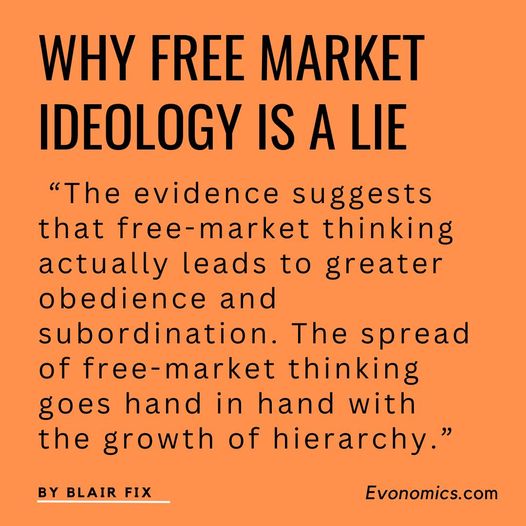
“So the free market, it appears,
is not about freedom. It’s about power.
Free market thinking is successful,
I argue, because it uses the language of freedom
to cloak the accumulation of power.”

Blair Fix

Free market works for only as long as it remains free!

Which is the problem.

Before meddling with the free-market, we need to agree first about freedom. About what we mean when we think/speak about freedom.

Freedom for all versus freedom for only those who happen to fit a certain set of criteria. To be wealthy, in this case.

Functional freedom – as in the kind of freedom which preserves, which remains sustainable over the long run – versus ‘absolute’ freedom. The kind of freedom which leads to anarchy. Which anarchy, necessarily and very shortly, becomes a rigid hierarchy. Then ends up in shambles…

Free market works for only as long as it remains functionally free. Free enough to do its thing.
To provide enough for enough of those contributing to the collective effort to make ends meet.

To understand what Blair Fix has to say, we need to identify the key words in his speech.
“It appears” and “I argue”.
In fact, he tries to convince us to see ‘the world’ as he sees it. He tries to convince us to be ‘on his side’.

He divides ‘the problem’ and then takes sides… which only contributes to the world/market losing its freedom.

As for what ‘evidence suggests’…
It suggests two things.
That yes, the ‘free market’ has, indeed, become an ideology. There are too many people who consider the market should be left to the mercy of the powerful. Who don’t understand how freedom actually works…
The second thing being an evidence. Not a suggestion.
All other markets but the free one work worse.

Adorno and Heidegger explores the conflictual history
of two important traditions of twentieth-century European thought:
the critical theory of Theodor W. Adorno and the ontology of Martin Heidegger.
As is well known, there has been little productive engagement between these two schools of thought,
in large measure due to Adorno’s sustained and unanswered critique of Heidegger.”

“Doubt everything” instead of ‘trust the scientist until proven wrong’.
‘Illiberal democracy’, whatever that might mean…
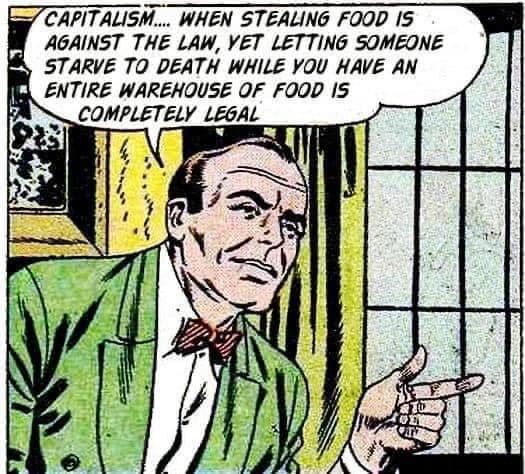
“Abolish capitalism”. As if there was any viable alternative!

What’s going on here?!?

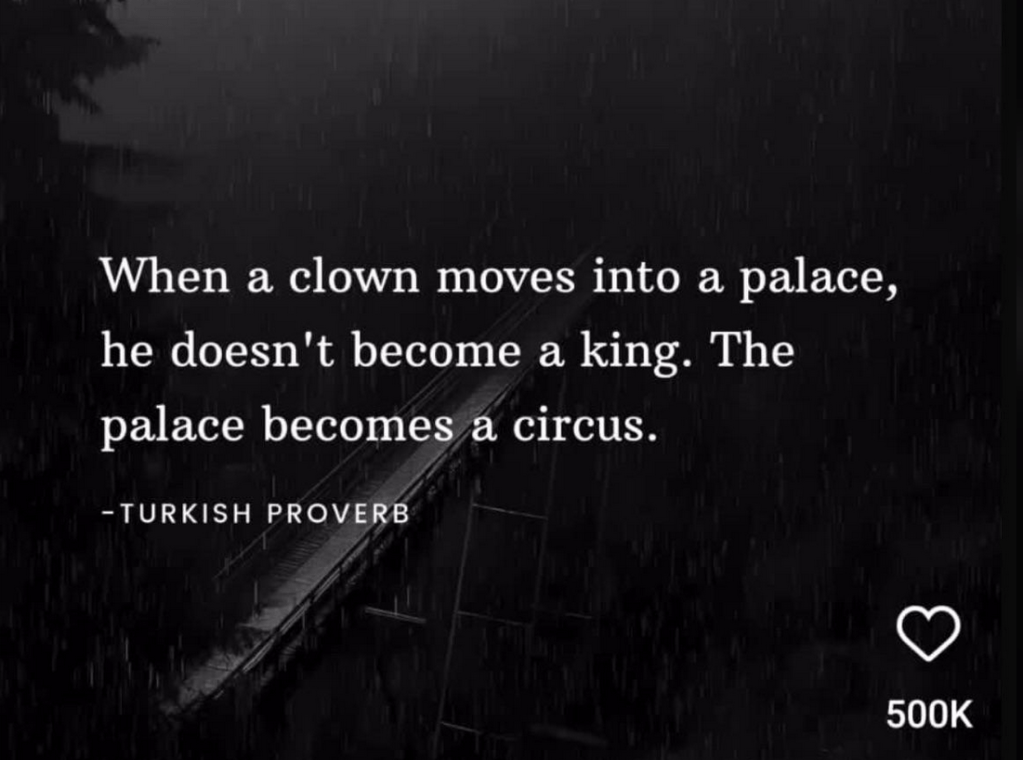
Indeed, but only a clown has enough gumption to tell the king that ‘he’s got no clothes on’!

Furthermore, every respectable palace has both a king and a jester.
The jester overpowering the king doesn’t change the palace into a circus. Only refocuses the attention of those paying attention…

If it did,
it probably had to happen!

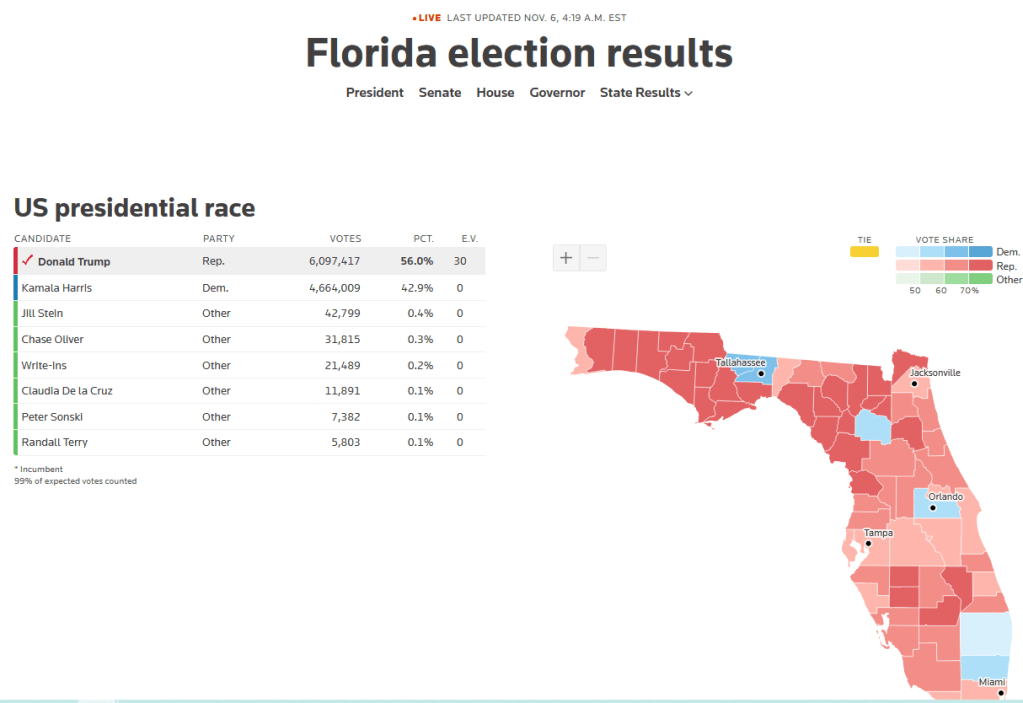
“Trump, a Florida resident, has said he would vote against the ballot measure, after initially appearing to suggest he would vote in favor.” Reuters, 2024-11-06

Abstract:

While there has been a plethora of analysis on diverse subjects within Holocaust studies,
there remains some reluctance to engage with women’s unique experiences,
which were largely subsumed under those of men in the decades following World War II.
This article examines how women’s specific experiences, both biological and social, are often denied
or suppressed in research and literature on the Holocaust, even in survivors’ own testimonies,
despite the fact that these are often clearly gendered experiences.
By revisiting key themes from the testimonies of female survivors,
such gendered analyses contribute to a fuller picture of the unprecedented
and relentless killing that the Final Solution’s anti-Semitism entailed.

Nicole Ephgrave
Journal of Women’s History Johns Hopkins University Press
Volume 28, Number 2, Summer 2016 pp. 12-32
10.1353/jowh.2016.0014

Those who had ordered what had happened at Auschwitz and many of those who had actually perpetrated the crimes considered themselves to be free. They did it on their own will.
Their freedom was intact!
And they had chosen, freely, not only to diminish the liberty of other people but to actually defile them…

Individual freedom is something which depends, largely, on each of us. On how each of us ‘digests’ their previous experiences and chooses to operationalize what they have learned.
Social freedom, on the other hand, depends on how we, as a group/community, aggregate our individual choices.

In this sense, the latter one, freedom becomes a space.
A place – THE place, actually – where each of us can put in practice our own individually free choices.

Now, places have rules.
Each place being defined by the rules governing that place. Some of those rules are specific for each space while others come from the ‘previous’ spaces.
For example, we – humans – are both animals and something ‘higher’. As such, we ‘obey’ both the rules governing the biological realm and the laws of each of the countries we happen to live in.
One of the most fundamental rules evident to man is “no good deed goes unpunished”. Otherwise known as the law of the consequence. “Do not be deceived… A man reaps as he sows” Gal 6:7

Everything we do leaves a trace. Influences the future. Creates karma.
How we, each of us, chooses to exert their freedom creates the circumstances in which we, and our children, will have to exercise theirs. Their freedom!
The manner in which the ‘free nazi’ had chosen to exert their freedom – to kill other people – has shaped the future of Europe. And of much of that of the world!

The manner in which we choose to ‘digest’, to interpret, what had happened shapes our future.

Which brings us back to ‘dehumanization’.

Many of us consider that the victims have been dehumanized. Made less human.
Had their humanness obliterated!
By the abusers. By those who had abused both their freedom and their power!
By those who had transformed other humans into victims….

I beg you to reconsider this:
Who had undergone the process of dehumanization?
The victims or the bullies?!?

We, as free thinkers, have the ability to poke fun at whatever happens to us.
To relativize our experiences.
Hence ‘no good deed goes unpunished’. When the utmost importance of the subject begged for a way more formal wording…
Poking fun at things we cannot control is a survival gimmick. By doing this we can, individually, survive in dire circumstances. Specially in situations where our inner values are questioned. When we have to quell what psychologists call ‘cognitive dissonance’. When we are forced – by ‘external factors’ – to do something we would not have done in ‘normal’ circumstances.

In this sense we can better understand the process of dehumanization.
The defiler actually needs to dehumanize the victim. To consider the victim something else but a human being. Otherwise, the defiler would no longer be able to defile the victim.
But what happens when a human being does not recognize (some of) their fellow humans as being their peers?

Who ceases to be human?