Archives for category: effective communication

Indeed, but only a clown has enough gumption to tell the king that ‘he’s got no clothes on’!

Furthermore, every respectable palace has both a king and a jester.
The jester overpowering the king doesn’t change the palace into a circus. Only refocuses the attention of those paying attention…

If it did,
it probably had to happen!

“Trump, a Florida resident, has said he would vote against the ballot measure, after initially appearing to suggest he would vote in favor.” Reuters, 2024-11-06

Abstract:

While there has been a plethora of analysis on diverse subjects within Holocaust studies,
there remains some reluctance to engage with women’s unique experiences,
which were largely subsumed under those of men in the decades following World War II.
This article examines how women’s specific experiences, both biological and social, are often denied
or suppressed in research and literature on the Holocaust, even in survivors’ own testimonies,
despite the fact that these are often clearly gendered experiences.
By revisiting key themes from the testimonies of female survivors,
such gendered analyses contribute to a fuller picture of the unprecedented
and relentless killing that the Final Solution’s anti-Semitism entailed.

Nicole Ephgrave
Journal of Women’s History Johns Hopkins University Press
Volume 28, Number 2, Summer 2016 pp. 12-32
10.1353/jowh.2016.0014

Those who had ordered what had happened at Auschwitz and many of those who had actually perpetrated the crimes considered themselves to be free. They did it on their own will.
Their freedom was intact!
And they had chosen, freely, not only to diminish the liberty of other people but to actually defile them…

Individual freedom is something which depends, largely, on each of us. On how each of us ‘digests’ their previous experiences and chooses to operationalize what they have learned.
Social freedom, on the other hand, depends on how we, as a group/community, aggregate our individual choices.

In this sense, the latter one, freedom becomes a space.
A place – THE place, actually – where each of us can put in practice our own individually free choices.

Now, places have rules.
Each place being defined by the rules governing that place. Some of those rules are specific for each space while others come from the ‘previous’ spaces.
For example, we – humans – are both animals and something ‘higher’. As such, we ‘obey’ both the rules governing the biological realm and the laws of each of the countries we happen to live in.
One of the most fundamental rules evident to man is “no good deed goes unpunished”. Otherwise known as the law of the consequence. “Do not be deceived… A man reaps as he sows” Gal 6:7

Everything we do leaves a trace. Influences the future. Creates karma.
How we, each of us, chooses to exert their freedom creates the circumstances in which we, and our children, will have to exercise theirs. Their freedom!
The manner in which the ‘free nazi’ had chosen to exert their freedom – to kill other people – has shaped the future of Europe. And of much of that of the world!

The manner in which we choose to ‘digest’, to interpret, what had happened shapes our future.

Which brings us back to ‘dehumanization’.

Many of us consider that the victims have been dehumanized. Made less human.
Had their humanness obliterated!
By the abusers. By those who had abused both their freedom and their power!
By those who had transformed other humans into victims….

I beg you to reconsider this:
Who had undergone the process of dehumanization?
The victims or the bullies?!?

We, as free thinkers, have the ability to poke fun at whatever happens to us.
To relativize our experiences.
Hence ‘no good deed goes unpunished’. When the utmost importance of the subject begged for a way more formal wording…
Poking fun at things we cannot control is a survival gimmick. By doing this we can, individually, survive in dire circumstances. Specially in situations where our inner values are questioned. When we have to quell what psychologists call ‘cognitive dissonance’. When we are forced – by ‘external factors’ – to do something we would not have done in ‘normal’ circumstances.

In this sense we can better understand the process of dehumanization.
The defiler actually needs to dehumanize the victim. To consider the victim something else but a human being. Otherwise, the defiler would no longer be able to defile the victim.
But what happens when a human being does not recognize (some of) their fellow humans as being their peers?

Who ceases to be human?

Engine

In their attempt to accomplish their own bidding, people use tools.
From the simplest – a crow bar, for example – to the more and more complicated ones.
The engine is one of the most interesting tools invented by us. While all the tools we used before were mere extensions of our hands, engines directly transform energy into movement. We, the operators, only control them. And provide them with energy.

But don’t have to transform that energy into movement ourselves. As we do when shoveling coal to feed a stove. Or to stoke a steam engine…

Wait a moment! You said we “don’t have to transform that energy into movement ourselves”. Then ‘we have to shovel coal to stoke the steam engine whenever we need that steam engine to work for us’.

Yep. An engine is still a tool. Still an extension of ourselves. And we still have to move our limbs – spend some energy – when operating one. The main difference between a hand shovel and a backhoe being the fact that all the energy needed to ‘activate’ the hand shovel flows through our muscles while most of the energy used to move the backhoe comes from its engine.
Another example being a horse drawn cart. We can carry things on our back – using exclusively the energy provided by our muscles – or we can load those things onto a horse drawn cart. Then drive it, channeling horse-muscle energy into the process – where ever we need those things to arrive.

Savvy?

“All governments suffer a recurring problem:
Power attracts pathological personalities.
It is not that power corrupts but that it is magnetic to the corruptible.”

Frank Herbert, Chapterhouse:Dune

How can Orson Scott Card be so bigoted, but the Ender’s Game series is about empathy and acceptance of others?

– “Circle of Empathy. If you’re inside the circle, you are worthy of empathy and it applies to you. If you’re outside the circle, you are not worthy of empathy and bigotry towards you doesn’t count because you don’t count. If you’re ever baffled by how one person can be forgiving and accepting towards one group and turn around and be rabid dogs towards another group it’s because in their emotional calculus the second group literally doesn’t count as “deserving”.
Does it make sense? No. Do humans make sense? No.
“”

Card was young when he wrote Ender’s Game and for what it’s worth I think it reflected his real views on the world at the time. He’s since spent decades of his life in a high control cult that has told him constantly that gay people are moral failures.
I think there’s a chance that Card is actually closeted from remarks he’s made on the subject and fear of discovery has made him feel he has to be even more dogmatic on the matter.
I grew up queer in fundamentalist churches. I’m always going to think of people like this as partial victims, even if it would be easier to just hate them. Brainwashing is real. It’s not just something you shrug off because you’re an adult.
I love his Ender series and think it’s beautiful. It doesn’t actually matter to me what he personally believes because his work is saying something else.

Discussion found on Reddit:
https://www.reddit.com/r/books/comments/14mmmu0how_can_orson_scott_card_be_so_bigotted_but_the/?rdt=42921

Alive in a living context.

Try to imagine a single living organism.
Forget about ‘where did it came from’. Forget about ‘what does it drink/eat/breathe’.
Now, does the existence of a single living organism mean that life is present? When attempting to answer this, pretend no observer is present…

‘Life’ is ‘wide’ word. It covers a lot.
From ‘life’ as a phenomenon. That thing studied by biology.
To ‘life’ as an ‘individual experience’. That thing cared for by medicine. Human, veterinary… By the way, how do you call a person who takes care of sick plants?

Am I making any sense here?

My point being that life is both a phenomenon and an experience.
As a phenomenon, life – as we know it – needs a certain environment. And a ‘push to start’.
According to what we presently know, life may appear, on it’s own, in certain conditions. We don’t know, yet, which are those exact conditions. Nor exactly how it happened. Only that it seems possible. And that’s enough for me.
If certain conditions are met, life – as a phenomenon – is possible.

Furthermore, if life as a phenomenon has established itself in a certain environment, life as an experience becomes certain. Each individual organism living in that environment experiences its own life. Regardless of whether a particular organism is aware of its being alive or not.

Shared Awareness

Life, as a phenomenon, is a ‘process’.

Individual organisms become alive. One way or another but always as a ‘continuation’.
Each generation of individual living organisms live by the same rules as the generation before it. Each ‘child’ generation follows in the footsteps of the ‘parent’ generation. A ‘blue print’, a genetic blue-print, is passed over from generation to generation. OK, let’s pretend we haven’t yet learned about genetic variation…
Each individual organism continues to be alive for as long as:
– It remains ‘functionally whole’. A human can continue to live, at least for a while, without any limbs. But not without its head or heart. Well, you understand what I mean.
– It continues to exchange substances with the environment in which it lives. Which means that the individual organism is the entity controlling which substances get inside and which substances are ejected from its interior. OK, we need to breathe so we inhale microorganisms and pollutants ‘on top’ of the air we need to survive – and some of them make it into our blood-stream – but it’s still our lungs which absorb oxygen, eliminate carbon dioxide from the blood and leave nitrogen alone. I’m sure you get my drift.

This ability of even the most basic/primitive individual organisms to interact with the environment – along the rules inscribed in their genetic inheritance – allows us, conscient observers of the phenomenon, to consider that individual organisms, while alive, display a certain degree of awareness. They behave as if being aware of the difference between oxygen and nitrogen. As being aware of the need to breathe. As being aware of the fact that too much carbon dioxide in your blood is something to be avoided… And so on.

Fast forward from bacteria – individual organisms which are able to extract specific nutrients from a broth to, say, chimpanzee. Who are very picky about food. When there is plenty enough to choose from…
There is a certain commonality between these two very different kind of organisms being able to feed themselves, right? And if we, humans, pretend to be aware of (some of) our our actions… how do we name this ability of our fellow living organisms? Their, our?!?, ability to choose?

Together?

“The greatest consequence of the arising of self-consciousness and self-awareness in the constitution of humanness, is that to the extent that we human beings are self-conscious beings we are aware of what we do, and of the possible consequences of what we do to ourselves and to other human and not human beings. Self-awareness and self-consciousness are manners of relational living that as they are lived constitute a relational grounding for all else that is being lived. The self-conscious person lives his or her living in a manner in which a question such as, “are you aware of what you are doing?” always makes sense. The self-conscious person lives his or her being in self-consciousness as if he or she were distinguishing him or herself as an independent entity, and operates comfortably in that way. Yet, if we seriously want to explain how is it that self-consciousness happens under the circumstances that we cannot distinguish in the experience between what we call perception and illusion, and, therefore, that we cannot make any reference to an independent reality, we cannot but Þnd out that it is not possible to do so if we do not accept that languaging is not a system of symbolic communications about entities assumed to exist independently of our distinguishing them, but it is a manner of living together in a recursive flow of co-ordinations of consensual co-ordinations of doings.”
Humberto Maturana, The origin and conservation of self-consciousness, 2005

According to Maturana, self-consciousness is somebody’s ability to observe themselves ‘in the act’. To observe themselves observing. Ability developed alongside other self-conscious ‘agents’ through the use of language.
“It is not possible to understand the nature of self-consciousness without understanding the operation of human beings as living systems that exist as emotional languaging living systems: self-consciousness is a manner of living.” Op. cit.

The way I see it, consciousness – self-awareness in Maturana’s terms – is life 2.0.

Just as there are life as a phenomenon and life as an individual experience, there are also human consciousness – a shared ability – and individual conscience.
Just as there’s no way in which a single living organism might appear ex nihilo – unless some ‘outside agent’ introduces it, there’s no way in which anybody might become aware of their own self by themself.
Life – the phenomenon, once established – opens up a huge field of opportunity. Mere chemicals, entangled, ‘cooperate’ towards maintaining the life of the individual organism inside which they happen to ‘cooperate’. Evolution, the process, makes it possible for new forms of life to appear as the environment is shaped by the formerly living organisms. Or by other naturally occurring phenomena.
Consciousness, our shared ability, opens up the next level of opportunity. The opportunity for each of us, individual self-aware agents, to show/prove our ‘true nature’.

Individually as well as collectively.

For me, Trump – along with all other ‘strong willed’ politicians –
are more of a symptom than a cause.
And a cause, indeed, but first and foremost a symptom.

The Economist news letter, October 10th, 2024

One way to figure out the dynamics of what’s going on around/to us is ‘resources, structure, agency’.
For lack of a proper term, I just sequenced the steps of the figuring out process.

For anything to happen, that thing has to start from ‘somewhere’. Some resources are needed at the start of anything.
For anything to happen in a certain manner, that something has to happen inside a ‘space’. Which ‘space’ ‘behaves’ according to a a set of ‘rules’.
For anything to happen, it has to start. To be put into motion. And, at the end, that ‘anything’ – already a ‘something’ – will produce a set of consequences. A ‘feedback’, supposedly carefully taken into consideration by those who had experienced it. And need to move forward.

Coming back to Trump, he couldn’t have happened, say, twenty years ago. The world, America in this case, had to be ready/readied for him. Well, in a sense, America – the American media, to be more precise – had worked hard to make him possible.

So should we blame the media for the advent of Trump?

Hm…

Remember the Apprentice? The show which made Trump famous?
That show was possible, and made Trump famous, because so many Americans watched it. For whatever reasons. By watching the Apprentice, America readied itself for Trump. For President Trump.

Then all those hosting reality-TV shows have a fair chance of becoming President?
After all, Zelensky also started as a TV personality…

Not so fast!
For anybody to become President, there are a few prerequisites.
That guy has to be famous.
That guy has to ‘push the right buttons’. To identify them. And to be willing to push them, regardless of any of the consequences.

Trump was famous enough. And callous enough to make use of some of the prevalent conditions present when he decided to make a run for the Oval Office.
Birtherism was already present. Trump only gave it a louder voice.
Abortion was already a hot issue. Trump only changed his mind about it. From “very pro-choice” in 1999 to “pro-life” in 2011.
But the most important factor which made President Trump possible was public discontent.
MAGA could not become such a powerful slogan if so many people were not already feeling left behind.


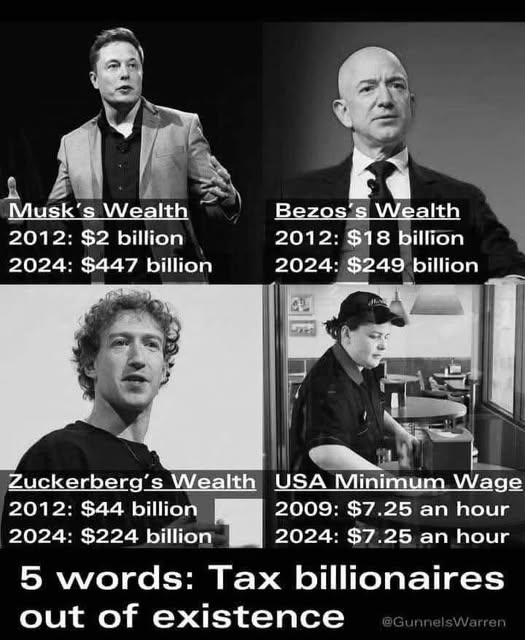
“The share of wealth owned by the bottom 50% hit its low point of 0.4% in 2011”

Coincidence?

ABC News, 2016, September 16,
“How Donald Trump Perpetuated the Birther Movement for Years”

Trumpification?
In a sense, yes. Trump did identify the circumstances prevalent when he made up his mind as opportunities. As resources towards his wishes. Then used the already existing ‘rules’ – and political customs – in his favor.
But can we pretend he had Trumpified politics? Can we pretend he changed the way politics was done in order to serve his purposes?

Or it would be more appropriate to say that a majority – as per how America elects its President – of “We, the People” have allowed him to do as he pleased? For whatever reasons?

““They really don’t care about, is he religious or not,” said R. Marie Griffith, a religion and politics professor at Washington University in St. Louis.
The survey results represent the shift in how white evangelicals now talk about morality and religion in politics, said Griffith. She pointed to a white evangelical culture that takes care of its own, but sees liberal outsiders as evil, and therefore, support for a Democrat is unimaginable to many.
Evangelical leaders, she said, are pushing this idea that, “this is God’s man, and we can’t ask why. We don’t have to ask why. It doesn’t matter if he’s moral, it doesn’t matter if he’s religious. It doesn’t matter if he lies compulsively. It’s for the greater good that we get him re-elected.””

It’s for the greater good…

“And the Lord God commanded the man,
“You are free to eat from any tree in the garden;
 but you must not eat from the tree of the knowledge of good and evil,
for when you eat from it you will certainly die.””

As you might already know, I grew up under communist rule.
The regime described itself as being democratic and promoting freedom. Freedom for all!

The day to day practice, the life we had to endure, proved those words were blatant lies.
Nobody but the dictator was free and the communist democracy was a sham. As soon as anyone opened their mouth – nobody was crazy enough to open their mind! – however slightly, their words were met with extreme caution!
This way I became accustomed with ‘double talk’ before even knowing the book existed!

In a sense, being aware of the fact that words are able to ‘transport’ anything – from abject lies to sublime – is a step further. For the individual. For a society…
When each individual member of a society doubts everything heard or read, that society does have a problem! Disseminated disbelief precedes dissolution.
When individuals no longer trust each-other, things go south fast. Society wise!

Freedom has three dimensions.
‘Phusical’, personal and institutional.
Phusis is the ancient Greek term for ‘growing’ and ‘becoming’. My point being that some things are free in a naturally occurring manner. Also, the phusical freedom is naturally limited. Birds are free to fly only inside the lower strata of the atmosphere.
Personal freedom resides inside our individual minds. Is learned by each individual as a result of social interaction. Is limited by what each individual internalizes during their ‘potty training’.
Institutional freedom is the cultural product of social interaction in a given historical context. I’ll leave aside the fact that history is heavily influenced by geography.

Back in my communist experience, freedom was ‘make believe/belief’. We pretended to be free – otherwise we would have gone nuts – to the tune of convincing ourselves that life was worth living. Otherwise we would have died trying to escape. Furthermore, we convinced the ‘others’ – the ever present ‘political surveyors’ – that we were at least content with what was going on. With how our lives were unfolding.
Our pretenses were the opportunity on which ‘the party’ – the communist party – had built its edifice.
The opportunity grabbed and put in practice by the dictator. Which dictator was the only one enjoying actual freedom. Institutional, personal and, certainly, a lot more phusical freedom than the rest of us.

Another crass example of double talk is how the Americans use the term ‘liberal’. For the Conservative Americans ‘liberal’ is a cuss-word while the Liberals are proud to be called in this manner but the word does have the same meaning for both of them. It includes everything on the left side of the political spectrum, communists included.
The problem with this whole thing being the fact that the communists – the ones inspired by Marx, anyway – are amongst the most conservative political operators ever. No communist has ever changed anything in Marx’s Communist Manifesto. Or doubted anything written by Lenin. No communist has ever accepted that institutional communism, the one that failed, was far more than a crime. A huge error!

Anything familiar?

And what has any of this to do with the First Lie?
With the first lie, perpetrated by the Founding Father at the very beginning of the most important Book?
Which Book is supposed to be read literally by certain individuals having a certain political orientation?

I really can’t wrap this thing up before noting that the First Lie didn’t hold.
The serpent convinced the woman to eat, she passed the fruit along to her man and thus we’ve all became able to ‘tell good from evil’. To a degree, of course.
And nobody died! Not immediately, as a consequence of them eating that darn fruit.

And the Lord God said,
“The man has now become like one of us, knowing good and evil.
He must not be allowed to reach out his hand and take also from the tree of life and eat,
and live forever.”
 So the Lord God banished him from the Garden of Eden
to work the ground from which he had been taken
“.

And what’s in it for us, ordinary people?”
My 90 years old father, commenting the news just running on TV

Nothing but what we can make of it.

The Earth was circling the Sun since the very beginning. Way before Bruno ‘discovered’ the phenomenon. Again…
The egg was sending ‘chemical signals’ since … who knows when. We, all of us, have been born without any knowledge on this matter.

Giordano Bruno was burnt at the stake.
He wasn’t the only one to face the consequences of his discovery. The lives of everybody else have been changed by his discovery. And the way we understand the world!
Sooner or later, somebody will find a way to use the information about ‘how the egg works’. To make some money out of it, to help people… or even to make an ‘ideological point’. “Yet another male dominated fantasy about the creation of life…”

So, Giordano Bruno was burnt at the stake as a consequence of his discovery?!?

Nope!
Bruno was burnt at the stake as a consequence of what we, the people, have made of his work.
Well, not exactly us but our ancestors. And not exactly we, the ordinary people, as the ‘bright minds of the day’. They had to be bright since ‘they’ were the ones running the show, right?!?

OK, so ‘those who know how to weave a story are those who order around those who know the facts’.
According to Yuval Noah Harari.
And, again, what’s in it for us?

Nothing but what we can make of it.

For as long as we’ll continue to chase power, ‘political power’, things will continue as they were.
As we’ve conditioned ourselves to expect them to be.

But, hopefully, when the next Giordano Bruno will tell us things can be spun the other way around, we’ll know better than to burn him at the stake. Alive. Again!

Power can be exercised in many ways!
The more sustainable of which being in favor of the general public.
‘For the long term benefit of the self aware social organism’ instead of ‘for how the public has been led to believe by the spin doctors’.

When will we be able to figure this out?
When those who know how things work will spill the beans out-front instead of choosing whose arse to lick.
After all, the egg encourages the most suitable sperm, not the most enchanting one…

1. Revelation
2. Widespread destruction or disaster

Unsettled.

Not in the sense that I feel unsettled in my ‘beliefs’.

In the sense that the world is coming apart. We allow ourselves to be led further and further away from our brethren and, together, from the ‘hard’ reality.

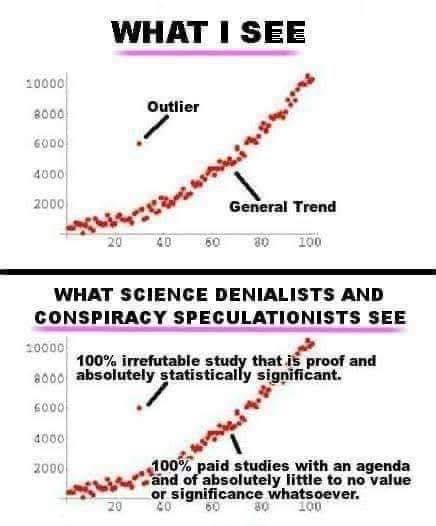
The key concept here is ‘rabbit holes’, not ‘conspiracy theories’.

Each of those theories are nothing but a highly redacted version of the truth, draped in psychological gimmicks. Dangerous but survivable.

It’s the fact that once hooked, those so disposed become unable to see/perceive/accept that no truth is complete or ‘everlasting’. That we need to adapt our beliefs to the ever-changing reality.

On the other hand, it was us who have built this world. The one we currently inhabit.
We have inherited the world and fine-tuned it according to our own wishes. To fit our own desires.

We are also the ones who have to sleep in the bed of our own making.
We are the ones to continue the project.
Or take it apart…

We have arrived at the moment of reckoning.
Like each and every other generation before us.

After all, one cannot build something new before taking apart the old.
This is the only constant truth.

It hurts me to accept that I have been wrong. That my understanding was incomplete or inaccurate.
Yet I have to acknowledge that before starting to build a new, hopefully better, version of the truth.
And I cannot do this alone.

Going forward, I can ‘circle the wagons’, along other like minded people, and attempt to defend the old truth.
Or I can, accompanied by a ‘motley crew’, attempt to see behind the curtains.

To leave behind the ‘safety’ of the rabbit holes and see with our own, very diverse, eyes what lies behind the make-belief shrouds woven by the conspiracy theorists.

“Complementarity is a principle that illuminates
an “honest anthropology”
based on “the nature of the subjects themselves who are performing the act””

John Paul II

The manner in which people chose to speak about the subjects they consider to be of great importance sheds a lot of light.
On the speakers!

The notion of “complementarity” was coined by John Paul II in 1979-1981. He was the reigning pope at that time.
I must remind you he was born Karol Wojtyla and his native language was Polish.

Well, nobody bothered to tell him that, in English, “complementary” has a rather limited ‘range’.
“Combining in such a way as to enhance or emphasize the qualities of each other or another. “they had different but complementary skills””

The notion was, and continues to be, used as the reason for which women cannot be made priests or deacons in the Catholic Church. And to deny marriage to the homosexual couples.

I find this whole thing rather baffling.

Man and Woman do not complement each-other. Not always, anyway.
Man and Woman survive together.

If you don’t understand the difference, don’t bother reading any further.

Now, if we need a certain ‘interaction’ between Man and Woman for the species to survive, then certainly we need to condemn homosexuality, right?

Wrong!

We have a series of facts here.

For the species to survive, Man and Woman are equally needed.
For the species to survive, it isn’t necessary for all men and women to bear children.
Homosexuality and gender dysphoria are realities. Regardless of what each of us thinks about each of them.

Humankind has survived. For now, at least.
The three facts I mentioned above have existed along the entire human evolution. We’re still here.

Back to square one.

I can ‘understand’, for the sake of the argument, the notion that homosexuality should not be ‘encouraged’. Homosexual couples are not naturally ‘productive’ so they shouldn’t be sanctioned by the church…
But if both Man and Woman are so indispensable, in their respective ‘natural roles’, for the survival of the humankind and “equal”, according to mainstream Catholic theology, then how can be explained the fact that Woman always comes second? And cannot be ordained?

Why do we allow a rather obscure thinker from the IV-th century B.C. to influence our decisions!?!

“The polarity position, first articulated by Aristotle
(384–322 b.c.), rejected fundamental equality while defending the
natural superiority of man over woman.”

Prudence Allen, RSM: Man-Woman Complementarity, The Catholic Inspiration

Buckminster Fuller prodded us to ‘convert our high technology’ into something really useful.

To do that, we need to perform a ‘self-actualization’ act.
Maslow considered self-actualization to be a need. An actual need, on par with the rest of them. Basic resources, safety, a place in society, esteem…
Maslow was right. Even if somewhat ‘incomplete’.

We need to crawl through the first four stages of Maslow’s pyramid in order to reach the fifth level. Where we have the opportunity to perform a self-actualization.
The result is up to us! There’s no rule nor any guaranteed outcome.

Eat and you’ll live another day. Feel safe and you’ll sleep well. Be loved and you’ll find your place. Feel good about yourself and you’ll be more ‘useful’. For yourself and for those around you.
To become a ‘better person’ you have first to find out what ‘better’ means.
And we really need self-actualization. In order to fulfill the first four needs, we’ve changed the ‘environment’. The place we call ‘home’.
We’ve built the technologies mentioned by Fuller! To make life easier…

To accept Woman as Man’s equal, as a full fledged equal, needs accepting that Man has been borne by Woman.
Some believe that Man has been made by God, ‘In His Image’. I can accept that but I must point out that God made only one Man. Adam.
All the rest have been given birth. By Woman. And raised by the extended family. By Men and Women, together.

After all, what’s keeping us from following Buckminster Fuller’s advice?!?
And is there any real difference between not allowing a woman to be ordained and not allowing her to speak ‘publicly’?