Archives for category: collective identity

Consequences.
We are the consequences of the decisions we take.
Of the choices we make.

As biological organisms, our fate, both individually and as a species, depends on whether circumstances remain habitable. Whether we can continue to live.

As rational humans, our individual destinies depend on luck, genes and on our ability to make good decisions.

‘Good’ decisions!
The tricky part being that nobody knows in advance the consequences of our decisions… whether a decision we consider to be good – when we take it – will remain so after its consequences will have been evaluated. After enough time will have passed for the full gamut of consequences to unfold…

To make things easier, humanity has developed ‘culture’.
Layered information which has morphed into ‘Weltanshauung’. Experience distilled into knowledge and accrued in time. Advice we no longer need to ask, only to remember.
When in a hurry, we do as we always used to. Back to the tried and tested.

But there’s a small problem here.
The cultural norms might have been ‘tried and tested’, hence ‘right’, but are we applying the appropriate norm in the given circumstances? Have we interpreted whatever information we have in the right way?

Ukraine is at war. Resisting aggression against all odds. Despite some of those in power attempting to access ‘undeserved rewards’. Unfortunately, war profiteering and corruption are as old as civilization…

Earlier this week, NABU (National Anti-Corruption Bureau of Ukraine) and SAPO (Specialized Anti-Corruption Prosecutor’s Office) said top company officials demanded illicit commissions of 10-15% from contractors.
The corruption allegations center on contracts linked to Energoatom, which provides most of Ukraine’s electricity.
According to investigators, an organized criminal group laundered the funds through an office in central Kyiv linked to the family of former lawmaker and suspected traitor Andriy Derkach. Among those named in the case was then-Energy Minister and later Justice Minister Herman Halushchenko.

https://www.kyivpost.com/post/64185

How do we choose to evaluate the current development?

As yet another step in the right direction? A country at war cleaning up its act?

Or…

Further more, what will we choose to DO?… after we will have chosen an interpretation to fit our ‘general disposition’… ’cause, unfortunately again, this is how we tend to evaluate things! Specially when we’re not diligent enough. Allow our ‘general disposition’ to take over and permit our reason to cowardly back off …

Help Ukraine to defend itself? And the rest of Europe? Freedom in general!
Or give up? On Ukraine, on cultural norms which seemed set in stone until not so long ago…

And the Truth shall set you free.

Heidegger, the philosopher, has an interesting take on this ‘truth’ thing.
Nobody does, and never will, know everything about anything. Lest of all about ‘everything’. Hence nobody has access to a ‘true’ piece of knowledge.
Furthermore, ‘truth’ is about communication. About a message. An expressed piece of knowledge. And since there is no language precise enough to allow a communicator to cram into a message all they want to express… nor precise enough to allow a ‘reader’ to figure out everything the communicator had attempted to express…
Which drives Heidegger to posit that truth depends on intent. On a communicator sharing honestly everything they know about a subject. On a communicator allowing the receiver of the message to reach their own conclusion.

I ended my previous post by mentioning the ‘fairy tales’ our ancestors have spun in order to ease their ‘passage into the great unknown’. Thus making their lives bearable. Enjoyable, even.
In those times, ‘the truth’ – the unconcealed truth, in Heidegger’s terms – was that nothing made sense. That life itself was a meaningless joke. As a Romanian saying goes, ‘life resembles a hair from the private parts of the body. Short and full of shit…’
I’m not going to make a historical inventory of the various fairy tales the humankind has used to lullaby itself into accepting life as it used to be. Enough to say that they, the fairy tales, did the trick. Helped us reach the present stage.

I’m going to make a break here.
And notice that any, or even all, of those fairy tales might, eventually, be proven as being true. No matter how improbable this might be. I’m not an atheist. I just don’t know whether a god, or more, do exist.
What I do know is that, by their own admission, all of those stories have been spun by people.
Each of those stories is about what the original ‘spinner’ saw fit to communicate on the subject.
And the better stories, those who made more sense in the particular circumstances where they had survived, made it up to the present.
Helped the respective believers to survive. Helped some of them to thrive, even.

Now, today, we need to make up our minds.
Accept that our consciences are works in progress.
That consciousness is a space caught up in an accelerating evolution. A cauldron of sorts.
That each of those ‘fairy tales’ was useful in its own time. That the need to mitigate our cognitive dissonances continues to exist.
That we’re responsible for our future. Nothing new here.
And that there’s no one to save us. Not now. Or after we will have fucked up everything.


The ‘Truth’ being that ‘Give me Liberty or give me Death’ was a very effective call at arms.
On the face of it, on the ‘logical front’, it doesn’t make much sense.
‘Death’ was, and continues to be, inexorable. Why, for the sake of ‘liberty’, jeopardize the few precious moments left to be experienced as a living creature? Specially when, according to the lore considered valid when Patrick Henry had uttered the words, a second life was going to open just ‘after’…
‘The Devil is in the details’!
The belief in the ‘after-world’ works both ways. It encourages the freedom-fighters to take risks – believing they will get their reward ‘afterwards’ – and encourages the prudent to endure. Believing that they will get also get their reward ‘afterwards’.

Now, that I’ve ‘spilled it out’, I must confess that I’ve successfully convinced myself.
I’ve rationalized, according to my standards, my belief that it’s our responsibility.
To understand and accept that we’re responsible for the consequences we’re leaving for those coming after us.
I don’t know what we should do. I’m no prophet.
But I do know what we shouldn’t.
You do too!

Give me Liberty or give me Death.
Patrick Henry

I argued in the previous two posts that we, humans, live in a three layered reality.
At the intersection of three spaces.

One driven by a ‘primeval’ set of rules and inhabited by Democritus’ atoms.
The living one. Inhabited by individual living organisms, ‘suffering’ the consequences of evolution and subject to laws pertaining to the biological realm.
And what we call ‘reality’. A space opened up by our self-awareness. Inhabited by our individual consciences and furnished with culture. I prefer to call that space ‘consciousness’.

These three spaces have a few things in common.
The actual, physical, place where they exist.
The primeval set of rules. Which is valid for all those inhabiting these/this mingled space(s). The chemistry going on inside a living organism is no different from that happening in the inanimate world and the body of a fully conscious human continues to be pulled by gravity. Despite the fact that conscious human beings have have been building, and flying, airplanes for quite a while now.
And a few ‘principles’ which ‘transgress’ from one space to another.

‘Inertia’.
A ‘body’ tends to continue as it was. To move, on a ‘straight’ trajectory, or to stay put. Until subjected to a ‘burst of energy’.
‘Survival instinct’.
A living organism tends to go on living. Until subjected to a ‘burst of energy’ or until it wears down.
‘Cognitive ‘Consonance”.
Conscious subjects need to maintain a certain congruence. To close/rationalize whatever cognitive dissonances which happen to challenge their ‘Weltanschauung’. The story which imparts sense to their existence.

‘Inertia’ keeps the physical world together, ‘survival instinct’ drives individual living organisms to keep struggling against all odds and ‘cognitive consonance’ pulls us back from the precipice Nietzsche warned us about. “If you stare into the abyss, the abyss stares back at you”.

I’ve been speaking about three spaces. The older being the home and growing place for the newer one.
Each of them being different from the previous one. But still having a lot in common.

Here’s another thing shared by all three spaces.
‘Evolution’.
The concept – everything we speak about is a ‘concept’, first and foremost – has evolved out of our need to make sense of things. To make sense of what we noticed as going on in the world. Species disappearing and fresh ones springing up to make good use of new opportunities. All of these species having a lot in common and ‘evolving’ in order to survive changes in their environment.
Well, if we look closer, ‘evolution’ takes place in all of those three spaces I mentioned.

Hydrogen, the first ‘species’ of atoms, gets together with other of their own kind and engender Helium. The process which keeps our Sun both hot and from gravitationally collapsing into a white dwarf.
A gas, hydrogen, ‘coalesces’ gravitationally and evolves into a star. Hydrogen, the ‘basic’ chemical element, gets together with other members of their own species and evolves into the next chemical element. Through a nuclear reaction, but that’s another subject… And so on, until all the fuel is spent and the star either contracts into a white dwarf or explodes into a supernova. And then contracts into a black hole…

The main difference between the evolution of the living things and the evolution taking place in the inanimate realm residing in how ‘individual destinies’ end up in each realm.
‘Radioactive’ elements are unstable by definition. Bound to become simpler but not to ‘dissolve’ into their initial components, as individual living organisms do.
‘Stable’ elements are… well… stable. Expected to remain as such, unless they are sucked up into a star and transformed into something else. But to ‘die’, not even then …
Stars ‘become’, ‘live’ and then become something else. Never ‘die’ ‘properly’!

Living things, on the other hand, are ‘actually born’, live and then actually die. The former organism ‘releases’ the chemical components back into the nature. To be – sometimes, if ever – part of another organism.

Until consciousness – the space – has been opened, to harbor individual consciences, ‘death’ didn’t ‘exist’.
The process of dying happened unnoticed. Unnoticed and unnamed, of course. Not yet conceptualized, to use a fancy word.

Imagine now the complete bafflement which had engulfed the first conscious individuals who stared into the abyss. Who noticed and then attempted to understand death…
What kind of cognitive dissonance must have been experienced at that point? At that stage in the evolution of what we currently call ‘consciousness’?
Hence the various ‘cosmogonies’. Stories about how the world came to be.
‘Fairy tales’ meant to assuage fear rather than to explain anything. To ease the way out in order to make survival probable for as long as possible.

https://www.goodreads.com/book/show/22322778-a-history-of-religious-ideas-3-vols

https://www.psychologytoday.com/us/basics/terror-management-theory

“WE ARE GOING TO CONTINUE TO FOCUS ON SOLVING PROBLEMS
FOR HARDWORKING AMERICAN TAXPAYERS”

LEADER JEFFRIES

(You might want to read my previous post before this one.
If you haven’t already done that, of course…)

Democrit’s atoms come with a clear cut set of rules. ‘Trapping’ them into a very predictable ‘future’. ‘If conditions are such and such, each of them atoms will do this and that’.
Furthermore, and as far as we know, that set of clear cut rules is valid everywhere. Was since the start of time and will remain valid for as long as the world will remain ‘as such’.
Our current understanding of the world – leaving aside various religiously motivated cosmogonies – actually depends on that set of clear cut rules being consistent over space and time.

At some point in time, and space, another set of rules had appeared. Even if we weren’t there to notice the event… Meaning that that appearance was a natural occurrence. We don’t yet know how that happened – not exactly, any-way – but we are satisfied that the first set of rules didn’t have to be broken in order for the second to appear. We consider that no miracle was necessary for life to happen. That happenstance and the first set of rules are a sufficient explanation.

This second set of rules is somewhat laxer than the first one.
It still traps those who have to obey it into a certain behavior but those respecting it enjoy a way wider ‘lee-way’ than Democrit’s atoms. The second set of rules makes it possible for evolution to happen.

While the individuals involved – atoms in the first case and individual living organisms in the second – don’t have any say in the matter, the first set of rules is consistent in space and time while the second one depends on the specifics of each region of the space and evolves in time.
Still trapped, but differently. The limitations pertaining to the first set of rules are drastic – life needs a very ‘narrow’ ‘window of opportunity’ in order to remain viable – yet the second set of rules ‘enshrines’ a certain amount of ‘individual freedom’. In the sense that individual living organisms do have a certain say when it comes to their own survival while the individual species have the ability to adapt to whatever changes happen where they have to survive.

Very recently – in the cosmological time-frame – yet another set of rules. Opening yet another space/place. Consciousness.
Not unlike a Matryoshka…, the first set of rules ‘opens’ the space where everything happens. Exists, but somehow ‘insulated’ when it comes to the passage of time.
The second set of rules opens a ‘narrower’ space. Narrower in the sense that life needs a very ‘narrow’ set of temperature, atmospheric pressure and the presence of certain substances. But a lot wider in the sense that the individuals involved have a certain autonomy and a certain sensitivity in the passage of time.
The third set of rules, the one opening up the space we call ‘consciousness’ is ‘written on the go’.

It does have a certain consistency.
For the simple reason that it is ‘written’ by statistically similar ‘authors’.
Take language, for example. One of the sub-sets belonging to the third set. It is shared solely by members of a single species, wielding more or less similar brains. OK, different languages have appeared in different geo-historical conditions but every human being who happens to be alive is potentially able to learn any of the languages ever spoken on Earth…
This third set of rules is usually referred to as ‘culture’. In the wider sense of the word. Information which is passed from one generation to the next one. Information which, shared among the members of the living generation, makes them conscious human beings.

I know, this is a startling manner of looking at things.
Please allow me to shed some light on the matter from another angle.
We have – we have noticed, more exactly – a ‘First Set of Rules’. FSR, let’s call it. Ingrained into the building blocks of the ‘real world’. Which rules will, hopefully, remain as they are for the entire foreseeable future… otherwise life, as we know it, will cease to exist in a jiffy.
We have also noticed, while attempting to understand ‘life’, a SSR. Second Set of Rules. Describing/making possible what we call life. Which life is, by nature/definition an evolving process. Hence the rules themselves not only allow a certain lee-way but also are bound to be rewritten whenever possible. Whenever the ‘altered version’ doesn’t jeopardize the survival of the individual harboring that version.
And whenever the accumulated alterations happen to be beneficial … a new rule is in place. Or a new species, according to the biologists.
The TSR is a work in process. A lot more so than the SSR. In the sense that each individual ‘rule’ – piece of information added to the corpus of work usually known as culture – has been put there teleologically. On purpose. Never fully aware of all the implications but always as the consequence of a conscious act.

This being the moment when I remind you that this blog is about “exploring the consequences of our limited conscience”.

https://books.google.ro/books/about/What_Evolution_Is.html?id=i8jx-ZyRRkkC&redir_esc=y

https://constructivist.info/1/3/091 regarding self awareness/consciousness

“As a white family, [we were] being told we’re racist
and not given the same opportunities because of the colour of our skin,”
“My daughters growing up in this world — we just couldn’t have it.”
In a bid to expedite his family’s citizenship applications,
Mr Huffman joined Russia’s military.

As living organisms, we are defined by the genes inherited from our parents.
As socialized human beings, our thoughts are shaped by the particular culture seeping through our consciences.
As politically governed inhabitants of various countries, our destinies depend on the wisdom of those calling the shots. On more than one level…

We don’t have much to say when it comes to our genes.
We can always interpret the tenets of the above mentioned cultures.
As citizens, and very much depending on the particulars of each ‘polity’, we can always try to influence the decision making process.

We cannot do much about our genes for a very simple reason. They are part and parcel of our ‘inner-workings’. The immutable part of what we are.
We can interpret culture and attempt to influence others because of our consciousness. Our ability to develop a certain kind of awareness.

Consciousness, the ability, can be construed as a space. The place where our individual consciences exist, meet and interact.
Our individual consciences can be understood as atoms inhabiting the consciousness.
Like all other spaces. consciousness has dimensions. Hence regions. Each region ‘functioning’ according to certain sets of rules. Sets of rules otherwise known as ‘cultures’.
Culture, in general and each of the individual ones, is ‘alive’. Just as life itself is ‘alive’.

Unfortunately, life is only ‘aware’. Not yet aware of it’s own self. Not yet conscious. Only a certain species of individual living organisms has, as far, developed this ability.
‘Culture’ – a living thing because it is animated by individual living organisms, the conscious ones – is also ‘aware’. Just as life is ‘aware’. But, again like life, culture has not yet developed a full consciousness. And awareness of

Atoms, in the real world as well as the individual consciences inhabiting consciousness, ‘cooperate’.
Democrit’s atoms, in various combinations, constitute the ‘real’ world. Including here the individual living organisms harboring individual consciences.
Conscious ‘atoms’, the individual consciences harbored by the living organisms which have been able to develop one, are about to take over a portion of the above mentioned ‘real’ world.

Unless they destroy it first…


The Sapir-Whorf hypothesis, following ideas put forward by Wilhelm von Humboldt, posits that the kind of language used by various categories of people have a meaningful impact upon the ways each of those categories of people think. And see the world.
The last iteration of the above hypothesis being the advent of AI. We train it using various languages. Those trained using precise languages – chess, go, ‘mathematics’ – work more or less as intended – aka ‘perfectly’ – while those trained using everyday English end up hallucinating…

https://www.jstor.org/stable/43102168: Sapir-Whorf
https://www.ibm.com/think/topics/ai-hallucinations
Moloch’s Bargain: Emergent Misalignment When LLMs Compete for Audiences:
https://arxiv.org/abs/2510.06105

We live in the world of our own making.
Literally!

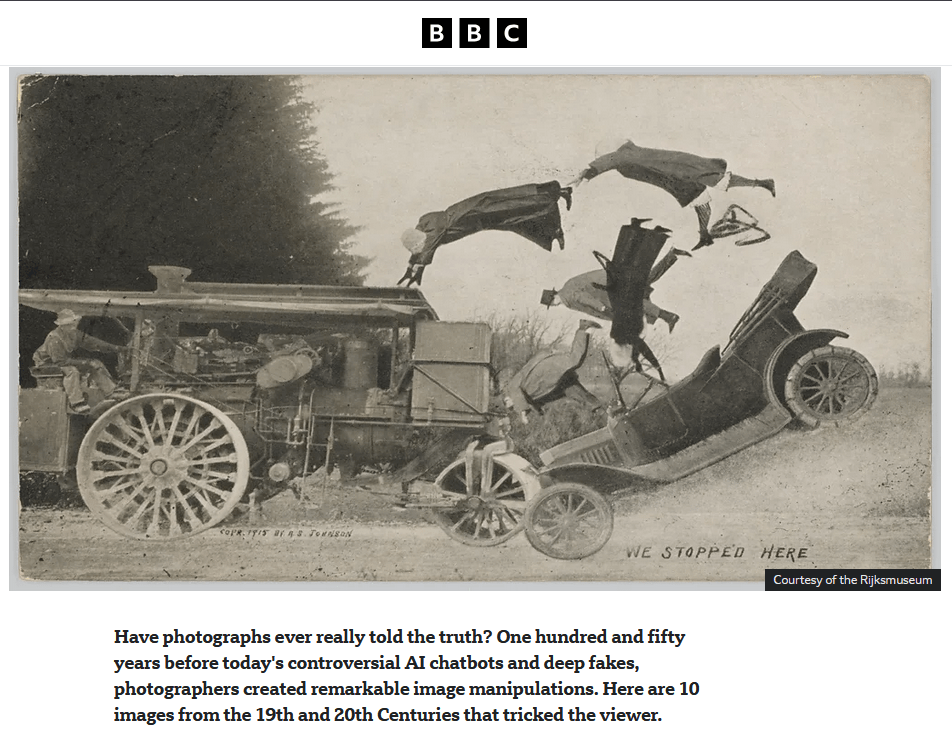
This is a picture.
A man-made picture.
God is depicted, by Michelangelo, as being very intent while ‘man’ seems to be casual about the whole thing. Disinterested. Somewhat absent.
Let me remind you, in this context, that Michelangelo’s painting was named “The Creation of Adam”.

The world we live in, very much like Michelangelo’s painting, has been made by us.

Unlike his predecessors – those who had painted the walls of Lascaux – Michelangelo had adorned a man made structure. A ceiling.
Unlike his predecessors – who had, most likely, painted on their own volition – Michelangelo was hired, ‘commissioned’ is the PC word to be used in these circumstances, by the pope, to interpret the Genesis Creation Narrative.
Very much like his ancestors, Michelangelo was also made of flesh and bones. Had to breathe, eat, drink and painted using substances ‘borrowed’ from the ‘nature’.

The point I’m trying to make here is both simple. And very hard to swallow.

We live inside ‘something’.
We use ‘reality’, the word, to describe a portion of that ‘something’. The portion we ‘control’. We think we know about and are able to interact with.
Very few of us accept the fact that what we call ‘reality’ is ‘tainted’ by us. That we have a growing contribution in the process of ‘reality’ becoming what it is. And what it’s going to be. To become…

The ‘something’ we inhabit is far wider that what we call ‘reality’.
It’s full of everything we do not know about.
And choke full of everything we have invented and does not fit in what we call ‘reality’. Choke full of gods, spirits, ghosts, ideologies, theories, explanations, narratives and so on and so forth. ‘Metaphysics’, if you know what I mean.

‘Another atheist. I should have known better…’

“It’s full of everything we do not know about”….
I never said there is no God. It might very well be. Or not… All I have to say about this is that what we consider to be ‘our god’ exists nowhere but in our imagination. Beyond the ‘physical’ world.

‘According to what your saying, we’re involved not only in ‘reality’. We’ve also ‘constructed’ a sizeable portion of the ‘netherworld’…’

As a matter of fact, yes. We’ve not only ‘created’ what we call ‘reality’, we’ve also created the ‘netherworld’ itself. Both inside the ‘something’ which encompasses everything.

‘ “Created…” how did we ‘create’ anything?!? Least of all ‘reality’…’

Language is a very powerful tool. And naming is a very powerful feature of that tool!
By naming something, anything, we separate that something. From the rest. We actually establish a barrier, in our collective mind, between that something and the rest of whatever there might exist.
And I leave aside the fact that our language coordinated efforts have drastically altered our portion of ‘something’, our ‘reality’, since the days when Michelangelo’s ancestors, ours, used to paint the walls of the Lascaux cave.

‘Reality’ itself is a very interesting word/concept.
Until not so long ago, Gods were real. And still are, for some of us.
But even in those times, people felt the need to make the difference between the real, hands on, reality and the rest of the things they believed into existence. ‘Metaphysics‘, the word itself, was coined by Aristotle’s editor. A certain Andronicus of Rhodes, sometimes in the first century BC.
As a consequence, everything was real, in those times, but some portion of what was real existed only in people’s minds. “ta metá ta phusiká“…
1500 years later, when science was budding – again, in our Medieval forefathers minds, the ‘tables had been turned’. The scientific state of mind demands that only the factual/physical things can be deemed as belonging to ‘reality’ while all the rest, including the metaphysical realm, belongs someplace else…

Nowadays… things have become rather complicated.
Science tells us we don’t know everything. Worse still, that we’ll never know everything.
On the other hand, everyday life proves, beyond any doubt, that things which exist only in our heads/minds do shape, dramatically, our daily lives.
I’ll give you but two examples.

The church and the traffic light.

People go to the church because they believe. Most of them. Very few people visit churches, ordinary churches, out of touristic curiosity.
People ‘obey’ the traffic light because they actually believe life has been made simpler, and safer, since the traffic lights have been invented/installed. Like churches, we don’t ‘obey’ them because they are there! We install them because we’ve understood our lives have improved since their inception.

Probably the most important of the ‘solved‘ wars…

Xi needs Putin to remain in power. To keep the Western Europe focused on something else but China.
Trump needs Putin to remain in power. Otherwise the Western Union would stop begging for protection. And stop buying American built ‘defense hardware’…
Meanwhile, various ‘fragments of the world’ pursue their own interests… as perceived by their respective leaders, of course!

“Our measures do not tell us whether philosophy majors
go on to apply their newfound abilities in the service of truth and justice
or, conversely, for personal gain and glory.
Settling that question would require gathering a different kind of evidence.”

Reading it, https://theconversation.com/studying-philosophy-does-make-people-better-thinkers-according-to-new-research-on-more-than-600-000-college-grads-262681, brought back to memory another research subject. Linking a ‘reasonable consumption of alcohol’ to various health benefits.
A quick google search produced this:

The paper I found now, https://www.phcc.org.nz/briefing/glass-half-full-alcohols-health-benefits-cardiovascular-disease-still-controversial-and, is quite thorough.
More importantly, for me, it raises the points which bothered me when I first found out about the claim. On FB, more than five years ago.
I’ll put it in my own words.

Being able to drink for a relatively long time means one had a fairly strong health at the start of the whole process. And at least some degree of self-control.
Otherwise the drinker would have very soon become ill, an alcoholic, suffered some accidents… or any combination thereof.

Same thing regarding the findings of the first study.
Take a number of smart people. One has to be smart in order to be interested in philosophy! And able to graduate…
Train those people’s abilities. Help them develop whatever they’re good at. And like doing…
Then wonder about the good results you’ve achieved!

Writing this post made me realize that it goes far deeper than this.
No, this is not a self-congratulatory study. Far from it.
It’s stark warning!

“Public trust in higher education has hit record lows in recent years, according to polling by the Lumina Foundation and Gallup. Meanwhile, the rapid advance of generative AI has threatened the perceived value of a traditional college degree, as many previously vaunted white-collar skills are at risk of being automated.
Yet now more than ever, students must learn to think clearly and critically. AI promises efficiency, but its algorithms are only as good as the people who steer them and scrutinize their output.
The stakes are more than personal. Without citizens who can reason through complex issues and discern good information from bad, democracy and civic life are at risk.”

This paper is not about the virtues of learning!
It’s about us.
So many of us still have so much more to learn about the virtues of learning…

One possible explanation for what’s going on is that not enough of the learned people “go on to apply their newfound abilities in the service of truth and justice“.
Me starting this post with the distinct feeling that this was a self-congratulatory study is yet another confirmation of the generalized distrust which permeates the whole society.
We’ve reached that stage where we primarily look for reasons to refute.
Some say a little paranoia is good for you. That it keeps you safe.
I’m afraid we’ve reached exactly where ‘they’ want us to be.
Distrusting, paranoiac people cannot do anything together.

Constantly looking over your shoulder will never lead you forward.
Will only make you, us, susceptible to manipulation.
Remember, in this context, how many reasonable posts we get from people supporting various horrendous ideas.
How many ‘think with your own head’ messages we get from those ‘also’ promoting MAGA. How many times Putin says he only makes ‘reasonable’ demands.

How can we build trust?
I don’t know how but I do know we don’t have any alternative.

We either learn to respect each-other, and build trust together, or become subjects.
And I’ve already been a subject. To a communist regime. Don’t want to repeat the experience.

Things happen.
The consequences of which

reshape what we call ‘reality’.

‘Things happening’ is how ‘reality’ works.
Is how we came about…

Believers and nonbelievers alike, all of us are consequences of ‘things happening’. ‘Naturally’ or ‘as commanded by God’.

‘Reality’, on the other hand…
What we call ‘reality’ is determined by ‘us’.

(What we call) reality is the consequence of things happening inside itself.
Consider a huge cauldron full of ‘events’. What’s going on inside that cauldron, each stage ‘reached’ by its content depends on what happened inside that cauldron. And to that cauldron if we accept the ‘god’ hypothesis.
Which ‘god hypothesis’ only compounds the reality. Which can be construed as being simple, evolving in an unhindered manner, or being run by a (bunch of) god(s).
Examined in this manner, the existence of a putative god doesn’t change much, does it?

Reality being shaped by what’s happening inside it leads to further considerations:
We, humans as part of this reality, have had played a role in all this. And continue to contribute to the process.
We, humans, as part of this reality, are one of the many consequences engendered by this whole ‘evolutionary’ process.

Another way of looking at this produces another train of thoughts.
Until we had reached the conscious state, things had happened exclusively in a ‘natural’ manner.
Furthermore, until that moment there was no difference between ‘natural’ and ‘non-natural’.
For the simple reason that there was nobody to make it…
Nobody able, let alone willing, to make that difference!

The gist of today’s post being the fact that we are shaping reality according to our wishes.
Not entirely, not fully aware of what we’re doing, yet our actions have more and more important consequences.

Let me give you an example.
Until not so long ago – historically speaking, all empires – most socio-political arrangements, usually known as ‘states’, functioned as authoritarian regimes – used to crash under their own weight, had been crushed by the competing empires ‘happening’ in their vicinity or a combination thereof. The Western part of the Roman empire, weakened by the mistakes perpetrated by its rulers, had been ‘dismantled’ by the nomadic people who fancied the riches accumulated inside its borders.
The process had many iterations. An aggressor, a would be ‘imperator’, noticed an opportunity. What he considered to be an opportunity…
Mounted an aggression. And was either successful or defeated…

Until Napoleon Bonaparte had stirred so thoroughly the hornets nest that enough people noticed what was going on. Were aggravated enough to spring into action.
So they banded together, twice, and sent the initially successful aggressor where he belonged. In exile!

For the first time in modern history – as far as I know it – an aggressor had been ‘tamed’ by a ‘coalition of the willing’.
The same process had unfolded during WWI, WWII and WWIII. Otherwise known as the Cold War.

The only other example which comes to my mind – but I’m no historian – was the Persian Empire being defeated by a coalition led by Athens. Some 2500 years ago…

What’s keeping us from understanding this simple thing?
That unless we band together, we’re at the mercy of whoever puts up a fierce enough aggression?

https://www.britannica.com/event/Greco-Persian-Wars