Archives for category: alternative ways of acquring knowledge

Expect nothing.
You’ll never be disappointed.

Buddhism 101

Language, one the tools we use for thinking, is an interesting subject.
For study!

Whenever there are two different words referring to something not exactly different, there’s a huge opportunity. For us to understand how our minds work.

Buddha said nothing about wishing. As far as I know, and I’m not an expert in Buddhism…
But since all those who bother themselves to help us becoming the better – read happier – version of us quote Buddha as speaking exclusively about ‘expecting’ and nothing about ‘wishing’ … I’ll just consider it yet another fact of life.

When speaking about expectations, Buddha starts by saying that “attachment to desire causes suffering“.
Which brings us back to the minute differences between words!
Wishes, desires… expectations…

Buddha’s first Noble Truth is stated as “Life is Suffering“. Very interesting formulation but today’s subject is somewhat different.
Life, as we experience it, needs a living organism.
Which living organism, in order to remain alive, has to meet some of its own ‘needs’. Subsistence, shelter…
For us to experience something – including life – we need to become and remain conscious. We need to build and preserve self-esteem…
For our living organism to inform our conscience about its needs, the body sends sensations to the higher echelons of the mind. Where sensation is transformed into perception. And becomes desire.

‘Pangs’ become perceptions of hunger. And our mind discovers that it – or ‘we’, as in ‘body and mind’?!? – desires to eat.
Is there any reasonable way in which we – any of us – may give up trying to fulfill this desire? This need, actually…

‘I wish I had eggs for breakfast!’
Nothing unreasonable about that, right? Nothing likely to make us suffer…

Well, maybe for us.
For me, writing this on a computer, and for you reading my thoughts over the internet. Highly unlikely for any of us to be unable to fulfill such a ‘dream’. Those allergic to eggs are excepted, of course.

This being the moment when I draw your attention to what other people may think. Feel…
Parents who can feed their children nothing but stale bread. If at all. And not for lack of trying!
Hungry teenagers who expect their parents to be able to feed them. Decently…

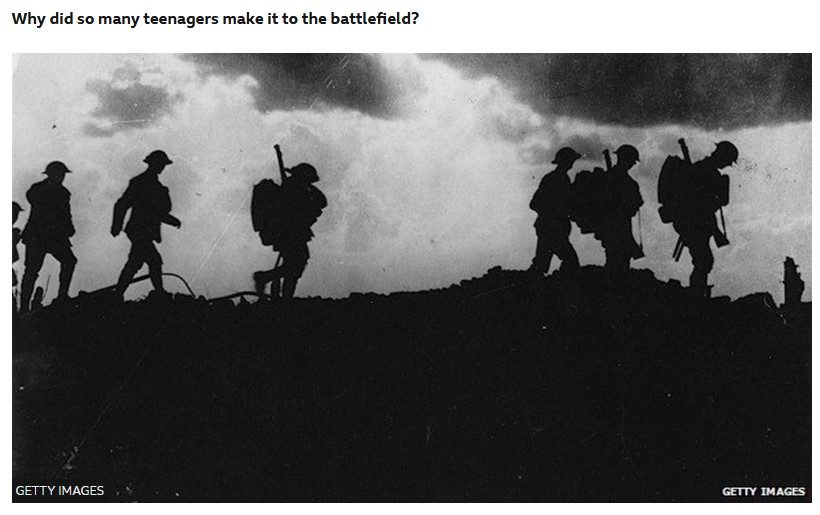
“Fifteen-year-old Cyril Jose was a tin-miner’s son from Cornwall. With the region suffering from heavy unemployment, the boy with a strong sense of adventure joined up.”https://www.bbc.com/news/magazine-29934965

Observe the abnormal.
The out of ordinary.
That’s how you might figure out the regular…

Psychology 101

We live on faith.

Without faith, one cannot even raise from their bed in the morning…
‘What’s the use?’

Animals start looking for food whenever hungry.
Human beings, for as long as they remain conscious, check whether there’s any chance of finding food before attempting to find it.

Faith in what?

Living organisms are made of matter.
Atoms and molecules stacked in a certain order and interacting according to certain rules. Rules being preserved, managed and passed over from generation to generation as ‘genes’.
Individual organisms have very little influence about the whole process, except for some ‘checks and balances’. Which checks and balances work according to some rules also contained in the genes.
Species, generations and generations of individual organisms, evolve. The genetic information passed over from generation to generation becomes slightly altered as evolution forces it to fit the changes in the environment.
According to Ernst Mayr, evolution is about the demise of the unfit. Individuals need to be able to survive in the environment where they happen to have been born. If the genetic information inherited from the parents is suitable for that environment, the individual has a fighting chance. To live and to pass over the genetic information which made survival possible.
The nature of life – the existence of successive generations and the mechanisms which pass genetic information from one generation to the next one – makes it so that genetic information may be slightly altered when copied into the new organism. The alterations appear haphazardly and ‘survive’ only if they don’t jeopardize the existence of the individual organism harboring them. If the organism survives for long enough, the alteration is passed over to the new generation. If the alteration happens to be beneficial for the organism in the context of circumstances where it needs to survive, that alteration has increased the chances of survival for the organism. And its own chances to be passed over to the next generation. Please note that no agency is involved in this process. Nobody and nothing but happenstance has anything to do with what’s going on here!

Conscious organisms are made of animals plus conscience.
You need a living organism in order to have a functional conscience.
Which conscience is nothing but a set of rules learned from the other members of the ‘species’ to which the individual belongs. In fact, conscience – individually speaking, is nothing but a set of ‘cultural’ genes.
Lumps of information passed on from generation to generation which allow us to actively interact amongst us, people, and between us and the environment where we happen to live.
Each individual conscience is like a ‘cultural’ organism riding on top of a biological one.

The difference between the cultural organism and the biological one being the fact that the cultural organism is aware of itself.
Of its mortal nature!

Being an organism, conscience has only one job. To survive for as long as it can and to pass over the information it has gathered to the next generation.
Just as a biological organism is driven by a ‘vital force’ – named ‘survival instinct’ by those trying to make sense of this whole thing – conscience is driven by hope.

Biological organisms have a symbiotic relationship with their environment. They ingest substances and excrete the consequences of their metabolism. They also notice information and react to it. Individually as well as collectively.
As a consequence, the world we currently live in is the ‘byproduct’ of 3 billion years of countless biological organisms having already lived on this planet. Without this teeming life we wouldn’t be here and the planet would be barren.

Cultural organisms have deepened and accelerated the process.
Not only they have physically transformed the planet but they have also built meaning.

As I mentioned before, consciences need hope in order to survive.
In order to have hope, you need meaning.
Things have to make sense.
Out of sheer necessity, we’ve built explanatory scenarios for what’s going on around us.

Each of us expects the others to behave rationally.
While each of us rationalizes their own biases.
And considers this to be normal!

Not so long ago – evolutionary speaking, things were free. As in ‘up for grabs’.
Our not so distant forefathers fed and clothed themselves by picking ‘things’ from nature.

By talking to each other they had become conscious human beings.
Then came up with the notion of property.

‘If I/we have this thing, you cannot have it too’.

Using this notion, they introduced some order unto the social stage.
Some things, albeit fewer and fewer, remained free/up for grabs while the rest – specially ‘the things of interest’ had become private.

Entertaining the notion of property means that individuals are able to link an object to its owner.
This link is a piece of information.
Discussing and remembering who owns what, our forefathers realized that information is important. Not only the information regarding the link between owners and their property but also information in general. Whatever ‘useful’ things had been learned, remembered and passed around.
Thus information became ‘a thing’.

The order created by the communities using the concept of property and by actively circulating information among the members had become the premise for those communities to thrive.

Somewhat naturally, the members of those communities had reached the conviction that:
Property is good. And that more property is better.
Old people are precious. For the simple reason that they deposit what had happened. By sharing their memories, old people make it so that the younger ones don’t need to learn again and again.

Since property and remembered information were good for the community, the communities using them developed faster and had a way better survival rate than those who didn’t. For whatever reasons.

Since in reality people rationalize rather than think rationally, they have reached the conclusion that the rich and old people were the ultimate cause for the well being of the community.
The individuals, not the modus operandi of the community.

“An effective way to undermining something of authentic substance
is by producing versions that closely resemble the real thing
but lack genuine substance.
The skill is in knowing the difference.”

On the other hand, we must keep in mind that fakes are also facts. They exist, don’t they?
Even more so, fake facts do engender consequences!
In fact, it’s these very consequences which impart fact-hood to ‘successful’ fakes.

Also, it is high time for us to understand that this undermining might occur ‘naturally’. Due to our attention being distracted rather than ‘intentionally misguided’.

The only thing I know is that I know nothing,
and i am not quite sure that i know that.

Socrates

“The demand for certainty is one which is natural to man,
but is nevertheless an intellectual vice.
To endure uncertainty is difficult, but so are most of the other virtues.“

Bertrand Russell

Socrates and Bertrand Russel, both, knew everything there was to be known in their respective times.
Socrates and Bertrand Russel, both, had enough guts to acknowledge their doubts. To themselves and to the rest of us.

On the other hand, Russell presents us with a very interesting riddle.
Is it possible for a naturally occurring thing to become a vice?

““Humans have an affinity for ethanol (plant-derived alcohol), and captive primates are well known to like to drink anthropogenically sourced ethanol,” Dudley told Sciam.com….
The appeal of naturally occurring alcohol has not yet been investigated because, in the handful of previous studies, animals expressed no interest. Anthropologist Katherine Milton of UC Berkeley surveyed primate researchers, working with 22 species, on whether they had seen animals reach for fermented fruit. All said they had not. Scientists at Israel’s Ben Gurion University of the Negev studying bats reported that the animals shunned foods with elevated alcohol concentrations, despite higher sugar levels. Perhaps this is because,  says animal physiologist Berry Pinshow, a co-author of that study, “a drunk bat is a dead bat.””

Cynthia Graber, Scientific American, 2008

Humans, and their pets, also get fat.
Humans – some of them and alone, this time – like to get ‘high’. Exclusively on naturally occurring substances, until recently.

Humans are the only animal species – known to ‘man’ – displaying a certain kind of consciousness. Self-awareness, as defined by Humberto Maturana. Also known as ‘Human Consciousness’.

So, consciousness drove us to become vicious?
To eat too much? To drink alcohol? To use drugs?
To introduce other animals to drugs? In the name of science

The way I see this, consciousness didn’t drive us to become vicious.
Only made it possible.

Being aware of ourselves – being able to observe ourselves ‘in the act’, according to Maturana – has added ‘purpose’ to the whole thing.
Animals do experience pleasure. Pet your pet and then call me a liar.
Animals have even learned from us to ask for pleasure. Many of our pets beg for food and to be petted.
But most wild animals – with the exception of pentailed treeshrews, whatever they might be – shun alcohol. While capable of learning to ‘douse their angst’ from us. In captivity…
Which makes us the only species which has learned to behave viciously on its own. By itself…

To over indulge on purpose.
Do you have a better definition for vice?

Which brings us back to Russell’s “intellectual vice”.

Which intellectual vice does have two aspects.
Overconfidence in one’s own intellectual prowess and over-reliance on other people’s expressed opinions, despite those opinions having a very slim chance of being true. The point being that the second aspect is a ‘simplification’ of the first one. The opinions believed despite being unrealistic do match the biases entertained by the believer.
By the ‘vicious’ believer, albeit the second aspect is less vicious than the first one. Where the overconfident should have known better.

To over-think on purpose.
To convince yourself of your own rectitude… on your own or with the help of others…

What are electron spins:
Electrons are able to spin on an axis, like how the earth rotates on an axis, but much faster. Electrons can spin in either a clock-wise or counter-clock-wise direction. The spin on an electron is described by the spin quantum number (ms). The value of ms can be either +12 or -12. The +12 is called spin-up and denoted by a ↑, where the -12 is called spin-down and represented by ↓. Sometimes the spin of electrons will be described as angular momentum.
Each orbital of an atom can be occupied by up to two electrons. The two electrons will have opposite spins. This phenomenon was first described in the Pauli exclusion principle which states that each electron in an atom is described by a unique set of quantum numbers, including ms.”

Political spin, in politics, the attempt to control or influence communication in order to deliver one’s preferred message.
Spin is a pejorative term often used in the context of public relations practitioners and political communicators. It is used to refer to the sophisticated selling of a specific message that is heavily biased in favour of one’s own position and that employs maximum management of the media with the intention of maintaining or exerting control over the situation, often implying deception or manipulation.

Electrons ‘work’ in certain ways. Science has recently figured out some of those ways.
The point being that electrons keep to themselves. One spins in its direction, the other spins in the opposite direction and no more than two electrons fit in the same ‘orbital’.

People’s minds also work in ‘certain’ ways.
Not as ‘rigidly’ as the electrons but still ‘useful’ for those who know how to exploit this phenomenon.

By constantly pestering people with certain messages, you get to convince at least some of them.
You get to divide them into (political) camps.
You get them to fight among themselves instead of cooperating.
You get to lead them into battle.
And after the battle has been won, by no matter which side, you get to lead the winning party. At least for a while, but that is another subject.

And all lies, aka as ‘half truths’/alternative facts, start from something real.
Capitalism, for as long as the people remain awake, works. As advertised.
Socialism, on the other hand, doesn’t. It had failed, abysmally, whenever and wherever it had been experimented.

But there’s a caveat.

‘Capitalism’ is a rather clear-cut concept. Property belongs mainly to the individuals and individuals trust each-other enough to do business among themselves. Usually – but not always – capitalism is associated with ‘free market’ and democracy. With freedom to act – inside the confines of the law – and freedom to speak up.
I’ll say this again! For as long as the people remain awake, the market continues to be free and democracy still functions, capitalism works. Sustainably. But only for as long as the people remain awake…

‘Socialism’ is rather vague. From ‘public’ (instead of private) property associated with central planning of the entire society to softer versions which sometimes pay lip service to democracy. The central idea of ‘socialism’ being that society comes first and the individual is only a cog.
Who wants to be a cog? Those who see no alternative… Those who, once in a certain set of circumstances and exposed to a certain propaganda, succumb to the Sirens’ song.

The point being that in order to impose ‘socialism’ to a society you need to lure (enough of) the people into an ‘altered state of consciousness’. To make them believe a certain set of rules. To make them behave according to that set of rules.

The interesting part, as usual, comes at the end.
There is a ‘social arrangement’ where property remains private but where the people behave in a ‘certain’ manner. As if they have been made to believe a ‘certain’ – as in ‘forcefully unified’ – set of rules.

That social arrangement is just as fragile as ‘socialism’.
Again like socialism, it has already been experimented.
Both had failed. Abysmally. History is our witness.

The ‘other’ always failing social arrangement is usually called ‘fascism’.
In Germany, it has been known under the name of ‘NAZIonal socialismus’.

Bullshit!

Back in time, some people had written a book.
And started living by it.
Things went on rather good so more and more people joined the new tradition.

After a while, after things had become so good that some of the people had enough spare time to think, some of these thinkers had noticed that some of the facts contradicted what was written in the book.
Hence some of the people had reached the conclusion that the book was not entirely right.

That even if following ‘the book’ had brought them that far, they no longer had to follow it to the t.
And they had learned to be suspicious of every written word… of all previously held convictions…
They called this new habit ‘science’.

Things went on. From good to even better.
Now many more people had enough time to spare. To think, to play… to read…

Trying to fulfill this new ‘need’, some enterprising people have transformed news gathering and publishing into a show.
Until then, news had to be exact. Hence they were published only after a close scrutiny.
After the ‘transformation’, speed and entertaining value took precedence over trustworthiness.

Furthermore, people less than passionate about knowledge had started to invade the scientific realm.

A study linking autism and vaccines had been published in a prestigious scientific magazine.
And then retracted.

With two consequences.
Some parents decided to ‘risk it’ and a lot of people were left with the impression that science had become unreliable.
That science was no longer above fraud.

““Science is at once the most questioning and . . . sceptical of activities and also the most trusting,” said Arnold Relman, former editor of the New England Journal of Medicine, in 1989. “It is intensely sceptical about the possibility of error, but totally trusting about the possibility of fraud.”Never has this been truer than of the 1998 Lancet paper that implied a link between the measles, mumps, and rubella (MMR) vaccine and a “new syndrome” of autism and bowel disease.

Fast forward to the present day.
When an editor had put together a title pretending that a “herd of 170 bison could help store CO2 equivalent to almost 2m cars, researchers say”.

Really?!?

Let me look closer.
“2m” stands for 2 million, right?
And since a conventional car spews a little over a ton of CO2 each year, that title meant that each of those 170 bison was supposed to bury 11765 tons of CO2 each year. Give or take…
But there’s a second problem.
‘Climate warriors’ are ‘mad’ about cows. We are constantly bombarded with news stating ‘the cows are belching so much methane that the polar ice caps are going to melt during our lifetime’.
What about bison? Which are, for all practical purposes, wild cows… Don’t they also belch methane?
Try reading the article and see if you understand the difference between cows and bison…

Did your homework?
No?

OK, here’s my version.
Bison grazing in the wild are a close system.
The vegetation they feed on ‘sequester’ CO2 from the atmosphere and transform it into cellulose, using energy from the Sun. Through grazing, the bison encourage the vegetation to transform more CO2 into cellulose versus the situation where the bison were not doing their thing.
Some of the extra cellulose gets eaten by the bison and ends up being transformed into the best natural fertilizer known to nature. Which further encourages the vegetation to sequester even more CO2 from the atmosphere.
A cow living on a pasture – and allowed to roam as freely as a bison herd – does more or less the same thing.
But a cow living in a stable is an ‘open system’. It is fed a lot of corn and soy. Transported from afar and which totally changes the chemistry going on inside the cow. Corn and soy accelerate the rate of growth – the reason for feeding them to the cows – but result in the cows producing a lot more methane than when naturally feeding themselves on grass. Further more, the manure thus produced is never returned where the corn and soy had been produced.

The consequences?
While in a close system the result of photosynthesis – sequestered carbon – slowly accumulates in the soil, in an open system the metabolic results of the plants and animals involved are spread around the globe. Add to that the huge amount of (fossil) energy implied in growing the plants and transporting the goods around the planet and you’ll start to understand the difference between bison/cows grazing on a pasture and cows being fed in a barn corn and soy imported from Brazil.

Why didn’t you read this in the article above?
Where did the aberration regarding each bison being able to sequester almost 12 000 tons of CO2 came from?
Why people don’t care anymore about science?

I’m sorry, you’ll have to figure these out by yourself.

“This headline and article were amended on 16 May 2024. Due to an error in the original research, a previous version stated that Carpathian ecosystems browsed by (170) bison could store 2m tonnes of carbon, equivalent to the emissions of 1.88m average US cars petrol a year. The research authors have since retracted these figures, which were due to a coding error. The correct figure is that bison could store 54,000 tonnes of carbon, equivalent to the emissions of 43,000 average US petrol cars.”

And the LORD God said,
Behold, the man is become as one of Us,
to know good and evil.

Genesis, 3:22

The point of this post is simple.
The difference between ‘bad’ and ‘evil’.

‘Good’ is straightforward.
It doesn’t matter – evolution wise – whether the ‘good’ has happened ‘naturally’ or ‘intentionally’.
But it makes all the difference in the world whether the ‘bad’ only happened or it was the consequence of somebody planning it to happen.

Even if that difference is visible only to us.
Conscious humans beings who use language to communicate and to consider.

Visible as well as ‘accessible’.
How many among you consider that anybody else but us, human people, is capable of ‘evil’?

And what about the perpetrators?
How many of them consider themselves to be ‘evil’? To have become evil, as they had intentionally hurt somebody?

And how come this simple ability was enough to elevate us to “one of Us” status?

On the other hand… letting go, emotionally speaking, may not be as beneficial as advertised.
We might lose some bitterness but we might become more liable to ‘repeat the experience’

As in …

Forgive but don’t forget is a lot easier to be said than done, you know…

Which brings us to:

Do we really need ‘a purpose’?
As in ‘an ideologically determined goal’?
Remember Marx’s “The philosophers have hitherto only interpreted the world in various ways. The point, however, is to change it.”. Then the consequences produced by those who had followed Marx’s teachings…
But not only Marx’s!

All set goals which go ‘against the grain’ incur costly consequences.
Which are detrimental to survival! Of the leading trespasser, of those in the following or of those hapless enough to be too close to that particular goal being pursued.
Remember Marx? Nothing unpleasant had happened to him. Not as a consequence of his attempts to change the world! But to others…
Which is equally valid for all other ‘world changers’. Along with all ‘world preservers’ who run along ideologically drawn paths.

Then what should we strive for?
Simply ‘follow the heart’ to achieve ‘peace of mind’?!?
Would that be enough?

Enough for what?!?

https://www.goodreads.com/book/show/56083.In_Dubious_Battle

An inhabited planet where some of the people have finally figured out the inherently limited nature of their world.
Global warming, pollution, soil erosion, loss of biological diversity, dwindling and unevenly distributed natural resources…

Two hot wars. And a huge trilateral economic contest involving a third of the population which leaves the other two thirds in relative misery.

Most of the conflict – hot and cold alike – can be pinned down to old people doing their best (worst, more likely) to conserve their status. Wealth, power, influence…

As things happen, currently there is one collective agent which yields enough power to decisively influence the outcome of the two hot wars. And to negotiate the economic contest.
The attention of the people constituting that particular collective agent has been hijacked by an insurrectionist ex-president attempting to regain that position.
The ex-president has curried the favor of significant political party by making it possible for the party-activists to succeed in their attempt to limit women’s access to abortion.
The ex-president and soon to be presidential candidate is currently involved in a penal process. The trial attempts to determine whether the hush money he had used to silence a porn actress regarding a ‘close encounter of the third kind’ had been spent legally.