Archives for category: 1989

Classic sociologist Emile Durkheim theorizes that crime exists
in all societies because it reaffirms moral boundaries and at times
facilitates needed social changes,
while former U.S. Senator Daniel Patrick Moynihan believes that
Durkheim’s views omit the possibility of too much crime, especially violent crime,
so that deviance as a serious social problem is not addressed.

“Normlessness and deregulation are poor translations of dereglement for several reasons. They did not enter into common English usage until the 1960s and certainly didn’t exist in Durkheim’s time. Dereglement is difficult to render in English. It carries with it in French the connotations of immorality and suffering, but is perhaps best translated as derangement. Anomie as dereglement implies a condition of madness or something akin to sin. This concides with the observation that over 20 words denoting sin were translated as anomia when the Bible was translated by St. Jerome and others.”

Durkheim was right after all.
‘Crime’ does fulfill a social function.
Some deviance, when well ‘managed’, can be useful. The US have somehow managed to transform a rather high level of deviance into ‘speed’. 250 years ago, the 13 American colonies were almost insignificant.
Today, the US is the most powerful/wealthy nation on Earth. While the Union continues to be the most ‘deviant’ among the civilized nations. On all conceivable metrics.

The key words here being, of course, “well managed”!
Maybe the time has come for the likes of Senator Daniel Patrick Moynihan to go back to class. And to finish reading what Durkheim had to say about things.

The problem with the current political class, not only in America, being the fact that too many politicians ‘outsource’ responsibility!
It’s not history’s job to maintain accountability!

The politicians themselves need to provide enough reasonable alternatives for the ‘people’ to chose from!

Durkheim, read from both ends, told us that much.
We are the ones who need to maintain the balance.
For it’s us who will bear the consequences!

No matter who was the culprit, we’ll have to clear up the mess.
So we’d better stop the fan from spreading the mess around!

After all, shit happens. It’s a natural occurrence.
We have to eat so we need to relieve ourselves.
But how about doing this in a civilized manner?
And not rewarding those bragging about ‘inappropriate behavior‘….

‘Universe’ has no meaning. Other than what we assign to be its meaning…

‘Universe’ is a word we use to encompass everything around us. Whether we know of it or not. Whether we understand (of) it or not.

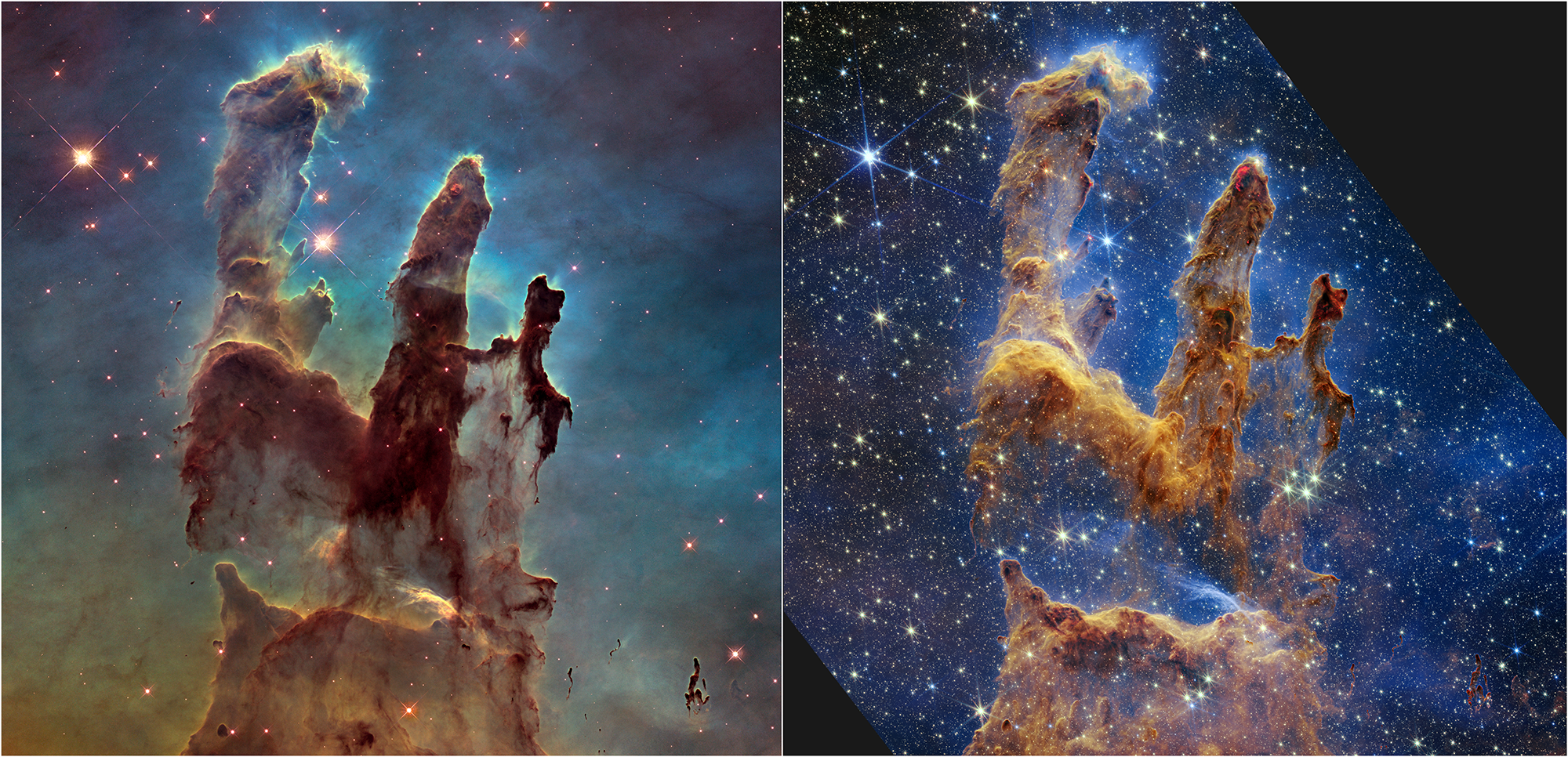
From ‘where’/’when’ we are in/attempt to perceive this huge environment, things look like ‘this’.
Depending of the wavelength of the light we use to ‘reinterpret’ the picture…
Nota bene, the colours were assigned by a computer app, starting from a series of ‘black&white’ images shot using filters which select short intervals of light-wavelength.

By sheer change, life appeared on Earth. And on who knows, if ever, how many other planets.
Evolution, an impersonal process, playing the odds in the current setting, had engendered the set of circumstances into which we happened to ‘burst’ into existence.

We, for better or for worse, have shaped the planet into what it has become.

Regardless of what each of us believes, religiously speaking, it doesn’t actually matter whether a god did or didn’t do anything. Since each and every religion currently biasing human thinking on Earth speaks about individual responsibility – hence freedom, for you can’t have individual responsibility without freedom – it actually doesn’t matter whether any of the teachings we refer speak about have been induced by an outside agent or have been produced ‘in house’.
Since each of us is individually responsible for our thoughts/actions – hence ‘free’ – then the meaning we assign to the object of our judgement, the ‘Universe’, belongs to us. To each and to all of us.

‘God save us!’

But since we’re ‘free’, we must save ourselves.

And since nobody can be free on their own – freedom has been defined by ‘us’ and put in practice collectively – saving ourselves will be a collective effort.
Or else.

Nota bene!
We are a ‘collection’/community of individual human beings.
We either ‘save’ ourselves maintaining what makes us human – our distinct individual individualities – or we become a hive. Of something else but ‘human’.
Of what we currently understand as being ‘human’…

“It is said
that one man’s terrorist
is another man’s freedom fighter.”

Sami Zeidan, Desperately seeking definition…, 2003

‘Truth’, ‘freedom-fighter’ and ‘terrorist’ are words. On the side where we get in touch with them.
We see/hear them first before they penetrate our minds. If at all…
We think of them and only afterwards they get pronounced by our mouths or typed by our fingers.

On the other hand, ‘propaganda’ – another ‘word’ – is a ‘technology’. A particular manner in which some of us choose to spread out their ideas.
Same thing goes for ‘conspiracy’. A particular manner of doing things. ‘Cloaked’. Hidden from sight and involving a number of vetted participants.
Nota Bene! Those involved in ‘conspiracy theory’ are also vetted.
The ‘theorists’ vet their targeted audience by choosing the subjects of their discourse and by wording it in a certain manner. The members of the ‘public’ ‘vet’ the ‘influencers’ by following them. And themselves – they set themselves apart from the rest – by allowing themselves to be ‘entertained’ by the message they keep returning to.
‘Terror’ itself is also a ‘technology’. A sort of ‘propaganda’ 2.0.

While ‘propaganda’ is a manner of spreading ‘the word’ around – presenting the ‘message’ in an easier to ‘accept’/’digest’ form for the targeted audience – ‘terror’ is a ‘technology’ used to convince an entire population that there’s no alternative. No alternative other than that ‘proposed’ by the terrorist.
A technology used to break the will of those whom the terrorist wants to submit.

And what ‘happened to THE truth’?!?

The truth of the matter is that there is no ‘truth’.
No ‘one size fits all’ kind of truth!

A truth is something we agree upon. In this moment!
Something we agree to consider as being true for as long as nothing meaningful contradicts the generally accepted ‘true thing’.

But what if there’s no longer a ‘we’?
What if those who – for whatever reasons – want to separate us manage to do exactly that?
What if ‘we’ no longer see each other eye to eye regarding not so long ago widely accepted ‘subjects’?
What if ‘we’ – a sizeable portion of us – accept ‘alternative facts’ as being at least as valid as the ones previously accepted as being true?
What if we, too many of us for our own good, start to doubt as a matter of creed?

“Too many of us for our own good”?!?
What happened to ‘doubting as a matter of creed’ being the ‘stepping stone’ for science?!?

Words… so many words, no matter how beautiful…

‘Science’ is, first and foremost, a state of mind. The ‘open’ state of mind which conserves the willingness to change ‘the truth’ according to the newly acquired information, if this new information is convincing enough. If it comes from more than one sources AND if ‘the conclusion’ can be reached again and again. Independently!
Being in a scientific state of mind means keeping the door open for new information.
Questioning everything with the transparent intent to impose a single version of ‘the truth’ is more than propaganda.
It’s a form of terrorism!

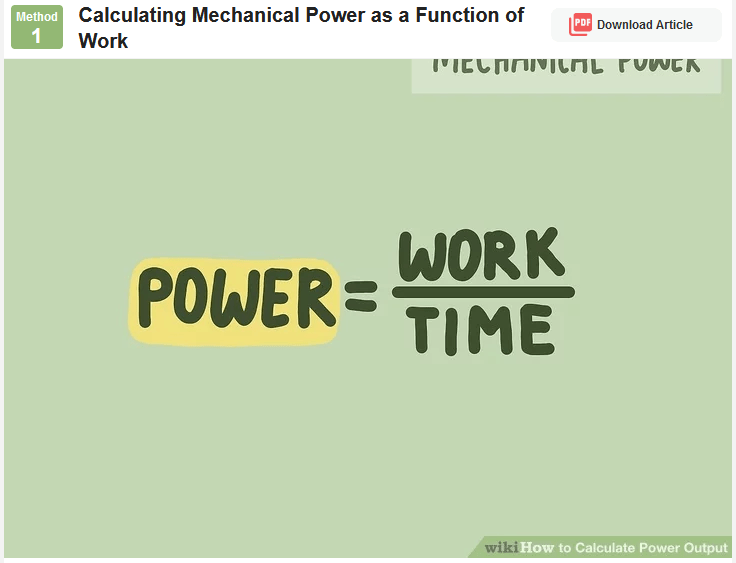
An amount of interaction expressed in the considered amount of time.

Where ever there is power, there is also resistance.
Michel Foucault in the footsteps of Isaac Newton

Michel Foucault used to be a post-Marxist philosopher and sociologist.
As the rest of the Marxists, two of his main subjects were Power and the individual’s (philosopher) duty to put their own convictions into practice. To make a difference, preferably ‘against’ the establishment.

From a Darwinian point of view, Foucault’s insistence that we shouldn’t restrict ourselves to the ‘straight and narrow’ makes perfect sense. The ability to change along with the changes in the environment is paramount to survival. Furthermore, the ability to induce change is paramount to what we call ‘progress’.

On the other hand, life itself demands that we, successive generations of individuals belonging to different evolving species, need to retain a certain congruence.
Succeeding generations share the genetic information needed to preserve the nature of the species.
Species living together evolve in such a manner as to maintain the viability of ‘their’ ecosystem. Or else…

The ‘law of the jungle’ is nothing more than something we believe to have noticed. And then convinced ourselves that we were right when we have formulated our observation in the current form. “The law of the jungle…

“Power” is but a word.
And words have the nasty habit of cloaking more than one meanings. Well, most of them…

“Power” means many.
From a ‘certain amount of work divided by the time in which that work had been performed’ to ‘the influence somebody has over the people happening to live in the vicinity.
And also something very pervasive yet seldom noticed.

Something which ‘permeates everything and “makes us what we are”‘.

Contradictory?
A tool, teleologically yielded by agents, or a fixture of the ‘environment’?
Both a the same time!
Imagine a group of people cavorting in a pool. Each of them using water to splash the others.
Or two ‘teams’ of angry men fighting near a river and using stones retrieved from the riverbed to crack each-others’ skulls.

‘A fixture of the environment’ identified as such and used by agents as a tool with which to further their goals.

Knowledge is power and power creates knowledge...
Both Bacon/Hobbes and Foucault have been right.
By identifying new and increasingly powerful instruments people have transformed knowledge into power while by putting power to work, the powerful have generated new meaning and driven things towards where they wanted them to be.

Having been able to draw from more accrued knowledge (a.k.a. culture) than Hobbes. Foucault is marginally ‘even more right’ than his predecessors.

“People know what they do;
frequently they know why they do what they do;
but what they don’t know is what what they do does.”

This being the explanation for all ‘social arrangements’ where power has been concentrated in a too small number of hands/heads having eventually failed.

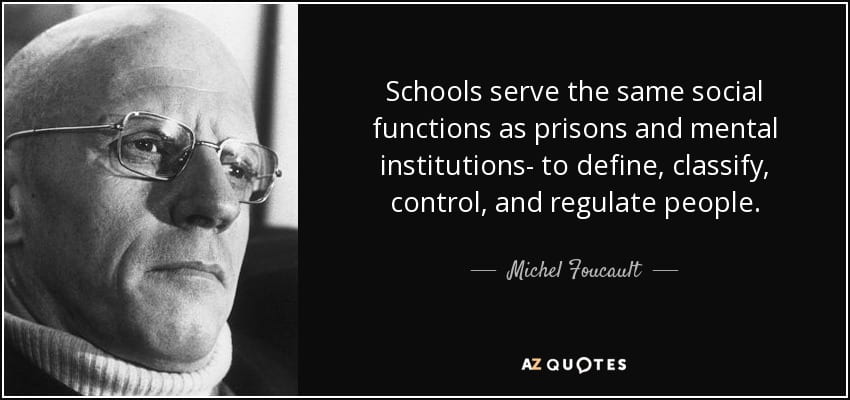
A society where schools and prisons are hard to tell apart – or perceived as such by those who have to spend time in any of them – is sooner rather than later going to reconsider it’s ‘knowledge’ regarding ‘power’. Or else…

“statuuntque latiores terminos scientiae Dei quam potestatis,
vel potius ejus partis potestatis Dei (nam et ipsa scientia potestas est)
qua scit, quam ejus qua movet et agit:
ut praesciat quaedam otiose, quae non praedestinet et praeordinet”

Francis Bacon, 1597
“and they set wider limits for the knowledge of God than for power,
or rather for that part of God’s power (for knowledge itself is power)
by which he knows, than that by which he moves and acts”
Google Translate

scientia potentia est
Thomas Hobbes, 1668

E=mc2
Einstein, 1905

In fact, power produces; it produces reality;
it produces domains of objects and rituals of truth.
Michel Foucault, 1991

“They” – as in ‘the knowing people’ – ‘set the limits for the knowledge of God’.
Then it was ‘they’ who had the real power over (their) God…

A little later, another thinker simplified the whole thing into ‘knowledge is power’.

Which, already collective, state of mind morphed into the socio-cultural environment into which Einstein was able to notice that E=mc2. That apparently different things can morph one into the other, given the right circumstances.

Which brings us to Foucault noticing that power produces reality. Including knowledge…

But is there a real difference between ‘power produces reality’ and ‘they set different limits for God’s knowledge than for God’s power’?
In fact, there is.

According to Foucault power is exercised directly.
According to Bacon, people exercise power by ‘fine tuning’ their ultimate tool. Their God. Which god, like all others, acts like an agent. Its powers might be limited – it is able to do/know only as much as those who have faith in it believe it to be able to know/do – but inside those limits it is as free as each of those who believe in it.

And the difference is huge.
As soon as Nietzsche had noticed that ‘God was dead’, ‘reality’ had shattered.
While God was alive, power created one reality. Also known as “God”.
As soon as there was no more God to mediate between reality and those gathering knowledge about it and exercising power while recreating it… reality became many!

And not only many versions of reality are competing for our attention, each of these realities are farther and farther away for the ‘hard’ one. The one harboring Einstein.

“People know what they do; frequently they know why they do what they do; but what they don’t know is what what they do does.”

Michel Foucault, Madness and Civilization:

“Until philosophers rule as kings or those who are now called kings and leading men
genuinely and adequately philosophize,

that is, until political power and philosophy entirely coincide…
cities will have no rest from evils…
there can be no happiness, either public or private, in any other city.”

Plato, circa 375 BC

The philosophers have only interpreted the world, in various ways.
The point, however, is to change it.

Marx,1845

“God is dead. God remains dead. And we have killed him.
How shall we comfort ourselves, the murderers of all murderers?
What was holiest and mightiest of all that the world has yet owned has bled to death under our knives: who will wipe this blood off us?

Nieztsche, 1882

The Social Responsibility of Business Is to Increase Its Profits
Milton Friedman, 1970

“Real life, says Heidegger, happens when beings become ‘unhidden’,
when we help bring things out of their hiding places
and step out of our own along with them, into the light of being itself.
It happens in rare moments when we see links between
‘beings themselves, the human world, the work of God.’
It can only occur, he says, when you’re disturbed by a sense that real life is elsewhere.”

Peter Holm Jensen, 2023

Wood is the raw material we use to make timber. And paper.
Steel is the raw material we fashion into tools. And weapons.
Words are the raw material we shape into ideas.

We use timber to build houses.
Paper to print poetry.
Tools to transform nature into civilization.
Ideas to make sense of the world we live in. And of ourselves.

When angry, we burn houses. Print lies. Transform tools into weapons and use them to destroy.
When angry, we no longer see eye to eye about meaning.

Almost two and a half millennia back, Plato told us us that “until political power and philosophy entirely coincide…
We had chosen, while ‘angry’, to interpret Plato’s warning as being a ‘blue print’. A ‘boiler plate’ for ‘how to breed appropriate rulers’. https://www.britannica.com/topic/philosopher-king.

Karl Marx, while terribly angry – and not without reason, had chosen to put in practice, tentatively, the generally accepted version of Plato’s work.
The Communists, therefore, are on the one hand, practically, the most advanced and resolute section of the working-class parties of every country, that section which pushes forward all others; on the other hand, theoretically, they have over the great mass of the proletariat the advantage of clearly understanding the line of march, the conditions, and the ultimate general results of the proletarian movement.“.

Nietzsche confessed, publicly, “God is dead. God remains dead. And we have killed him“.
We have chosen to place the onus on him. As if it had been he who killed God. Alone…

Friedman – Milton Friedman the economist, not a word-smith nor a philosopher – had formalized the public opinion prevalent during his ‘tenure’. That corporations should stick to what they were good at – producing things in an efficient manner, hence being profitable – and leave social intervention to those concerned with solving that line of specific problems.
NB. I’m not suggesting Friedman was right. More about ‘being right’ in a short while. I’m only stating that both Friedman’s sycophants and detractors – including me – have been near-sighted.

Heidegger was the guy who brought back into discussion the notion of Aletheia. “the presocratic way to truth, as unconcealment.
Truth as the the ‘politically’ sanctioned expression of reality. “until political power and philosophy entirely coincide…

In a sense, we’ve spent the last two and a half millennia updating Plato’s to Heidegger’s wording of how to make sense of truth.
We haven’t been able to come up, yet, with a convincing version because we’ve chosen to ‘ignore’ Buddha’s “truth that misery originates within the craving for pleasure“. That ‘misery’ originates from our ‘rational’ desire for ‘being right‘.

That misery originates from us being angry, collectively, for not being able to reach ‘the truth’ individually.
That misery originates from each of us, individually, craving to be ‘right’. Each on our own…

The Buddha taught that nothing is permanent and that everything is impermanent.
Therefore, people should avoid getting attached to things as eventually everything will change.
People suffer when they crave and when they get attached to people and objects.

Being right, individually, is both incomplete – as Heidegger pointed out – and temporary. According to both Siddhartha Gautama and Karl Popper.
Being angry about not being right is not helpful. On the contrary…
It compels us to defend our version of truth and it blinds us towards all others. Regardless of how they complement ours.
Renders us incapable to politically sanction a comprehensive version of truth. Renders us incapable to build Aletheia.

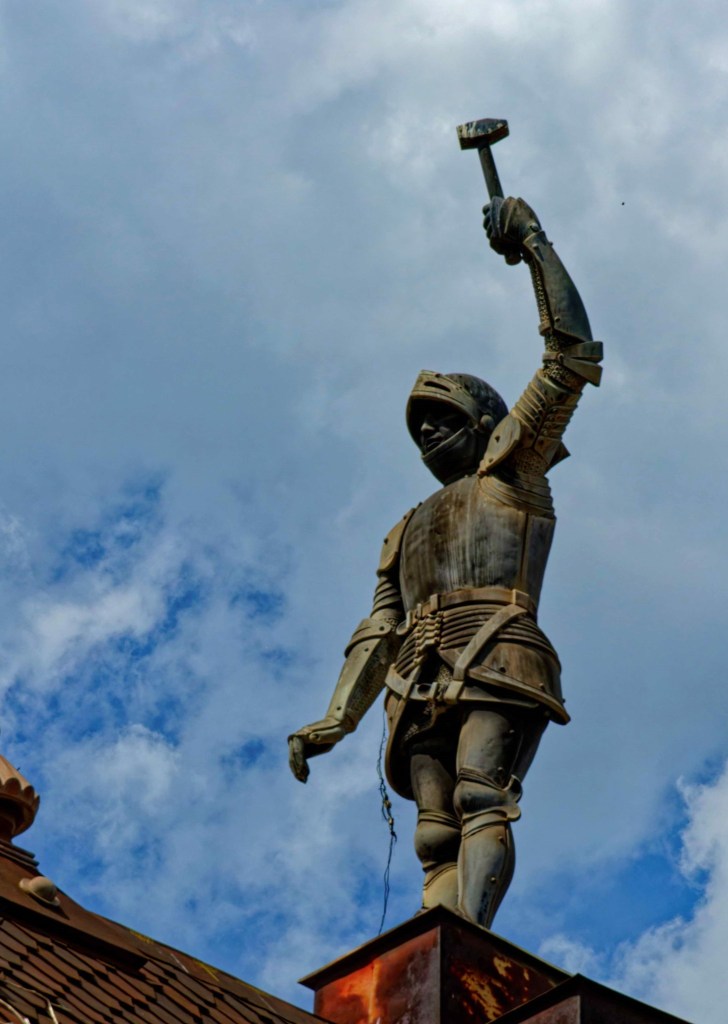
“I suppose it is tempting,
if the only tool you have is a hammer,
to treat everything as if it were a nail”

Abraham Maslow

I write this blog in the hope that ’embodying’ my thoughts will somehow help me.
Help me solve some of the quirky questions which have been haunting me for sometime now.

Why so many people have been convinced that thinking may help them make sense of things?
Why so many otherwise smart people have convinced themselves that thinking ‘in solitude’ would take them to the ‘right’ place?
Why so many seemingly reasonable people have somehow become certain that their version of things was the only one valid? To the tune of trying to impose it to those happening to be around them?

The first answer was easy to find.
Because that’s how we make sense of things.
And because that’s what people do when they have no other alternative.
They start thinking about how to get out of the mess into which they have entered by not thinking! Enough…

The second one was also easy. Ish… specially after I did come up with the question formulated like this.
Apparently, to shield their minds from ‘distraction’. From the mundane ‘minor’ problems which might have wasted their ‘brain power’.
In reality, simply because they could do it. They had a great time doing it – thinking, that was – so they indulged on every occasion they had. And smart as they were, they made it possible for them to have more and more time available for thinking.
And they cut themselves off from the rest of the world because the few people able to partake in the process not always shared the same opinion. Thus otherwise smart thinkers ended up in the company of sycophants…

Having found the answer for the second question opened, wide, the door for the third answer.
No, it wasn’t the presence of the sycophants which convinced the otherwise reasonable thinker that their was the only valid solution for whatever problem they had in mind at anyone time.
Sycophants showering praise were only a ‘favorable circumstance’. A mere opportunity for it to happen.

Unhindered by any outside intervention, the tinkering thinker turned his tool to his own head.
And hammered out all the remaining doubts his mind was still harboring.

I also believe that people – well, some of them – are able to change their minds if presented with the right arguments at the right time, in the appropriate manner and in auspicious circumstances.

People are not robots. And, for certain, not rational!

We are rationalizers. We use rational arguments to fortify our already held conclusions. And the more we love those conclusions, the further we go in our quest to find the ‘right’ arguments in our favor.
But given enough time and if the arguments which contradict our convictions are presented in an un-injurious way, we might be persuaded.

And here’s the catch.

For quite a while now, some of those familiar with how rationalization works have used their knowledge about the innards of our minds to further their own goals.
Nothing wrong with that?

Are you familiar with ‘divide et impera’?
That’s the strategy used by every would be dictator to breed trouble in the population they planed to take over.
Divide and conquer. Make your followers despise everybody else. To the tune of transforming ‘the others’ into sub-humans.
Make your followers believe they are ‘special’ while the others, all of them, are nothing but vermin.

‘And what’s wrong with believing yourself to be rational?!?’

It’s not wrong. Only delusional.

Making your mind up only after carefully considering all of the available ‘arguments’ means having a scientific attitude.
You know? Science, the fad currently popular among many of us…

The problem with the scientific attitude being the fact that this attitude has been developed in the context of hard facts. The scientific attitude has been ‘minted’ by those studying physics, chemistry, biology… fields where every minute transgression becomes evident in real time! Where people could not ‘fall in love’ with their own conclusions. For the simple reason that those conclusions had to be changed along with the new facts continuously discovered in the process of learning.

The concept of rationality had been minted late in the development of human thought.
Sometimes during the XVIII-th and the XIX-th centuries. When philosophers had started to concern themselves with ‘how we think’ on top of ‘what we should be thinking’.
When philosophers – and lately psychologists – have started to understand how we reach/build meaning.

Some of those philosophers have reached rather strange conclusions.

Nietzsche posited that ‘God is dead’ while Marx rationally convinced himself, and others, that there was a way – and only one way, his – to make everybody happy.
Nietzsche opened the gate and Marx led us through.

And now, that we’re dwelling in no-God’s land, everything is up for grabs.

Including reason…
What is here to prevent us from using our knowledge of how mind works in order to further our own, personal, goals?

Goethe did warn us.
The Sorcerer Apprentice made the very same mistake. Overconfidence in his own ability to ‘play the rules’. To fidget with reality.
The difference between Goethe’s poem and what we’re currently doing is the fact that Goethe’s was a work of fiction while we’re playing with our own future.

I’ll wrap up highlighting the extreme perversity of the message.
‘I have a mental illness…’
Loosely translated, this means that everybody who doesn’t follow those arguments to the same conclusion where I have arrived myself must be (also) mentally ill.
And now, that we’ve reached the conclusion that at least one of us is ‘crazy’, it no longer matters who is on the ‘wrong’ side of the fence!

We both are!
We no longer see eye to eye. Each of us is convinced that the other is sick.
Unworthy!

We’re both ready to be taken over.

The only way out is to start listening, respectfully, to what the other has to say.
‘Respectfully’ means, first and fore-most, ‘don’t mess with GIGO‘!

Expect nothing.
You’ll never be disappointed.

Buddhism 101

Language, one the tools we use for thinking, is an interesting subject.
For study!

Whenever there are two different words referring to something not exactly different, there’s a huge opportunity. For us to understand how our minds work.

Buddha said nothing about wishing. As far as I know, and I’m not an expert in Buddhism…
But since all those who bother themselves to help us becoming the better – read happier – version of us quote Buddha as speaking exclusively about ‘expecting’ and nothing about ‘wishing’ … I’ll just consider it yet another fact of life.

When speaking about expectations, Buddha starts by saying that “attachment to desire causes suffering“.
Which brings us back to the minute differences between words!
Wishes, desires… expectations…

Buddha’s first Noble Truth is stated as “Life is Suffering“. Very interesting formulation but today’s subject is somewhat different.
Life, as we experience it, needs a living organism.
Which living organism, in order to remain alive, has to meet some of its own ‘needs’. Subsistence, shelter…
For us to experience something – including life – we need to become and remain conscious. We need to build and preserve self-esteem…
For our living organism to inform our conscience about its needs, the body sends sensations to the higher echelons of the mind. Where sensation is transformed into perception. And becomes desire.

‘Pangs’ become perceptions of hunger. And our mind discovers that it – or ‘we’, as in ‘body and mind’?!? – desires to eat.
Is there any reasonable way in which we – any of us – may give up trying to fulfill this desire? This need, actually…

‘I wish I had eggs for breakfast!’
Nothing unreasonable about that, right? Nothing likely to make us suffer…

Well, maybe for us.
For me, writing this on a computer, and for you reading my thoughts over the internet. Highly unlikely for any of us to be unable to fulfill such a ‘dream’. Those allergic to eggs are excepted, of course.

This being the moment when I draw your attention to what other people may think. Feel…
Parents who can feed their children nothing but stale bread. If at all. And not for lack of trying!
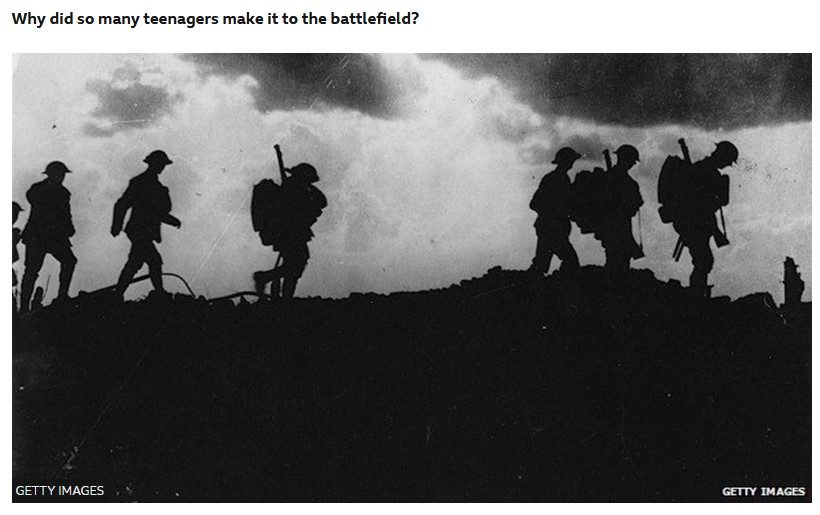
Hungry teenagers who expect their parents to be able to feed them. Decently…

“Fifteen-year-old Cyril Jose was a tin-miner’s son from Cornwall. With the region suffering from heavy unemployment, the boy with a strong sense of adventure joined up.”https://www.bbc.com/news/magazine-29934965

The Polish state broadcaster on Saturday suspended
a television journalist who, during the Olympic Games opening ceremony,
reacted to a performance of John Lennon’s “Imagine” by saying it was a “vision of communism.”

Communism is perfect!
Communism is the perfect lie…

Communism was ‘invented’ by Marx and proposed as the only solution to a real problem.

The problem with communism as a practical solution is that it cannot be put into practice!

Humans, both at individual and social level, need freedom.
Without individual and social freedom, individuals regress to an animalic state and societies fail. Abysmally!

According to Marx, communism was the only solution for what he had perceived as a problem.
According to Marx, when a critical mass of people belonging to the middle class will become destitute, they will accept to be led out of their predicament by ‘the communists’. But since the rest of the society continues to enjoy their perks or to ignore the dangers ‘lurking in the future’, in order to achieve their goal – communism for everybody, including for the unwilling, the communists will have to institute the socialist dictatorship. As a transition phase to communism. A phase in which the unwilling will be convinced.
According to history, no dictatorship – including the socialist – has ever survived. Has ever achieved its goal.

Communism, at least for now, is unattainable. For the simple reason that humankind has not yet learned how to survive dictatorship. How to live without freedom.

On the other hand, communism is very alluring.
For the idealists amongst us…
Communism is a very suitable subject for dreaming. A very nice thing to have, albeit impossible to achieve…

Since the idealists are hard to convince, let me speak to the practical minded amongst you.
John Lennon invited us to dream. To dream a world with ‘no possessions’ and with ‘no need for greed or hunger’. What’s not to like in this dream, except for the fact that it can’t be put in practice?
Hunger is natural. Why eat if not hungry?!?
Greed is also natural.
Who doesn’t like/want more of what they consider to be pleasant?!? The wise amongst us?
How do we become wise? As wise as each of us is able to become…
By interacting with others? By learning from them? And from the consequences of those interactions?

Property – possessions – is a tool.
A tool society uses to make order. If each of us knows what they are able to use for what purpose things go smooth. There’s no need for outside intervention. Granted, this is valid for only as long as each – well, at least most – members of the society have enough to eat, where to sleep and what to protect their backs with.
Without the order construed by the society, collectively, using the tool known as ‘property’, how are the people going to cooperate?!? To interact? To learn, even…

How about we wake up?
Sleep is essential and dreaming a normal part of it.
But we also need some wake up time!
Pun intended…