Image

Sometimes things are so incredible that people are more comfortable joking about them than discussing them in earnest.
Anyway we should pay more attention about how the really important decisions are taken.

It’s our life at stake and we only have one!

PS Click on the picture and start the New Year as we all should: with a good laugh!

Broadly speaking all humans are intellectuals since all of them are conscious so, at least sometimes, they ponder upon things before deciding one way or another.

Nowadays, since we live in the era of the ‘peer reviews’, the concept is defined a lot stricter: one is an intellectual only if at least one ‘certified gatekeeper’ affixes him with an approval stamp…

OK, let me get serious.

Some people use their brains a lot more than others. Does this simple fact turn them into intellectuals?
Not so long ago, when books were not yet written directly on laptops, publishers used to hire people to do this job. Practically to copy a ‘manuscript’, usually typed (?!?), on a computer. Now, is that kind of a person an intellectual or not? After all he is working mostly with his brain, right? And in general people who work as clerks, or in a call center, are they intellectuals just because of their daytime jobs also?

No? Because their honest and respectable work, otherwise very useful, doesn’t result in anything new or original?
I concur.

So we might say that an intellectual is a person that uses his brain in such a manner that the end result of his activity is a new idea or concept, one that either fixes a problem that has become apparent, broadens the human knowledge or contributes to the artistic treasure of the mankind.
If we take this definition to be true then the limitation described when talking about peer reviewing looks rather stupid. Asking highly original people to evaluate the work of other highly original people would seem to be both a waste of their time and a subtle form of pressuring those whose work is being evaluated to conform to the established norms and customs of the ‘discipline’.
And this would be at loggerheads with the need for originality, wouldn’t it?
On the other hand in the modern days of very specialized science and technology it would be preposterous to accept every new ‘contribution’ as valid without previously checking it in some way or another…

And here we get to the really interesting part. The professionalism of the intellectuals.

What?!?

It’s simple actually. A professional is by definition a person who not only has the command of whatever skills he needs to perform his job but also such a high degree of self esteem that he always strives to do his best. In short a professional is a person who sees/describes himself as somebody who is able to perform a certain job above a certain level.

And exactly as we have doctors who save lives and quacks, writers and pen-pushers, cooks and people who waste good food, we also have people who love to think in searching for a solution or for the next new thing and people who think mainly about how to advance their ‘intellectual’ careers…

I’m not trying to convince any of you that bona-fide ‘intellectuals’ should volunteer their life and energy,  live on stale bread and dress miserably. I’m only suggesting that when a passionate one meets a ‘career’ man things will probably not work smoothly between them and if the career guy gets the upper hand it is the rest of us who are the real losers. The same thing happens if the society at large is not wise enough to make sure that the ‘professional’ ones have ‘enough to eat’ but this is a rather different problem.

Pe vremuri erau foarte multe bancuri cu Bula.

Unul dintre ele suna cam asa:

‘Diriginta lui Bula afla ca saptamana viitoare va avea inspectie de la regionala de partid asa ca ii pregateste pe copii.- ….. Si probabil ca la un moment dat o sa va intrebe si ce meserii au tatii vostri. Hai sa vedem ce veti raspunde voi. Spune tu Ionescule.
– Tata e strungar la 23 August.
– Acum Popescu.
– Tatal meu este frezor la Timpuri Noi.
– Hai Bula, spune si tu ca vad ca esti tare nerabdator!
– Tata este clopotar la Patriarhie.
– Bula, nu cred ca ‘tovarasii’ se vor bucura sa auda asta…
– Atunci am sa spun ca e disk-jockey la Mystic-Club!’

Avand in vedere ca eu am asa o teorie cum ca starea psihica a unei comunitati poate fi ‘masurata’, cel putin calitativ, prin studierea bancurilor ‘colportate’ in interiorul ei am fost foarte atent cand am aflat de o varianta moderna a acestui banc:

‘….Popescu
– Tata e pompier si salveaza vieti.
– Ionescu
– Tata e medic si salveaza vieti.
– Bula
– Tata este dansator intr-un club gay, danseaza la bara, clientii ii baga bani la chiloti, si daca platesc bine tata si-o pune cu ei in boschetii de la intrare.
Miscata de situatia lui Bula diriginta il opreste dupa ore:
– Imi extrem de rau, daca as fi stiut nu te intrebam in fata intregii clase.
– Dumneavoastra sa ma iertati-ma doamna diriginta, zice Bula cu ochii in lacrimi, v-am mintit, tata se ocupa cu politica da’ mi-a fost rusine sa spun.’

Image

http://www.newindianexpress.com/cities/bangalore/Chasing-the-Evasive-Muck/2013/12/24/article1961626.ece

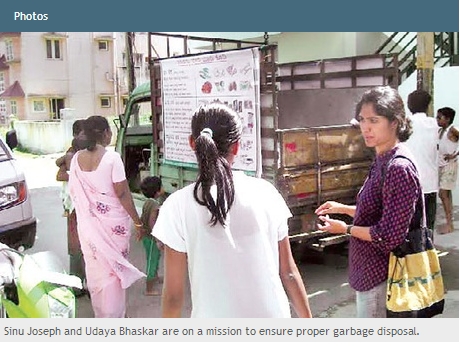
This is the most effective way to introduce something new to people.
Preaching isn’t enough, there are a lot of small hurdles that need to be removed before change will actually be implemented.
Enlisting the help of those involved insures that the new thing is OK with them – otherwise you wouldn’t be able to convince them – and that they understand what it’s going on!

Have you considered ‘being friends with your neighbors to such a degree that you may count on their help’ as being part of an adequate preparation for what ever we may have to confront in the future?

Image

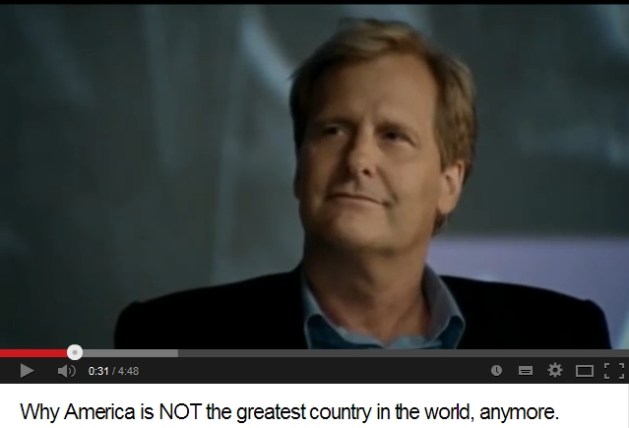
This is the second time I came across with this video.
While some of the arguments presented ‘inside’ are valid I beg to disagree with its conclusion.

Here are some valid arguments for rejecting that conclusion but I’m afraid they don’t get the gist of it.

America is number one, and has been for quite a while, because she is able not only to weather such soul searching controversy as depicted in this video without falling apart as a nation but also to draw a lot of energy from it.

For self centered foreigners and also for disgruntled Americans such bickering might seem a sign of divisiveness and frailty, but in reality this is how America keeps herself on her toes in absence of credible menace from outside. Well, sometimes she was so successful in scaring herself up that she started such hapless wars as the ones against drugs and poverty but this is another topic.

But when push comes to shove she is able to pull herself together. Hitler, the communist leaders of the USSR and bin-Laden are only a few of those who have mistaken lack of unanimity with lack of strength. They are all history now and haven’t arrived there using the recommended venue…

Being able to adapt to whatever comes to cross your path demands being able to think with your own head and original thinkers are renown for sometimes acting boisterously but that doesn’t mean they cannot team up to cross that treacherous mountain!

Image

M-a intrebat cineva ce cred despre articolul asta:

“Nouă personalităţi răspund pe ce se întemeiază credinţa lor: De ce cred în Dumnezeu”

Dupa ce am citit (doar) “Omul fara rost” am raspuns repezit:

“Icoana de pe peretele clasei nu este un indemn catre narcomanie sau orice altceva (din ‘clasa’ celor evocate de Dan C. Mihailescu) ci este unul catre conformism.

Si exact asta este motivul pentru care am intrat, cu totii, in criza in care suntem de vreo 50-60 de ani: am ascultat prea tare de altii si am imprumutat prea disciplinati modelele care ne-au fost propuse.
E adevarat ca dezvoltarea la care a ajuns spatiul cultural din care facem parte (cel ‘vest european’) are foarte mult de a face cu faptul ca am fost crestini numai ca noi oamenii am dat nastere crestinismului nu invers.
Cu alte cuvinte noi am dezvoltat crestinismul, noi l-am creat pe Dumnezeu (tocmai pentru ca avem credinta – “Nu M-ai cauta daca nu M-ai fi gasit!”) si nu invers.
Distanta care a aparut acum intre oameni si Dumnezeu nu se datoreaza faptului ca Dumnezeu ar fi facut ceva rau (nici nu poate, el este insasi ‘firea’ – tot ce exista – asa ca daca ar face ceva rau ar fi ca si cum si-ar trage un glont in picior.) Se datoreaza faptului ca unii smecheri incearca sa profite de credinta oamenilor. Prea mult preoti catolici isi bat joc de copii. Ortodocsii construiesc prea multe biserici monumentale si prea putine azile de batrani. Prea multi protestanti se straduie sa invete pe unii cum sa-i urasca pe altii (legile anti-homosexuali din Uganda se pare ca sunt opera unor evanghelisti americani) in loc sa-i indemne sa depaseasca diferentele dintre ei. Prea multe ulemale indeamna la varianta exterioara, violenta a jihadului.
In realitate oamenii nu se indeparteaza de Dumnezeu. Se indeparteaza de chipul pe care i l-au cioplit smecherii astia si ii cauta adevarata fata, cea care se arata fiecaruia dintre noi in particular si nu atunci cand batem matanii in fata bisericii ca Iliescu sau ca Bush dupa ce s-a ‘nascut a doua oara’. Sau ca sa ma intorc la Mihailescu oamenii merg “prin păduri, pe vârfuri de munte, prin livezi, podgorii, fâneţe, ori în largul mării” tocmai pentru ca acolo gasesc o fata a lui Dumnezeu mult mai sincera decat cele zugravite prin unele ‘altare’ sau zbierate prin difuzoare de unii predicatori!”
Abia dupa aceea am citit si restul articolului. Merita. Pe mine m-au interesat mai ales cele spuse de Radu Gologan. Pe urma am mai citit odata si predica parintelui Galeriu.

“Man is hungry.
He steal bread to feed family.
Get home, find all family have gone Siberia!
“More bread for me,” man think.
But bread have worm.”

If somebody really wants to understand this “Latvian Jokes” he needs to remember that the only period of independence enjoyed by the Latvian people in its entire history until 1991 was 1918-1939 and even that short period was spent under a dictatorship.

That somebody also has to remember that jokes describe how the people who keep telling them over and over feel about a certain situation and are not necessarily an ‘accurate’ description of that situation. These jokes were ‘kept alive’ in spite of “Latvia was one of the most economically well-off and industrialized parts of the Soviet Union” exactly because the Latvian people felt oppressed by foreign rule. (Besides that the Baltic republics  were better of than the rest of the USSR in spite of the communist rule, not because of it.)

Image

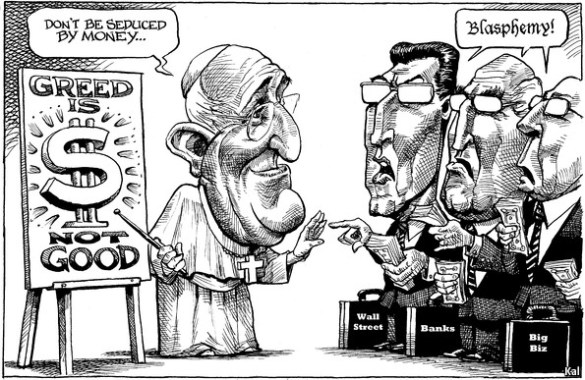
Yesterday I shared this picture on FB.

One of my friends asked me:
“How do you define “greed”. In the movie “Wall Street” Michael Douglas has this great speech saying that “greed is good” meaning that passion for things in life is good. Where is the line between greed and passion? Does that line look differently depending on where you are in the deal chain?”

This was my answer:
“This one is simple.
If you are willing to do your best in order to get something then you’re passionate ABOUT that something.
If you are ready to ‘step on corpses’ to reach your goal then you are ‘greedy’ FOR that something.”

Another friend commented:
“Well I have a problem with this; the Catholic church is one of, if not the richest organization in the world, how does the pope plan on distributing the assets? The church generally asks for 10% of your income to be ‘donated’; not mandatory but one of the heftiest taxes around. Practice what you preach.”

Me again:
“It seems that Romanians have already solved this conundrum.
We have a saying that goes like this: “Do what the priest says, not what he does!” ”

Thank you guys!

Ca tot ‘sarbatorim’ trezirea din 1989…

In postarea trecuta am adus vorba despre Sven Hassel.
Cei mai tineri dintre noi s-ar putea sa nici nu fi auzit despre el. A fost un soldat din armata germana care a reusit sa supravietuiasca razboiului – si l-a facut pe tot, din ’39 pana in ’45 – iar apoi a povestit ce i s-a intamplat.

In ’40 a dezertat. A fost condamnat la puscarie iar dupa cateva luni a fost transferat intr-un regiment disciplinar. Ca atare a mai facut un stagiu de instructie. Numai ca de data asta ‘instructia’ avea mai degraba de a face cu ‘reeducarea’ (vezi ‘Fenomenul Pitesti’) decat cu antrenamentul specific militar. Intr-una din cartile lui povesteste ca ‘instructia’ asta cuprindea si momente in care trebuiau sa se prezinte la o ‘inspectie de front’ (unde pentru o pata de noroi pe uniforma primeau pedepse crunte) la o jumatate de ora dupa ce se intorsesera din cite un mars de doua zile prin noroaie. Singura solutie era sa intre sub dus cu uniforma si tot echipamentul pe ei si sa spele tot acolo, pe loc. E de presupus ca apa de la dus era daca nu calda atunci macar incropita, altfel nu ar fi avut nici o sansa…

Ei bine, in primele 3 sau 4 saptamani de armata acolo unde si cand am fost eu incorporat nu a curs apa aproape de loc. Nici rece si cu atat mai putin cea calda. Si mi-am “satisfacut stagiul militar” in mijlocul unui municipiu – Focsani – din Romania anului 1981 si nu undeva in Germania anului 1940…

Pana la urma asta a fost motivul pentru care au cazut regimurile comuniste. Nu comunismul nu ‘a cazut’ inca, mai sunt nostalnici care mai cred ca utopia asta ar fi putut fi pusa in practica, dar despre asta mai tarziu!

Regimurile comuniste au cazut pentru ca asa ceva nu putea functiona!

It’s the economy, stupid!