Neo-liberalism – a ‘folly’, to be polite – was, and continues to be, a reaction to an all-encompassing left wing etatism. A reaction to the overbearing attitude of the government. Of too many of the governments around the world.
The fact that neo-liberalism has ‘gone too far’, way too far ‘in the right direction’, doesn’t excuse etatism. One folly doesn’t justify another.
Since Milei’s Argentina is a particularly poignant example of neo-liberalism, I may very well point out that ‘it takes two to tango’…
As for the root of all our problems… that’s ideology itself. Left, right… each and everyone of them. Each of every pre-scripted attitudes we tend to adopt when trying to cope with the excesses we need to survive on a daily basis.
We no longer examine the factual reality whenever we need to figure something out. To solve a problem. To cope with a situation.

We check what ‘our’ ideology has to say about the subject…

Prietenii mei sunt mai deștepți decât ai lor.
Iar ăsta este meritul lor!
Ei au fost cei suficient de deștepți încât să mă accepte printre ei.
Cu toate ciudățeniile mele…

Pâna la urmă, diferența dintre noi și ei e simplă.
Noi ne acceptăm, între noi – așa cum suntem, până la un punct, iar ei se aleg singuri.

Deșteptăciune/inteligență, educație, caracteristici psihologice individuale? Care să fie explicația?

Din punctul meu de vedere, este vorba despre noroc.
Asta în timp ce inteligența are cel mai puțin de a face cu toată treaba asta. Ba, de prea multe ori, este un factor agravant…

Ai noroc de niște circumstanțe sociale propice? Și de o structură psihologică favorabilă? Care oricum va fi pusă în valoare de către circumstanțe? Atunci l-ai prins pe dumnezeu de-un picior!
Ai ghinion? Te naști într-un loc nașpa? Nepotrivit pentru ‘matricea ta interioară’? Atunci doar dumnezeu te mai salvează!

‘Păi da… numai că ‘circumstanțele alea sociale’ despre care vorbești tu sunt chiar consecința faptelor noastre! Moștenirea pe care o lăsăm noi generațiilor ulterioare. „Copiilor copiilor noștri”’

Corect.
Noi înșine suntem cei care, prin interacțiunea dintre noi, dăm naștere circumstanțelor sociale care devin locul în care urmează să ne continuăm viețile. Noi și urmașii noștri.
Ai intuit perfect. La exact asta mă refeream atunci când spuneam că prietenii mei sunt mai deștepți decât prietenii lor. Prietenii mei gândesc cu capetele lor. Nu le spune nimeni ce să creadă.

Bine, nici ‘lor’ nu le spune nimeni, direct, ce să creadă.
‘Prietenii’ lor flutură niște idei prin spațiul public. Iar ‘ei’, excedați de ceea ce au ajuns să simtă și lăsându-se convinși că ‘acolo’ e salvarea, se încolonează disciplinați…

‘Adică sunt proști!
Sau, în orice caz, se comportă ca și cum ar fi proști.
Și, până la urmă, ce mă intereseză pe mine dacă ‘ei’ chiar sunt sau doar fac pe proștii…? Singurul lucru cert este că eu, noi toți, tragem ponoasele prostiei lor! Manifestă, indiferent dacă e reală sau doar inchipuită.’

Rabinic vorbind, ai dreptate.
De comportat, se comportă ca și cum ar fi proști. Din punctul nostru de vedere…
Din punctul lor de vedere, noi suntem proștii! Pentru că nu vedem/acceptăm ‘adevărul’. Adevărul lor…

Și abia aici începe diferența dintre noi!
Circumstanțele, diferite, în care ne-am dezvoltat au dus la rezultatele cărora trebuie să le facem față.
Noi putem face față acceptând că nu există un singur adevăr în timp ce ei au nevoie de un Adevăr pentru a se putea da jos din pat în fiecare dimineață.

Situația este chiar atât de simplă.

Și care-i treaba cu „schimbarea la față”?
‘Ei’ se simt în sfârșit ‘bine’. Au primit răspunsul. Știu ce au de făcut. Îl urmează pe Guru și toate problemele lor vor fi rezolvate. La un moment dat…
Noi avem o problemă. Știm că drumul ales de ei este o fundătură. Mai știm că nu ne permitem să experimentăm, încă o dată, încă o fundătură. Cum facem să nu ajungem acolo?
Îi înjurăm în continuare pe ‘ei’, aruncându-i și mai adânc în brațele lui Guru? Sau găsim o cale? Pe care să ieșim cu toții? Afară din rahat?

Doar că ar trebui, mai întăi, să înțelegem cum am ajuns acolo!
Acolo, în rahat…
Adică aici.

Un corespondent de limba romana al unui prestigios post de radio francez urmareste vizita președintelui român în Franța. Citește interviul acordat de acesta către Le Monde. Își informează ascultătorii…
A doua zi, prezent fiind la conferința de presă, același corespondent:

„În fine, cum cvasitotalitatea întrebărilor puse de confraţii noştri veniţi din Bucureşti au fost legate de subiecte de actualitate internă, românească, ne-am molipsit şi noi şi ne-am legat de un răspuns dat de Nicuşor Dan unei întrebări puse de aceeaşi ziarişti de la Le Monde. Preşedintele României a negat răspunsul dat confraţilor noştri francezi. «Am spus că (alegătorii AUR) nu sunt toți (extremişti sau proruşi). Am spus că motivația celor mai mulți dintre ei este o revoltă față de modul în care s-a făcut politică și administrație în România și că, în acest moment, oamenii aceștia care sunt nemulțumiți de modul în care merg lucrurile în România, spun orice e mai bine decât cei care guvernează acum. Asta este realitatea. Și atunci ei găsind un singur vehicul electoral, către care în momentul acesta se pot îndrepta, se îndreaptă către un partid care are în program elemente care sunt antieuropene, ba chiar proruse.

„Am spus că nu sunt toți!” a fost auzit ca negând „Cei care votează AUR nu sunt nici extremiști, nici proruși”.

După care anumiți ‘analiști’ descoperă că mare parte dintre politicieni, în nici un caz TOȚI, au reticențe în relațiile lor cu presa.
Genul ăsta de maniheism, de împarțire strictă în alb și negru, este cât se poate de distructiv. Distruge încrederea între părți. Și, pe cale de consecință, capacitatea de conlucrare.

Știu. Controversa produce rating.
Ăsta fiind și motivul pentru care este folosit ‘dar’ în loc de ‘precum’. „Dar și” în loc de „precum și cu o serie de oameni de afaceri”.
Uite-așa, de dragul ‘inflamării’, orice nuanțare ajunge să fie intepretată ca negare a mesajului care a fost clarificat.
Doar că funcția socială a jurnalistului este să disipeze informație. Dacă doar încearcă să producă rating, obținând în final neîncredere, atunci n-am făcut nimic. Nici ei, jurnaliștii, nici noi.
Noi toți! Și nici măcar ei.

Dacă fiecare auzim ce vrem, ce ne-am propus – de la început – să auzim… atunci n-o să ne mai înțelegem niciodată!

Cui prodest?!?

Evolution is not as much about the survival of the fittest
as it is about the demise of the unfit‘.
Ernst Mayr, What Evolution Is

As an engineer, I’m more concerned about consequences than fascinated by explanation.
OK, explanation – as in understanding the process – is necessary when trying to improve things. To fine tune. To ‘increase efficiency’…
But ‘survival wise’… sometimes it’s enough to bring things back to square 1. To repair. Specifically when the thing which no longer works used to make wonders.

Passeist? Anti-progressive?!?
No, as I already mentioned, I’m just a ‘don’t fix it if it’s not broken’ engineer. And currently … IT is broken.

Democracy doesn’t work anymore. Not like it used to, anyway!
If we want to fix it, we don’t necessarily need to understand what happened. Only to return democracy back to where it was.
For that, we need to understand what democracy is, not what had happened to it.

Looking back, we notice that all authoritarian regimes had failed. Crumbled under their own weight, usually, and failed abysmally when attacked from outside. Usually, again.
While no democratic regime had ever failed as long as it had managed to conserve its democratic nature.

‘But the Pharaohs have run Ancient Egypt for three millennia, give or take. In a very authoritarian manner…. they were absolute monarchs, you know!’
Not so fast. During those three millennia, The Ancient Egypt had been run by 33 dynasties. By 33 different authoritarian regimes… When each of those dynasties were no longer able to run the country – when each regime fell under the weight of its own mistakes, with or without ‘outside’ contribution – another dynasty, the next one, took over. ‘Usually’ not in a nice manner…
Same goes for all other authoritarian regimes!

While under a democratic regime, whenever those at the helm of the government start behaving badly, or commit too many mistakes, they are changed in a peaceful manner.

So, basically, democracy is a social arrangement which is able to change itself. To adapt! To what happens inside or outside it.
While the authoritarian rulers do their best – or worse? – to conserve their own power/position at the helm, the democratic regimes contribute to the survival of the entire society.
For as long as they manage to conserve their true democratic nature. Their openness. Their ability to depose those who overcome their welcome at the helm of the government.

I argued in my previous post that corruption is akin to decay.
Going forward, evolutionary speaking, we need to figure out what’s driving it. It’s ‘raison d’etre’.

Decay, also known as decomposition, re-allocates resources. Frees resources. Resources previously used in an currently ‘dead process’. Building blocks currently stuck in a corpse. Waiting to be freed, in order to participate in the next living process.
Corruption does more or less the same thing. Only less naturally. Way less naturally, sometimes bordering malignancy…

I mentioned corruption taking place in two environments. In a closed, abandoned, fridge – in an authoritarian environment, or in an open forest. A free society. In the fridge, corruption begets ‘hairy’, aberrant, ‘things’ while in an open society corruption plays a more nuanced role.

‘Intensity’ wise, at the individual level, there is ‘grass-roots’ corruption – like tipping your restaurant server or your hairdresser – and white-collar corruption. Which culminates in ‘pork-barrel’ politics.

‘Consequence’ wise, at the social level, grass-roots corruption sets the stage for the white-collar variety. ‘Educates’ people. Accustoms individuals exposed to it with the phenomenon. White-collar corruption weakens the entire society. Prepares it for take-over. Softens it for ‘revolution’. Not very different from an insidious rot weakening a seemingly strong tree before it is knocked over by wind.

Historically speaking – as in looking back in time – it’s easy to notice that corruption weakens both kind of societies. Open as well as the authoritarian ones.
The difference being that it works in opposite ways!

Corruption frees, eventually, those living in authoritarian societies.
The same process weakens the open, democratic, societies which allow it to grow malignantly.

Let’s remember.
Hitler’s Germany was defeated not only by the valor of those resisting its aggression but also by its inability to adapt. By its absolute corruption.
USSR collapsed, under it’s own weight, like all other empires. The British one included.
No authoritarian regime had ever survived for the long run. Each change of dynasty was, in reality, the advent of a new authoritarian regime. People had no alternative in those times.
On the other hand, no democratic regime had ever collapsed as long as it had managed to preserve its democratic character. What had happened in Eastern Europe after communism had caved in is ample proof for my thesis.

Corruption kills.
Sometimes literally.

Some ten years ago – 2015, October 30 – a fire broke out in a Bucharest night-club.
64 people died on the spot, including 4 members of the band. “The day we give is the day we die” was one of the tunes Goodbye to Gravity played that night.

The inquiry had determined that corruption was the main cause for what had happened. Safety certificates issued outside any norms, dysfunctional health care, unresponsive authorities… Massive popular protest forced the prime-minister to resign.
Things are better now, in Romania, but only slightly. Too slightly…

The point being that we’ve been warned.
Lord Acton: “Power tends to corrupt and absolute power corrupts absolutely.
Frank Herbert: “It is not that power corrupts but that it is magnetic to the corruptible.

Both were right.
Power both corrupts and is a magnet for the corruptible!
Hence we need to keep it in check…

Nothing moves without power. We need it. To make things happen.
We also need to survive. To remain alive after things will have happened!

In order to do that, we need to understand something.
About the thing which may derail the whole thing.
About corruption!

Current events – Andriy Yermak resigning his post in Ukraine and Federica Mogherini being detained – are hailed as being ‘flaws’. As highlighting the weakness of Ukraine and the EU, respectively. Their ‘unworthiness’.

I forcefully disagree.
Corruption, like decay, is a natural thing.

Let me put it in a different perspective.
Decay may happen in an abandoned fridge. A closed space in which all kind of ‘unnatural things’ will happen if left unattended.
Decay naturally takes place in a forest. Where ‘no longer living’ organisms ‘turn back to dust’.

A fridge – which is a dead thing, specially when abandoned – is incapable of managing anything. Including a process of decaying.
A forest – which is a meta-living organism, if you’ll allow this expression – thrives as long as natural processes can take place. Decaying being one of the most important ones.

Same thing goes for societies.
Open societies – the ones known as democracies – are no more and no less ‘corrupt’ than the closed ones. The ones usually known as autocracies. In the sense that those in powerful positions are equally tempted by corruption. Equally tempted to misuse their power…
The difference being that the open societies deal with corruption in an open manner. Above the board. In public. In a court of law.
While autocracies deal with the corrupt people only when the autocrat allows it. Only when the autocrat feels that a particular act of corruption is detrimental for his own well being…

So.
Every time an open society exposes an act of corruption, that society becomes stronger.
While autocratic regimes are corrupt from top to bottom. By definition. Very much similar to an abandoned fridge brimming with ‘hairy’ things.

l-am intrebat cine ar putea sa il convingă si pe Drula sa faca la fel ca sa nu iasă nebuna?
A zis ca publicul e singurul dar că orgoliu lui prea mare nu o sa fie mișcat.

Atâta vreme cât candidații mai ies din urnă doar în măsura în care îi votăm noi…

Aud tot felul de ‘invitații.’ Către candidați. Să se retragă. Ca să nu se întâmple… nefăcutul.

De parcă alegătorii ar fi tâmpiți! Incapabili să aleagă de unii singuri…
Pe baza promisiunilor făcute de către candidați și pe baza a ceea ce candidații au făcut deja în spațiul public!

În context, vă atrag atenția că Drulă este singurul care a promis să pună în practică referendumul cu privire la bugetul Bucureștiului. Referendum aprobat deja de către cei chemați să voteze din nou…

N-ar fi mai bine să ne împingem la vot unul pe celălalt – între noi, alegătorii – în loc să invităm pe unul sau pe celălalt dintre candidați să se retragă?

Până la urmă… E soarta noastră în joc, nu a lor!
Nouă trebuie să ne vină mintea la cap.
Altfel cum să știm ce să le pretindem lor să facă?!?

Winning the war is not enough.


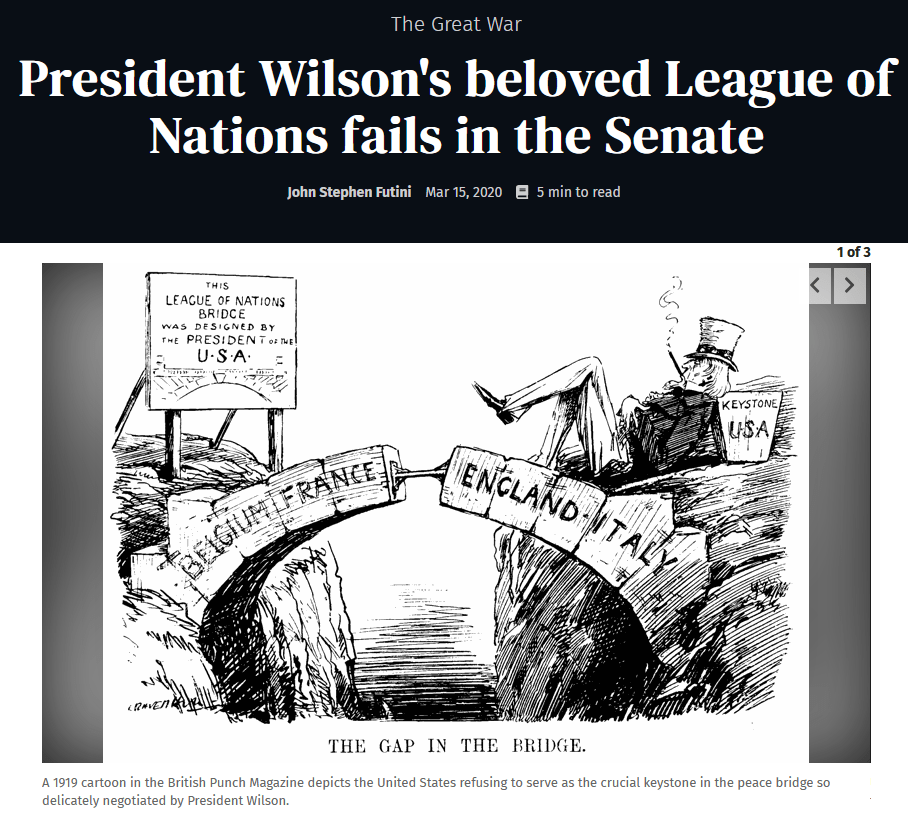
At the end of WWI, the vanquished was left to her own devices. After having been saddled with huge war reparations. The US – whose President, Woodrow Wilson, had been the brain behind the League of Nations – went back into its ‘splendid isolation’.
Adolf Hitler rose to power. Conquered the western part of Europe and then attacked the Soviet Union, convinced that the US would not intervene into the conflict. Convinced that ‘Western Civilization’ had become weak. That the good life enjoyed by those living there had ‘mellowed’ the people. Read ‘castrated’.
Japan was convinced that attacking the US was a good idea. For more or less the same reasons used by Hitler to convince himself that America wasn’t going to fight back.

America had to fight on two fronts. For otherwise all her partners would have been conquered. For otherwise America would have been left alone…

Any resemblance with the current situation, when America seems to be extracting herself from the European front and when Russia has been left to her own devices after loosing the Cold War, is purely coincidental. And since there’s no such thing as a coincidence…

Doing business is not enough.
America and Nazi Germany did a lot of business.
Nazi Germany and the Soviet Union did a lot of business.
The EU and the US did a lot of business with Russia.

WWII is ample proof.
Winning a war is useless unless followed by a workable peace. Which comprises the integration between the victor and the vanquished.

Yet winning the war comes first.
Any attempt to integrate an unrepentant aggressor is doomed to fail.
1938 Munich Agreement and 2014 Crimea should be enough.

‘Revolution’ might be sexy and hype but our lives are shaped by counter-revolution.
Ilie Badescu, PhD

Marx, Karl Marx, is considered the quintessential revolutionary philosopher.

Ilie Badescu – a Romanian Professor of Sociology, proud of his reactionary convictions – makes a very poignant argument. ‘We live in counter-revolutionary times. Almost always. After each revolution, whatever was changed during the upheaval has been mitigated by the survivors to fit with the existing circumstances.’

The Communists are distinguished from the other working-class parties by this only:
1. In the national struggles of the proletarians of the different countries, they point out and bring to the front the common interests of the entire proletariat, independently of all nationality.

2. In the various stages of development which the struggle of the working class against the bourgeoisie has to pass through, they always and everywhere represent the interests of the movement as a whole. The Communists, therefore, are on the one hand, practically, the most advanced and resolute section of the working-class parties of every country, that section which pushes forward all others; on the other hand, theoretically, they have over the great mass of the proletariat the advantage of clearly understanding the line of march, the conditions, and the ultimate general results of the proletarian movement.
The immediate aim of the Communists is the same as that of all other proletarian parties: formation of the proletariat into a class, overthrow of the bourgeois supremacy, conquest of political power by the proletariat.
The theoretical conclusions of the Communists are in no way based on ideas or principles that have been invented, or discovered, by this or that would-be universal reformer.
They merely express, in general terms, actual relations springing from an existing class struggle, from a historical movement going on under our very eyes. The abolition of existing property relations is not at all a distinctive feature of communism.

The Communist Manifesto

Karl Marx and Friedrich Engels wrote this in the first half of the XIX-th century. During quite revolutionary times… Or rather?!?

‘The communist ideas have not been invented or discovered by this or that would-be universal reformer’…

Those familiar with the history of communism know – or should – that both Marx and Engels had been born and raised in Prussia. At that time, until 1848, Prussia was run as an absolute monarchy.
Engels came from a wealthy merchant family who owned textile factories in both Barmen, Prussia, and Salford, England.
Marx was born into a well off family. His father, Heinrich, owned a number of vineyards and was an attorney. Eventually, after an engagement spanning 7 years, Marx married the educated daughter of a liberal aristocrat, but not before befriending his future father-in-law.

Neither had any blue-collar experience. Yet they co-authored the Communist Manifesto…

Things – every’thing’, actually – are/is relative.
Relative to the agent evaluating each of those things
.
Accordin’ to Einstein, that is.
He was the one who taught us to use whatever reference frame suits our needs.

Do you reckon anybody wasted any time or energy thinking about freedom before the advent of slavery?
Me neither.
Forget about the fact that, in those times, people didn’t have much time left for abstract thinking. Finding food and enjoying it with friends kind of drains your energy when you have to do it yourself… The point being that, in those times, everybody was free. Hence ‘had’ nothing to compare freedom with… No lack of freedom, no reason to speak/think about it.
No reason to notice the thing and no reason to coin the concept…

Hunter-gatherers have no use for ‘property’. Personal objects are just that and everything else either belongs to Mother Nature or to the entire group. And this goes without saying. Or thinking about it. People share everything as a matter of fact and common sense discourages the others to use anybody’s personal objects unless in an emergency.
Agriculture – either herding animals or growing crops – changed everything. Property, both as a concept and as an everyday manner of dealing with ‘things’, was invented and introduced in daily use. Productivity increased dramatically. Which made it possible for people to have ‘spare time’. For thinking.
And for planning…

‘The neighbors have better crops. Let’s go take some for us. And while we’re at it, let’s take some of their women too’.
The first slave was probably the first person to long for freedom…

‘Cheap’ slave work coupled with the increased social productivity induced by a markedly improved technology for obtaining food meant that some individuals could afford the luxury of thinking.
The Ancient Athenians had both slaves and philosophers. The slaves did whatever was needed to be done while some of the ‘beneficiaries’ had enough time, and energy, to let their minds ‘free’. To roam free in search for meaning.
To coin the concept and to explore freedom…

Relative “To whom”? To us!
We’re responsible for freedom and freedom is relative to us.
We have invented it. We’re the ones using it. In the sense that we’re the ones who need to notice that freer communities fare a lot better than the less free.

So freedom is relative both to those thinking about it and to each particular community.
To each particular community which puts freedom into practice!