Archives for category: effective communication

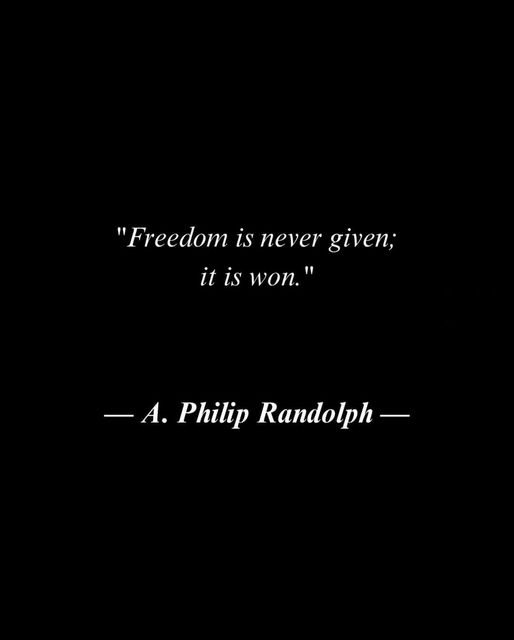
With Chandler Owen, A. Philip Randolph founded and became co-editor of The Messenger,
an African American socialist magazine, in 1917.
In 1925, Randolph established the first predominantly black labor union,
the Brotherhood of Sleeping Car Porters, to improve working conditions
for the nearly 10,000 black railroad employees.
The Brotherhood would enjoy longstanding prominence in the labor and civil rights movements.

According to the English lore, “there’s more than one way to skin a cat”.
According to the cat, ‘who cares about how I lose my coat? I’ll end up dead anyway!’
According to the fur tanners, ‘the manner of skinning the pelt is of utmost importance for the end-result of the operation’.

Whom to believe? Specially since all of them seem to be right…

Well, truth has a marked tendency for being complicated.
Hard to comprehend in its entirety and even harder to express in a concise manner.
Meanwhile we, conscious human beings, have a marked tendency to notice only what we’re interested in. To notice only what we care about…

In fact, the manner in which we notice things speaks volumes about who we are. About how we relate to what we call ‘reality’.

The white colonists inhabiting a certain area in Northern America had become ‘Free Americans’ after fighting the British. Only after they had freed themselves through battle!
A. Philip Randoph had fought for his freedom. And for human rights.

All this fighting leads to a bout of pondering.
Are we free together? As in ‘all of us’ and ‘once and for all’?
Or our freedom is defined against other people? Who might try to steal our liberty from us?

What is freedom, after all?
A zero sum game? Where liberty is up for grabs but in limited supply?
Or a ‘grace’ we impart with and upon our fellow human beings?
Something to be jealously guarded or something to be collectively and cooperatively maintained and enhanced?

And one final question.
Why would anyone attempt to steal other people’s freedom?
When history gives us plenty of evidence that whenever freedom was out to be shared people were happy while whenever freedom was in short supply the entire society eventually crumbled under it’s own weight…

What is going now in China – and in Russia, for that matter –
has nothing to do with the ‘left’.
With what is understood as “left” in Europe…
Instead, it has many similarities with fascism.
‘Corporatist’ states imbued with revindicative nationalism.

Nassim Nicholas Taleb has introduced the concept of “Skin in the Game“.
In short, it is about the fact that the decisions made by people who do not directly and immediately ‘enjoy’ the consequences of their choices have a high probability of being bad. A phenomenon that is accentuated as bad decisions are not immediately sanctioned by those who suffer.

Taleb’s observation only confirms the fact that all dictatorships/authoritarian regimes have collapsed.
Without exception!
Alternatively, it is very easy to see that democracies ONLY last as for long as they manage to maintain their ‘functionality’. That is, for as long as people can – and undertake – to voice their grievances. And for as long as people listen to each other. Respectfully! In vain, some shout about being ‘hungry’ if nobody listens/cares ..

Returning to the idea of ​​’leadership’, yes, countries are led. By some who consider themselves/are considered to be ‘elite’. ‘Led’ only from the operational point of view, however…
Countries are living things, ‘natural selection’ still has the last word!
Ernst Mayr, a biologist, said that ‘evolution is not about the survival of the fittest, but about the disappearance of those who cannot find their ‘right’ place. The misfits. ‘. That’s right, countries have big problems if/when they don’t manage to take down the ‘misfits’ who happen to have clambered into power.
Why countries don’t succeed to do this in a timely manner? How did they clambered there in the first place…
Everything starts when the popular dissatisfaction reaches a critical level. Which dissatisfaction is engendered when the members of that country no longer care for each-other. When mutual respect has disappeared.

I will conclude by returning to the major difference between communism and fascism.
Both of them appeared in situations when enough dissatisfied people were ‘wandering aimlessly’ while looked down by the rest of the society.
Some low-life profiteers seized the occasion and ‘grabbed the helm’. Profiteers who have been able to operationalize the dissatisfaction festering in the society. And the lack of vision of those who hated the others. I repeat myself, both communism and fascism had appeared when various sections of the society despised, and sometimes hated, the ‘others’.
The minor difference consists in the fact that the proto-communist dissatisfied looked up without having any chance to get there, while the proto-fascist ones wanted to return to where they had once been. The Russian muzhiks dying during WWI versus the unemployed German workers who had just lost WWI.

This being where the difference appears.
The difference which makes it hard to recognize what’s going on now in Russia/China as being a form of fascism.
Both the Russians and the Chinese have a lot better lives now than they had under communist rule. Statistically and from the material point of view! Psychologically speaking…
Those who live in well-established democracies – people who respect each other – have a greater tolerance for ‘insecurity’. Each of them knows they can rely on the others. In that environment, failure is temporary. People try as many times as they need to succeed. Or that’s how it used to be…
In communism, we had learned – the hard way, that one was not allowed to make mistakes.
When Russia and China switched to ‘capitalism’ and people saw what could happen to them – to make mistakes while trying – they had become frightened!
And, at least some of them, chose to return – especially psychologically, in the past. Where they felt safe…

“An effective way to undermining something of authentic substance
is by producing versions that closely resemble the real thing
but lack genuine substance.
The skill is in knowing the difference.”

On the other hand, we must keep in mind that fakes are also facts. They exist, don’t they?
Even more so, fake facts do engender consequences!
In fact, it’s these very consequences which impart fact-hood to ‘successful’ fakes.

Also, it is high time for us to understand that this undermining might occur ‘naturally’. Due to our attention being distracted rather than ‘intentionally misguided’.

Your Liberty To Swing Your Fist Ends
Just Where My Nose Begins

Now, what would you have done if this guy had started to swing his fists? In the very proximity of your precious nose?
“Stood your ground” or gave him enough ‘space to exercise’?

You’re not exactly comfortable with the current meaning of ‘stand your ground’?

Then maybe it’s high time for us to understand that ‘stand your ground’ is the direct consequence of ‘your liberty ends where my nose begins’.

Not comfortable with the current situation?

Then maybe it’s high time for us to come up with another definition for liberty.
One which brings forward the cooperative effort which made liberty possible in the first place.
Instead of the confrontational one currently in use. Which serves perfectly the interests of those powerful enough to define evolution as “survival of the fittest”.
Which serves perfectly the interests of those powerful enough to be convinced that only those able to defend their liberty are worthy to be free.

The key word here being “their”, not “liberty”!
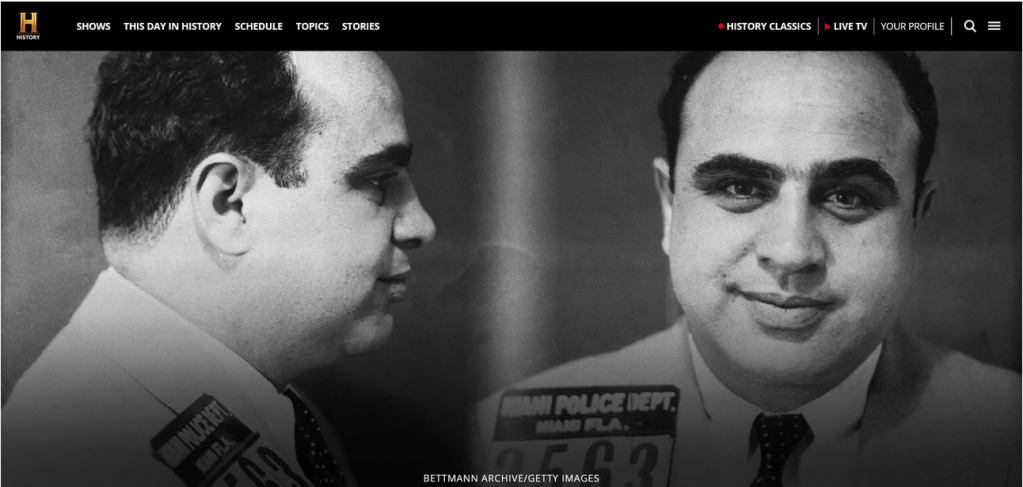
For this kind of people, for the Capones of this world, freedom – their freedom – is something to be appropriated rather than shared.

Think about it!
Do you remember the argument ‘the west has provoked the current situation’?

“Mr Farage said he had been arguing since the 1990s that “the ever eastward expansion” of the Nato military alliance and the EU was giving President Putin “a reason to [give to] his Russian people to say they’re coming for us again and to go to war”.
He added: “We provoked this war. Of course, it’s [President Putin’s] fault.””

What kind of freedom do we want?
For us and for our children?
The kind that must be constantly wrenched from the likes of Putin or one shared freely among all those present?
Built cooperatively or defended against all others?

Shaking willing hands or swinging fists?

The only thing I know is that I know nothing,
and i am not quite sure that i know that.

Socrates

“The demand for certainty is one which is natural to man,
but is nevertheless an intellectual vice.
To endure uncertainty is difficult, but so are most of the other virtues.“

Bertrand Russell

Socrates and Bertrand Russel, both, knew everything there was to be known in their respective times.
Socrates and Bertrand Russel, both, had enough guts to acknowledge their doubts. To themselves and to the rest of us.

On the other hand, Russell presents us with a very interesting riddle.
Is it possible for a naturally occurring thing to become a vice?

““Humans have an affinity for ethanol (plant-derived alcohol), and captive primates are well known to like to drink anthropogenically sourced ethanol,” Dudley told Sciam.com….
The appeal of naturally occurring alcohol has not yet been investigated because, in the handful of previous studies, animals expressed no interest. Anthropologist Katherine Milton of UC Berkeley surveyed primate researchers, working with 22 species, on whether they had seen animals reach for fermented fruit. All said they had not. Scientists at Israel’s Ben Gurion University of the Negev studying bats reported that the animals shunned foods with elevated alcohol concentrations, despite higher sugar levels. Perhaps this is because,  says animal physiologist Berry Pinshow, a co-author of that study, “a drunk bat is a dead bat.””

Cynthia Graber, Scientific American, 2008

Humans, and their pets, also get fat.
Humans – some of them and alone, this time – like to get ‘high’. Exclusively on naturally occurring substances, until recently.

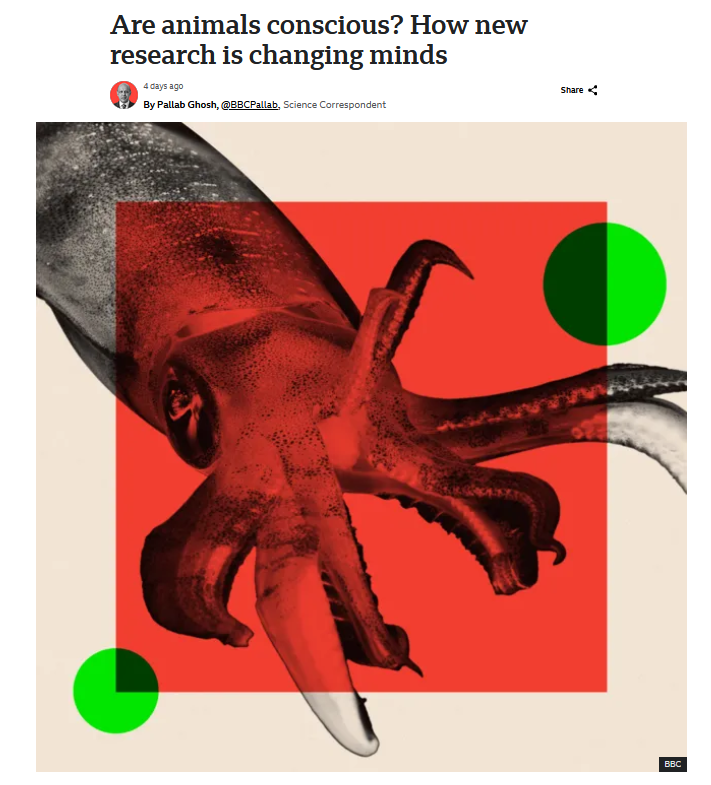
Humans are the only animal species – known to ‘man’ – displaying a certain kind of consciousness. Self-awareness, as defined by Humberto Maturana. Also known as ‘Human Consciousness’.

So, consciousness drove us to become vicious?
To eat too much? To drink alcohol? To use drugs?
To introduce other animals to drugs? In the name of science

The way I see this, consciousness didn’t drive us to become vicious.
Only made it possible.

Being aware of ourselves – being able to observe ourselves ‘in the act’, according to Maturana – has added ‘purpose’ to the whole thing.
Animals do experience pleasure. Pet your pet and then call me a liar.
Animals have even learned from us to ask for pleasure. Many of our pets beg for food and to be petted.
But most wild animals – with the exception of pentailed treeshrews, whatever they might be – shun alcohol. While capable of learning to ‘douse their angst’ from us. In captivity…
Which makes us the only species which has learned to behave viciously on its own. By itself…

To over indulge on purpose.
Do you have a better definition for vice?

Which brings us back to Russell’s “intellectual vice”.

Which intellectual vice does have two aspects.
Overconfidence in one’s own intellectual prowess and over-reliance on other people’s expressed opinions, despite those opinions having a very slim chance of being true. The point being that the second aspect is a ‘simplification’ of the first one. The opinions believed despite being unrealistic do match the biases entertained by the believer.
By the ‘vicious’ believer, albeit the second aspect is less vicious than the first one. Where the overconfident should have known better.

To over-think on purpose.
To convince yourself of your own rectitude… on your own or with the help of others…

Greeks, the Ancient ones, has been the first people which had allowed its culture to waste its civilization.

By considering their neighbors as being ‘barbaric’, the Ancient Greeks have isolated themselves from the rest of the world. From the rest of the reality.
Shutting themselves out from the exterior, they turned their attention towards their own interior. Towards themselves.
Found differences among themselves.
Ranked themselves.
And ended up fighting among themselves.

Allowed themselves to be conquered.

First by home grown tyrants. Pericles, Alexander the Great…
And then by foreign emperors. Persian, Roman, Ottoman…

Establishing a pattern.
And constituting a warning.

Every time when people become complacent, somebody will seize the opportunity.

Every time people will stop – for whatever reasons and under whatever pretexts – respecting each other in earnest, scheming con-artists will step in. Identify the situation and taking the opportunity to deepen the differences between the people into chasms. Into unbridgeable chasms which make it impossible for people to reconnect.
Unbridgeable chasms which destroy the community.
Rendering it to the mercy of tyrants.
To the mercy of tyrants who constantly lurk in what we call reality and which, under ‘normal circumstances’ – a.k.a. ‘democracy’, are kept in check. In a normal, functional, social setting. By a functional community.

The fact that all tyrannies end up badly, for all those involved, is no consolation.

And all these – social settings, democracies, tyrannies, etc, – are as real as it gets.
Only this level of reality is being created by us. By us, people.
By ‘the people’ who not only creates the reality but also has to make do with the consequences derived from the reality it has created for themselves. Knowingly or ignorantly.

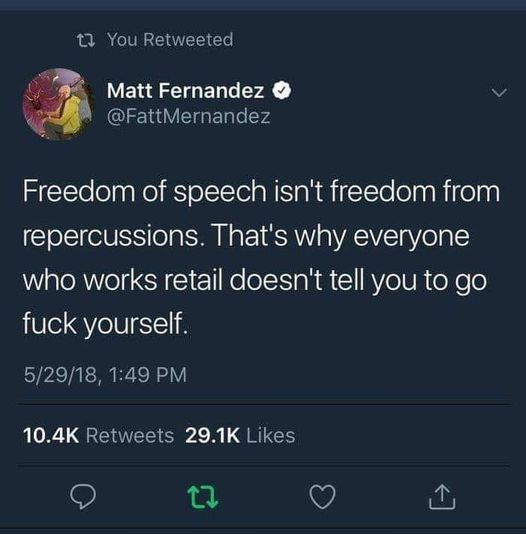
“Only freedom of speech with repercussions isn’t anything special.
That has existed throughout every dictatorship.
If we consider freedom of speech as a value,
it must be something else.”

Whenever somebody opens their mouth, they reveals things about themselves.

That’s a repercussion.

Whenever somebody acts upon information gleaned this way, those acts also have repercussions.

The repercussions belonging to the second category are the ones which ensure that, in the end, every dictatorship ends up in failure. In abject failure.

Out of fear, everybody shuts up. So nobody yells anymore ‘The emperor is naked. And about to be run over by a bus’. So the emperor, and his henchmen, end up hanged by an angry mob. Process usually called retribution. Or revolution?

““We are not extremists. We are just angry,” explains Lazar Potrebic, a 25-year-old from a Hungarian minority in Serbia who is entitled to vote.

He – and many of his peers – are worried about the future, and feel that the more traditional parties are not listening to their concerns.

“We feel like our needs are not being met. People our age are taking really important life steps. We’re getting our first jobs, thinking about starting a family…but if you look around Europe, rent prices are going through the roof – and it’s hard to get work.”

.

.

Of course the feeling of not being listened to when you’re young, of not being part of the equation, is nothing new. But many of the parties on the far right are actively courting the young vote, says Dave Sinardet, a professor of political science at the Free University of Brussels.

“The radical right channels anti-establishment feelings,” he told the BBC. “They have a bit of a rebellious vibe – especially when it comes to their anti-woke agenda – and that appeals to young people.””

Bullshit!

Back in time, some people had written a book.
And started living by it.
Things went on rather good so more and more people joined the new tradition.

After a while, after things had become so good that some of the people had enough spare time to think, some of these thinkers had noticed that some of the facts contradicted what was written in the book.
Hence some of the people had reached the conclusion that the book was not entirely right.

That even if following ‘the book’ had brought them that far, they no longer had to follow it to the t.
And they had learned to be suspicious of every written word… of all previously held convictions…
They called this new habit ‘science’.

Things went on. From good to even better.
Now many more people had enough time to spare. To think, to play… to read…

Trying to fulfill this new ‘need’, some enterprising people have transformed news gathering and publishing into a show.
Until then, news had to be exact. Hence they were published only after a close scrutiny.
After the ‘transformation’, speed and entertaining value took precedence over trustworthiness.

Furthermore, people less than passionate about knowledge had started to invade the scientific realm.

A study linking autism and vaccines had been published in a prestigious scientific magazine.
And then retracted.

With two consequences.
Some parents decided to ‘risk it’ and a lot of people were left with the impression that science had become unreliable.
That science was no longer above fraud.

““Science is at once the most questioning and . . . sceptical of activities and also the most trusting,” said Arnold Relman, former editor of the New England Journal of Medicine, in 1989. “It is intensely sceptical about the possibility of error, but totally trusting about the possibility of fraud.”Never has this been truer than of the 1998 Lancet paper that implied a link between the measles, mumps, and rubella (MMR) vaccine and a “new syndrome” of autism and bowel disease.

Fast forward to the present day.
When an editor had put together a title pretending that a “herd of 170 bison could help store CO2 equivalent to almost 2m cars, researchers say”.

Really?!?

Let me look closer.
“2m” stands for 2 million, right?
And since a conventional car spews a little over a ton of CO2 each year, that title meant that each of those 170 bison was supposed to bury 11765 tons of CO2 each year. Give or take…
But there’s a second problem.
‘Climate warriors’ are ‘mad’ about cows. We are constantly bombarded with news stating ‘the cows are belching so much methane that the polar ice caps are going to melt during our lifetime’.
What about bison? Which are, for all practical purposes, wild cows… Don’t they also belch methane?
Try reading the article and see if you understand the difference between cows and bison…

Did your homework?
No?

OK, here’s my version.
Bison grazing in the wild are a close system.
The vegetation they feed on ‘sequester’ CO2 from the atmosphere and transform it into cellulose, using energy from the Sun. Through grazing, the bison encourage the vegetation to transform more CO2 into cellulose versus the situation where the bison were not doing their thing.
Some of the extra cellulose gets eaten by the bison and ends up being transformed into the best natural fertilizer known to nature. Which further encourages the vegetation to sequester even more CO2 from the atmosphere.
A cow living on a pasture – and allowed to roam as freely as a bison herd – does more or less the same thing.
But a cow living in a stable is an ‘open system’. It is fed a lot of corn and soy. Transported from afar and which totally changes the chemistry going on inside the cow. Corn and soy accelerate the rate of growth – the reason for feeding them to the cows – but result in the cows producing a lot more methane than when naturally feeding themselves on grass. Further more, the manure thus produced is never returned where the corn and soy had been produced.

The consequences?
While in a close system the result of photosynthesis – sequestered carbon – slowly accumulates in the soil, in an open system the metabolic results of the plants and animals involved are spread around the globe. Add to that the huge amount of (fossil) energy implied in growing the plants and transporting the goods around the planet and you’ll start to understand the difference between bison/cows grazing on a pasture and cows being fed in a barn corn and soy imported from Brazil.

Why didn’t you read this in the article above?
Where did the aberration regarding each bison being able to sequester almost 12 000 tons of CO2 came from?
Why people don’t care anymore about science?

I’m sorry, you’ll have to figure these out by yourself.

“This headline and article were amended on 16 May 2024. Due to an error in the original research, a previous version stated that Carpathian ecosystems browsed by (170) bison could store 2m tonnes of carbon, equivalent to the emissions of 1.88m average US cars petrol a year. The research authors have since retracted these figures, which were due to a coding error. The correct figure is that bison could store 54,000 tonnes of carbon, equivalent to the emissions of 43,000 average US petrol cars.”

And the LORD God said,
Behold, the man is become as one of Us,
to know good and evil.

Genesis, 3:22

The point of this post is simple.
The difference between ‘bad’ and ‘evil’.

‘Good’ is straightforward.
It doesn’t matter – evolution wise – whether the ‘good’ has happened ‘naturally’ or ‘intentionally’.
But it makes all the difference in the world whether the ‘bad’ only happened or it was the consequence of somebody planning it to happen.

Even if that difference is visible only to us.
Conscious humans beings who use language to communicate and to consider.

Visible as well as ‘accessible’.
How many among you consider that anybody else but us, human people, is capable of ‘evil’?

And what about the perpetrators?
How many of them consider themselves to be ‘evil’? To have become evil, as they had intentionally hurt somebody?

And how come this simple ability was enough to elevate us to “one of Us” status?

The world is nothing but change.
Our life is nothing but perception.

Marcus Aurelius.

Killing is the most definitive thing available to man.
To humans in general and to men in particular.

We cannot create life!
We can make love, our wives can give birth but other than that…

Yet we can kill!

You see, most animals feed on other living organisms.
We describe the process as ‘the law of the jungle’ but for them it’s only natural. That’s how they feed. That’s how they get their sustenance.
None of them gives much thought about it. When hungry, they do what they have to do. And then they stop.

We are the ones who get to choose. To kill or not to kill…
We are the ones who, once aware, have introduced thinking into all these.
We are the ones who, through our awareness, have transformed sensation into perception.
We are the ones who, in our attempt to create/maintain congruence – to keep things together, have attached meaning to sensation.

We are the ones who, once we have learned the difference between good and bad, have invented the notion of evil.

We are the ones who, once we have learned the difference between good and bad, have tried to separate them.
To separate what we have perceived as good from what we have perceived as bad. And called it evil…

And now, that we’ve reached the stage where we currently are, we’ve set our minds to determine which had come first.
The egg or the chicken…
The Good or the Bad?!?
Matter or Spirit?

When we’ll grow up, when we will have caught up with Marcus Aurelius, we’ll remember that there’s no clapping with one hand.
That while it may be natural to feed on other animals, there’s no escaping the consequences of our killings.