Archives for category: alternative ways of acquring knowledge

“Dans tous les cas,
la seule « condition » est de le faire
dans les limites de ce que permet la loi”

Aurel, dessinateur de presse au Canard enchaîné

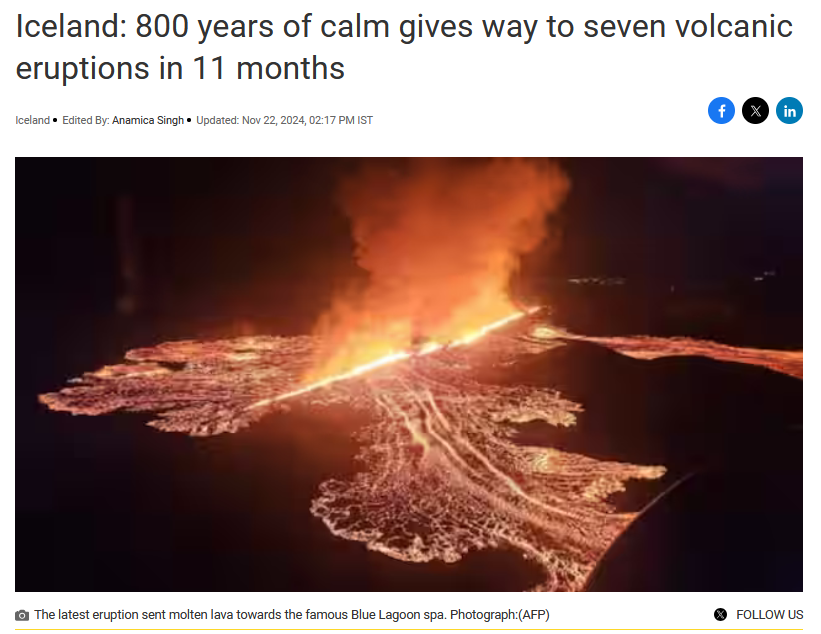
Would you poke fun at a volcano?
No? Because it doesn’t make any sense?
But would you poke fun at people who, 800 years ago, prayed to a ‘volcanic god’ asking for ‘mercy’?
Why? Only because (we currently know that) ‘it doesn’t work like that’?!?

OK, forget about the volcano.
Would you make fun of Shoah? Also known as the Holocaust.
No, because it’s illegal? Otherwise you would have mocked a tragedy?!?

It’s not illegal to fall down.
And impossible to ‘ignore’ gravity. Just as impossible as it is to ignore a volcano!
We laugh our eyes out when clowns pretend to fall.
Nobody laughs at a volcano.
Hence it is us who choose what is funny and what isn’t. Just as it is still us who choose whether to obey the law or not. We’re talking about the human laws here, not about the natural ones…

Which brings us closer to the gist of this post.

For the believers, God is everything. Both the entire world and their reference point. Without their God, the world loses its meaning. Without their God, the believers lose their bearings.
Making fun of God, of any god, is no different from making fun of a volcano.

‘You’re making absolutely no sense. No sense whatsoever.
A volcano is a real thing. Sometimes too real, even. While God, all gods, …
Nonsense. Absolute nonsense!’

Do you have faith in vaccines?
Why? Because they work? Because they save a lot of lives?
Despite vaccines being rather expensive and despite the fact that some guys have become obscenely rich as a consequence of people needing vaccines, and other medicines, in order to survive, right?
Have you ever made fun of vaccines? Of obscenely rich people, no matter how they got their money?

Do you understand how religion works?
How religion actually works… Psychologically, sociologically, etc.
No more than you understand vaccines?
Or you just consider religion to be a hoax while vaccines are a scientific fact?
Why? Because you have been told so by reputable people? By people in whom you have absolute trust?

So.
You trust doctors to the tune of allowing them to mess up with your immune system.
And you trust those thinkers who try to convince us not only that God doesn’t exist but also that religion is the “opiate of the masses“. “An ideological tool that legitimates and defends the interests of the dominant, wealthy classes in the population.” According to Marx, that was. Karl Marx. The guy advertising the advent of the communist happiness uber alles…

Let’s backpedal for a while.
You’re OK with vaccines and hate the fact that some people get way too much money for selling those vaccines. You’re OK with the idea of making fun of rich people but not of vaccines. Because vaccines save lives while obscenely rich people are… well… obscene!

Let’s get back to religion.
Making fun of vaccines doesn’t make sense. To you. To us, actually. Because they’re not funny. Because they are a scientific fact. And because they save lives.
Making fun of God also doesn’t make sense. For the believers. For those who truly believe in God.

For those who have a different understanding of the world than we do.

What would you think about people who dismiss vaccines?
The scientific concept of vaccination, not a specific vaccine.
You consider them…?
From your point of view, their reference point is way out of this world? That they have lost their bearings?
That they actually deny the reality? Your/our reality?

That’s exactly what also happens when people make fun of God. Of any god.
Those who believe in God – in the particular god which is the target of the joke but also in all other gods – feel queasy. ‘Sea-sick’. Their world and their bearings are being put into jeopardy. Which puts them into a very difficult position.
There are only two ways out of their conundrum.
To consider the jester as being clueless. As having no idea.
Or to consider the jester as an ‘agent provocateur’. To consider the whole thing as being an insult.

You have a concern and you want to express it? As the law allows you to do?
How about doing it in a considerate manner?
In an efficient manner! In such a way as to get through…
Insulting people, or being considered clueless, doesn’t help if you want to be heard by the other side.
If you want the other side to listen, carefully, to what you need to say.

Or should I say “straight”?!?
After all, not everything that comes from the right is ‘right’.
Not everything that comes from the left is ‘wrong’. Or good…
And even ‘straight’ has always been complicated but nobody seemed to care
!

Neither ignorance or education can do anything.
On their own. Education is a process and ignorance a mere situation.

It’s what the educated choose to do with their knowledge that makes the difference!

The key words in the statements above are “I always believed” and “It seems”.

It’s not ignorance that’s going to willingly destroy anything and it was the educated which had always ‘produced’. Moved things towards carefully chosen goals. ‘Rationally’ chosen goals, according to the latest fad.
Everything there is is the consequence of something initiated by educated people. The good, the bad and even the very ugly!

‘Another biased and inconsiderate post.
You completely dis-consider the ignorant. Assuming they are impotent and inconsequential.’

I’m afraid somebody else is assuming things.
First of all, there are no ignorant. Only the actual idiots are ignorant and they cannot do much. We, all the rest, start learning from the first minute of our life. Each according to how lucky we are.
Secondly, even the highest educated ignore most of the existing knowledge. But that doesn’t make them ignorant. The most important thing a person must learn before calling itself ‘educated’ is that nobody, that person included, will ever know enough.
Thirdly, all action is initiated from a piece of information. One starts to look for food after realizing they are hungry. After transforming a feeling into a resolution and making a plan to fulfill that resolution. A reaction – like pulling back your hand from a hot stove – doesn’t need much thinking indeed. But that’s only a reaction. Not at all a carefully, supposedly rationally, chosen goal.

“I mean by a “fact” something which is there, whether anybody thinks so or not.“
“Facts are what make statements true or false.”

Bertrand Russell

What do you see here?
A ‘fact’ or ‘gravity in action’?
Bertrand Russell? Isaac Newton?

Or both?
After all, Earth pulling down yet another apple is (nothing but) a fact.

Yeah, but ‘Earth pulling down apples’ had become a fact only after Newton had figured it out.
And received this name, “fact”, only after Russell had coined the concept.

My point being that some things happen in the special place we call ‘conscious mind’.

“When in the Course of human events, it becomes necessary for one people to dissolve the political bands which have connected them with another, and to assume among the powers of the earth, the separate and equal station to which the Laws of Nature and of Nature’s God entitle them, a decent respect to the opinions of mankind requires that they should declare the causes which impel them to the separation.
We hold these truths to be self-evident:”

The United States, currently the most powerful country on Earth, exists because some people had put it in their minds to make it.
Gravity exists, as we know it, because Isaac Newton had noticed it and described it to us.
Facts exist, as we think of them, because Bertrand Russell had introduced them into our thinking process.

‘Do you imply that apples did not fall down before Newton noticed the process? That people didn’t think before Russell told them how? That the US would have remained a colony if not for the Boston Tea Party?’

I believe you’re fully aware that the question above had sprung up in a mind before being put down on paper… before being tapped on a keyboard, actually…

Of course gravity existed before Newton had described it. Of course people had been thinking for a while before Russell let us in on his thoughts on this subject. And of course I have no idea about what would have happened if those guys in Boston had brewed the tea instead of throwing it in the harbor.

But it is very clear for me, “self-evident” as the Founding Fathers had put it, that some things do happen in a certain manner.
That not all of us think in the same way – god forbid, that would be against our very nature – but all of us think according to some ‘rules’. Hence the results of our thinking are not exactly ‘haphazard’.

The point of today’s post being that my method is ‘thinking’.
I use my ‘conscious mind’ as an instrument. As a scalpel-cum-microscope with which I attempt to study how my mind works.

Being fully aware (?!?) that this process takes place ‘inside my head’. Inside my ‘limited’ head. Limited in both space and time.
That ‘that’ head is made of the same matter – atoms – as the rest of the Universe. Hence some of its limitations.
And that ‘that’ head works ‘inside’ the cultural universe created by the aggregated effort of every human that has ever lived on Earth. Hence another set of limitations.

He was my friend. We trusted each-other.

He was huge. 150 pounds of muscle. Pitch black.
Some people feared him. Specially when seeing him for the first time.

He had earned the respect of many. Canine friends in the park. People who had come in contact with him.

Respect is a tricky thing.

Fear is simple. Not that different from love. Somewhat contrary…
Trust is simplish. After enough time spent together, you learn whether you can trust the other.
Respect, on the other hand….

You cannot respect something/somebody which/whom you find repulsive.

You can ‘trust’ a bully to make your life miserable but you cannot respect them.

Do you fear a bully?
Not necessarily. You don’t need fear to avoid a danger. You only need to understand what’s going on.

Then what is ‘respect’?
Something you learn about. While trust is something you learn to.
Trust is something to be rather felt while respect is something you experience with your mind. First and foremost.

Furthermore, nobody fakes trust. Unless presented as ‘respect’.

Why have I chosen an animal to illustrate this post?
Because ‘fear’ is what drives awareness. Fuels conscience. And, as far as evidence suggests, it is widely felt in the animal kingdom.
Our family. Our only home in this world!

Adorno and Heidegger explores the conflictual history
of two important traditions of twentieth-century European thought:
the critical theory of Theodor W. Adorno and the ontology of Martin Heidegger.
As is well known, there has been little productive engagement between these two schools of thought,
in large measure due to Adorno’s sustained and unanswered critique of Heidegger.”

“Doubt everything” instead of ‘trust the scientist until proven wrong’.
‘Illiberal democracy’, whatever that might mean…
“Abolish capitalism”. As if there was any viable alternative!

What’s going on here?!?

Indeed, but only a clown has enough gumption to tell the king that ‘he’s got no clothes on’!

Furthermore, every respectable palace has both a king and a jester.
The jester overpowering the king doesn’t change the palace into a circus. Only refocuses the attention of those paying attention…

Abstract:

While there has been a plethora of analysis on diverse subjects within Holocaust studies,
there remains some reluctance to engage with women’s unique experiences,
which were largely subsumed under those of men in the decades following World War II.
This article examines how women’s specific experiences, both biological and social, are often denied
or suppressed in research and literature on the Holocaust, even in survivors’ own testimonies,
despite the fact that these are often clearly gendered experiences.
By revisiting key themes from the testimonies of female survivors,
such gendered analyses contribute to a fuller picture of the unprecedented
and relentless killing that the Final Solution’s anti-Semitism entailed.

Nicole Ephgrave
Journal of Women’s History Johns Hopkins University Press
Volume 28, Number 2, Summer 2016 pp. 12-32
10.1353/jowh.2016.0014

Those who had ordered what had happened at Auschwitz and many of those who had actually perpetrated the crimes considered themselves to be free. They did it on their own will.
Their freedom was intact!
And they had chosen, freely, not only to diminish the liberty of other people but to actually defile them…

Individual freedom is something which depends, largely, on each of us. On how each of us ‘digests’ their previous experiences and chooses to operationalize what they have learned.
Social freedom, on the other hand, depends on how we, as a group/community, aggregate our individual choices.

In this sense, the latter one, freedom becomes a space.
A place – THE place, actually – where each of us can put in practice our own individually free choices.

Now, places have rules.
Each place being defined by the rules governing that place. Some of those rules are specific for each space while others come from the ‘previous’ spaces.
For example, we – humans – are both animals and something ‘higher’. As such, we ‘obey’ both the rules governing the biological realm and the laws of each of the countries we happen to live in.
One of the most fundamental rules evident to man is “no good deed goes unpunished”. Otherwise known as the law of the consequence. “Do not be deceived… A man reaps as he sows” Gal 6:7

Everything we do leaves a trace. Influences the future. Creates karma.
How we, each of us, chooses to exert their freedom creates the circumstances in which we, and our children, will have to exercise theirs. Their freedom!
The manner in which the ‘free nazi’ had chosen to exert their freedom – to kill other people – has shaped the future of Europe. And of much of that of the world!

The manner in which we choose to ‘digest’, to interpret, what had happened shapes our future.

Which brings us back to ‘dehumanization’.

Many of us consider that the victims have been dehumanized. Made less human.
Had their humanness obliterated!
By the abusers. By those who had abused both their freedom and their power!
By those who had transformed other humans into victims….

I beg you to reconsider this:
Who had undergone the process of dehumanization?
The victims or the bullies?!?

We, as free thinkers, have the ability to poke fun at whatever happens to us.
To relativize our experiences.
Hence ‘no good deed goes unpunished’. When the utmost importance of the subject begged for a way more formal wording…
Poking fun at things we cannot control is a survival gimmick. By doing this we can, individually, survive in dire circumstances. Specially in situations where our inner values are questioned. When we have to quell what psychologists call ‘cognitive dissonance’. When we are forced – by ‘external factors’ – to do something we would not have done in ‘normal’ circumstances.

In this sense we can better understand the process of dehumanization.
The defiler actually needs to dehumanize the victim. To consider the victim something else but a human being. Otherwise, the defiler would no longer be able to defile the victim.
But what happens when a human being does not recognize (some of) their fellow humans as being their peers?

Who ceases to be human?

Engine

In their attempt to accomplish their own bidding, people use tools.
From the simplest – a crow bar, for example – to the more and more complicated ones.
The engine is one of the most interesting tools invented by us. While all the tools we used before were mere extensions of our hands, engines directly transform energy into movement. We, the operators, only control them. And provide them with energy.

But don’t have to transform that energy into movement ourselves. As we do when shoveling coal to feed a stove. Or to stoke a steam engine…

Wait a moment! You said we “don’t have to transform that energy into movement ourselves”. Then ‘we have to shovel coal to stoke the steam engine whenever we need that steam engine to work for us’.

Yep. An engine is still a tool. Still an extension of ourselves. And we still have to move our limbs – spend some energy – when operating one. The main difference between a hand shovel and a backhoe being the fact that all the energy needed to ‘activate’ the hand shovel flows through our muscles while most of the energy used to move the backhoe comes from its engine.
Another example being a horse drawn cart. We can carry things on our back – using exclusively the energy provided by our muscles – or we can load those things onto a horse drawn cart. Then drive it, channeling horse-muscle energy into the process – where ever we need those things to arrive.

Savvy?

“All governments suffer a recurring problem:
Power attracts pathological personalities.
It is not that power corrupts but that it is magnetic to the corruptible.”

Frank Herbert, Chapterhouse:Dune

How can Orson Scott Card be so bigoted, but the Ender’s Game series is about empathy and acceptance of others?

– “Circle of Empathy. If you’re inside the circle, you are worthy of empathy and it applies to you. If you’re outside the circle, you are not worthy of empathy and bigotry towards you doesn’t count because you don’t count. If you’re ever baffled by how one person can be forgiving and accepting towards one group and turn around and be rabid dogs towards another group it’s because in their emotional calculus the second group literally doesn’t count as “deserving”.
Does it make sense? No. Do humans make sense? No.
“”

Card was young when he wrote Ender’s Game and for what it’s worth I think it reflected his real views on the world at the time. He’s since spent decades of his life in a high control cult that has told him constantly that gay people are moral failures.
I think there’s a chance that Card is actually closeted from remarks he’s made on the subject and fear of discovery has made him feel he has to be even more dogmatic on the matter.
I grew up queer in fundamentalist churches. I’m always going to think of people like this as partial victims, even if it would be easier to just hate them. Brainwashing is real. It’s not just something you shrug off because you’re an adult.
I love his Ender series and think it’s beautiful. It doesn’t actually matter to me what he personally believes because his work is saying something else.

Discussion found on Reddit:
https://www.reddit.com/r/books/comments/14mmmu0how_can_orson_scott_card_be_so_bigotted_but_the/?rdt=42921

Alive in a living context.

Try to imagine a single living organism.
Forget about ‘where did it came from’. Forget about ‘what does it drink/eat/breathe’.
Now, does the existence of a single living organism mean that life is present? When attempting to answer this, pretend no observer is present…

‘Life’ is ‘wide’ word. It covers a lot.
From ‘life’ as a phenomenon. That thing studied by biology.
To ‘life’ as an ‘individual experience’. That thing cared for by medicine. Human, veterinary… By the way, how do you call a person who takes care of sick plants?

Am I making any sense here?

My point being that life is both a phenomenon and an experience.
As a phenomenon, life – as we know it – needs a certain environment. And a ‘push to start’.
According to what we presently know, life may appear, on it’s own, in certain conditions. We don’t know, yet, which are those exact conditions. Nor exactly how it happened. Only that it seems possible. And that’s enough for me.
If certain conditions are met, life – as a phenomenon – is possible.

Furthermore, if life as a phenomenon has established itself in a certain environment, life as an experience becomes certain. Each individual organism living in that environment experiences its own life. Regardless of whether a particular organism is aware of its being alive or not.

Shared Awareness

Life, as a phenomenon, is a ‘process’.

Individual organisms become alive. One way or another but always as a ‘continuation’.
Each generation of individual living organisms live by the same rules as the generation before it. Each ‘child’ generation follows in the footsteps of the ‘parent’ generation. A ‘blue print’, a genetic blue-print, is passed over from generation to generation. OK, let’s pretend we haven’t yet learned about genetic variation…
Each individual organism continues to be alive for as long as:
– It remains ‘functionally whole’. A human can continue to live, at least for a while, without any limbs. But not without its head or heart. Well, you understand what I mean.
– It continues to exchange substances with the environment in which it lives. Which means that the individual organism is the entity controlling which substances get inside and which substances are ejected from its interior. OK, we need to breathe so we inhale microorganisms and pollutants ‘on top’ of the air we need to survive – and some of them make it into our blood-stream – but it’s still our lungs which absorb oxygen, eliminate carbon dioxide from the blood and leave nitrogen alone. I’m sure you get my drift.

This ability of even the most basic/primitive individual organisms to interact with the environment – along the rules inscribed in their genetic inheritance – allows us, conscient observers of the phenomenon, to consider that individual organisms, while alive, display a certain degree of awareness. They behave as if being aware of the difference between oxygen and nitrogen. As being aware of the need to breathe. As being aware of the fact that too much carbon dioxide in your blood is something to be avoided… And so on.

Fast forward from bacteria – individual organisms which are able to extract specific nutrients from a broth to, say, chimpanzee. Who are very picky about food. When there is plenty enough to choose from…
There is a certain commonality between these two very different kind of organisms being able to feed themselves, right? And if we, humans, pretend to be aware of (some of) our our actions… how do we name this ability of our fellow living organisms? Their, our?!?, ability to choose?

Together?

“The greatest consequence of the arising of self-consciousness and self-awareness in the constitution of humanness, is that to the extent that we human beings are self-conscious beings we are aware of what we do, and of the possible consequences of what we do to ourselves and to other human and not human beings. Self-awareness and self-consciousness are manners of relational living that as they are lived constitute a relational grounding for all else that is being lived. The self-conscious person lives his or her living in a manner in which a question such as, “are you aware of what you are doing?” always makes sense. The self-conscious person lives his or her being in self-consciousness as if he or she were distinguishing him or herself as an independent entity, and operates comfortably in that way. Yet, if we seriously want to explain how is it that self-consciousness happens under the circumstances that we cannot distinguish in the experience between what we call perception and illusion, and, therefore, that we cannot make any reference to an independent reality, we cannot but Þnd out that it is not possible to do so if we do not accept that languaging is not a system of symbolic communications about entities assumed to exist independently of our distinguishing them, but it is a manner of living together in a recursive flow of co-ordinations of consensual co-ordinations of doings.”
Humberto Maturana, The origin and conservation of self-consciousness, 2005

According to Maturana, self-consciousness is somebody’s ability to observe themselves ‘in the act’. To observe themselves observing. Ability developed alongside other self-conscious ‘agents’ through the use of language.
“It is not possible to understand the nature of self-consciousness without understanding the operation of human beings as living systems that exist as emotional languaging living systems: self-consciousness is a manner of living.” Op. cit.

The way I see it, consciousness – self-awareness in Maturana’s terms – is life 2.0.

Just as there are life as a phenomenon and life as an individual experience, there are also human consciousness – a shared ability – and individual conscience.
Just as there’s no way in which a single living organism might appear ex nihilo – unless some ‘outside agent’ introduces it, there’s no way in which anybody might become aware of their own self by themself.
Life – the phenomenon, once established – opens up a huge field of opportunity. Mere chemicals, entangled, ‘cooperate’ towards maintaining the life of the individual organism inside which they happen to ‘cooperate’. Evolution, the process, makes it possible for new forms of life to appear as the environment is shaped by the formerly living organisms. Or by other naturally occurring phenomena.
Consciousness, our shared ability, opens up the next level of opportunity. The opportunity for each of us, individual self-aware agents, to show/prove our ‘true nature’.

Individually as well as collectively.

The World Health Organization explains QoL
as a subjective evaluation of one’s perception of their reality
relative to their goals as observed through the lens of their culture and value system.

Until not so long ago, all people were busy surviving.
‘Waking alive to see another day’ wasn’t taken for granted.
Food was scarce, illness was plenty and war was a constant presence. And these were shared by all. From kings to their last subject. “Although (Queen) Anne (of Great Britain and Ireland, 1702-1714) was pregnant 18 times between 1683 and 1700, only five children were born alive, and, of these, only one, a son, survived infancy.”

And this need to survive didn’t stop at death.
Since most people were convinced that, one way or another, there was life after death, they were also concerned about redemption. It doesn’t matter what you believe in, if your belief includes any kind of an after life … you need to prepare yourself for it. Either to avoid reincarnation or to ascend to heaven/escape going to hell.

This commonality insured that all people had something to share. A common ground.
Which made it possible for them to see eye to eye regarding at least something.
Which common understanding of one thing made it possible for them to live in a (sort of) community. Together!

Nowadays…
Too many of us continue to have a hard time foraging for the essentials. Continue to survive.
While others have it differently.

Haven’t experienced hunger. Nor need. And their most dangerous experience is speeding on the highway. Dangerous in the sense that they may pay a fine if caught ….
Surviving has been replaced by searching for a better quality of life!

Which is fine!
One should make the most of the opportunities present, right?

But do we really know what we’re doing?
The consequences of our actions?
Specially since surviving was a team effort while ‘quality of life’ is a solitary quest… With nobody in attendance – except for the occasional life coach – to warn us when we ‘jump the shark’.