Archives for category: 1989 and the Global Financial Crisises.

Image

” “Fiat justitia ruat caelum” is a Latin legal phrase which means “let justice be done though the heavens fall.” It signifies the belief that justice must be realized regardless of the consequences.”

Really?
Since when (rational) human beings do something (willingly and knowingly) without being interested in the outcome of their actions?

Let’s find a better interpretation!

I’ll start with Humboldt’s observation that the inner workings of a language are in strong connection with the way the native users of that language relate themselves to the world at large, observation that was later developed into the Sapir-Whorf hypothesis. I find this important because it perfectly explains the fact that a translation will hardly ever be as explicit as the original, precisely because the interpreter needs to translate both the meaning of the text and the frame-mind of the writer.

Back to the Latin phrase.
The Romans were warriors, not literates, so they favored direct talk even if it was sometimes so direct as to become a puzzle. After all they were familiar with their own way of talking!
Take for instance ‘Ubi bene, ibi patria!’
Apparently it’s an immigrant’s motto: “Where there is good (prosperity), there is my fatherland (country), Wherever I prosper, there is my fatherland.”
Now what if there is a lot more to it?
Let’s remember first that the Romans, like the early Americans, were not immigrants but colonists. Quite a difference between these two notions, isn’t it?
So what if ‘Ubi bene, ibi patria’ has a slighter different meaning than the generally accepted one, like ‘if we arrived this far let’s make this place our home’? As in ‘if we’re stuck here at least let’s make this place comfortable’!

I think you already have a fair idea about what I’m trying to suggest but I’d like to explore the concept of ‘justice’ before going any further.
The English term “Justice” is related to two Latin words:
– “Jus” = 1. Law; 2. Right
 “Justitia”= 1. Equity, 2. Justice
In these conditions it is safe to say that ‘justice’ is not only about the rule of law but also about the congruence between the behavior of an individual and his social status. Simply by having said that I got a lot nearer to ‘why on Earth do we care so much about justice?’.

Without justice the social fabric, the spider’s net that keeps us from wandering aimlessly through time, would simply disappear. Direct interactions between (no longer human) individuals would be governed exclusively by brute force and indirect relations would no longer exist.

And this was common knowledge since the dawn of time. Shortly after learning how to speak people have started to teach their children: “Don’t do unto others what you don’t want others to do unto you”. And one of the reasons people invented writing was for them to be able to pass that rule over and over across generations.

About the same time justice started to be ‘administered’. People no longer relied solely on their muscles to defend themselves, if they felt they had been mistreated they could raise the problem before the common gathering of the tribe or before the ruler of the place. And both of these instances would take swift action since none of them had any interest in things escalating any further, friends or relatives of those involved to take sides and the situation to degenerate into open conflict between sections of the community.

In order for a ‘sentence’ to be effective it has to be both just (according to the rules) and pertinent (according to the reality).
In practical terms before punishing somebody for stealing you need to have in place a rule stating clearly what constitutes an ‘act of stealing’, the penalty for purporting such an act, to have sufficient proof that the act has been committed and by whom; otherwise the whole enterprise would defeat its purpose since it would be perceived as arbitrary: a proof that the rule of law no longer operates, the new rule is ‘free for all’ and that individuals are no longer members of a society but hapless constituents of a mob.

I find it extremely significant that some of the most democratic nations had, for long periods of time and quite a few of them still have it, something called ‘judgement by peers’. This way not only the accused doesn’t find himself at the mercy of the ruler of the land, or one of its ‘henchmen’, but also the general public is assured that no monkey business is taking place during the final stage of the judicial process. (NB, judges might have had their powers ‘vested in them by God’ but they were, and still are, vetted by those in power at a given moment).

But the main difference between a jury trial and a bench trial is that while jurors receive strict orders from the judge that they have to be convinced ‘beyond any reasonable doubt’ before passing a ‘guilty’ decision, it is in the very nature of a judge’s job to interpret the law. And it is here where ‘fiat justitia, ruat caelum’ comes into play.
The classic ‘translation’ of this is that “justice must be realized regardless of the consequences” and this interpretation may ‘help’ a judge to pass a verdict one way or another just because he, personally, is ‘satisfied’ with the evidence presented to him and he feels that he has reached the just decision.
Maybe a more useful interpretation would be ‘be careful when dispensing justice otherwise the heavens will fall upon your head’.
Not in the mundane sense that you, personally, would have to suffer the consequences of your decisions but that you, the judge, have contributed – by twisting the due course of justice – to the weakening of the entire society. And by doing so you have brought great danger upon us all.

PS.

Here is another thing about ‘justice’ that is not exactly as conventional wisdom has it.
The blindfold that sometimes adorns the representations of Lady Justice is not so much a symbol of its impartiality and more a sign that she is going to (or at least should) ignore the ‘bribes’ being offered to her.

I, personally, prefer a ‘justice’ that is fully aware of what is going around her so that she might have as much pertinent information as possible at her disposal when reaching a decision.
Fiat justitia, ruat caelum insemna mult mai mult decat “faca-se dreptate chiar daca ar fi sa se prabuseasca cerul” (condamna-l cu orice pret daca il crezi vinovat).

Bunicii nostri romani erau mai degraba razboinici. Scrijeleau cuvintele cu varful sabiei, nu le mangaiau cu varful vreunei pene. Spusele lor erau mai mult avertismente si mai putin indemnuri metafizice.
Erau mult mai interesati de amanuntele practice ale guvernarii imperiului decat de aspectele morale ale justitiei abstracte.

Si pentru ca toate astea trebuiau sa se termine cu o interpretare alternativa a maximei din titlu….

“Ai grija! Daca dreptatea din care te impartasesti nu este cu adevarat justa, mai devreme sau mai tarziu cerul de de-asupra capului iti va cadea de sub picioare”!

Aveti aici o excelenta argumentare din punct de vedere teologic, chiar daca un pic pro-domo, a zicalei de mai sus.

Eu ma voi margini sa spun ca ‘popii’, in sensul de persoane initiate intr-un anumit domeniu, dispun de un set mult mai mare de cunostinte relativ la acel domeniu decat noi ceilalti dar asta nu-i scuteste de slabiciunea tipica fiintei umane: tendinta de a ceda ispitei.

De unde capacitatea ‘popii’ de a da sfaturi excelente dar si posibilitatea ca acesta sa nu se tina intotdeauna de propriile sale invataturi.

Acum se impune o precizare de ordin metodologic.
Dupa cum se vede cu ochiul liber am pornit de la ipoteza bunelor intentii. Bineinteles ca ‘popa’, avand atat avantajul belsugului de informatii cat si pe cel al ascendentului moral, ar putea sa dea niste sfaturi intentionat gresite dar asta ar insemna ca respectivul sa fie rau intentionat. Exact din momentul acesta incepe vina enoriasului – cine l-a pus sa asculte cuvintele unui profet mincinos? – asa ca voi ramane in conditiile ipotezei initiale: ‘popa’ este un om ca toti ceilalti, supus greselii, doar ca mai informat si de aceea un pic mai puternic decat ceilalti.

In conditiile astea e de presupus ca la un moment dat ‘popa’ isi va da seama de greselile pe care le-a facut si va incerca sa le dreaga. Nici macar nu conteaza daca face acest lucru de frica pentru ce i se va intampla dupa moarte sau daca si-a dat seama ca efectele actiunilor lui pot face atata rau incat chiar el insusi, copiii si apropiatii sai sunt supusi pericolului. Important este ca omul din el incearca sa dreaga din ce a facut.

Si exact din acest moment incepe sa devina o prostie sa nu asculti cu mare atentie ce are de spus:

“Basescu: Statul nu poate fi necompetitiv sau corupt fara un partener – mediul privat. Responsabilitatea trebuie asumata de ambele parti” si “Eu nu spun că sunt un sfânt. Este controversat modul cum am primit apartamentul din Mihăileanu. Legal, dar controversat din punct de vedere moral. Acum, este controversa cu creditul fiicei mele. În mod cert, este legal. Deci, nu vorbesc de pe poziţia unui sfânt, dar lucrurile au limite”.

Putem sa discutam la nesfarsit despre variatele interpretari care pot fi brodate pe marginea acestor spuse.

Cert este ca are dreptate. Coruptia implica atat corupti cat si corupatori iar odata scapata din frau va distruge intreaga societate.
Noi toti, atat cei cu ‘mainile curate’ cat si cei implicati in acte de coruptie, trebuie sa intelegem odata ca daca o mai tinem mult asa ne va cadea sandramaua in cap!

Image

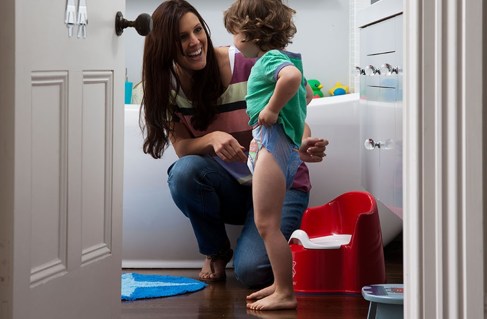
“Vezi fa ca ala micu iar s-a cacat pe el. Ce facem, il schimbam odata sau facem altul?”

Cam asa si cu clasa politica, ne tot plingem de ea, ‘din toate pozitiile’ spectrului politic, dar nu facem nimic concret pentru primenirea ei.

Ca in bancul de  mai sus, aparent avem doua variante, schimbam ‘scutecele’ celor deja acolo – constienti fiind de faptul ca nici un ‘bebelus’ nu invata din prima sa se tina curat dar ca o data si o data tot va trebui ‘pus pe olita’ – sau ii schimbam cu o garnitura complet noua?

In realitate, tot ca in bancul de mai sus, nu prea avem de ales: ‘Si cu asta (astia de acum) ce facem?’
In cazul copilului e evident, in cazul politicienilor poate mai putin: ‘ce ma intereseaza pe mine ce se intampla cu ei, au facut deja destule belele si oricum s-au infruptat pe saturate!’

De fapt lucrurile nu stau chiar atat de simplu. Asa cum nici un copil nu se invata ‘curat’ din prima si de unul singur tot asa nici politicienii nu au actionat de unii singuri. In termenii lui Basescu “Let’s drop the hypocrisy. A state on its own cannot be either uncompetitive or corrupt, because the state always has a partner, which is the private sector.”

Toata chestia e ca trebuie sa intelegem o data ce a vrut Gresham sa spuna cu “banii ‘rai’ ii gonesc de pe piata pe cei ‘buni’ “ Povestea a inceput atunci cand au inceput sa fie folosite monezile de metal aur sau argint. Valoarea unei monezi consta in cantitatea de metal pretios continuta. Cum aurul este cu atat mai usor de prelucrat cu cat este mai curat, primele monezi au fost batute din aur aproape pur. Aurul pur este insa foarte putin rezistent asa ca cei care faceau monezi (si bijuterii) au inceput sa experimenteze diverse aliaje. In acelasi timp cei care aveau de a face cu multe monezi – marii comercianti si ‘zarafii’, cei care schimbau banii dintr-o moneda intr-alta – incepusera sa pileasca cate un pic de aur din fiecare moneda care le trecea prin mana.
In situatia asta cei care utilizau monezile aveau in fata doua incertitudini: cat aur intra in realitate in compozitia aliajului din care a fost batura o anumita moneda si cat din cantitatea initiala de aliaj se mai afla in moneda atunci cand ea era oferita la schimb – pentru marfa sau pentru alte monede.
Prima problema a fost rezolvata de Arhimede – asta descoperise el de fapt atunci cand a luat-o la fuga dezbracat pe strada strigand Eureka, o metoda sa masoare simplu densitatea unui aliaj, si deci procentajul de aur din acel aliaj – iar a doua prin introducerea monedelor zimtate – din cauza zimtilor orice tentativa de a pili o moneda iese foarte repede in evidenta.
Numai ca pana la rezolvarea lor circulatia banilor nu fusese pe atat de simpla pe cat ar fi trebuit sa fie. Orice noua emisiune monetara era tratata cu neincredere pana cand nu se afla ‘in piata’ cu certitudine titlul (continutul in aur) aliajului din care fusese batuta si apoi fiecare moneda era cantarita cu grija la zaraf. Iar monezile noi si fara zgarieturi din seriile ‘bune’ erau tezaurizate cu grija, ceea ce provoca o criza de bani pe piata, adica deflatie.
Pe de alta parte, din punct de vedere individual, in conditiile in care pe piata circulau si bani ‘prosti’ (adica ‘piliti’, pentru indivizi era practic imposibil sa bata ei moneda dintr-un aliaj mai prost) ar fi fost de-a dreptul o prostie sa nu incerce si ei sa pileasca cate putin din monezile care le treceau prin mana sau cel putin sa le cantareasca pe cele care li se ofereau inaite de a le primi ca plata.

Numai ca toate astea distorsionau piata in asa masura si presiunea pentru ca problemele sa fie rezovate a fost atat de mare incat cei din ‘fruntea  bucatelor’ au fost fortati sa implementeze masurile care se impuneau: emiterea de monezi cu continut fix de metal pretios si care aveau zimti de siguranta.
Aici trebuie facuta remarca ca cei care au avut cel mai mult de castigat din masluirea aliajului si din pilirea banilor erau cei care bateau moneda (suveranii locurilor, de cate ori trebuiau sa isi plateasca creditorii sau armatele mai bateau o cantitate noua de moneda in care puneau atat aur pe cat aveau sau pe cat credeau ca vor accepta creditorii) cat si marii comercianti ai momentului (cei care aveau oportunitatea sa pileasca cat mai multe monezi). Totusi si acestia au inteles pana la urma ca le va fi si lor mai bine daca instrumentele de plata vor functiona corect si intreaga economie va fi deblocata.

Cam acelasi lucru ar trebui sa se intample si in politica actuala. Nu e nevoie de cine stie ce filozofie. In momentul in care cei aflati ‘la butoane’, atat cei de la putere cat si cei din opozitie, vor intelege ca daca mai continua asa li se va prabusi sandramau in cap sa vedeti ce repede vor incepe sa faca ce trebuie.
Numai ca oamenii acestia, ca noi toti de altfel, au nevoie sa fie trasi tot timpul de maneca. Ce sa intelega ei daca noi, cei de rand, atunci cand avem o problema ‘sarim la cap cu cate o spaga’? Ca li se cuvine, nu? Iar atunci cand ne vine randul sa spunem ce parere avem despre ei nici macar nu mergem la vot.

“Pai degeaba merg la vot, ca nu am pe cine sa votez. Toti sunt la fel!” Poate ca or fi ei atat de asemanatori incat e greu sa-i deosebesti dar daca nu mergem de loc la vot semnalul pe care il trimitem este ca nu ne pasa, ca ei pot face ce vor si ca noi nu vom reactiona. Asa ca daca suntem atat de scarbiti incat nu ne vine sa votam cu nici unul dintre candidati ar trebui sa le spunem clar chestia asta si sa punem doua trei stampile pe buletinul de vot ca semnalul sa fie atat de puternic incat sa il auda si ei: “ne pasa de ce faceti voi acolo, aveti grija!”

Asa ca mai usor cu spaga si mai mergeti pe la cabina de vot.

Apropo, cati dintre voi stiu cine ii reprezinta in parlament sau in consiliile locale?

Dar cati dintre voi s-a gandit pe vremea lui Boc ca in loc sa fie taiate lefurile ar fi mai eficient sa fie stavilita ‘risipa’ resurselor statului si ca in loc sa fie marit TVA-ul ar fi fost mai bine sa fi fost imbunatatita colectarea lui? Cele 30-40% din economie care raman nefiscalizate sunt populate tot cu oameni din tara asta, nu?

Extrapoland citatul din Basescu rezulta ca ‘nici un smecher de pe lumea asta nu poate face nimic de unul singur’. Ar fi timpul ca toti, atat smecherii cat si cei care ii ajuta, sa inteleaga ca nu mai tine.
Mai e un pic si chiar ne cade sandramaua in cap.

Image

Please read first Mr. Binswanger’s article by clicking on the picture and only then proceed to my humble comments.

Even though I’ve been disappointed by Obama I don’t think yours is the right way out the current mess.
While you are right when claiming that the regulatory/welfare state is part of the problem I strongly oppose your solution: wholesale dismantlement.
The point of contention between us is the Sherman Antitrust Act of 1890.
You are right when you say that ultimately the free market will take care of everything – eventually even the ‘too big to fail’ will ‘eat the dust’, no matter what – my only problem is why allow them to grow so big as to put all of us in jeopardy when they fail/fall?
So how about putting the Sherman Antitrust Law to its intended use, to protect the freedom of the market from any entity, public or private, gaining any degree of control over the economic agents? (Here is a lot to be discussed, what I mean is that the state should only be able to restrict economic agents from acts that would harm the others – including from getting control over a market – and not to tell any of them what to do)
How about putting the entire state back to its intended use, a regulatory tool for making sure that the table stays level?
Right now it is anything but that but, I repeat, dismantling it altogether would not bring in freedom. It will bring very shortly a long period of dictatorship punctured by brief but very intense episodes of anarchy. Some like to call them revolutions …
In fact there is no difference between a state run monopoly and a private one, both fail eventually. And this is what Sherman had in mind, back in 1890.

Image

Robert Prechter, a market analyst who has correctly called all the ‘hiccups’ in the financial market, has crossed economy with sociology and came up with the concept of socionomics.

The idea is that behind all that is happening in the human realm lies something he calls ‘the social mood’ and if we want to understand what lies in store for us we’d be better off trying to figure out the changes in this mood rather than doing complicated econometric calculations or social forecasting.

Maybe not very scientific but he was spot on in his predictions – up to now, anyway.

According to his method this piece if news is akin to a new dawn: “The minibar may soon be extinct in most hotel rooms as guests spend more time in the lobby than in their rooms” (The most attentive among you will notice that I left out ‘experts say’ – because I feel that over reliance on ‘expertise’ is one of the explanation for what has happened  – but this is another, even if closely related, topic)

Why?

First of all because ‘hotel dwellers’ are very good predictors of socio-economic trends, they tend to have more resources and be more involved in significant decision making processes than the regular Joe.

Secondly because the main thing that let the last crises happen was a strange disconnection between those who made the most significant economic and political decisions and those who had to suffer them. Things happened as if those at the driving wheel were convinced that they could pursue their individual goals (getting rich and powerful) regardless of the consequences their behavior inflicted on the rest of the people.
Even stranger is the fact that too many of the rest of us validated that attitude by copying it. Remember that the financial meltdown started when people in the US could no longer service the huge debts they (irrationally we consider now) piled upon their most prized possessions, their own houses? And people did that exactly because they foolishly tried to mimic ‘the life style of the rich and wealthy’!

Thirdly, by being a ‘divergence’  this is a very powerful signal.
Let me be a little more specific. In ‘technical market analysis’ a divergence happens when the price of something trends in one direction while one or more ‘indicators’ trend in the opposite one. Usually a divergence is a reliable signal that the price will soon change its trend also.

In this case the ‘price’ is the general attitude of the people towards everything. Before 2007 carelessness was the norm, ‘live today as if it were your last’. Prices were paid, no questions asked and everybody retreated to their gilded dens to savor they prey. People left the city centers where individuals of different extractions lived intermingled and together with small businesses and shops and congregated in walled in communities in the suburbia where the population is self segregated according to various criteria – money first and ethnicity, ‘alternative life styles’, etc. on a second level. Strangely enough social life in quite a large number of these communities is almost inexistent, the inhabitants coming and going without noticing their neighbors. Meanwhile the size of the housing units grew without any real reason since the number of the family members living together has shrunk. The size of the cars used for commuting also grew because ‘bigger cars are safer’ – another strange development since while indeed bigger cars are somewhat safer there are some more efficient ways of increasing overall safety: public transport, rail, defensive driving…

The indicator is the attitude of the ‘hotel-dwellers’ – who, as I mentioned before, are a very interesting cross section of the society. During the bubble years we have witnessed the apparition of the room service – the mighty didn’t want to mingle with the less fortunate, he wanted his whims to be privately catered for – and the mini-bar – the ‘less fortunate’ wanted to enjoy the same perks, couldn’t afford the price so had to settle for less variety.
‘Conventional wisdom’ has it that the advent of technology would have enforced that trend, with wireless connectivity at his disposal why would a hotel guest already hooked up to FB, Netflix and the Cloud ever come out of his room except maybe to go to his business meetings, the beach or the gym?

And here we have a ‘divergence’ gaping at us: while the society at large is trying desperately to resume ‘business as usual’ “People are migrating out of their rooms rather than being in the rooms,” !

Several things might have contributed to this. Some of the hoteliers reduced the area covered by free wireless to the lobby area to lure their guests out in the open where they could be enticed to buy other services, the ‘technology’ became so affordable as to become accessible to the cost conscious, etc., etc., but the essential thing is that public attitude is changing.

Now we’ll have to wait and see where this incipient change in ‘the social mood’ will take us to.

PS. By clicking his picture you’ll get to a very interesting interview of Bob Prechter. The most interesting part starts at 15:00 where he discuses how people look up to the government for a solution.

Have you considered ‘being friends with your neighbors to such a degree that you may count on their help’ as being part of an adequate preparation for what ever we may have to confront in the future?

“Man is hungry.
He steal bread to feed family.
Get home, find all family have gone Siberia!
“More bread for me,” man think.
But bread have worm.”

If somebody really wants to understand this “Latvian Jokes” he needs to remember that the only period of independence enjoyed by the Latvian people in its entire history until 1991 was 1918-1939 and even that short period was spent under a dictatorship.

That somebody also has to remember that jokes describe how the people who keep telling them over and over feel about a certain situation and are not necessarily an ‘accurate’ description of that situation. These jokes were ‘kept alive’ in spite of “Latvia was one of the most economically well-off and industrialized parts of the Soviet Union” exactly because the Latvian people felt oppressed by foreign rule. (Besides that the Baltic republics  were better of than the rest of the USSR in spite of the communist rule, not because of it.)

Image

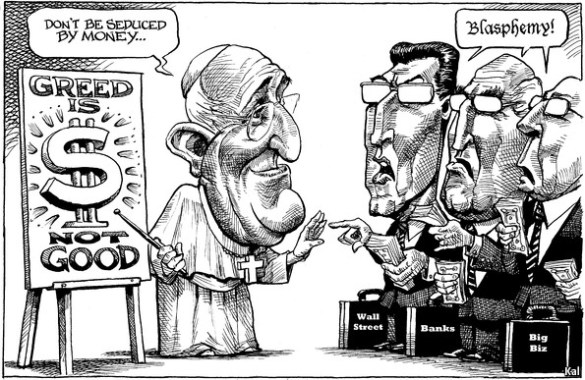
Yesterday I shared this picture on FB.

One of my friends asked me:
“How do you define “greed”. In the movie “Wall Street” Michael Douglas has this great speech saying that “greed is good” meaning that passion for things in life is good. Where is the line between greed and passion? Does that line look differently depending on where you are in the deal chain?”

This was my answer:
“This one is simple.
If you are willing to do your best in order to get something then you’re passionate ABOUT that something.
If you are ready to ‘step on corpses’ to reach your goal then you are ‘greedy’ FOR that something.”

Another friend commented:
“Well I have a problem with this; the Catholic church is one of, if not the richest organization in the world, how does the pope plan on distributing the assets? The church generally asks for 10% of your income to be ‘donated’; not mandatory but one of the heftiest taxes around. Practice what you preach.”

Me again:
“It seems that Romanians have already solved this conundrum.
We have a saying that goes like this: “Do what the priest says, not what he does!” ”

Thank you guys!

Ca tot ‘sarbatorim’ trezirea din 1989…

In postarea trecuta am adus vorba despre Sven Hassel.
Cei mai tineri dintre noi s-ar putea sa nici nu fi auzit despre el. A fost un soldat din armata germana care a reusit sa supravietuiasca razboiului – si l-a facut pe tot, din ’39 pana in ’45 – iar apoi a povestit ce i s-a intamplat.

In ’40 a dezertat. A fost condamnat la puscarie iar dupa cateva luni a fost transferat intr-un regiment disciplinar. Ca atare a mai facut un stagiu de instructie. Numai ca de data asta ‘instructia’ avea mai degraba de a face cu ‘reeducarea’ (vezi ‘Fenomenul Pitesti’) decat cu antrenamentul specific militar. Intr-una din cartile lui povesteste ca ‘instructia’ asta cuprindea si momente in care trebuiau sa se prezinte la o ‘inspectie de front’ (unde pentru o pata de noroi pe uniforma primeau pedepse crunte) la o jumatate de ora dupa ce se intorsesera din cite un mars de doua zile prin noroaie. Singura solutie era sa intre sub dus cu uniforma si tot echipamentul pe ei si sa spele tot acolo, pe loc. E de presupus ca apa de la dus era daca nu calda atunci macar incropita, altfel nu ar fi avut nici o sansa…

Ei bine, in primele 3 sau 4 saptamani de armata acolo unde si cand am fost eu incorporat nu a curs apa aproape de loc. Nici rece si cu atat mai putin cea calda. Si mi-am “satisfacut stagiul militar” in mijlocul unui municipiu – Focsani – din Romania anului 1981 si nu undeva in Germania anului 1940…

Pana la urma asta a fost motivul pentru care au cazut regimurile comuniste. Nu comunismul nu ‘a cazut’ inca, mai sunt nostalnici care mai cred ca utopia asta ar fi putut fi pusa in practica, dar despre asta mai tarziu!

Regimurile comuniste au cazut pentru ca asa ceva nu putea functiona!

It’s the economy, stupid!