Archives for posts with tag: Historic lessons

History never repeats itself.
Only keeps teaching a lesson until we actually understand it.

‘In 1936, Hitler boldly marched 22,000 German troops into the Rhineland, in a direct contravention of the Treaty of Versailles. Hitler offered France and Britain a 25 year non-aggression pact and claimed: “Germany had no territorial demands to make in Europe” ‘.

“In the summer of 1938 Hitler demanded the annexation of the Sudetenland into Germany. At this point Hitler was aware that the Allies were desperate to avoid war, and thought it likely that they would appease his demands.
Hitler threatened war over the issue of the Sudetenland. On 29 – 30 September 1938 the British, Italian, French and German leaders met in Munich to discuss the issue.
The Allies agreed to concede the Sudetenland to Germany in exchange for a pledge of peace. This agreement was known as the Munich Pact.”

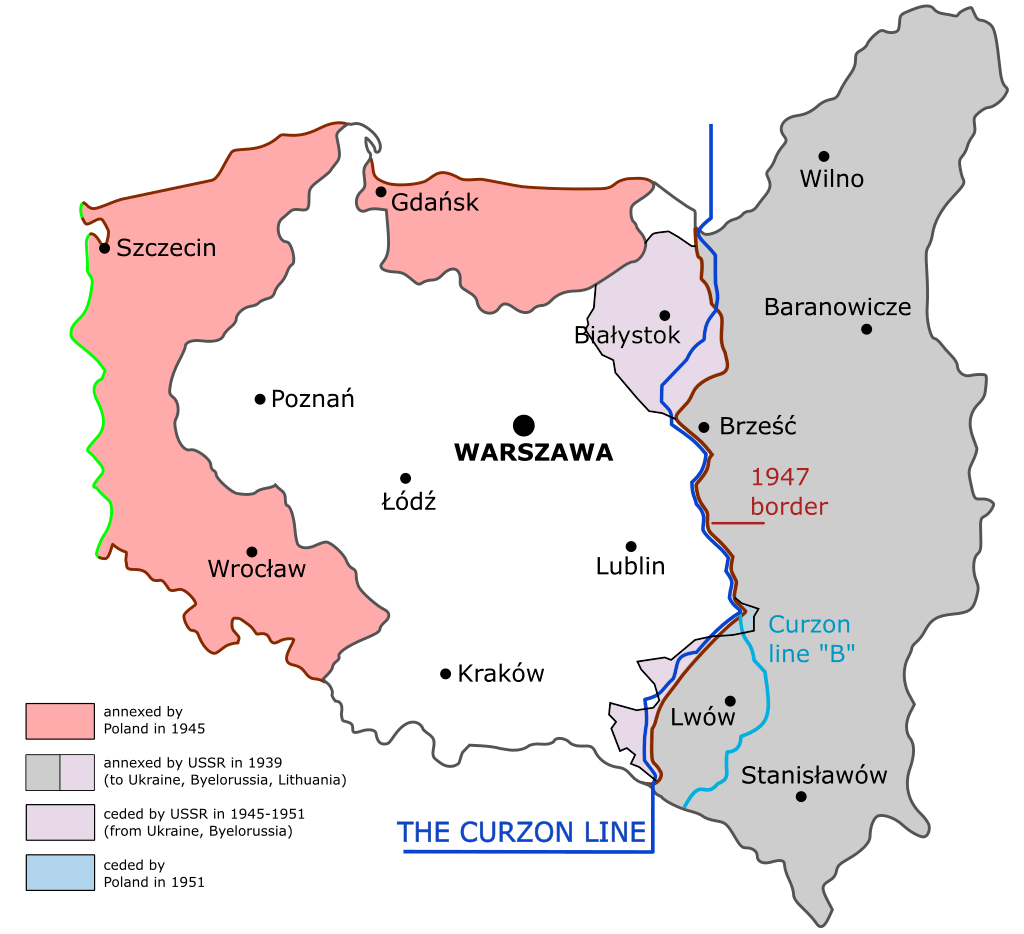
On May 3, 1939, Soviet leader Joseph Stalin fired Foreign Minister Maksim Litvinov, who was Jewish and an advocate of collective security, and replaced him with Vyacheslav Molotov, who soon began negotiations with the Nazi foreign minister, Joachim von Ribbentrop. The Soviets also kept negotiating with Britain and France, but in the end Stalin chose to reach an agreement with Germany. By doing so he hoped to keep the Soviet Union at peace with Germany and to gain time to build up the Soviet military establishment, which had been badly weakened by the purge of the Red Army officer corps in 1937. The Western democracies’ hesitance in opposing Adolf Hitler, along with Stalin’s own inexplicable personal preference for the Nazis, also played a part in Stalin’s final choice. For his part, Hitler wanted a nonaggression pact with the Soviet Union so that his armies could invade Poland virtually unopposed by a major power, after which Germany could deal with the forces of France and Britain in the west without having to simultaneously fight the Soviet Union on a second front in the east.

What is the lesson here?
That each tyrant believes they can outwit all other tyrants.
That tyrants are convinced they can outwit democratic alliances.
That, in the end, all authoritarian regimes fail. Abysmally. For the simple reason that inability to accept their own faillings makes all authoritarian leaders incapable of coping with change. Unable to adapt. Unable to evolve. Hence all authoritarian regimes are inherently fragile.

And who suffers the consequences?
We do. All of us. “World Wide Wars”, remember?

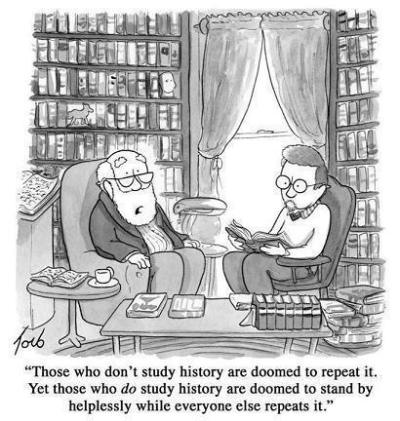
This image constantly pops up all over Facebook.

And while the caption does harbor some truth it somehow completely misses the point.

So:

– Those who don’t study the history have all the chances to repeat it but only if they are just as callous as their ancestors.

– Those who do study the history and stand by helplessly while everyone else repeats it have studied it in vain. They still haven’t got a clue about what really happened outside those books they’ve been reading. Had they learned a real understanding of what went on they would have been able, and willing, to explain it to their contemporaries and thus help them move forward, to a totally different set of mistakes waiting to be made.
Just as Plato (and Marx after him) thought of having found the absolute truth and did his best to lead his people to it …

But don’t despair. There is a safer way. To let things take their own course, to develop naturally. Just as Lao-Tzu taught us.

http://izquotes.com/quotes-pictures/quote-the-wicked-leader-is-he-who-the-people-despise-the-good-leader-is-he-who-the-people-revere-the-lao-tzu-188515.jpg

Karl Marx and Max Weber, two different pupils of Plato:

https://nicichiarasa.wordpress.com/2015/02/28/karl-marx-and-max-weber-two-different-pupils-of-plato/