
This is one way to put it but different people might see it differently, depending on the side of the barricade where each of them finds itself at one moment.
The ‘meek’ demand from the government protection against the abuses of the perceived powerful while the ‘people of substance’ expect from the government to protect their life and property from predation. The funniest thing is that each part see the other one as being the more powerful, the ‘meek’ consider the government as nothing but another tool used by the rich to extract more wealth from the people while some of the rich consider that the government cater too much for the poor plainly because the poor have more electoral power by simply being more numerous.
This is why I prefer the notion of ‘shared interests’ instead of ‘common good’ and I think we should reconsider the whole concept of public administration.
‘Government’ comes from ‘governing a ship’ = ‘determining its course’.
The ‘point’ is that a ship is different from a society/country.
Both have a specific role, carrying goods/providing a living medium for its people, and are different in the sense that each voyage has a port of origin and a destination so ‘governing’ simply means finding the shortest/safest/cheapest route between those two while a country has only ‘history’, its future being perpetually under construction.
In these circumstances governing a country presumes somehow knowing where that country needs to go even before choosing a course to that future.
The problem is confounded by the democratic process.
In the old times of the “l’etat c’est moi” (“imperium” in Latin) a country was indeed governed like a ship, the ruler/’emperor’ acted as a captain/owner who charted the course depending solely on his interests, wasting no breath about what the crew felt or wished. As a consequence the crew mutinied from time to time or more precisely each time the living conditions became unbearable.
Tired of those already periodic mutinies, the whole crew, the ‘officers’ included, decided to ‘change tack’ and that from that point on the captain would be elected democratically. Unfortunately this development solved only one side of the problem. The captain can no longer act despotically and disregard completely the wishes of the crew but no one feels compelled to seriously think about the destination anymore. The would be successive captains think their term would have passed by then while the crew is confident that the current captain is taking care of the problem.
All goes well as long as the ship stays in deep waters, the weather is fine – with an occasional shower so that enough drinking water can be saved – and the ‘fishing’ yields enough food for everybody to be reasonably well fed – differences are not felt until their sizes interfere with the smooth sailing of the ship – but when the ship runs aground, as it so often happens, all hell breaks loose, everybody goes nuts, blames the captain and then tries to save his own hide.
It takes a while until enough of them realize that ‘common good’ is an utopia and all they have to agree about is the shared interest of keeping the boat afloat.
And that all of them need to work together as a crew cos’ it’s a lot easier/safer together aboard a big ship than each of them manning a puny raft.
From time to time I enjoy an odd episode of “JAG”.
The one I’m gong to tell you about now presented Harm Rabb and those around him with the classic dilemma of which comes first, the very ‘palpable’ individual member of the community or the distantly hazy but “extremely important” ‘common good’.
In the end even the self important CIA ‘common good-er’ rallied to the more mundane task of saving a child’s life at the expense of a longer range operation and this apparent change of attitude from the ‘CIA’ somehow raised my hopes that maybe ‘they’ are starting to get it:
– First of all that sacrificing yourself for the common good is heroic but sacrificing somebody else for something that you, or even an impressive crowd, consider to be of any importance is callous. Even more so if the sacrificed is innocent or the sacrifice is made against his wish. Does anyone remember of Baal, the hungry god in whose mouth young children were thrown to be engulfed by flames in the hope that the satiated Baal will stop tormenting his worshipers?
– Secondly this kind of operations usually backfire, even if for the moment ending in apparent success. Regular Joe, while not always as quick as it should be, figures out eventually that in these cases there always are two kind of people, who do not mingle. The ones who select those who get sacrificed and those who get the ax. And that he, Regular Joe, is always among the latter.
Do I need to remember you what happened in the end to the priests who fed Baal? I forgot that this legend isn’t so widespread… Maybe because the priests were eventually fed themselves to the ‘hungry statue’ and the commoners chose to forget the whole story, somewhat embarrassed for being fooled for so long?

I remember that as a child I used to play with electric trains. Models, of course. I think I still have the power source tucked someplace.
Me and a couple of other guys in the neighborhood had tracks that our mothers allowed us to set from time to time on the table in the living room so we took turns. We all gathered at one of us, build the track and played for a while.
The gear wasn’t cheap, for sure, but not more expensive than today’s smart phones.
The important thing was that we got together, learned something about how to deal with electricity, how to put things together and how to use our toys collectively. Later I found out that that some adults never out-grow these trains and develop quite a passion for them. Some even transform this passion into a way of living.
This morning I stumbled upon this video:
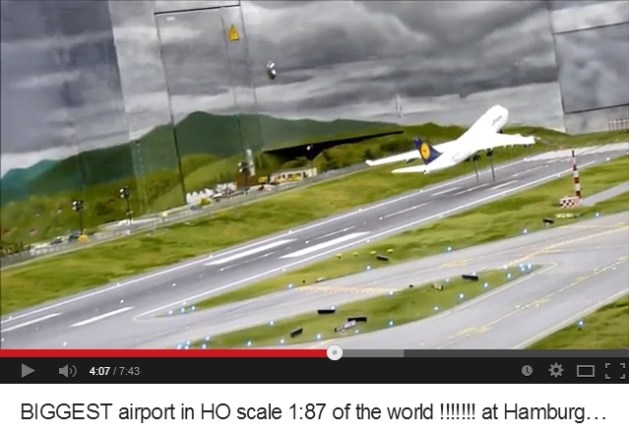
I wasn’t put off as much by its cheesy-ness, check out the struts that are holding the plane ‘aloft’ or the access door with the ‘beware of electricity’ sign as by the fact that too many children no longer build anything. Too many children don’t really play anymore, at most some of them are taken to visit places like the one described in this video and where all they can do is shoot a video of their experience using, yes, you guessed it, their smart phones.

This morning I watched on BBC a documentary with this title. A young Cambodian gets a helping hand from a Bangladeshi textile entrepreneur on her road to becoming a fashion designer. OK, so what?!? Nothing but a normal occurrence. In fact both are helping each other. Well…yes only five years ago the promising designer was scraping for food at the edges of the Phnom Penh garbage dump, unable to read or write. Scott Neeson was the one who gave her a helping hand and the whole story brought back to my mind an IMF study I’ve read recently: “Inequality and Unsustainable Growth: Two Sides of the Same Coin?” Inside are some interesting ideas about the dynamics between inequality and growth but, a lot more important and almost at the beginning, the reader stumbles upon the explanation for why the considerable efforts that have been spend towards this goal have brought so scarce results: “Over the long run, sustained growth is central to poverty reduction. The rapid growth seen in much of the world over the past few decades—notably, but not only, in China and India—has led to an unprecedented reduction in poverty. And, in general, increases in per capita income tend to translate into proportionate increases in income of the poor. As Dollar and Kraay (2002) memorably put it, ―Growth Is Good for the Poor.‖ All the more reason, then, to place sustainability of growth at the center of any poverty reduction strategy.” The point is that we’ve been chasing a ghost. What is ‘poverty reduction’? In order to do such thing one needs to define poverty, measure it and then come up with a grand strategy about how to solve a problem invented by ourselves. All of them arbitrary activities. Let me make myself perfectly clear. ‘Poverty’ is a problem indeed. Both for the poor themselves and for the society at large. Problems are to be solved but before starting doing so we should identify the real nature of the problem. Nowadays most of us agree that ‘poverty is a problem’ but when it comes to solving it we find ourselves divided into two camps. Some say this is an individual problem and those involved, the poor themselves, are the ones who should do something about it – work more that is. Some others consider that poverty is a social problem and should be solved by others but those directly involved, either by the government or by charitable organisations. In this camp we find quite a lot of people, from the ‘kind hearted’ who consider they have to help their fellow human beings to the ‘economically minded’ who say that by reducing poverty we’ll be able to increase consumption which, in turn, will induce economic growth. Both approaches are fundamentally flawed. How much help are we going to extend to the needy? What (long term) consequences is this all this help going to have? How much consumption is needed? What is the ‘optimum’ economic growth rate? I think we are missing the essential here. The real problem with the existence of poverty is the enormous waste it produces. Yes, waste, and the worst kind of waste. The waste of human potential. Poverty is, and always was, relative. Sreymom Ang, the promising fashion designer, was dirt poor when she lived on the fringes of the Phnom Penh’s garbage dump yet her chances for survival were far better then that of the most Europeans living three hundreds years ago. Her real problem was that she didn’t see any way out of a situation she (and those around her) saw as being desperate while for those Europeans it was ‘business as usual’. This very difference in attitude is crucial. Our forefathers did their best to improve their lot while most of today’s poor are feeling so depressed as to let things happen to them instead of having a more active approach. Right now I have a distinct feeling that the ‘let the poor fend for themselves’ people are polishing the ‘I told you so’ placards… Not so fast! As everybody who has been really depressed knows, it’s hard to ‘get out of it’ on your own and specially so when the deck of cards is set against you. So where I’m driving at? That we should treat this whole business as an efficiency problem instead of a poverty problem. A person with at least some (useful!!!) education is a lot more likely to be able to ‘fend for himself’ than a complete illiterate. Even more important he/she will be able to cooperate with others in order to produce and consume, efficiently, marketable goods and services. A person who knows that he/she will receive some help if in dire need will summon more easily the courage to start something, be it a new business, a new career or anything else. A person who has a reasonable expectation to be treated fairly by those around him/her is a lot more likely to come up into ‘the open’ than one who has a previous experience of being treated as a second (or third…) class citizen. As history teaches us, countries where the creative power of the people could find it easier to manifest itself and where a bigger proportion of the people were really free fared better than countries where the opposite situation prevailed. This is the only argument for which I am convinced that allowing for considerable human potential to go unused, because of crippling poverty but not exclusively, is more than an individual problem and that we’ll all be considerably better off by finding a way for a bigger and bigger proportion of the people living at one time on the face of the Earth to be able to do something meaningful. For them but also for the rest of us.
By reading the comments at the bottom of this post one would get the feeling that the current Ukrainian government is nothing but a bunch of islamists and that Russia deserves kudos for standing up to western bullies…
Well…the Ukrainians are anything but islamic, bar the Tartars now living in the Russian occupied Crimea, and Putin is not standing up against any bully but trying to get some more elbow room at the bully convention he, and others, is currently attending.
And the rest of us, middle of the road people, will continue to stay in the sorry state we currently dwell as long as we’ll let others speak for us, unchecked. I understand why too many of us are so disheartened but this is exactly where the bullies want us to be and the longer we stay here the harder it will be for us to climb out of here.
So get hold of your shoe laces, pull yourself up and let’s go.
Don’t ask/wait for guidance. You already know, deep in your hearts, what is it that you have to do.
PS I must also mention that there is a big mistake, albeit a common one, to conflate the image of a people with that of those who temporarily rule that people. Yes, there is link between the two, but they are not the same thing. Not even when the rulers are democratically elected and so much less so when we are discussing a country that finds itself under a totalitarian regime.

N-am mai vazut o asemenea dovada de nerecunostinta!
Chiar daca nu stie sa scrie fata asta s-a chinuit sa faca un tort pentru prietena/sora sa si iata cu ce s-a ales….
Mai exista o varianta, cel putin la fel de nasoala.
Atat cea care tine tortul cat si cel/cea care a facut fotografia sunt prietenii Florinei, tortul a fost facut/cumparat de mama/bunica/matusa iar invitatii s-au gandit ca un pic de misto, pe internet, nu strica…
A great article on why Pay Transparency really works:
“Huet-Vaughn concedes he has no idea why this happened. But he has a great theory: We don’t care as much about the amount we make as long as we know we’re not being taken advantage of. And not knowing what other people earn is, de facto, a breeding ground for doubt.”
Well, this feeling might actually kick in only after a certain ceiling has been penetrated but this is a great insight, nevertheless.
“SIF Moldova renunta la intentia de a imparti cu SIF Banat-Crisana controlul la Muntenia Invest”
Traducere: SIF2 a vrut sa cumpere ceva, avea nevoie de aprobare pentru a face acest lucru, s-a dus sa ceara acea aprobare si autoritatea de supraveghere i-a explicat ca in statutul sau, adica in statutul care defineste modul de functionare a SIF2, exista o prevedere expresa care ii interzice fondului exact genul de investitie pe care dorea sa il faca. Mai mult, administratorii fondului nu cred ca pot mobiliza suficient de multi investitori incat sa poata schimba acea prevedere, de care oricum uitasera, asa ca renunta de tot.
?!?

