

Just received this in my mail.
Please take a second look.
Now tell me what’s forcing the voters to use the ground level cabin?
Now tell me what’s forcing the voters to use the ground level cabin?

To an employer, simple economic reason tells him to extract as much work as possible from his employees.
To an employee, the same attitude tells him to ‘resist’, to make himself as ‘scarce’ as possible without giving the employer obvious reasons to fire him.
Add modern technology to all this and here is what you get: employees locking themselves into toilets booths and surfing the internet on their smartphones while employers counteract by installing access control machinery in the ‘rest areas’.
“Not more than 6 (six) minutes a day and a $20 gift card if you don’t go there at all”.
How about a more complex understanding of the whole business?
Can we see economic contracts (work related ones included) as a form of cooperation instead of mindless/ruthless/mutually crippling competition?
Fair sport versus ‘no holds bared fight’?
Or am I too naive?
Watch these two videos and tell me where is the difference.

To me this looks more like an Umberto Eco novel than anything else… layers upon layers of information connected solely by what human individuals living in one of them think about what is going on in the next one…
– Ayn Rand grew up in Russia and wrote in and about the US… OK, she might have had some interesting ideas but so did a lot of other controversial thinkers. Karl Marx and Nietzsche, among others. Would any of you become a dedicated follower of any of these two? I had to live in a Marxist society for the first 30 years of my life and I wouldn’t recommend it…
– The guys that came up with this… scheme… have as much in common with libertarianism as Bernard Madoff has with bona fide capitalism…
– Investing, money or time, into something without due diligence is not a very libertarian thing to do either…
– Etc., etc….
After all an utopia, even one supposedly based upon Ayn Rand’s ideas, is nothing more than another … man made dystopia.
Some recent developments (I’ll list a few at the end of this post) brought me back to this subject.
So what is freedom?
Consider a lump of dirt someplace in the middle of nowhere, so far from any galaxy that it is under no gravitational pull whatsoever. In theory it would be able to go anywhere, right? With almost no ‘energy costs’… But it has none available … it’s nothing but an lump of dirt…
How about replacing that hypothetical lump of dirt with the most sophisticated spaceship you can imagine and add to it an inexhaustible energy source. This would be ‘free’ for sure, no? But where would it go?
Now add to it a human being. But mind you, one that not only knows how to drive a spaceship but also that can hold his own in absolute solitude. Can you find such a human being? Can you even imagine one?
So, again, what is freedom? Or liberty, if you prefer this word?
So, real, effective liberty is something that has to be perceived and has to be implementable. It’s not enough for an individual to think himself as being free, that individual also needs to be able to exert his freedom. I don’t have any doubt that Stephen Hawking, one of the brightest minds alive, is one of the freest spirits on this Earth but I’m afraid that he is also one of the individuals who depend heaviest on those around him.
And, in fact, all of us are in almost the same situation as he is. OK, most of us can move on our own. But before even thinking about liberty each of us has to become aware of himself, to develop his consciousness. Only we cannot do that on our own. As Humberto Maturana amply demonstrated human conscience has developed, slowly, in time. It was a process that could take place because by some genetic mutation or accident our brains had suddenly grown close to the present dimension but that was not enough. We needed another 70 or so thousand years after we learned to speak (by doing so we were able to exchange ideas and think about concepts) to become what we are today. In Maturana’s words people are not only conscious, they are conscious of their consciousness.
I believe you already have an inkling about what I have in mind.
Liberty is nothing but a concept, one that has been refined by human thinking along our entire history. It was us who defined the notion of ‘degrees of liberty’ which is used extensively not only in statistics but in many other scientific domains.
And it was still us who came up with such a social arrangement that allowed for free people not only to coexist with slaves but also to own them.
So what is freedom? An absolute (divine) ‘human right’ or a social construct? Both?
The point I’m trying to make is that we should never forget that freedom hasn’t been given to us on a silver plate. All along human history there have been enough people who tried hard to dominate as many as they could and too many who accepted to be dominated. And invariably the societies/communities where social relations were based on authoritarianism have eventually failed while the more egalitarian, the ones where individuals enjoyed a higher degree of freedom coped better and usually survived.
My conclusion of all this? There is no such thing as ‘liberty/freedom’ against all others. The only liberty that can survive long term is liberty with the others. While the first is nothing but a synonym for the ‘Law of the jungle’ (another human concept, the jungle doesn’t have any laws) the second is the foundation for any civilized nation. And when we’ll be able to extend the notion for all peoples (usually the slaves came from outside the people of the slave-owners) we’ll have lasting peace.
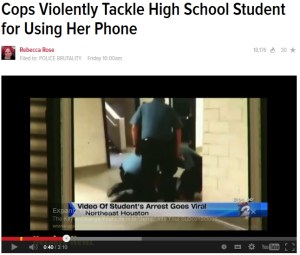
What prompted me to write this? Which of the following do you think is a proper way of exerting one’s liberty? Or free will, which includes proper/professional behavior in every conceivable circumstance?
‘Rights’ are to be exerted no matter what or with great consideration? Tradition/order has to be upheld/maintained at all costs or only as long as it makes sense? ‘Makes sense’ to whom?


9/11
A day of mourning and remembrance.
My son was two years old at that time and doesn’t have any personal recollections of that moment yet has a rather clear understanding of what happened. Some wackos somehow crashed three airplanes into three of the most important buildings in America and, by doing so, simply changed the world.
I still remember vividly having my eyes glued to the TV screen. All those people jumping from the windows. So much desperation. One question still haunts me to this day. What made those wackos do what they did? What made them so ‘desperate’ as to … OK, they must have had some ‘predisposition’ of sorts… not every desperate person does what they did … only in a normal world really desperate people get noticed by their community and are treated accordingly. They get help and/or are rendered harmless to the others.
So our real problem is why hadn’t the wider community noticed that particular kind of ‘desperation’, and its intensity, and why hadn’t something been done about it. Another thing. There is something else that the wider community has failed to notice.
That the closer community, exactly those people who in normal circumstances notice and stop this kind of tragic occurrences, helped the perpetrators instead of blowing the whistle.
And it seems we continue to not understand what had really happened.
A ‘war on terror’ has been declared.
Only there is a small problem here.
Nobody can fight ‘terror’, just as nobody can fight the blue color.
The only thing we can do, as warriors, is fight terrorists. And if we limit ourselves to fighting them we perversely confirm their mantra – ‘we are under attack, we are weak so the only thing we can do is use ‘terror’ as weapon’.
Maybe thirteen years of this is enough.
The reality is that we are far more powerful than they are. This situation offers us a lot more options than they have.
Among these options is that in parallel with defending ourselves we might try to separate the active terrorists from the communities that support them. In order to do this we must recognize that those communities do have grievances. Some make sense, some don’t but if we disconsider all their grievances, wholesale, we do nothing but validate what the extremists are preaching: ‘those “white” people simply don’t care about any of us’. That’s why so many members of the communities among which the terrorist are usually hiding turn their heads when they see a terrorist act being prepared. Most of them wouldn’t participate directly – because of fear or maybe they abhor violence, as any normal human being does – but being convinced that ‘the “white” people don’t care about them’ makes them wonder ‘why should I care if the “white” people ‘gets it’?’
There is no shortage of people crazy enough to do horrible things. Just watch the 5 o’clock news. There is no way to change that. What we can do is give enough positive reasons to the communities to ‘call 911’ instead of turning away their heads. And sometimes gloat.
PS. ‘Positive reasons’ doesn’t mean ‘bribe them’. That might help a little but would not solve the situation. What we need to do is to convince them, and even some of our people too, that being different doesn’t mean being less human. After that things will become way simpler. No normal human being is comfortable seeing how his FELLOW human being is killed or otherwise hurt.
Dati un click pe citatul de mai sus si cititi intregul articol. Merita.
Acum ca stim cu totii despre ce e vorba…
Un regulament este si el o scriere.
Orice scriere transmite mult mai mult decat a intentionat vreodata autorul ei.
Acesta propunere de regulament este, dincolo de o serie de instructiuni si proceduri despre cum cred autorii sai ca ar trebui sa decurga procesul de invatamant, o descriere foarte amanuntita a ceea ce se intampla, din pacate, in scoli.
Intr-adevar, prea multi copii se joaca cu telefoanele mobile in timpul orelor, vin imbracati neadecvat si sunt total dezinteresati de scoala. Da, prea multi dintre ei beau, fumeaza, participa la jocuri de noroc si folosesc substante psihotrope.
In plus fata de scrierile obisnuite regulamentele sunt un fel de unelte. Sunt facute cu un alt scop decat informarea pura si, folosite cu pricepere, pot fi extrem de eficiente. Dar totul depinde de cei care le utilizeaza.
Acum mai ramane ca lectiile sa devina cu adevarat interesante, programele scolare sa fie pertinente – informatiile oferite (nu “predate”) elevilor sa aibe legatura cu viata reala pe care acestia urmeaza sa o traiasca si, poate cel mai important, scoala, ca institutie, sa isi recapete locul pe care il merita in ochii si inimile tuturor celor implicati: parinti, elevi, profesori si factori de decizie. Adica noi toti.
“Why did the woman cross the road?
Who cares what women do outside the kitchen?”
I was watching a BBC documentary about sexism and I heard the ‘joke’ I quoted above. (Sorry, I couldn’t find a link to that documentary, probably because they are still airing it, but I linked the quote to Yahoo answers because it seems that this one is quite popular)
The narrator had summed up quite convincingly the phenomenon: ‘every time when people not obviously biased against women laugh at sexist jokes the misogynists feel that their convictions are ‘right’ and this enhances the sexist side of their behavior’.
I understand this line of thinking and it is correct from the a psychological point of view. People seek validation from their peers, so each ‘public approval’ for one of their action enhances that particular streak of behavior. I’m afraid though that the real problem lies some place else.
A joke is supposed to be funny. That’s what makes it a joke and it’s up to us to determine what is funny or not.
I didn’t laugh at that joke not because it’s sexist but because, for me at least, it isn’t funny at all.
Some more jokes from Yahoo answers:
“What is the difference between a battery and a woman?
A battery has a positive side.”
So no ‘generic’ woman has ‘a positive side’!
OK, this leaves open the possibility for exceptions… a mother, a sister, maybe a wife… but still, I cannot wonder what kind of women has this guy met during his life? So hugely unpleasant yet passive enough as to feel no apprehension when stating publicly such a harsh position? I wouldn’t dare tell such a joke knowing that any one of my female friends would find out, including my wife. No, not because any of them would bodily hurt me or anything but because they would pointedly and purposefully react. Adequately. Well, in fact It wouldn’t cross my mind to use this joke otherwise than as an example but I believe you got the point…
“Why is the space between a woman’s breasts and her hips called a waist?
Because you could easily fit another pair of **** in there.”
Now this is a real good one. I don’t know for sure what those **** stand for but I’m afraid that the guy who came up with this joke would rather **** a bitch than a real woman. To each, his own…
If you don’t mind rather gross humor here is one for you:
“How do you make 5 pounds of fat look good?
Put a nipple on it.”
Excuse me if you are not and in both situations please consider the real case here: where is the sense of humor?
Maybe the last one will enlighten us.
” – If your wife keeps coming out of the kitchen to nag at you, what have you done wrong?
– Made her chain too long”.
I’m sure you all have heard about the three Ks – In German it’s Kitchen, Children, Church (Kueche, Kinder, Kirche). This expression was coined over a century ago by either Kaiser Wilhelm II or his wife Augusta while trying to belittle the feminist movement that was making inroads into the classic German Weltanschaung.
More than 100 years ago?!? Shouldn’t we get over it?!?
Meanwhile the situation has changed dramatically enough for me to ask you how come the guy in the last joke has a wife in the first place? Or maybe that couple is happy, she with the length of that chain and he with her nagging?
Now seriously, are we not all born by women? Educated, in the first few years at least, predominantly by women? So how come so many men are still finding jokes like that to be funny while so many women accept this situation?
One possible explanation may be that we are experiencing a reaction to ‘feminism’.
I’ve heard, and read, a considerable number of explanations about what it is and why it is named like that.
I must confess that while I agree with many of its goals I’m extremely unhappy about its name.
I think ‘suffragettes’ was, in those times, a far better denomination. It stated clearly what goal they had in mind – voting rights for women – and ‘disbanded’ as soon as they got what they had in mind.
But ‘feminism’?
What is their goal?
To establish that women are different from men?
OK, we already know that, don’t we?
Oh, equal rights? With whom? With men?!?
With which ones of the wide range of men? Men don’t have equal rights either… only in theory maybe, but in theory women have already been recognized (by men, OK?!?) as full fledged citizens. Well, there still is that small but nagging problem of being the masters of their own body (Roe vs Wade) but other than that there is no legal difference between being a man and a women. Not in the civilized world anyway.
So why are we still enjoying the presence of so many, and vocal, feminist activists of both genders instead of them joining ranks with the rest of the human rights activists?
Maybe because the entire human rights movement has reached a dead end?
Women want to be equal with men while men want to be equal among themselves and all pretend it’s their (constitutional) right.
In what sense can a woman be equal with a man? Or a man with another? Have you ever seen two absolutely equal eggs? Or, funnier even, can somebody pretend that egg yolk is equal to egg white?
Oh, the yolk is useless without the white (except for when you want to make mayonnaise) and the white is useless without the yolk (except for when you want to bake meringues) so no sensible person would ever dream of trying to determine which comes first… as we do with people… women come first when it comes to passing through a door and last when we are talking about promotions…
But who to change all this if not us?
We, men, should acknowledge that women are just as important as us, and just as wise, even if they cannot hunt as well as we do, while women should understand that their quest for ‘equality’ doesn’t make much sense.
What we really need is equal opportunity to develop our potential, regardless of gender. If a woman is denied promotion based on her gender and a less capable man is promoted in her place the real looser is the entire organization and its stakeholders. Shortly that woman would move over to another company if she is really good.
The same rationale is valid for the rest of us.
If a child, no matter how gifted, doesn’t get the right education to fit his potential, he might loose some. But the society at large looses big.
Even if the child is less than average he might become, properly educated, a self sufficient person. If not, chances are he’ll become either a ‘welfare benefits receiver’ or a ‘repeat offender’.
We all agree that an average person has more opportunities to become a respected member of the society if he receives more education, right? I’m going to presume we are talking now about proper education, the kind that benefits the recipient, not the ‘teacher’…
If we are considering really gifted individuals then the situation is even clearer. What if Edison, or Marie Sklodowska Curie, couldn’t have learned what they did or experiment the way they used to? And now, that we are talking about Edison, do you know where Tesla came from? Croatia? Have you ever heard of that place before? (It’s in Europe, east of Italy).
I’m sure you already know where Poland lies, the place where Marie Curie came from, but I wonder if you know that she was educated in an underground university because higher education for women was forbidden at that time in her country by Czarist Russia, the imperial power who controlled Poland in those times.
Really bright people have a habit of being able to make it more or less on their own but also of looking for greener pastures. Not necessarily because they are greedier than the rest of us but because they need more resources in order to put their ideas into practice.
I’ll leave you to do the final reckoning.
Some additional reading about how men and women complement each-other in most unusual ways and how heavily this depends both on social habits and individual choice:
– Islamic women fighting for what they consider to be freedom (and I fully agree with them): http://www.foreignpolicy.com/articles/2014/09/12/meet_the_badass_women_fighting_the_islamic_state_pkk_kurdish
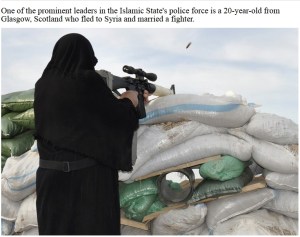
– Islamic women fighting to preserve ‘traditional values’ (To what end?!?, I constantly ask myself but I cannot find an answer) http://www.jpost.com/Middle-East/Report-60-UK-women-fighting-in-Syria-with-all-female-Islamic-State-police-374761
– What women have to experience in places where their freedom is less than it should be: http://petapixel.com/2012/12/26/portraits-of-albanian-women-who-have-lived-their-lives-as-men/ and http://metro.co.uk/2014/04/30/unmarried-women-thrown-on-scrapheap-after-years-of-living-with-a-man-4713547/
– Not only women can play the role of men. The opposite is not only possible but also sanctioned by some societies: http://theculturetrip.com/pacific/samoa/articles/fa-afafines-the-third-gender/
– For some historical perspective: https://www.facebook.com/FranciscoFilipeCruzCulturalMarketing/photos/a.569976243114253.1073742149.305394226239124/569976396447571/?type=1&theater and http://www.ancientworlds.net/aw/Article/1106316
– Even what we call ‘values’ depend heavily upon the social developments that are taking place: http://www.psychologytoday.com/blog/homo-consumericus/201211/be-thankful-your-liberties-and-freedoms
Tomorrow will be a full century since the ‘Miracle of the Marne’, a battle from the WWI during which the French managed to stop the seemingly invincible German army at some 35 miles from Paris. Apparently the Germans erroneously appraised the state of the French army and lost a huge opportunity while the French had shown a lot more stamina and determination than they were credited for.
Also there are some chances that tomorrow will be remembered as the first day of peace in Eastern Ukraine after many month of (un)civil war.
What I would like to do now is take a fresh look at what we know as ‘wars’. Hot, cold, asymmetric, commercial, trade…you name it.
There are two interesting definitions that I would like to share with you:
“War is the continuation of politics by other means.” This one belongs to Claus von Clausewitz, the mastermind behind the German strategic thinking during the second half of the XIX-ht century. The most immediate impression one gets from reading it is that war, per se, is a legitimate tool when it comes to solving problems. You try ‘diplomacy’ first but if that doesn’t work there is always the option of “WAR”.
“War is only a cowardly escape from the problems of peace.” A XX-ht century hippie tree hugger? Not exactly… Another German, a writer this time, who had witnessed the WWI as a mature thinker – Thomas Mann, 1875 – 1955. I don’t know when had Mann come up with his definition but it is quite the opposite from the one proposed by his fellow countryman. On the other hand I cannot fail to observe that while in von Clausewitz time Germany was on the rise as a military power during Mann life it had suffered two humiliating defeats.
To be continued.
 nicichiarasa