Archives for category: politics

I’m sorry but you’ll have to read this first in order to fully understand what I want to say. Just click on “Borderlands” and you’ll get there.

Borderlands: Hungary Maneuvers is republished with permission of Stratfor.”

Horthy and Antonescu, his Romanian counterpart, did some successful balancing during WWII and saved indeed some precious time for the many Jews that happened to live in those two countries. Also, by doing so, they avoided their countries being invaded twice, by both the Germans and the Russians, as Poland and Czechoslovakia were

But, unfortunately,  the longer term results were horrendous.

No, not that what happened in Hungary in 1956 was far worse than the 1968 occupation of Prague or that present day Romania is in a lot worse, economical and political, shape than Poland despite having many more natural resources…

The real problem is that both people lost their self-esteem precisely because they didn’t put up any real resistance against neither of those two aggressors. And this is the explanation for what is going on right now!


PS European Union is not a failure. Yes, sometimes it does appear like one only so did the League of Nations to Hitler. And in the end it was the countries from the old Europe, with some American help, that succeeded in defeating Hitler and containing Stalin, Khrushchev and Brezhnev.


I’ve made an assertion on FB, forgetting to use scarecrows, and I’ve been asked to elaborate:

Marx was a schizophrenic? You need to provide me with some good evidence before I can countenance that assertion. Similarly with the accusation of intellectual arrogance; Marx was a dialectician–which I understand to mean that conversation was more productive than solitary rumination.”

First about Marx being a dialectician. He was one alright. Only there is a small problem with dialectics. In order to work they need at least two equivalent proponents, one on each side. You cannot have proper dialectics by talking to yourself, eventually you’ll take sides and the whole exercise loses its scope.

At this point I’ll make a short break and let you in on one of my moments of shame.
As a high school student (Romania under communist rule) I had to participate in a compulsory class about ‘dialectical and historical materialism’ – the ‘scientific formula’ used by communists to describe their creed in those times. At one point the teacher asked me “What are the reasons for ‘dialectical’ materialism being ‘better’ than all other forms of materialism?”. “‘Dialectical materialism’ constantly checks its concepts against the reality and adjust them as the reality changes. By doing this its practitioners constantly deepen human knowledge and build an ever improving understanding of the world.” The teacher congratulated me for this answer and I felt very proud at that moment.
But only momentarily. Very soon I started to understand that the theory was fine indeed but that it couldn’t be put into practice.

Precisely because of how Marx had envisioned the communist society:

“The Communists, therefore, are on the one hand, practically, the most advanced and resolute section of the working-class parties of every country, that section which pushes forward all others; on the other hand, theoretically, they have over the great mass of the proletariat the advantage of clearly understanding the line of march, the conditions, and the ultimate general results of the proletarian movement.
The immediate aim of the Communists is the same as that of all other proletarian parties:
formation of the proletariat into a class, overthrow of the bourgeois supremacy, conquest of political power by the proletariat.
The theoretical conclusions of the Communists are in no way based on ideas or principles that have been invented, or discovered, by this or that would-be universal reformer.
They merely express, in general terms, actual relations springing from an existing class struggle, from a historical movement going on under our very eyes.”

In fewer words he had stated that the communists were the sole guardians of truth and that that truth was unquestionable. Hence everybody else was wrong and the communists had an obligation to bring everybody back to the ‘straight and narrow’!

And where are the symptoms of his alleged ‘schizophrenia’?
Read the manifesto. It is comprised of a ‘theoretical’ introduction, in which Marx exposes his view on what had happened until the dawn of mankind till his days, and a ‘to do’ part which contains Marx’s recomandations about what people should have done from there on. I find it extremely baffling that a person who gathered such a complex understanding about a certain situation could come up with such completely erroneous ideas about how to proceed from there on.
Quite a lot of people entertain the notion that Marx was right only Lenin got it wrong and hence the failure of Russian/European communism.
No! Marx was right only when he described and explained what had happened. What he had said about the ‘conquest of political power by the proletariat’ was plain wrong. There is no such thing as a ‘good’ or ‘right’ dictatorship, no matter how dialectical it pretends to be.

You see, bona fide dialectics is about people freely, but considerately, contradicting each-other. In no way about ‘sheeple’ submissively caving in to peer pressure or crushing authority.

And here we have ‘it’: under communist rule, in order to save both their mortal beings and their inner souls quite a lot of people apparently toed the line but nevertheless kept a mental reserve about what was going on around them. Not clinical/proper schizophrenia indeed but how else would you call it?

PS. I still have to explain where my shame came from. When I eventually did understand the unbridgeable contradiction between my fine theoretical demonstration about the relative superiority of ‘dialectical materialism’ above over all other forms of materialism and the day to day tragic consequences of that specific brand of materialism being put into practice I remembered how proud I was about the praise I received on that day.
Remembering that moment is a fail proof method to prune down my pride!

One-Time
Monthly
Yearly

Make a one-time donation

Make a monthly donation

Make a yearly donation

Choose an amount

$5.00
$15.00
$100.00
$5.00
$15.00
$100.00
$5.00
$15.00
$100.00

Or enter a custom amount

$

As much as I love writing, I do have to eat.
And to provide for my family.
Earning money takes time.
If you’d like me to write more, and on a more regular basis, hit the button.
Your contribution will be appreciated!
Another very efficient way to help would be to share my posts.

As much as I love writing, I do have to eat.
And to provide for my family.
Earning money takes time.
If you’d like me to write more, and on a more regular basis, hit the button.
Your contribution will be appreciated!

As much as I love writing, I do have to eat.
And to provide for my family.
Earning money takes time.
If you’d like me to write more, and on a more regular basis, hit the button.
Your contribution will be appreciated!

DonateDonate monthlyDonate yearly

Image


Somebody forwarded to me an email, in Romanian, about this incident. I read it this morning.

Basically it was a translation of the article published by the Russian Radio, available here.

Two things have grabbed my attention:

After the incident, the foreign media reported that “Donald Cook” was rushed into a port in Romania. There all the 27 members of the crew filed a letter of resignation. It seems that all 27 people have written that they are not going to risk their lives. This is indirectly confirmed by the Pentagon statement according to which the action demoralized the crew of the American ship.”

and

“The system with which the Russian Su-24 shocked the American destroyer “Donald Cook” has the code name “Khibiny”. This is the name of the mountain range on the Kola Peninsula in the Arctic Circle. “Khibiny” is the newest complex for radioelectronic jamming of the enemy. They will be installed on all the advanced Russian planes .
Recently the complex has undergone regular testing exercises on the ground in Buryatia. Apparently, the tests which were conducted under conditions as close to real as possible, were successful.”

So 27 American Navy personnel were scarred shitless by an extremely powerful experimental device soon to be deployed on ‘all the advanced Russian planes’!

OK, let’s get this straight. I’m no privy to any military secrets, Russian or American. For all I care/know this might have taken place ‘as advertised’. But there is one thing I know for certain, the Russians have actually published this article. So lets see what we can gather from this, undeniable, fact.

There are two main possibilities.

1. The whole thing is a bogus. Well, not entirely, the fly by has actually taken place, so only the spin out might be considered an elaborate invention. Why? D.J. Dyer offers a very pertinent reason:Donald Cook is the first of our permanently forward-stationed ballistic missile defense (BMD) warships, which we’ve been planning to put in the European theater as part of the Obama “substitute” for the Bush 43 missile defense plan.” so the Russians couldn’t afford to loose the opportunity to raise the issue one more time.
2. The Russians have indeed developed a very efficient “complex for radioelectronic jamming of the enemy” and … used an experimental version in an actual encounter with a potential enemy, even before massively deploying it on the the rest of their Air Force?!? Does any of this make any sense?

Actually yes. It makes some sense.
Judging by the fact that somebody took the trouble to translate and disseminate the article in other languages than Russian and English means that that somebody thinks the effort is worthwhile. People have forwarded it  so, at least apparently, the whole thing got some traction. After reading the comments on the original link that impression is beefed up even more.

But what if we dig a little deeper?
To me at least it starts to smell like desperation. Do you remember how much hype Hitler made about his ‘secret weapons’ towards the end of WWII? No I won’t dismiss altogether the Russian military establishment, it still is very capable of throwing a hefty punch. The problems arise, exactly as they did in Hitler’s case, from the extreme concentration of decision power in present day Russia. Dictators tend to become elongated from the real world and to see nothing but enemies everywhere they look around. Enemies that have to be frightened into submission, no matter how, no matter what. In fact it’s more about alleviating  one’s own fears (dictator’s own fears) than anything else. Hiding desperation under a blanket of extreme aggression.

One other thing. Romania suffered for some 40 years the rigors of communist rule. During 25 of those years if somebody would have disseminated news about how strong the Americans were and how they had humiliated the Red Army that person would have gotten a hefty prison term  for defeatism and propaganda favorable to the enemy. Nowadays bashing America is …. you find the right word… No, the Americans are not whiter than Snow White but piling on their heads things that don’t belong there isn’t helpful for any of us.


Image

Our admiration for Plato speaks volumes about who we are and about where we are on the historical ladder.

Toward the end of the astonishing period of Athenian creativity that furnished Western civilization with the greater part of its intellectual, artistic, and political wealth, Plato wrote The Republic, his discussion of the nature and meaning of justice and of the ideal state and its ruler.”

What had happened, back then, was that Athens had invented a certain kind of democracy (based on ample opportunities and relative abundance) and, using that political system, had build a very successful society.

In time, the system became perverted – mainly because pampered people loose their edge – and its future demise started to become apparent for the open minded thinkers. Among them, Socrates was one of the most vocal critics and had payed dearly for not keeping his mouth shut.

We should remember now, if we are to believe Plato’s words, that ‘the Republic’ is nothing but the faithful reproduction of an actual conversation. Socrates own thinking, in spirit and in words.

Let me take a break at this moment and remind you two things:

1. Rome, which had also started as a democracy, at some point had conquered the entire Greece – including Athens, discovered the works of Plato, admired them and, a little later, its political system also degenerated into authoritarianism and eventually failed miserably.

2. Western Europe had forgotten about Plato for more than a millennium and rediscovered him because the Arabs had preserved his work. Moreover until recently  only specialized scholars had any idea about who Plato was…

Back to the ruling process…

I’ll assume the translation was faithful and Plato really meant ‘rule’ as opposed to ‘govern’, ‘impose your own will upon the community’ instead of ‘putting in practice the will of the people’…

Now let me remind you that no matter how wise a ruler and how proficient a builder Pericles was, his reign ended the epoch of grandeur for Athens. After that, the great city had experienced a 2000 years decline…And here are some other interesting thoughts about that era: “There is no little irony in the fact that one of the things we most admire in the ancient Greeks is their love of freedom – and yet one of the chief manifestations of that love was their constant striving to control in some way the futures of their neighbors.” (Robin Waterfield, Athens, a History…)

So what was Plato really trying to say?

“The heaviest penalty for declining to rule is to be ruled by someone inferior to yourself.”

Well, I have no way of knowing exactly what went through his head when he was writing this but I can infer a thing or two from his words:

– He was speaking about an epoch were bona fide democracy was no longer the prevailing political system. Not only that he used ‘rule’ instead of ‘govern’ but, according to the written texts which have survived, the public offices were up for grabs and the ‘important’ person itself was the one to decide whether to ‘rule’ or to govern.

– People were rather arrogant at that time… who’s job was to decide who was ‘above’ and who was ‘below’? How come am “I” so sure that “I” am the most qualified (superior) to rule and that everybody else is/should be considered my inferior?

Then what made Athens, and then Rome, fall from the pinnacles where they had managed to climb while they governed themselves as democracies?

As for Plato maintaining that all he did was to ‘faithfully’ record Socrates’ words… allow me to have some doubts.

Socrates was asked to kill himself because of his teachings – ‘you should learn to think with your own head’ – were perceived, by the powerful-s of the day, as being dangerous for the younger generations.

Was it be possible that the same thinker might have uttered, as Plato pretended:

[Socrates]Then, I said, the business of us who are the founders of the State will be to compel the best minds to attain that knowledge which we have already shown to be the greatest of all-they must continue to ascend until they arrive at the good; but when they have ascended and seen enough we must not allow them to do as they do now.

[Glaucon] What do you mean?

[Socrates] I mean that they remain in the upper world: but this must not be allowed; they must be made to descend again among the prisoners in the cave, and partake of their labors and honors, whether they are worth having or not.

[Glaucon] But is not this unjust? he said; ought we to give them a worse life, when they might have a better?

[Socrates] You have again forgotten, my friend, I said, the intention of the legislator, who did not aim at making any one class in the State happy above the rest; the happiness was to be in the whole State, and he held the citizens together by persuasion and necessity, making them benefactors of the State, and therefore benefactors of one another; to this end he created them, not to please themselves, but to be his instruments in binding up the State.

There is absolutely no difference between this line of thinking and that which was taught by Marx to his followers:

The Communists, therefore, are on the one hand, practically, the most advanced and resolute section of the working-class parties of every country, that section which pushes forward all others; on the other hand, theoretically, they have over the great mass of the proletariat the advantage of clearly understanding the line of march, the conditions, and the ultimate general results of the proletarian movement.

The immediate aim of the Communists is the same as that of all other proletarian parties: formation of the proletariat into a class, overthrow of the bourgeois supremacy, conquest of political power by the proletariat.

The theoretical conclusions of the Communists are in no way based on ideas or principles that have been invented, or discovered, by this or that would-be universal reformer.

They merely express, in general terms, actual relations springing from an existing class struggle, from a historical movement going on under our very eyes. The abolition of existing property relations is not at all a distinctive feature of communism.

What we have here is nothing but two examples of extreme arrogance.

Both posit that ‘I (disguised as ‘the thinkers’/’communists’) know better than all of you so you’d better obey me. Or else.’

For both the State is instrument of oppression, not the expression of the free will of its inhabitants.

I refuse to accept that Socrates actually thought like that.

On the other hand Plato wrote his Republic during Pericles’ reign and Aristotle, Plato’s favorite pupil, was the teacher of Alexander the Great.
And no matter how many exploits Alexander had ‘committed’, we shouldn’t forget that he was nothing but yet another ruthless dictator. More successful than most but still a dictator. Same thing for Pericles. He was indeed a great builder and administrator but his reign marked the end of the Athenian democracy. Very soon after him the entire Greece had lost her independence and political significance.

All that was left was the Greek culture. The habit of thinking with one’s own head. Socrates’ legacy, not Plato’s.

PS.

Now what if Plato had written his dialogs as a warning rather than as a set of guidelines? ‘This will happen’ – historical facts were already clear enough, ‘if you do such and such things’.

It’s up to us, his readers, to choose what we consider to be the proper interpretation!

Which reminds me of the diehard Marxists who still believe ‘the bearded one’ was right and that his ideas had been badly put in practice by the likes of Lenin, Stalin, Pol Pot, Ceausescu…

Ce e nou in asta? Din cauza nenorocitului de Ceausescu care adusese tara intr-un asfel de hal incat copii prematuri sau bolnavi erau transfuzati cu sange testat superficial si in felul asta a aparut o intreaga generatie de bolnavi?

Pentru aceia dintre voi care nu stiu cum e cu SIDA asta, treaba sta cam asa.
Iei virusul, de cele mai multe ori prin contact sexual dar se poate si prin transfuzii sau pe alte cai, dupa cateva saptamani sau luni ai niste simptome ca de raceala si boala intra in latenta. In timp virusul se imprastie in intregul sistem imunitar si il slabeste in asa hal incat, netratat, bolnavul moare din cauza unor infectii cu germeni ‘oportunisti’ (prezenti in mod curent si de obicei nepericulosi) sau a unor cancere rare si ciudate.
Perversitatea acestui virus consta exact in faptul ca ‘adoarme’ vigilenta sistemului imunitar. In felul asta organismul nu mai recunoaste agresorii (virusul cu pricina isi face ‘un culcus’ chiar in interiorul sistemului imunitar, pe care il slabeste treptat) si apoi cade prada atacului patogenilor oportunisti.


Bine, numai ca eu nu la felul asta de SIDA ma gandeam acum.
La nivel societal rolul sistemului imunitar este jucat de triada libertate de exprimare (presa)/justitie/politie. In felul asta ies la iveala comportamentele aberante/antisociale ale acelora dintre noi care incearca sa o ia ‘pe scurtatura’ iar societatea poate sa se protejeze de efectele nefaste ale activitatii acestora. Pe termen lung toti avem are de castigat, tocmai prin mentinerea intregului mecanism in stare de functionare iar intr-o societate normala cei mai interesati de bunul mers al acestor mecanisme sunt chiar cei care au cel mai mult de pierdut daca totul se duce dracului.
Adica oamenii cu dare de mana care au de pierdut averile stranse cu greu si oamenii educati care inteleg ce se intampla.

Acum hai sa ne uitam in jur.

” “O parte semnificativă a presei este în continuare folosită de patroni ca armă în vederea obţinerii unor avantaje politice şi economice sau pentru a pune presiune pe justiţie”, se spune în raport, precizându-se că “politizarea discursului mediatic a fost evidenţiată de decizia unor jurnalişti de a migra în mediul politic şi de atacurile tot mai frecvente între oamenii din presă, în care predomină ameninţările, injuriile şi limbajul vulgar”.

În raportul ActiveWatch se spune şi că media îşi abandonează adeseori misiunea de a informa, în schimbul promovării unor mesaje favorabile intereselor unor entităţi private.

Totodată, conform raportului FreeEx, unele instituţii media folosesc abuziv dreptul la liberă exprimare pentru a intimida alte persoane/grupuri sociale/ justiţia/grupări politice, iar, pe de altă parte, “mai mulţi politicieni au cerut închiderea unor instituţii media”.

“Abaterile etice tot mai frecvente ale presei au fost sancţionate de instanţe, în baza noului Cod Civil”, se spune în raport.

Potrivit aceluiaşi raport, unele instituţii media şi unii oameni din presă îşi somează colegii de breaslă să nu mai relateze critic despre ei, ameninţând cu procese.”


Adica exact o parte dintre cei care au cel mai mult de pierdut, investitori si ‘oameni de cultura’, comploteaza pentru a deturna ‘triada de protectie’ de la functia ei fireasca – apararea intregului organism social – catre promovarea unor interese de grup.

SIDA, mâncați-aș!!!

Si noi, astialalti, stam ca fraierii si asteptam sa ne manance ‘oportunistii’ de cur.
OK, aia care fac treaba asta nu isi dau seama ca isi taie singuri creanga de sub picioare, cred ca vor putea fugi la timp din tara, or fi convinsi ca sunt deasupra ‘tutulor’… da’ chiar toti… parca a dat cineva cu praf de orbu’ gainilor … nu ne mai vine odata mintea cea de pe urma la cap…

PS 1. Pentru cine vrea sa citeasca intregul raport Active Watch, iata-l aici: http://www.activewatch.ro/ro/freeex/publicatii/raport-freeex-2013-video/


I have great respect for Fareed Zakaria, I’ve been following him for at least twenty years.
That doesn’t mean that we always see things the same way…
He recently published “America’s educational failings” in the Washington Post. To me at least it represents a very balanced analysis of what ‘s currently going on. And yet!

“…if we really want to reduce inequality, we need to reform the system,….
And here is where we start to disagree!
Trying to ‘reduce inequality’ implies a lot of arrogance: it means we know where the inequality level should be and that we are confident enough that our actions would beneficial. (To whom?)
How about setting a more modest goal, long term survival?
In fact some inequality is good, it motivates people. Too much inequality, on the other hand, induces social fragility – the country actually falls apart.
The symptom that things have started to go south is ‘mass dependency’ – too many individuals cannot fend for themselves and depend on others, government or private charity, for daily survival. The tax payers, those who have to foot the bill, start to rebel while the recipients grow despondent. This has happened time and time again, from Ancient Rome to modern days communist states.
So yes, education is the only way out but we have to be very careful what we teach to the young generations.
Telling them to hunt for equality is one thing, encouraging them to better themselves by offering them a level playing field with low (or even 0) entrance fee and a lot of opportunities is quite another.

Image

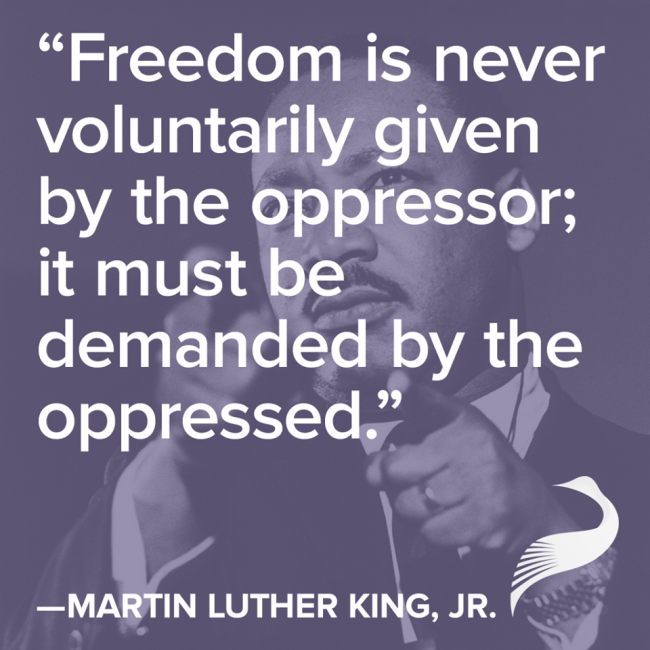
First of all freedom is a state of mind and only subsequently may become translated (or not) into social reality.
Whenever an oppressor/oppressed relationship exists neither of them is really free, not even the oppressor: he is permanently bound to take care, of sorts, for the oppressed. Otherwise the oppressed would wither away, either literally or by gaining their liberty.
This doesn’t mean Martin Luther King Jr. wasn’t right, it still is the duty of whoever feels oppressed to start fighting for liberty, it just puts the onus on both sides of the relationship.
In fact time and time again human history has produced ample proof that as entire societies became freer their individual members fared better and better.
Wealth and technology can only help but cannot replace (perceived) individual liberty.

Image


A rather heated debate is currently going on between ‘specialists’ about how ‘economic fairness’ is influencing growth:

inequality=unsustainable growth


The problem is that most of these ‘specialists’, usually economists or politicians, while sometimes finding interesting facts, rarely stick their heads out of their narrow fields of expertise high enough to notice that too much economic inequality is counterproductive precisely because it creates a relationship of dependency between the haves and the  have nots.

Taking care of your dependents uses precious resources that could be better spent concentrating on further development.
This is exactly what Henry Ford had understood and motivated him to double the wages of his employees. This is the sole explanation for why the American economy took off after WWII. More and more individuals were able to stand on their own two feet because the economic climate was good, business thrived AND the wages were decent – without the government or the unions having much to say about this.

Today business people care almost exclusively about the bottom line and the next quarterly report – thus favoring short term results versus sustainable growth, the governments regulate more and more, arrogantly believing  that they know better than the (no longer) free market and the union leaders concentrate on gathering more and more clout instead of taking care of the long term interests of their union members.
This byzantine maze does nothing but creates a highly oppressive medium in which everybody is oppressed by everybody else.

And human society, if it is to work properly, needs free cooperation, not generalized oppression.


Cineva mi-a trimis urmatoarea intrebare:

“PITAGORA a zis:
Nu năzui la himera unei democraţii pure; egalitatea perfectă există numai la morţi. 
++++++
Si cred ca are mare dreptate. Voi ce credeti ????”
Dupa care mi-a trimis si unul dintre raspunsurile primite de el:”Orice apreciere temporala e marcata de relativitate, pentru ca ignora perspectiva eternitatii.”

Moise, Noe, David si altii au trait inaintea lui Pitagora.
Notiunea de viata eterna in preajma lui Dumnezeu nu a fost o idee doar a crestinismului.
David in Ps. 15:1 spune: “Doamne cine va locui in cortul Tau?” cortul Domnului fiind etern.
Egiptenii credeau mult mai profund in viata eterna inainte de Pitagora.
Hindusi au notiunea si credinta in Nirvana ca viata de apoi.
Islamicii lafel viseaza, ca daca mor ca martiri vor avea 72 de virgine in viata de apoi.

Ateii adica a-teii care prin auto-denumile se vor fara de Dumnezeu (Teo) printr-o incapatanare perversa, cum spunea Cioran, considera ca aici e raiul, aici e iadul, asa ca dece nu si-ar trai viata fara a se teme de vreo consecinta.
Poporului rus considerat pravo-slavnic, adica adevarat aducator de slava lui Dumnezeu i s-a inoculat aceasta idee perversa pt a putea ucide la comanda partidului fara teama consecintelor eterne, chiar daca consecintele imediate erau exercitate asupra lor de proprii lor tovarasi de lupta.

Problema care se pune e aceea ca dela niste oameni cu adevarat inteligenti ar trebui sa te astepti la mai mult decat la teoreme asupra unor lucruri existente. “Suma patratului catetelor este egala cu patratul ipotenuzei” nu e o inventie ci o constatare.”

Ce am vrut sa spun este ca asa cum a fost imaginata democratia initial parea sa conduca la o oranduire ce tindea asimptotic spre perfectiune, numai ca conditiile sociale si caracterul omului impiedica realizarea perfectiunii dealungul timpului, fapt pt care devine relativ modul in care se aplica orice principiu.
Acum cunoscand modul de gandire limitat al lui Pitagora in comparatie cu alti filosofi din vremea lui, mi-am dat seama de lipsa lui de perspectiva din cele ce le vei citi mai jos.

Traieste-ti viata;
nu exista nimic inainte si nimic dupa ea. Sa-ti placa sa traiesti si sa traiesti bine. Cel ce priveste viata cu dezgust, fie ca are spiritul bolnav, fie inima putrezita. ”


N-as fi citat atat de extensiv daca textele de mai sus nu mi s-ar fi parut extrem de descriptive pentru ceea ce cred destul de multi dintre contemporanii nostri si anume ca democratia este o inventie, similar cu dictaturile. Ori exact de aici apar problemele. Fiecare dictatura este unica, fiind rezultatul actului de vointa a celui aflat la putere in momentul respectiv.

Spre deosebire de dictaturi democratia nu a fost inventata, asa cum au fost, sa spunem, chibriturile – a stat cineva cu picioarele in apa rece si s-a gandit pana a ajuns la solutia ‘optima’. (Si care oricum au mai fost imbunatatite de nu stiu cate ori de atunci)

Democratia a fost inventata in comun, de catre grupuri intregi de oameni care au constatat (prin simpla supravietuire) ca daca se inteleg intre ei le merge mai bine (tuturor) decat grupurilor/comunitatilor care urmeaza orbeste pe cel care s-a nimerit sa fie in fruntea lor…
Esential in toata treaba asta este ca membrii comunitatii respective sa fie ‘echivalenti’. Nu trebuie sa fie egali, asta e o prostie, este destul ca fiecare dintre ei sa fie autonom, adica sa nu depinda in mod josnic de cei din jurul lui – asa cum depinde sclavul de stapanul sau, iobagul de posesorul mosiei, cel care beneficiaza de asistenta sociala de bunavointa politicienilor/birocratilor…
Si aici ajungem la rana purulenta care este realitatea cotidiana. Adevarul asta rostit de Pitagora a fost intors pe toate fetele. Exact asa cum legea lui despre catete nu este o inventie ci o constatare, la fel spusele lui despre democratie sunt tot o constatare. Si asa cum legile geometriei pot fi folosite atunci cand proiectezi o casa sau un pod dar si atunci cand vrei sa construiesti un abator/lagar de concentrare la fel si constatarile despre democratie pot fi intoarse pe toate fetele.
Intotdeauna se vor gasi cate unii care sa incerce distorsionarea procesului democratic astfel incat sa le fie bine doar lor. Chiar si Hitler s-a folosit de procedee democratice pentru a ajunge la putere. Tarile comuniste erau cunoscute sub denumirea de ‘democratii populare’…
In realitate soarta grupului social/tarii depinde, in ultima instanta, de raspunsul pe care comunitatea respectiva reuseste sa il dea acestor incercari. de fapt continue, de monopolizare a procesului de decizie, de transformare a lui dintr-unul de natura colectiva intr-o dictatura.
Chestia e ca sunt foarte multe argumente de natura teoretica (constatari) pe marginea acestui fenomen si care incearca sa explice de ce democratiile ar fi mai bune decat dictaturile dupa cum sunt aproape la fel de multe argumente in sens contrar. Un exemplu, recent, ar fi succesul economic al Chinei explicat, pertinent, prin faptul ca in China autoritariana ar fi mai usor de facut afaceri – mai ales pentru investitorii straini – decat in India democratica.
Ce mi se pare mie foarte surprinzator este ca toti analistii astia uita ceva extrem de evident. Este adevarat ca multe dintre democratiile care s-au perindat de-a lungul istoriei s-au degradat in timp dar este la fel de adevarat ca toate dictaturile s-au prabusit, mai devreme sau mai tarziu. Iar fenomenul asta este din ce in ce mai accelerat. Indiferent de constatarile teoretice si de incercarile de manipulare facute plecand de la aceste constatari, democratiile se deterioreaza din ce in ce mai incet iar dictaturile se prabusesc din ce in ce mai repede.
Si aici incepe nedumerirea mea. De ce se mai chinuie manipulatorii? Sunt atat de inteligenti incat sa inteleaga mecanismele dar in acelasi timp atat de orbi incat nu vad directia generala sau atat de aroganti incat cred ca pot intoarce mersul istoriei? Chiar mai poate cineva crede ca ‘de data asta e altfel’?
La final voi reveni la raspunsul primit de prietenul meu si dupa ce veti citi aceasta ‘anexa’ incercati sa faceti o paralela intre ce spune Pitagora si invataturile lui Lao-tzi. Nu cred ca s-au cunoscut, n-ar fi fost nevoie. Exact asa cum triunghiurile sunt la fel peste tot si natura umana are generalitatile ei.
Faptul ca nicaieri democratia nu e perfecta dar ca peste tot este mai buna decat dictatura este una dintre ele. O alta ar fi ca nici o interventie umana nu poate intoarce cursul natural al istoriei, acesta poate fi incetinit temporar dar niciodata abatut din drum…
“Legi ale moralei si ale politicii – Pitagora:
Viata cumpatata, in slujba binelui si a dreptatii, trebuie sa stea si la baza alcatuirii politice a unui stat.Nu incerca sa vindeci un popor mare si corupt: cangrena nu se poate vindeca.

Nu incerca sa schimbi oranduirea unei mari natiuni. Un popor numeros e ca o dihanie hada; e ceva impotriva firii. Dintre toate soiurile de dobitoace cea mai rea e speta umana ce se cheama “popor”.

Nu raspanditi vestea unei fapte rele! Faceti in asa fel incat sa-i dispara cat mai curand si cele mai mici urme. Lasati raul sa moara!

Sa-i crezi doar pe jumatate, pe cei ce vin sa parasca fapte rele.

Nu nazui la himera unei democratii pure; egalitatea perfecta exista numai la morti.

Legiuitorule!
Nu le lasa oamenilor de stat timpul sa se deprinda cu puterea si onorurile!

Legiuitorule!
Nu uni credinta, cu morala. Roadele acestei legaturi nepotrivite nu pot fi decat niste monstri.

Legiuitorule, baga de seama sa nu te inseli!
Drepturile omului nu sunt la fel cu ale popoarelor, din cauza ca oamenii deveniti “popor”, inceteaza a mai fi oameni.

Un Senat de 100 de capete e mult prea mult! Putini legiuitori, dar
intelepti! Putini razboinici, dar viteji! Putin “popor”, dar multi cetateni!

Da legi poporului-taur si boabe poporului-bou.

Supune-te legilor, chiar daca sunt proaste! Nu te supune oamenilor, daca nu sunt mai buni ca tine.

Taie-i unghiile poporului, dar nu-i spala capul cu propria-i urina;
pedepseste-l, fara sa il injosesti.

Nu chemati in magistraturi decat barbati ce sunt in saptamana mare a vietii lor.

Magistrati!
Fiti precum in Sparta! La intrarea in tribunale ridicati un altar al
Fricii; frica de a fi pedepsit inspaimanta poporul si copiii.

Magistratule!
Legea iti e sotie legitima; desparte-te de ea, mai bine decat sa o faci sa devina o femeie trandava si care se invoieste cu orice.

Magistrati ai poporului!
Nu urmati pilda pescarilor de pe Nil, care arunca cu noroi in ochii
crocodilului, ca sa-l poata stapani.

Sa nu fii legiuitorul ori magistratul unui popor care se lauda cu mintea sa luminata.

Urmand pilda locuitorilor din Creta, la fiecare 9 ani, legile sa fie citite
si indreptate de un intelept.

Cand magistratul vorbeste, preotul sa taca!

Scutiti-va magistratii de juramant, atunci cand intra in functie, dar nu-i
scutiti sa dea socoteala, cand o parasesc.

Poporule !
Cantareste-ti legile! Numara-ti magistratii!

Poporule!
Daca iti doresti o buna randuiala in ceea ce priveste politica, fereste-te de o organizatie fara vlaga, o administratie fara putere si de luxul
ospetelor. Acestea trei dau intotdeauna nastere vrajbei in viata civila si in gospodarii si au ca urmare, naruirea statului si a familiei.

Nu tulbura o apa statatoare, ori un popor in sclavie.

Fugi de poporul caruia ii place esafodul.

Nu te astepta sa ti se multumeasca, atunci cand ii faci un bine poporului: dintre toate dobitoacele, el este cel mai nerecunoscator.

Lucrul cel mai rusinos al unei stapaniri este pandirea si iscodirea
oamenilor.

Nu urma pilda omizii: nu primi sa te tarasti la picioarele printului sau in
fata poporului, pentru ca, intr-o zi, sa porti aripi.

Toti suntem egali! Sa nu credeti insa ca neghiobul este egalul inteleptului.

In fiecare an sa aveti o zi de sarbatoare numita pacea familiei. In aceasta zi, sotul si sotia, la pranz, in mijlocul familiei, isi vor da mana si isi vor ierta unul altuia greselile facute de-a lungul anului.

Invata sa vezi mai departe decat pot ajunge privirile tale.

Lebada tace toata viata, ca sa poata canta desavarsit, o singura data.
Omule de geniu! Ramai in umbra si pastreaza tacerea, pana in clipa in care vei putea sa apari cu toata stralucirea unei faime pe care nimeni nu o mai poate tagadui.

Nu admira nimic! Zeii s-au nascut din admiratia oamenilor.

Sa nu ai alt Zeu in afara de propria ta constiinta.

Fii cetatean al lumii intregi, pana cand vei intalni un popor intelept si
cu legi drepte.

Traieste-ti viata;
nu exista nimic inainte si nimic dupa ea. Sa-ti placa sa traiesti si sa traiesti bine. Cel ce priveste viata cu dezgust, fie ca are spiritul bolnav, fie inima putrezita.”

Image

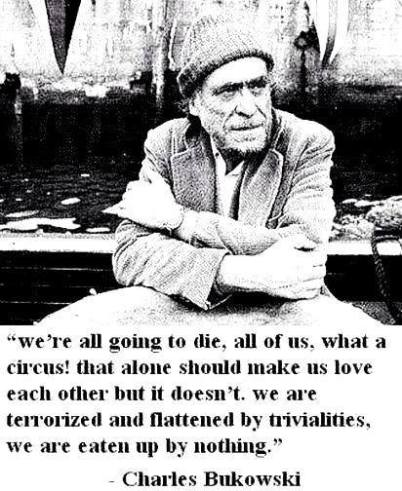
I remember that John F. Kennedy once said something similar

” “In the final analysis,” …. “our most basic common link is that we all inhabit this small planet. We all breathe the same air. We all cherish our children’s future. And we are all mortal.” “

Yet now, fifty years later, we still act as if the planet was infinite, we had found a cure for death and we had given up about the fate of our children…

This is one way to put it but different people might see it differently, depending on the side of the barricade where each of them finds itself at one moment.
The ‘meek’ demand from the government protection against the abuses of the perceived powerful while the ‘people of substance’ expect from the government to protect their life and property from predation. The funniest thing is that each part see the other one as being the more powerful, the ‘meek’ consider the government as nothing but another tool used by the rich to extract more wealth from the people while some of the rich consider that the government cater too much for the poor plainly because the poor have more electoral power by simply being more numerous.
This is why I prefer the notion of ‘shared interests’ instead of ‘common good’ and I think we should reconsider the whole concept of public administration.
‘Government’ comes from ‘governing a ship’ = ‘determining its course’.
The ‘point’ is that a ship is different from a society/country.
Both have a specific role, carrying goods/providing a living medium for its people, and are different in the sense that each voyage has a port of origin and a destination so ‘governing’ simply means finding the shortest/safest/cheapest route between those two while a country has only ‘history’, its future being perpetually under construction.
In these circumstances governing a country presumes somehow knowing where that country needs to go even before choosing a course to that future.
The problem is confounded by the democratic process.
In the old times of the “l’etat c’est moi” (“imperium” in Latin) a country was indeed governed like a ship, the ruler/’emperor’ acted as a captain/owner who charted the course depending solely on his interests, wasting no breath about what the crew felt or wished. As a consequence the crew mutinied from time to time or more precisely each time the living conditions became unbearable.
Tired of those already periodic mutinies, the whole crew, the ‘officers’ included, decided to ‘change tack’ and that from that point on the captain would be elected democratically. Unfortunately this development solved only one side of the problem. The captain can no longer act despotically and disregard completely the wishes of the crew but no one feels compelled to seriously think about the destination anymore. The would be successive captains think their term would have passed by then while the crew is confident that the current captain is taking care of the problem.
All goes well as long as the ship stays in deep waters, the weather is fine – with an occasional shower so that enough drinking water can be saved – and the ‘fishing’ yields enough food for everybody to be reasonably well fed – differences are not felt until their sizes interfere with the smooth sailing of the ship – but when the ship runs aground, as it so often happens, all hell breaks loose, everybody goes nuts, blames the captain and then tries to save his own hide.
It takes a while until enough of them realize that ‘common good’ is an utopia and all they have to agree about is the shared interest of keeping the boat afloat.
And that all of them need to work together as a crew cos’ it’s a lot easier/safer together aboard a big ship than each of them manning a puny raft.