Archives for category: effective communication

Bullshit!

Back in time, some people had written a book.
And started living by it.
Things went on rather good so more and more people joined the new tradition.

After a while, after things had become so good that some of the people had enough spare time to think, some of these thinkers had noticed that some of the facts contradicted what was written in the book.
Hence some of the people had reached the conclusion that the book was not entirely right.

That even if following ‘the book’ had brought them that far, they no longer had to follow it to the t.
And they had learned to be suspicious of every written word… of all previously held convictions…
They called this new habit ‘science’.

Things went on. From good to even better.
Now many more people had enough time to spare. To think, to play… to read…

Trying to fulfill this new ‘need’, some enterprising people have transformed news gathering and publishing into a show.
Until then, news had to be exact. Hence they were published only after a close scrutiny.
After the ‘transformation’, speed and entertaining value took precedence over trustworthiness.

Furthermore, people less than passionate about knowledge had started to invade the scientific realm.

A study linking autism and vaccines had been published in a prestigious scientific magazine.
And then retracted.

With two consequences.
Some parents decided to ‘risk it’ and a lot of people were left with the impression that science had become unreliable.
That science was no longer above fraud.

““Science is at once the most questioning and . . . sceptical of activities and also the most trusting,” said Arnold Relman, former editor of the New England Journal of Medicine, in 1989. “It is intensely sceptical about the possibility of error, but totally trusting about the possibility of fraud.”Never has this been truer than of the 1998 Lancet paper that implied a link between the measles, mumps, and rubella (MMR) vaccine and a “new syndrome” of autism and bowel disease.

Fast forward to the present day.
When an editor had put together a title pretending that a “herd of 170 bison could help store CO2 equivalent to almost 2m cars, researchers say”.

Really?!?

Let me look closer.
“2m” stands for 2 million, right?
And since a conventional car spews a little over a ton of CO2 each year, that title meant that each of those 170 bison was supposed to bury 11765 tons of CO2 each year. Give or take…
But there’s a second problem.
‘Climate warriors’ are ‘mad’ about cows. We are constantly bombarded with news stating ‘the cows are belching so much methane that the polar ice caps are going to melt during our lifetime’.
What about bison? Which are, for all practical purposes, wild cows… Don’t they also belch methane?
Try reading the article and see if you understand the difference between cows and bison…

Did your homework?
No?

OK, here’s my version.
Bison grazing in the wild are a close system.
The vegetation they feed on ‘sequester’ CO2 from the atmosphere and transform it into cellulose, using energy from the Sun. Through grazing, the bison encourage the vegetation to transform more CO2 into cellulose versus the situation where the bison were not doing their thing.
Some of the extra cellulose gets eaten by the bison and ends up being transformed into the best natural fertilizer known to nature. Which further encourages the vegetation to sequester even more CO2 from the atmosphere.
A cow living on a pasture – and allowed to roam as freely as a bison herd – does more or less the same thing.
But a cow living in a stable is an ‘open system’. It is fed a lot of corn and soy. Transported from afar and which totally changes the chemistry going on inside the cow. Corn and soy accelerate the rate of growth – the reason for feeding them to the cows – but result in the cows producing a lot more methane than when naturally feeding themselves on grass. Further more, the manure thus produced is never returned where the corn and soy had been produced.

The consequences?
While in a close system the result of photosynthesis – sequestered carbon – slowly accumulates in the soil, in an open system the metabolic results of the plants and animals involved are spread around the globe. Add to that the huge amount of (fossil) energy implied in growing the plants and transporting the goods around the planet and you’ll start to understand the difference between bison/cows grazing on a pasture and cows being fed in a barn corn and soy imported from Brazil.

Why didn’t you read this in the article above?
Where did the aberration regarding each bison being able to sequester almost 12 000 tons of CO2 came from?
Why people don’t care anymore about science?

I’m sorry, you’ll have to figure these out by yourself.

“This headline and article were amended on 16 May 2024. Due to an error in the original research, a previous version stated that Carpathian ecosystems browsed by (170) bison could store 2m tonnes of carbon, equivalent to the emissions of 1.88m average US cars petrol a year. The research authors have since retracted these figures, which were due to a coding error. The correct figure is that bison could store 54,000 tonnes of carbon, equivalent to the emissions of 43,000 average US petrol cars.”

And the LORD God said,
Behold, the man is become as one of Us,
to know good and evil.

Genesis, 3:22

The point of this post is simple.
The difference between ‘bad’ and ‘evil’.

‘Good’ is straightforward.
It doesn’t matter – evolution wise – whether the ‘good’ has happened ‘naturally’ or ‘intentionally’.
But it makes all the difference in the world whether the ‘bad’ only happened or it was the consequence of somebody planning it to happen.

Even if that difference is visible only to us.
Conscious humans beings who use language to communicate and to consider.

Visible as well as ‘accessible’.
How many among you consider that anybody else but us, human people, is capable of ‘evil’?

And what about the perpetrators?
How many of them consider themselves to be ‘evil’? To have become evil, as they had intentionally hurt somebody?

And how come this simple ability was enough to elevate us to “one of Us” status?

The world is nothing but change.
Our life is nothing but perception.

Marcus Aurelius.

Killing is the most definitive thing available to man.
To humans in general and to men in particular.

We cannot create life!
We can make love, our wives can give birth but other than that…

Yet we can kill!

You see, most animals feed on other living organisms.
We describe the process as ‘the law of the jungle’ but for them it’s only natural. That’s how they feed. That’s how they get their sustenance.
None of them gives much thought about it. When hungry, they do what they have to do. And then they stop.

We are the ones who get to choose. To kill or not to kill…
We are the ones who, once aware, have introduced thinking into all these.
We are the ones who, through our awareness, have transformed sensation into perception.
We are the ones who, in our attempt to create/maintain congruence – to keep things together, have attached meaning to sensation.

We are the ones who, once we have learned the difference between good and bad, have invented the notion of evil.

We are the ones who, once we have learned the difference between good and bad, have tried to separate them.
To separate what we have perceived as good from what we have perceived as bad. And called it evil…

And now, that we’ve reached the stage where we currently are, we’ve set our minds to determine which had come first.
The egg or the chicken…
The Good or the Bad?!?
Matter or Spirit?

When we’ll grow up, when we will have caught up with Marcus Aurelius, we’ll remember that there’s no clapping with one hand.
That while it may be natural to feed on other animals, there’s no escaping the consequences of our killings.

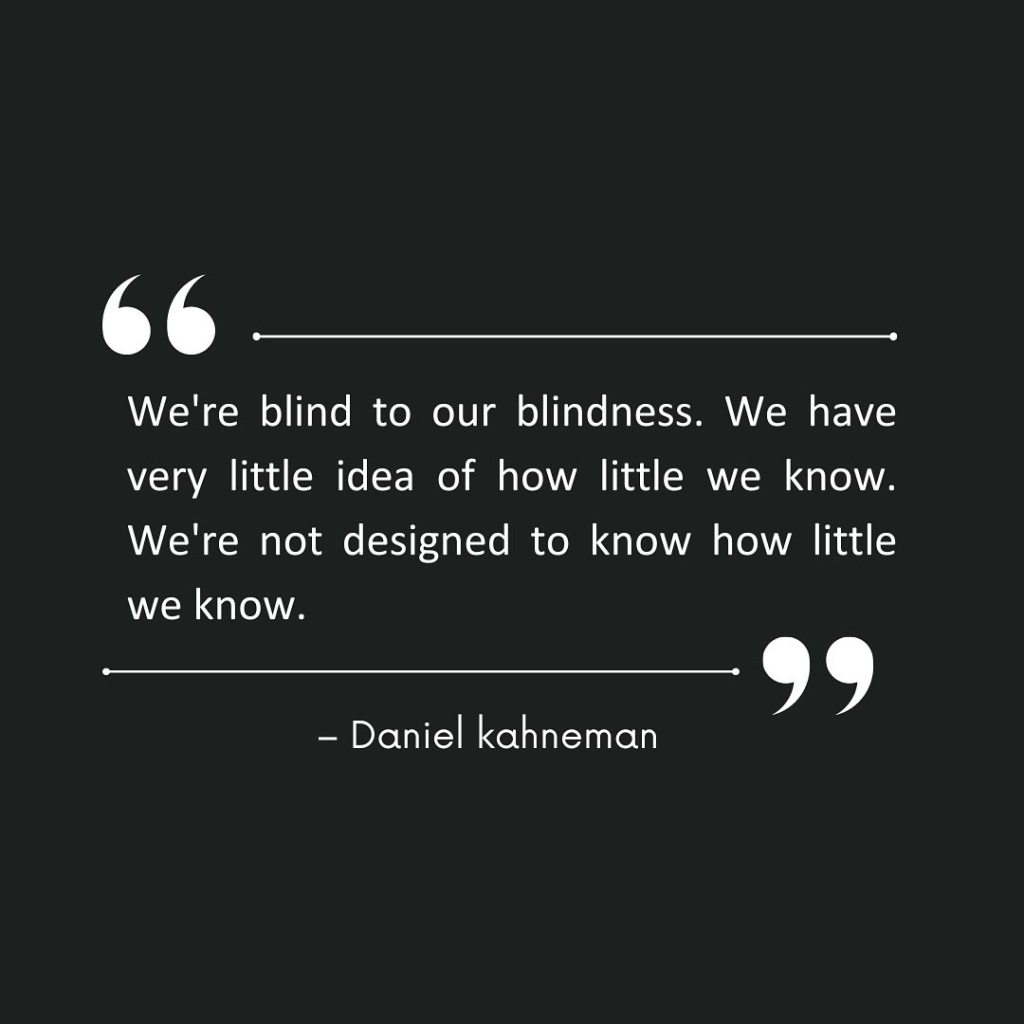
I’m acquainted with a relatively large number of people. From all walks of life. My experience suggests that it’s not the ignorance which is the problem but our (collective) unwillingness to accept/assume it. After all, we are ignorant. All of us, albeit in various degrees. Even the smartest amongst us ‘controls’ more ignorance than knowledge.

The real problem stems from us being cock-sure about things. Across the board!

Some of the smart ones are fully aware about the fact that they don’t know everything. But only some.

Some of the ‘ignorant’ are aware of their ignorance. Not all of them, but way many more than the smart ones. Simply because it’s easier to notice how much more you have to learn when you are at the start of the process.

And the problem is compounded by the fact that some of the smart ones who have chosen to ignore their ignorance team up – or more exactly organize – the ignorant who refuse to learn. This being the reason for so many actual human beings behaving as if they were some faintly intelligent ‘bots’.

A process, a space and some consequences.

The process through which individual agents transmit and receive information.

The space inside which the above mentioned individuals do what ever they set their minds to do.
The stage used by each of us, according to our own goals and abilities, to perform our self assigned roles. Inside and/or outside the roles bestowed upon us by ‘fate’.

Consequences?
The shapes and content of our individual consciences.
Consciousnesses.
Culture, as the historically accrued trove of knowledge more or less accessible – through language and subjected to interpretation – to each of us.
Civilization, as the result of our cooperative effort to ‘make good’ the knowledge we have inherited and/or gleaned ourselves.

On the other hand… letting go, emotionally speaking, may not be as beneficial as advertised.
We might lose some bitterness but we might become more liable to ‘repeat the experience’

As in …

Forgive but don’t forget is a lot easier to be said than done, you know…

Which brings us to:

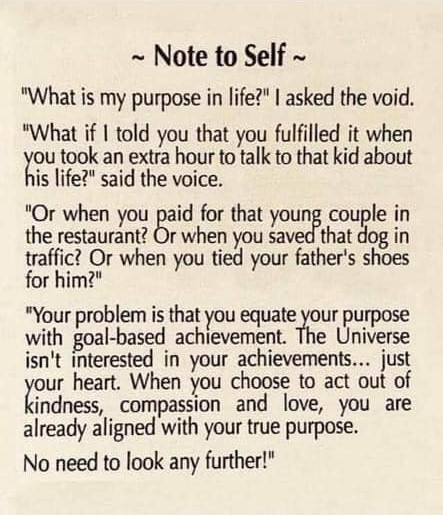
Do we really need ‘a purpose’?
As in ‘an ideologically determined goal’?
Remember Marx’s “The philosophers have hitherto only interpreted the world in various ways. The point, however, is to change it.”. Then the consequences produced by those who had followed Marx’s teachings…
But not only Marx’s!

All set goals which go ‘against the grain’ incur costly consequences.
Which are detrimental to survival! Of the leading trespasser, of those in the following or of those hapless enough to be too close to that particular goal being pursued.
Remember Marx? Nothing unpleasant had happened to him. Not as a consequence of his attempts to change the world! But to others…
Which is equally valid for all other ‘world changers’. Along with all ‘world preservers’ who run along ideologically drawn paths.

Then what should we strive for?
Simply ‘follow the heart’ to achieve ‘peace of mind’?!?
Would that be enough?

Enough for what?!?

https://www.goodreads.com/book/show/56083.In_Dubious_Battle

An inhabited planet where some of the people have finally figured out the inherently limited nature of their world.
Global warming, pollution, soil erosion, loss of biological diversity, dwindling and unevenly distributed natural resources…

Two hot wars. And a huge trilateral economic contest involving a third of the population which leaves the other two thirds in relative misery.

Most of the conflict – hot and cold alike – can be pinned down to old people doing their best (worst, more likely) to conserve their status. Wealth, power, influence…

As things happen, currently there is one collective agent which yields enough power to decisively influence the outcome of the two hot wars. And to negotiate the economic contest.
The attention of the people constituting that particular collective agent has been hijacked by an insurrectionist ex-president attempting to regain that position.
The ex-president has curried the favor of significant political party by making it possible for the party-activists to succeed in their attempt to limit women’s access to abortion.
The ex-president and soon to be presidential candidate is currently involved in a penal process. The trial attempts to determine whether the hush money he had used to silence a porn actress regarding a ‘close encounter of the third kind’ had been spent legally.

What? When? Where?
Opportunity Evolving in Time.

‘OK, I can accept the concept of opportunity evolving in time.
After all, the whole thing is nothing but a truism.
Opportunity is fluid by definition. Evolution is its natural destiny. And time is the natural consequence of evolving opportunity.
But where does this whole process take place?!?’

In our heads, where else….

Opportunity, evolution, time and, yes, ‘space’ are concepts.
Ideas coined by us, conscious human beings acting as thinking agents who use contextualized observation to further our understanding of what’s going on around us.

‘Huh?!?’

Consciousness is a state of mind.
A mind is like an AI machine. Something more than a live brain but not yet a wake, conscious, entity.
The closest thing to a ‘mind’ is a sleeping human conscience. Sleeping – hence not doing its ‘thing’ – but able to be awaken. Able to do what it’s capable of doing.
A brain is nothing but hardware. A mind is like a computer. Hardware and software put together. The only difference between a mind and a computer is that a mind is an expression of natural evolution while a computer is an expression of human ingenuity. Another thing minds and computers have in common is that both need a will to start them. To point their attention towards a goal.
This being where consciousness takes over. A mind which is aware of its own ‘wokeness’ is a conscious mind. It can pay attention, do things and generate meaning.

‘Hardware, software, natural evolution… aren’t you throwing too much ‘content’ into a single post?’

I’ll try to keep it simple.

We, humans, are the pinnacles of ‘natural evolution’. According to our interpretation of the information we have gathered until now.
As you already know, a pinnacle is a small thing perched on top of something way bigger. And for pinnacles is far easier to notice other pinnacles than to perceive what lies under them.
Our bodies – including our brains – depend on what’s going on ‘beneath’ us. In fact, ‘our’ whole world – the world we depend on, the one we live in – is working ‘in the back ground’.
Yet most of the time we’re interested only in what the other ‘pinnacles’ are doing… ‘Cause they are the ones which grab our attention!

Well, the ‘cool’ fact is that this is only ‘natural’.
In the sense that this is how we’ve become human in the first place. That’s how our minds got their ‘software’.
We’ve learned self-awareness by interacting with other human beings. We’ve built our culture by remembering the lessons learned by our ancestors. And we’ve built our civilization in concert with our brethren.
Individually, we may know little. But together we can move mountains. As we did.

And got cocky.
Our success has narrowed our attention span.

Somewhere inside the book which metaphorically recounts how we’ve learned self-awareness – the Bible – Mark, one of the evangelists, quotes Jesus:
Because of your unbelief; for verily I say unto you, if ye have faith as a grain of mustard seed, ye shall say unto this mountain, ‘Remove hence to yonder place,’ and it shall remove. And nothing shall be impossible unto you.
I’m not a psychologist. But I find this idea as being very explicit regarding the manner in which our minds work.
We cannot start anything, in a voluntary manner, before ‘believing’ in the outcome. We need to have ‘faith’ in that action. No matter how simple.

How do we get that faith?
We don’t get it, it’s being built into our conscience during the process. Continuously.
There are two factors which build our faith. Experience and reason. Past interactions we had with the wider world and the meaning we’ve derived from them. Putting it bluntly and oversimplifying things, based on previous experienced we convince ourselves, involuntarily, that it was us who were entitled to claim the merit for what had happened. Either we’ve done something right, ‘believed’ in the right things/gods or both at the same time.

Up to not so long ago, we have evolved in a religious manner.
In the sense that faith was shared amongst us. We used to share a ‘core faith’. That things not only work in a certain manner but also that things should go in a certain direction.

Success has changed that.
We’ve become so confident in our ability to generate meaning that we have emptied what’s left of the core faith.
We, the pinnacles, have reached such heights that we’re no longer aware of our link with the rest of the mountain. We’re racing ourselves for the top forgetting that we need fuel and spare parts. That our very racing completely changes the ‘racetrack’. For better or for worse…

And everything described here takes place inside our heads!
Happens inside our heads and changes, through our actions, the very world which keeps us alive.

The Dunning-Kruger effect occurs
when a person’s lack of knowledge and skill in a certain area
causes them to overestimate their own competence.

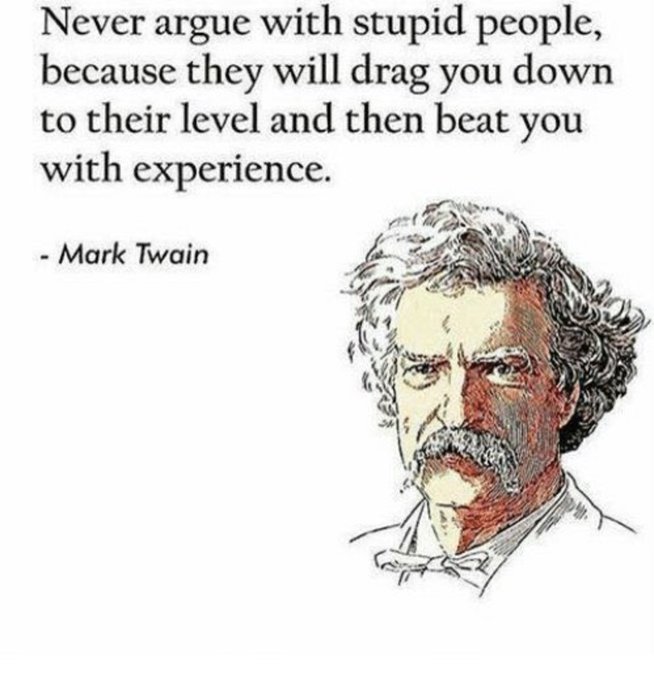
‘Experience’… as in “drag you down to their level and beat you with experience”…

But is this even possible?
For a really stupid individual to survive for so long?!? For long enough to become ‘old and experienced’…

Maybe we need to reconsider the whole thing!

My own experience – ‘Trust me, I’m an engineer!’ and I’m not kidding – strongly suggests that ‘bona fide’ stupidity is far less abundant than currently advertised.
The hard reality we have to deal with is the one described by the Dunning-Kruger effect.

Whenever we don’t understand other people’s actions, or motives, we tend to consider them as being stupid. Actions, motives and even the people themselves.
Specially when we experience the slightest discomfort as a consequence of such actions.

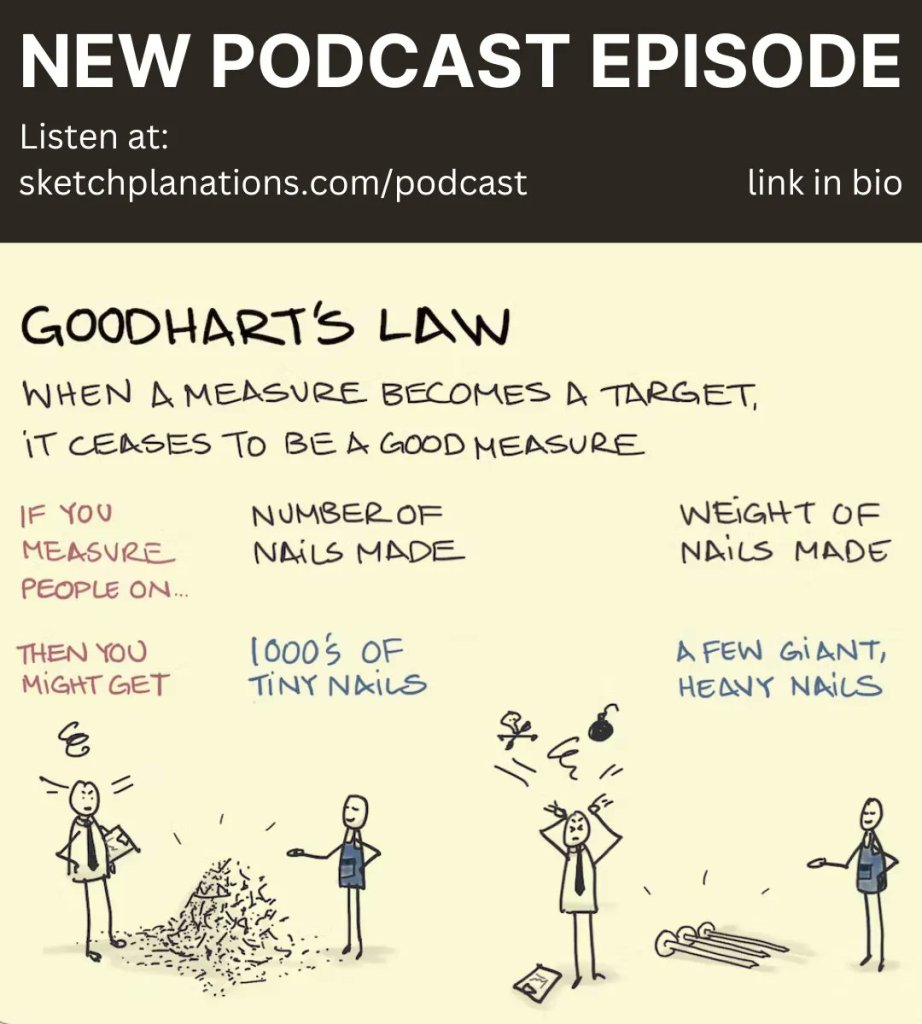
Furthermore, much of what is currently considered to be a consequence of stupidity is rather the result of accrued ‘misguided smartness’.

The law of unintended consequences
was first mentioned by British philosopher John Locke
when writing to parliament about the unintended effects of interest rate rises.
However, it was popularized in 1936 by
American sociologist Robert K. Merton who looked at
unexpected, unanticipated, and unintended consequences
and their impact on society.

On the other hand, never underestimate what mere happenstance can accomplish!

“Despite this advancing scientific knowledge,
there is much that remains unknown about both sleep
and dreams.
Even the most fundamental question
— why do we dream at all? —
is still subject to significant debate.”

Dreaming is normal and healthy, but frequent nightmares can interfere with sleep.

So.
We’ve figured out that dreams are something which happen inside our heads. When sleeping.
Then called them names. ‘Dreams’ if they were OK, ‘nightmares’ if not.
Interesting, isn’t it?
Then we have hallucinations. A sort of daydreaming – if you think of it – only less pleasant.

My point being that our consciousness – “our ability to observe ourselves observing” – opens up a new realm inside what we call ‘reality’.
That we live, in fact, inside a world of our own making.

‘But this is valid for all living things, right?’

In the sense that all living things collaborate – albeit involuntarily – towards the continuous reshaping of what we call ‘biosphere’… yes! Life does indeed reshape the portion of space/time where it happens.

The way I see it, life is responsible for the ‘second layer’ of what we call reality.
While we, the conscious observing cum living inhabitants, are responsible for the ‘third layer’ of what we call reality.

‘You keep saying “what we call reality”.
Would you care to elaborate?’

You see, we have developed two concepts.
‘God’ and ‘Reality’.
God is something which had suposedly made us. According to those who believe in God, we have been brought to life – along with the world we inhabit, in a voluntary manner, by the agent we call God.
On the other hand, reality – according to those who believe in ‘science’ – is the ‘place’ where we have happened to ‘evolve’.

God is something we are told about by others. Something the ‘worthy among us’ might experience first hand through ‘rapture’.
Those who believe in God consider that the original information about God had been delivered, through divine inspiration, to ‘prophets’. Or had been acquired one way or another by ‘elders’.
Those who believe in God consider that God – and his will – are inaccessible to humans. That we, ordinary human beings, are only meant to simply experience ‘God’s will’. And adapt our behaviour accordingly.

Reality is something we, the present ones, are told about by our predecessors. And something we experience through observation.
Those who believe in science consider that nobody – individually and collectively – will ever be able to know everything. Basically, those who believe in science are also convinced that reality is ultimately inaccessible to us.
Those who believe in science consider that it’s our job, as conscious human beings, to find out as much as we can about ‘reality’ and adapt our behaviour accordingly.

For somebody unwilling to take sides, there’s not much practical difference between the two sides mentioned above.
Both are states of mind. Convictions. Weltanschauungs which shape human action.
Furthermore, both mandate us to do the very same thing. Adapt our behavior to what we ‘see’!
Does it really matter whether what we ‘see’ was handed out to us by somebody or is the consequence of happenstance? Would our reaction be different? Why?

‘But God has handed out a series of commandments! For us to follow in order to be saved.
Science doesn’t provide any ‘spiritual guidance”!

I beg to differ.
The Bible – and all other sacred texts – have been written by people. Taught by people to other people.
Science – everything we know about things, including what we call ‘best practices’ – has been put together by people. And taught by people to other people.
Furthermore, technology – the manner in which we have put in practice what we know about the world, regardless of how we have acquired the information – has been put together by us. We’ve designed each and every tool we have used to transform our world into what it is today.
And it was still us who have use those tools according to our own goals.

So it is us, collectively, who are responsible for the world we live in.
For the dream we live.
And for the nightmares experienced by some of us.