Archives for category: 1989 and the Global Financial Crisises.

“SIF Moldova renunta la intentia de a imparti cu SIF Banat-Crisana controlul la Muntenia Invest”

“Partile au convenit incetarea contractului de cesiune de drepturi si obligatii incheiat la data de 23.08.2013 (…) Partile declara ca acest contract nu a produs si nu produce efectele juridice avute in vedere de parti la incheierea contractului si convin in mod expres ca acesta se desfiinteaza cu efect retroactiv, fiind considerat ca nu a fost incheiat niciodata”, se arata intr-un comunicat transmis, miercuri, de SIF Moldova (SIF2) Bursei de Valori Bucuresti (BVB).

SIF Moldova arata ca decizia a fost luata dupa ce ASF a stabilit ca preluarea pachetului de actiuni Muntenia Invest “poate fi solutionata doar ulterior eliminarii prevederilor art. 14 alin. (1) din actul constitutiv al SIF Moldova”. Articolul prevede ca societatea, membrii Consiliului de Administratie si directorii nu pot detine actiuni la alte societati de administrare a investitiilor, iar pentru modificarea statutului este necesara intrunirea unei adunari generale extraordinare a actionarilor, care necesita un cvorum ridicat, de minim 50% din actiuni.”

Traducere: SIF2 a vrut sa cumpere ceva, avea nevoie de aprobare pentru a face acest lucru, s-a dus sa ceara acea aprobare si autoritatea de supraveghere i-a explicat ca in statutul sau, adica in statutul care defineste modul de functionare a SIF2, exista o prevedere expresa care ii interzice fondului exact genul de investitie pe care dorea sa il faca. Mai mult, administratorii fondului nu cred ca pot mobiliza suficient de multi investitori incat sa poata schimba acea prevedere, de care oricum uitasera, asa ca renunta de tot.

?!?

The sole characteristic that makes us what we are, human beings, is our ability to ‘get out of our selves’ and to make decisions as if their outcome didn’t matter to us. In other terms we are able of cold blooded reasoning.
I don’t say this is easy – it involves quieting down our emotions – nor that everybody is able to do it. In fact almost nobody is able to do it consistently yet here we are, all the better just because of this particular ability of ours.

I find it extremely strange that some of us, in fact too many of us, are willing to give up this special ability, for different reasons.

Some try to introduce self driving cars, in the name of safety and to increase the capacity of existing highways. http://www.businessweek.com/articles/2014-04-03/the-problem-with-self-driving-cars-they-dont-cry

Some others came up with software to grade students essays. http://www.informationweek.com/mobile/mobile-devices/automated-essay-grading-software-stirs-debate/d/d-id/1111035?

Not even the stock market is immune to these developments. “High-frequency trading practices” – robots, that is – have become widespread enough as to create concern. http://www.aboutschwab.com/press/issues/

As you’ll notice if you read those articles there is no clear majority as yet, for or against this phenomenon. Pros are carefully weighted against the identified cons and then advice is given by the authors. Unfortunately none of them distances himself far enough from the brouhaha to notice the somber fact that by allowing so many automatons to take over our lives we not only basically give up our individual autonomy but also we give up more and more of the opportunities we have to exercise our capacity to decide for ourselves.

It is indeed increasingly safer and more profitable, in the short term at least.

But is it really good for us? For our ability to cope in unforeseen/unforeseeable circumstances?

Excellent post.
Obama failed to fulfill, by far, both the promises he made when he run for president AND the hopes/illusions nurtured by those who voted for him but holding him accountant for all the misery that befell on the regular Joe is a little too much.
This kind of mistakes is very costly. Those who forget that the daily actions of each and everyone of us aggregate into our common destiny tend to believe that we might change our fortune simply by changing the leader.
History has proven, time and again, that we’ll keep making the same mistake until we’ll eventually understand what went wrong. And start doing ourselves what needs to be done instead of looking up to somebody above us to direct our actions.

I expect you all know the story of the flood.
For those who feel the need to refresh their memories here is the original version.

Lately people have given up reading so some guy felt the need to use another medium in order to convey the essence of this story. Or just saw a good opportunity to make a buck? Maybe both? Anyway…

Image


Reactions have started to flow: “Why our Youth Group won’t be going to see Noah!”
Make an effort and do read that post. It’s really worth it.

Then somebody put THE question: “Does anyone really believe there was an ark?”

Here is my answer:

Yes, I do believe there was an ark, only it wasn’t ‘made out of wood’.
In fact I see the entire Bible as a very powerful metaphor.
Coming back to this particular instance, for a considerable amount of time people thought that children come from God and that intercourse was just for fun.
By specifically asking Noah to bring animals in pairs the Bible makes it perfectly clear that even if God’s will might have something to do with the whole process for a child to appear two parents of opposite sex are a must. Besides ‘the Word being spoken’ some actual, ‘material’ conditions must be met for anything of substance to come into being.
Furthermore, the fact of the matter is that Noah basically saved himself. It was he who build the ark. God could have ‘miraculously’ saved him, alongside some animals but no, he had Noah do all the work.
I understand this passage of the Bible as a warning: don’t expect anyone to do your job for you and it is you who are the sole responsible for the well being of the world around you.

Image


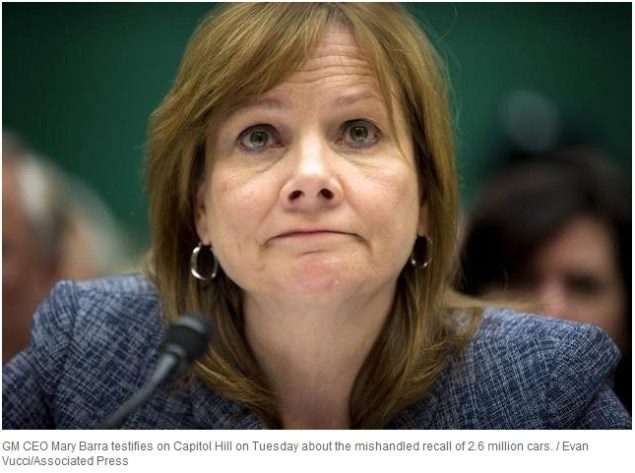
“During the hearing, a lawmaker read out an internal company e-mail saying that a 90-cent per-piece increase that would have fixed the flawed part wasn’t justified by the offsetting 10 cents to 15 cents in warranty savings. Barra, 52, said the GM she inherited three months ago would never condone executives opposing fixes that might have saved lives because they’re too expensive.”

We all know were the ‘cost culture’ has taken the ‘old’ GM: into the ground.
I’ll be blunt on this one. In fact it is not about minimizing the costs. That is not only rational but also natural. The real problems arise from ‘maximizing profits’, sometimes at “all costs”. Non financial costs that is. I.e. lives. Human lives in this case.

And this will keep on happening until we’ll finally understand that profits are good – inexorable even – but only as long they are an indicator for being on the right track towards long time survival (sustainable growth if you want to call it that way).

Allowing for the customers to get killed just for the sake of some pennies shaved from the costs is an extreme but compelling symptom of the present confusion. Short time profits, made at the expense of the customers, can be extremely dangerous.

Eventually they’ll kill the business itself, not just the customers.

PS Click on the highlighted quote, or here, and read the entire Bloomberg article. It’s worth it.


Some believe innocence is lost when becoming sexually active.

Some others understand, mostly the hard way, that being innocent means not being able to discern crooks from trustworthy people and that sometimes this condition cannot be cured.

students of history


Not that simple…
Those who have understood something from studying history already know that eventually people will learn to avoid repeating the same mistakes… or else…
It is true that new mistakes appear all the time!

The importance of the middle class relies in the fact that people who feel they belong here have a certain degree of autonomy without being entirely detached.
They have enough ‘substance’ as not to be in abject dependence on their ‘masters’ but  they don’t consider themselves  so wealthy as to be impervious to anything.
In fact the ‘middle class’ are the only people who really care about the day after tomorrow, the dirt poor are too focused on surviving till tomorrow while the ‘filthy’ rich are not concerned with such mundane things…

Daca reusesti sa calci suficient de multi oameni pe batatura pana la urma se va gasi cineva sa te puna la locul tau.

Zilele astea am gasit in biblioteca “Ultimele 6 minute” de Alistair Maclean, aparuta in 1976 in colectia Enigma. Tineam minte ca am citit-o, aveam cam 15 ani pe vremea aia,
Intriga e relativ simpla, o gasca de infractori internationali doboara un avion incarcat cu aur si pietre pretioase deasupra Golfului Mexic si apoi incearca sa recupereze prada. Socotelile lor sunt incurcate de fratele pilotului care isi pierduse intreaga familie atunci cand avionul s-a prabusit.

Numai ca sub aparenta simplitate se ascunde o realitate pe care putini dintre noi o realizam, cu toate ca avem nenumarate ocazii de a intelege cum stau lucrurile. De cand suntem mici bunicii nostri ne povestesc basme cu Fat –Frumos care reuseste ‘cu regularitate’ sa-l infranga pe balaur pentru ca acesta este ‘rau’, si de aceea singur, in timp ce Fat – Frumos se intovaraseste intotdeauna cu victimele balaurului. Dupa aceea crestem mari, ajungem la scoala si invatam despre reguli, legi si ce este aceea morala.
Pricepem ceva? De obicei nu, ne dam seama ca am facut ceva rau abia cand cei din jurul nostru reactioneaza la faptele noastre si ne pedepsesc atunci cand ii deranjam. Din momentul acela alegem calea minimei rezistente adica adoptam un comportament de evitare a pedepselor in loc sa incercam sa intelegem care e treaba cu adevarat si sa actionam in cunostinta de cauza.

Daca am fi mai atenti in frageda noastra copilarie ne-am da seama ca Fat-Frumos isi construieste victoria tocmai avand grija sa se alieze cu cei din jurul sau. El nu evita nimic, cu atat mai putin confruntarile, dar are intotdeauna grija sa fie de partea fireasca a baricadei. Am evitat in mod intentionat sa spun ‘partea buna a baricadei’ pentru ca ce este bun pentru unul poate fi rau pentru altul in timp ce ‘firescul’, ‘naturalul’ sunt mult mai usor de recunoscut.

Am recitit cartea cu placere. Singurul lucru pe care mi-l mai aminteam era ca se termina cu bine asa ca a fost ca si cum as fi citit-o pentru prima oara. Aproape toate cartile politiste se termina cu bine , nu?
La sfarsit – povestea are happy-end doar in sensul ca personajele negative isi primesc pedeapsa, ‘eroul’ in schimb ramane fara insasi ratiunea de a trai si se afla in fata unui nou inceput dar cărând dupa el toate cicatricile si vanataile vietei de pana atunci – am recunoscut sentimentul pe care l-am trait cu 40 de ani in urma.

Uluirea ca  exista atat de multi indivizi pe lumea asta care nu pot intelege, nici in ruptul capului, ca ‘daca reusesti sa calci suficient de multi oameni pe batatura pana la urma se va gasi cineva care sa te puna la locul tau’, precum si mirarea ca oamenii obisnuiti rabda foarte mult ca degetele sa le fie strivite inainte de a face ceva cu adevarat semnificativ pe chestia asta.

De fapt a spune ca ‘politica este o curva’ e echivalent cu a spune ca a face sex e tot una cu prostitutia.

Am formulat asa tocmai pentru a sublinia ca expresia consacrata cu privire la politica e deficienta si din punct de vedere al exprimarii, o activitate – politica – nu poate fi ‘curva’ ci cel mult ‘curvasarie’. Partea proasta este ca expresia ne-a fost fluturata atat de mult prin fata ochilor incat ne-am obisnuit cu ea si am inceput sa o consideram a fi adevarata.
Nu, nu este intotdeauna asa ci doar in masura in care ii permitem noi sa fie.
Atunci cand facem sex (ma rog, eu unul prefer sa fac dragoste, nu sex, asta este expresia consacrata) ne alegem partenerul dupa preferinta si comoditate. Preferam o noapte salbatica dar fara batai de cap? Ne ducem la curve. Preferam o relatie stabila dar care implica responsabilitati? …

Cam asa e si cu politica. E o activitate esentiala, la fel ca sexul, fara de care comunitatile umane nu ar putea supravietui, si care poate fi incredintata unor oameni seriosi sau unor ‘curvari’.
Iar asta nu e totul.
Nici curvasaria si nici politica nu pot fi practicate de unul singur.
Dupa cum bine spunea Basescu: “Statul nu poate fi necompetitiv sau corupt fara un partener – mediul privat. Responsabilitatea trebuie asumata de ambele parti” tot asa politicienii nu ar putea sa-si bata joc de noi daca noi ne-am purta cu mai multa responsabilitate, pentru noi si pentru copii nostri.
Si inca ceva.
Cele mai multe curve ajung sa faca trotuarul de nevoie sau fortate de altii, nu de placere iar odata ajunse acolo nu mai pot scapa din cercul vicios. Am impresia ca tot cam asa se intampla si cu politicienii, odata ajunsi in hora nu mai pot da inapoi. Si hora se invarte din ce in ce mai tare…

Bine, si ce facem?
Legalizam prostitutia?
Se spune ca dupa ce ‘se potolesc’ curvele devin neveste foarte bune. Pare plauzibil. Dupa ce au trait in infern cele care au fost suficient de puternice si de inteligente incat sa supravietuiasca si sa iasa de acolo ar trebui sa fie tampite sa vrea sa se mai intoarca acolo.
Pe de alta parte orice om normal nu intra intr-o relatie pe termen lung cu altcineva fara sa afle ce a facut celalalt inainte.
Iar dupa aceea, indiferent de cata incredere are in partenerul sau, este atent sa vada ce face – exista si posibilitatea ca acesta sa innebuneasca la un moment dat si sa dea foc la casa, nu?
Primul si cel mai important lucru pe care il avem de facut este sa nu mai credem ca politica este neaparat curvasarie.
Conceptul asta a fost pus pe tapet tocmai de cei care vor sa ne obisnuiasca cu ideea ca nu mai este nimic de facut si ca trebuie sa ne obisnuim cu situatia. Iar partea si mai proasta este ca repetand-o nu facem decat sa ii descurajam pe oamenii cinstiti care ar vrea sa intre in politica: ‘pai daca acolo sunt numai curve eu de ce sa ma duc, ca sa se spuna si despre mine tot asa?’
Iar al doilea lucru este sa nu mai acceptam genul asta de comportament. Tin minte ca l-am auzit o data pe Basescu la un ‘telejurnal’ si nu reusesc sa gasesc undeva citatul ca: ‘nici un ministru sau director n-ar putea face nimic fara unii care sa-l ajute si fara ca cei din jurul lui sa inchida ochii’.
Pana la urma si politicienii sunt conectati la viata reala. Pe vremuri, cand politica era apanajul capetelor incoronate, lucrurile erau mai simple dar mult mai brutale. Daca cel care detinea controlul situatiei (suveranul, singurul care avea autonomie fata de ceilalti) o dadea in bara tara era atat de slabita incat cei din jur incepeau sa profite de situatie: mai luau o bucata de pamant, cateodata o ocupau cu totul…si uite asa se incheia domnia celor nepriceputi.
Acum teoretic e mai simplu, ne alegem conducatorii. Chestia e ca daca nu-i alegem cu grija, si mai ales daca nu stam cu ochii pe ei, ajung sa faca ce le trece lor prin cap si nu ce ar trebui sa faca pentru ca lucrurile sa functioneze cat mai bine. Asa ca nu mai este cazul sa asteptam sa ne cada sandramaua in cap si abia dupa aceea sa luam masuri.
De fapt scandalul care ia amploare in invatamant, cel cu banii din care urmau sa fie luate cadouri pentru profesori, este inca un semn ca oamenii s-au saturat sa mai rabde.