Archives for category: Choices we make

broadcast to the Universe

“Professor Stephen Hawking, the Cambridge cosmologist, warned in 2010 that humans should keep as silent as possible because alien civilisations may be attracted to Earth and have the technology to travel here and exploit its resources. “If aliens visit us, the outcome would be much as when Columbus landed in America, which didn’t turn out well for the Native Americans,” he said.”

Let’s accept for the sake of the argument that an ‘imperialistic and inconsiderate’ civilization (like the western Europeans were during the time of Columbus) manages to reach the technological prowess of being able to travel at velocities higher than the speed of light – otherwise no one would bother to leave their native planet except for a real emergency since building an empire in this circumstances is impractical.
Would you think they would wait for an invitation from us? Or that they would even need one to know that the Earth is a ‘hospitable’ planet?
If ‘they’ are as belligerent as we were, and still are, the Universe would be either divided into at least two empires busily trying to bite each other’s throat or a huge one who continuously gobbles up new and new planets.
We are still free after so many eons since the galaxy has been in place so chances are that either ‘they’ are a lot more peaceful or interstellar travel is not a feasible thing. Not in any recognizable – by us – form of animal life, anyway.

What we are left with is another, and for me a lot more plausible, hypothesis.
Long range travel has indeed been mastered, in one form or another. After a prolonged interstellar war or even from the very beginning the ‘travelers’ have understood that peace is a lot more ‘profitable’/nice/cozy than generalized war so they don’t allow ‘beligerant’ civilizations to get out of their planets until the would be new-comers ‘grow up’ from their ‘waring’ pubescence.
For instance by installing monitoring stations around ‘promising’ planets and actually sabotaging their efforts at ‘conquering the space’ until they reach a comprehensively peaceful stage of social development.

I remember that one of the conditions for Romania to be accepted in both European Union and NATO was for it to have good relations/’friendship treaties’ with all its neighbors. If we were wise enough to do such thing don’t you think that a civilization that has mastered space travel should have reached the same conclusion way back in their development?

It seems that our fright about the ‘aliens’ tells more about the way we are than about anything else…

 
Scientific thinking gave us vaccines, planes, computers, plenty of food through higher yield crops and state of the art health care, among other things.
Most of us have decided that using computers is good, including for our children, despite the fact that many of them develop “Facebook addiction”, that planes are safe enough to transport us and our children from place to place and that antibiotics tainted beef isn’t that bad tasting after-all.
Simultaneously some of us decided, all of a sudden and after more than 200 years of successful and safe use of the method that vaccination is ‘bad for you’. No, almost none of those have yet given up the use of planes and still surf furiously on the internet in their quest to convince others of their new found truth. Some of them have indeed shifted to organic food, whenever they can afford it.
Meanwhile the Taliban have started to shoot down the health workers that work hard to immunize Pakistani kids against polio.

And all this came to be because some reckless people who should have known better started to misuse the principles of the same scientific thinking by:
– Trying to produce perfect assassins through the use of LSD,
– Building an eavesdropping net the size of the entire Planet,
– Producing so many almost poisonous food additives and by promoting almost useless but very expensive drugs that regular people have lost their faith in both big pharma and ‘regular’ food industry,
– By the CIA using a “a sham hepatitis B vaccination project to collect DNA in the neighborhood where” bin Laden was hiding in a failed attempt to find him.  (As we all know the good news are that they found him after-all, using more straightforward methods.)
The bad news are that if we don’t clear up our act people will slowly but totally loose their trust in what we now call ‘scientific attitude towards the world’.
And, in fact, the real question is not about where are science and technology headed to but what do WE use them for!

“- Can we talk to you?
– We talked, now it’s time for each of you to listen to your own hearts.”

Misterious Ways, Pure of Heart: http://www.imdb.com/title/tt0655359/?ref_=ttep_ep3

Yesterday I had the opportunity to visit another salt mine, an active one this time,

My mother worked in the mining industry, my father in law was a miner almost all his life, my first job was in a factory building mining equipment, I went down another half a dozen mines before, both active and transformed into touristic attractions. I thought I had a fair imagine about what it means to be a miner.

In the mine I visited yesterday there was a small church, entirely carved in salt of course. On one of its walls the visitors can read:

“Afara-s doar chinuri si nevoi,
Aici, in mina-i Dumnezeu cu noi.”

(Out there, topside, nothing but trouble comes in sight.
Down here, deep into the mine, we have the Lord on our side.)

How deep into our souls do we need to dig in order to find our good nature?

And then I found this picture on Facebook:

I started to comment on “The reason the economy crashed and has been slow to rebound is because of government intervention, not the market mechanism” by Nick Sorrentino and got carried away. So I transformed the comment into a post of my own.

I fully agree with your conclusion “I prefer an open sourced economy to one which is manipulated by programmers writing in a language which is full of bugs and which brings the system down periodically.” but I find your initial assumption to be too vague.
The current situation was indeed heavily influenced by government decisions. And yes, they were completely out of touch with reality – central planning never works.
But here is where our ways depart.
The solution for the current situation is not at all ‘less’ government. Or, god forbid, ‘no government’!.
Free market is the most efficient way of running an economy only it has two limitations. It is populated by people and the total amount of trade-able goods is limited. Hence the market is never really free. We do need a free market only the natural evolution of any limited system is to gradually loose it’s freedom. So it is us who have to guard the freedom of the market.
And this is what ‘government’ business should really be. Not to tell us what to do – to plan for all of us – but to make sure that nobody becomes so powerful as to be able to dictate to others what to do.

Some of you might wonder “Why should we not accept any monopoly if it has been ‘lifted to power by the free market'”?
I mentioned earlier that there is no such thing as a really free market.
OK, you might disagree with that, after all we both advocate freedom and I’ll use a reason we both agree upon: “central planning doesn’t work“. Ever! So why do you think that a private monopoly would be able to function any better than a public one? Just because it’s private? I assure you that Lenin saw the entire Russia as his back yard and that didn’t stop him from messing that country so big that it’s still reeling under the consequences. King George saw the American colonies as his private possessions and that didn’t make the early Americans any happier.
So what we have to implement is a completely different kind of government, not a weaker one. Blaming ‘the (notion of) government’ instead of specific government decisions only induces the impression that ‘government’ as a whole is useless/despicable and that drives people away from (the concept of) government.

What we really need, that different kind of government I was speaking about, is a government that is closely watched by the people and who jealously defends both the political and economic freedom of the individuals, not either notion of ‘central planning’ or ‘vested interests’ – which, in the end, are uncannily similar.

http://www.againstcronycapitalism.org/2015/01/the-reason-the-economy-crashed-and-has-been-slow-to-rebound-is-because-of-government-intervention-not-the-market-mechanism/

Most people tend to be passionate about what they do, parents in particular.
This is absolutely normal, what could be more important than ‘the future of mankind’?

And the more passionate we are about something, the more we want to reach the best results in what we do, right?

Only sometimes we are so busy trying to demonstrate that our best is the best there is that we neglect some of the basic aspects of the day to day reality.
The most neglected one being that very seldom ‘one size fits all’.

http://www.huffingtonpost.com/chris-routly/where-similac-and-the-mother-hood-go-wrong-and-why-it-matters_b_6536280.html

Interesting .
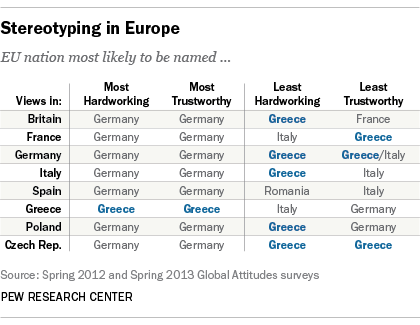
Cannot stop wondering how is it to belong to a people/tribe and reach the conclusion that the members of another people/tribe are more trustworthy than your own ‘mates’?!?

http://www.pewresearch.org/fact-tank/2015/01/27/greek-election-reflects-countrys-differences-with-the-eu/

More than five years ago a friend introduced me to the work of Humberto Maturana.
I was instantly hooked.
Only I’m not that interested in how consciousness appeared to be as I am in the consequences of us being conscient.

“The argument unfolds as follows: physicists have no problem accepting that certain fundamental aspects of reality – such as space, mass, or electrical charge – just do exist. They can’t be explained as being the result of anything else. Explanations have to stop somewhere. The panpsychist hunch is that consciousness could be like that, too – and that if it is, there is no particular reason to assume that it only occurs in certain kinds of matter.”

This excerpt perfect illustrates what I have in mind.

First thing after becoming conscious – ‘aware of his own awareness’ in Maturana’s terms – man realized how fragile he is.  The best way to assuage that feeling was to find an explanation and a purpose for the whole situation. That’s when our immortal soul came to be. Created by God or simply invented by us, it doesn’t make any practical difference.
In time, as rational knowledge constructed wider and wider inroads into the unknown and currently offers scientific explanations for almost everything, the Creator God became less and less necessary. But ‘soul’ survived and now accompanies our still smart and yet unfulfilled desire to understand the origin of our consciousness. And now that we are no longer satisfied with the ‘divine origin’ of anything but not yet ready to accept that we might indeed be something special – fright again, being special implies extreme fragility/responsibility for one’s own fate – we are constantly searching for a new way to connect our nature/fate to the rest of the known Universe.

Hence the advent of ‘panpsyhism’. Which is not such a new idea as it would seem at first glance. The Buddhist notion of successive reincarnation has been around for more than two millennia.

How about accepting what Maturana teaches us – that consciousness of self is something we have continuously improved by using it synergistically with language and all these could take place simply because of the increased processing power that was accidentally bestowed, evolutionary speaking, upon our brains – and move on? If a better explanation will ever dawn upon us – by feat, by chance or even by divine intervention – we can always come back and reconsider – this is how science works, right?
Remaining stuck in this so called ‘Hard Problem’ – what is the direct link between our anatomy/brain physiology and our thoughts? – won’t take us anywhere, for sure.

http://www.theguardian.com/science/2015/jan/21/-sp-why-cant-worlds-greatest-minds-solve-mystery-consciousness

http://www.univie.ac.at/constructivism/pub/hvf/papers/maturana05selfconsciousness.html

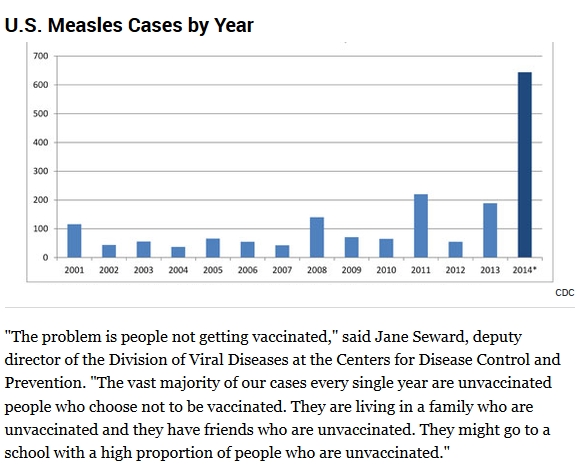
Vaccines work.
OK, there are exceptions. Some batches are botched, some people develop allergies, some viruses mutate so fast that in those cases vaccination isn’t very effective.
But as a principle vaccination works as intended.

Despite all that, some people choose to deny their children the protection offered by vaccines, without any specific reason – such as an allergy or something similar. Just because they have heard that vaccination may cause autism. Or other equivalent baloney. Against advice vehemently pressed by most doctors.

As a consequence, people have re-started to die. After contracting perfectly preventable diseases.

vaccination

I have a rather ambivalent attitude towards Ayn Rand. I admire her razor sharp mind yet I find her a little too callous for my liking.

But sometimes it’s exactly this combination of traits that helps her pin point the essence of a situation:

http://www.theatlantic.com/health/archive/2015/01/the-new-measles/384738/