Archives for posts with tag: Mutual Respect

I have great respect for Fareed Zakaria, I’ve been following him for at least twenty years.
That doesn’t mean that we always see things the same way…
He recently published “America’s educational failings” in the Washington Post. To me at least it represents a very balanced analysis of what ‘s currently going on. And yet!

“…if we really want to reduce inequality, we need to reform the system,….
And here is where we start to disagree!
Trying to ‘reduce inequality’ implies a lot of arrogance: it means we know where the inequality level should be and that we are confident enough that our actions would beneficial. (To whom?)
How about setting a more modest goal, long term survival?
In fact some inequality is good, it motivates people. Too much inequality, on the other hand, induces social fragility – the country actually falls apart.
The symptom that things have started to go south is ‘mass dependency’ – too many individuals cannot fend for themselves and depend on others, government or private charity, for daily survival. The tax payers, those who have to foot the bill, start to rebel while the recipients grow despondent. This has happened time and time again, from Ancient Rome to modern days communist states.
So yes, education is the only way out but we have to be very careful what we teach to the young generations.
Telling them to hunt for equality is one thing, encouraging them to better themselves by offering them a level playing field with low (or even 0) entrance fee and a lot of opportunities is quite another.

Every morning I drive my wife to work, smack in the center of Bucharest.

The streets are narrow and full of potholes, for a couple of days the weather was lousy, the radio was belching horrible news about what’s going on in Ukraine yet for sometime now I found a strong reason for being optimist.

I realized driving habits have changed in a very subtle but extremelly significant way. People have understood that mutual respect works a lot better than sheer aggression: they honk a lot less, let others merge into traffic, do not ‘herd’ into bottlenecks as they used to…

In fewer words people have learned that considerate cooperation gets you farther than mindless competition.

Now I’m watching closely for signs of this new attitude being displayed in other circumstances.


PS I
For my American and Western European readers this must sound like hogwash, being used with the courteous driving practiced in their respective countries. They should take into consideration that this development has come about spontaneously, the police or any other agency having (almost) nothing to do with the process. People simply understood, individually, that in this manner all of us will get sooner to our destination.

PS. II
On second thoughts …  In fact decent competition, the kind that takes place according to rules, is just another form of cooperation. Even war waged according to the Hague convention can be seen as a form of cooperation…

PS. III
Please notice how everybody takes care of those around them. Do they really care about the ‘other guy’? I honestly don’t know and I openly admit that I don’t really care. But the fact remains that they act as if they do and the consequence is that traffic never gets bogged down.

Image

I started life as any average child, trying to learn as much as I could from those around me.

For practical reasons I studied mechanical engineering – law or philosophy were dead ends in communist Romania.
After the fall of the ancient regime I started investing in the stock market and became interested in technical analysis. This is how I found out about Daniel Kahneman and the notion of ‘behavioral economics’.
Trying to deepen my understanding about how society works I went back to school, sociology this time. Here I found out about Herbert Simon – bounded rationality – and Catalin Zamfir – what constant uncertainty does to human mind and why ideologies are so powerful. (Unfortunatly Zamfir hasn’t published much, if anything, in English so I have to settle for this as a sketchy replacement)

A couple of months ago I rediscovered Zen. It had grabbed my attention some 35 years ago – I had found some books in a public library, a donation from L’Institute Francais. Sometimes in my spare moments I look up ‘zen’ on the internet and this is what I came across a few moments ago:

“The Path of Foolish Beings

Who are the foolish beings? According to the Shin tradition of Pure Land Buddhism, we all are. Mark Unno explains that only by becoming aware of our limited self and acknowledging our fundamental foolishness can we realize the oneness of all beings and the limitless flow of compassion.”

Maybe I should have sticked with Zen in the first place…

Image

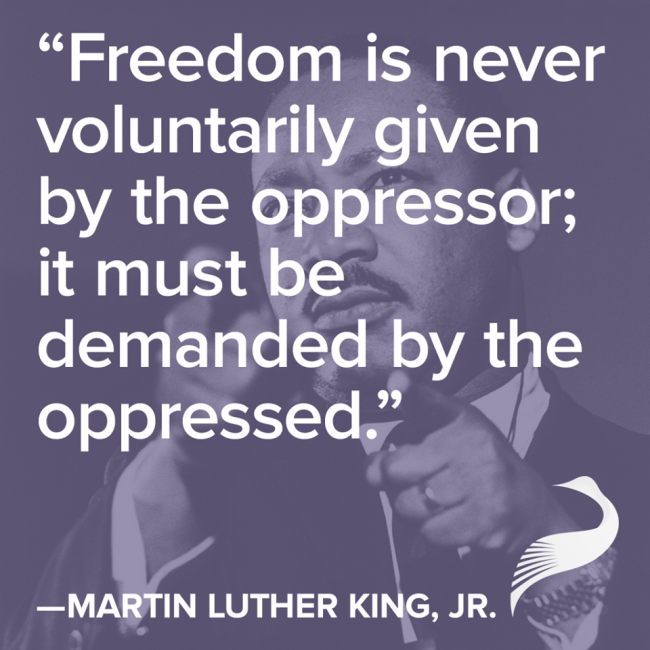
First of all freedom is a state of mind and only subsequently may become translated (or not) into social reality.
Whenever an oppressor/oppressed relationship exists neither of them is really free, not even the oppressor: he is permanently bound to take care, of sorts, for the oppressed. Otherwise the oppressed would wither away, either literally or by gaining their liberty.
This doesn’t mean Martin Luther King Jr. wasn’t right, it still is the duty of whoever feels oppressed to start fighting for liberty, it just puts the onus on both sides of the relationship.
In fact time and time again human history has produced ample proof that as entire societies became freer their individual members fared better and better.
Wealth and technology can only help but cannot replace (perceived) individual liberty.

Image


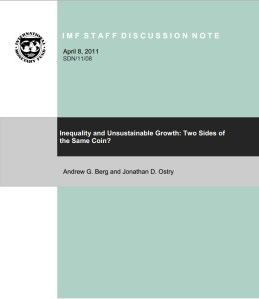
A rather heated debate is currently going on between ‘specialists’ about how ‘economic fairness’ is influencing growth:

inequality=unsustainable growth


The problem is that most of these ‘specialists’, usually economists or politicians, while sometimes finding interesting facts, rarely stick their heads out of their narrow fields of expertise high enough to notice that too much economic inequality is counterproductive precisely because it creates a relationship of dependency between the haves and the  have nots.

Taking care of your dependents uses precious resources that could be better spent concentrating on further development.
This is exactly what Henry Ford had understood and motivated him to double the wages of his employees. This is the sole explanation for why the American economy took off after WWII. More and more individuals were able to stand on their own two feet because the economic climate was good, business thrived AND the wages were decent – without the government or the unions having much to say about this.

Today business people care almost exclusively about the bottom line and the next quarterly report – thus favoring short term results versus sustainable growth, the governments regulate more and more, arrogantly believing  that they know better than the (no longer) free market and the union leaders concentrate on gathering more and more clout instead of taking care of the long term interests of their union members.
This byzantine maze does nothing but creates a highly oppressive medium in which everybody is oppressed by everybody else.

And human society, if it is to work properly, needs free cooperation, not generalized oppression.


Do you remember my bewilderment about how come so many people think it’s OK to use, indiscriminately, every opportunity to increase their personal wealth?

Image

I don’t remember ever waking from a dream in which I did anything against anybody.

Every one of my dreams were about me achieving something, by my own or as a member of a team.

Then how come so many of us are plotting, when being wide awake, against others of our kind – against some of our brethren even?

Image

http://dreamiliscious.wordpress.com/

http://en.wikipedia.org/wiki/Tikkun_olam 

any one still wandering about how come the Jews managed to survive for so long, against the so long odds as they had to face?

As almost everything else on this world this also can be looked at from two different vantage points.

The disgruntled citizen says: “I know I’m stating/asking the obvious here, but with all the Big Corp. favoritism, what’s the point in the people voting? Big money talks louder than the peons. Fire every one of them- here and elsewhere.”

Yeah, OK, I get your point…but what if those already ‘at the wheel’ understand/interpret the act of non voting as approval of the current state of things/people being discouraged about the possibility of any change being made so they take it as a carte blanche?

So unless more of us actually going to the voting booths and manifesting our will the simple wish that: “I only HOPE that this next election, people will wake the fuck up and quit ALLOWING this to continue.” won’t mean much…
Alternatively, our mere ‘presence’ – even if unhappy about about everybody on the ballot we cancel out vote – means ‘hey, this guys have waken up, maybe we should clean up our act’!

Somebody just asked me:

“People all over the world are all about themselves these days?”

Unwisely so…
Actually it’s nothing wrong about being ‘about one’s self’!

The real problems start only when crossing the divide between one amongst/with others versus one above/against all others…


Image


“Si mai vorbim despre “globalizare”…”
“And we are still speaking about “globalization”…”

“- What’s your opinion about the food shortages in the rest of the world?
– What does ‘food’ mean?
– What’s that a ‘shortage’?
– What’s that ‘the rest of the world’?
– What’s that an ‘oppinion’?”

“- Ce parere aveti despre lipsa de alimente din restul lumii?
– Ce sunt alea ‘alimente’?
– Ce inseamna ‘restul lumii’?
– Ce este aceea ‘lipsa’?
– Ce este aceea ‘opinie’?”

Pai da, vorbim!
Si pe drept cuvant.
Din pacate ‘globalizare’-a asta inseamna deocamdata ca toti alergam ca disperatii dupa bani. In loc sa actionam firesc, sa reactionam la imprejurarile in care ne aflam, incercam, in disperare, sa folosim aceste imprejurari pentru a ne umfla conturile din banci.
Si dupa aceea ne miram de ce a iesit…

Yes we do!
And rightfully so!
Because, until now at least, ‘globalization’ only meant a planet wide treasure hunt. Instead of acting naturally – reacting to the circumstances in which any of us happens to find himself – we desperately/obsessively try to use those circumstances with the sole goal of inflating our bank accounts…
And then we are flabbergasted by the outcome…

Bine, inteleg ca pentru asta ar trebui sa intelegem odata (?) ca bogatia este doar o unealta, ca telul suprem ar trebui sa fie doar ‘supravietuirea’/capacitatea de a evolua si ca astea doua nu sunt chiar identice  … dar oare de cate argumente in acest sens mai avem nevoie?
OK, I understand we’d need to understand, once and for all (?) that wealth is nothing but a tool, that the sole reasonable goal is survival/ability to adapt and that these two are not exactly similar… but how many more proof do we still need?