
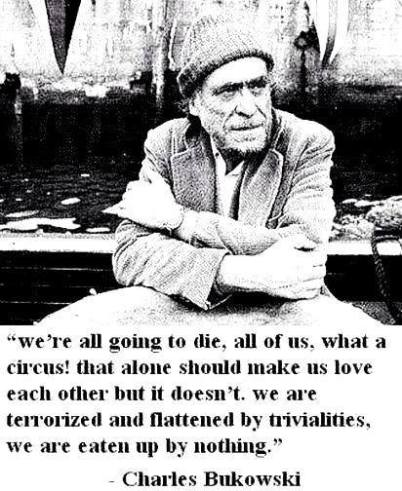
I remember that John F. Kennedy once said something similar
Yet now, fifty years later, we still act as if the planet was infinite, we had found a cure for death and we had given up about the fate of our children…
I remember that John F. Kennedy once said something similar
Yet now, fifty years later, we still act as if the planet was infinite, we had found a cure for death and we had given up about the fate of our children…
” “Hallel” means “praise” in Hebrew. You might know it from the first part of the word “hallelujah” which means “praise the Lord”. It’s also the name of a prayer that we say on festivals (like Passover), consisting mostly of psalms. But on the last day of Passover, which begins tonight, we don’t say a full Hallel; we shorten the prayer. Why? Because this is the day when Pharaoh’s army drowned in the Red Sea, and, though we want to rejoice in our victory, we don’t want to rejoice in the death of our enemies.
I think this is an important principle: we have a right to defend ourselves, but we shouldn’t demonize our enemies – the opposite: we should remember that our enemies are human too. More than that: we don’t *need* to demonize our enemies in order to defend ourselves; the right to self-defense is absolute.” (David Boxenhorn).
” So God created mankind in his own image, in the image of God he created them; male and female he created them.
God blessed them and said to them, “Be fruitful and increase in number; fill the earth and subdue it. Rule over the fish in the sea and the birds in the sky and over every living creature that moves on the ground.” (Genesis 1, 27:28)
For some it’s not easy to understand how come the Jews have managed to survive. as a nation, for so long.
Reading the explanation about why the ‘hallel’ said in the last day of the Passover is shorter than usual did the trick for me.
I’m not a religious person, not in the general accepted meaning of the word anyway, but this doesn’t prevent me from finding wisdom in religious texts.
Reading the quote from the Genesis where God tells to his ‘made in his own image’ children “…fill the earth and subdue it. Rule over the…” things start to become apparent:
– The most important is ‘survival’. Nothing can be accomplished after death, not ‘on this side of the grave’ anyway.
– ‘Survival’ is not something that can be done individually. It’s ‘…fill the earth and subdue it.”, not ‘conquer the earth and vanquish the others’.
– Take care of what’s going on around you. ‘Rule over the…’ means bearing the responsibility of whatever happens under your stewardship.
My explanation about how come the Jews, and other ‘very experienced’ people, have managed to survive for so long is that they were able to maintain the fragile equilibrium between the need to preserve their identity and the wisdom to respect the identity of ‘others’. After all it’s a lot easier to survive together with as many as possible than against everybody else.
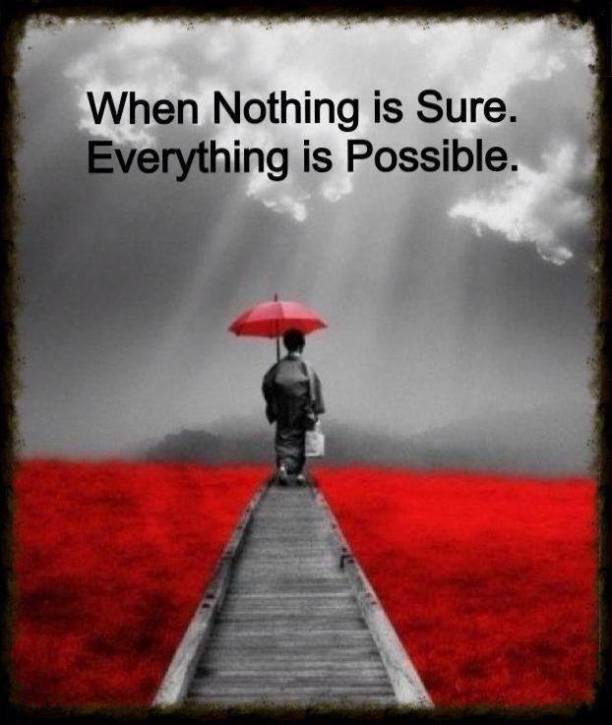
Prin primavara lui ’89 cineva la o petrecere, mai spre dimineata:
‘Bai, de ceva timp incoace pluteste in aer asa o atmosfera de schimbare sociala…’
Eram suficient de ametiti incat sa nu-l bagam in seama. Dupa AIA ne-am adus aminte mai multi de faza si l-am intrebat ce-l apucase.
‘Ati uitat deja…Poate e mai bine asa…Desi toate pareau la locul lor in realitate nu mai puteai fi sigur de nimic. Totul depindea doar de hachitele sefilor!’
Spring of ’89. Party, small hours. Out of the blue somebody says: ‘For sometimes know I feel the wind of change is picking up!’
We were too drunk to pay much attention at that time but after Ceausescu fell with a bang some of us remembered and asked him about the whole thing:
‘You’ve already forgotten… Maybe it’s better this way…Even if all things seemed perfectly settled the hard reality was that you could not be sure of anything. All was decided at the whim of those powerful enough to make a decision, nothing else mattered but their ‘inspiration’/ambition…’
From time to time I enjoy an odd episode of “JAG”.
The one I’m gong to tell you about now presented Harm Rabb and those around him with the classic dilemma of which comes first, the very ‘palpable’ individual member of the community or the distantly hazy but “extremely important” ‘common good’.
In the end even the self important CIA ‘common good-er’ rallied to the more mundane task of saving a child’s life at the expense of a longer range operation and this apparent change of attitude from the ‘CIA’ somehow raised my hopes that maybe ‘they’ are starting to get it:
– First of all that sacrificing yourself for the common good is heroic but sacrificing somebody else for something that you, or even an impressive crowd, consider to be of any importance is callous. Even more so if the sacrificed is innocent or the sacrifice is made against his wish. Does anyone remember of Baal, the hungry god in whose mouth young children were thrown to be engulfed by flames in the hope that the satiated Baal will stop tormenting his worshipers?
– Secondly this kind of operations usually backfire, even if for the moment ending in apparent success. Regular Joe, while not always as quick as it should be, figures out eventually that in these cases there always are two kind of people, who do not mingle. The ones who select those who get sacrificed and those who get the ax. And that he, Regular Joe, is always among the latter.
Do I need to remember you what happened in the end to the priests who fed Baal? I forgot that this legend isn’t so widespread… Maybe because the priests were eventually fed themselves to the ‘hungry statue’ and the commoners chose to forget the whole story, somewhat embarrassed for being fooled for so long?

I remember that as a child I used to play with electric trains. Models, of course. I think I still have the power source tucked someplace.
Me and a couple of other guys in the neighborhood had tracks that our mothers allowed us to set from time to time on the table in the living room so we took turns. We all gathered at one of us, build the track and played for a while.
The gear wasn’t cheap, for sure, but not more expensive than today’s smart phones.
The important thing was that we got together, learned something about how to deal with electricity, how to put things together and how to use our toys collectively. Later I found out that that some adults never out-grow these trains and develop quite a passion for them. Some even transform this passion into a way of living.
This morning I stumbled upon this video:
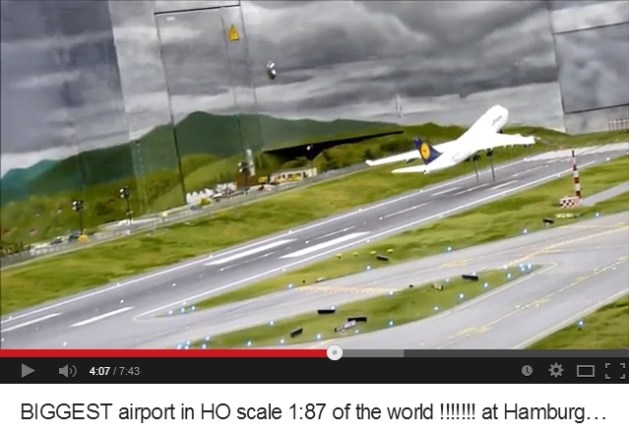
I wasn’t put off as much by its cheesy-ness, check out the struts that are holding the plane ‘aloft’ or the access door with the ‘beware of electricity’ sign as by the fact that too many children no longer build anything. Too many children don’t really play anymore, at most some of them are taken to visit places like the one described in this video and where all they can do is shoot a video of their experience using, yes, you guessed it, their smart phones.

This morning I watched on BBC a documentary with this title. A young Cambodian gets a helping hand from a Bangladeshi textile entrepreneur on her road to becoming a fashion designer. OK, so what?!? Nothing but a normal occurrence. In fact both are helping each other. Well…yes only five years ago the promising designer was scraping for food at the edges of the Phnom Penh garbage dump, unable to read or write. Scott Neeson was the one who gave her a helping hand and the whole story brought back to my mind an IMF study I’ve read recently: “Inequality and Unsustainable Growth: Two Sides of the Same Coin?” Inside are some interesting ideas about the dynamics between inequality and growth but, a lot more important and almost at the beginning, the reader stumbles upon the explanation for why the considerable efforts that have been spend towards this goal have brought so scarce results: “Over the long run, sustained growth is central to poverty reduction. The rapid growth seen in much of the world over the past few decades—notably, but not only, in China and India—has led to an unprecedented reduction in poverty. And, in general, increases in per capita income tend to translate into proportionate increases in income of the poor. As Dollar and Kraay (2002) memorably put it, ―Growth Is Good for the Poor.‖ All the more reason, then, to place sustainability of growth at the center of any poverty reduction strategy.” The point is that we’ve been chasing a ghost. What is ‘poverty reduction’? In order to do such thing one needs to define poverty, measure it and then come up with a grand strategy about how to solve a problem invented by ourselves. All of them arbitrary activities. Let me make myself perfectly clear. ‘Poverty’ is a problem indeed. Both for the poor themselves and for the society at large. Problems are to be solved but before starting doing so we should identify the real nature of the problem. Nowadays most of us agree that ‘poverty is a problem’ but when it comes to solving it we find ourselves divided into two camps. Some say this is an individual problem and those involved, the poor themselves, are the ones who should do something about it – work more that is. Some others consider that poverty is a social problem and should be solved by others but those directly involved, either by the government or by charitable organisations. In this camp we find quite a lot of people, from the ‘kind hearted’ who consider they have to help their fellow human beings to the ‘economically minded’ who say that by reducing poverty we’ll be able to increase consumption which, in turn, will induce economic growth. Both approaches are fundamentally flawed. How much help are we going to extend to the needy? What (long term) consequences is this all this help going to have? How much consumption is needed? What is the ‘optimum’ economic growth rate? I think we are missing the essential here. The real problem with the existence of poverty is the enormous waste it produces. Yes, waste, and the worst kind of waste. The waste of human potential. Poverty is, and always was, relative. Sreymom Ang, the promising fashion designer, was dirt poor when she lived on the fringes of the Phnom Penh’s garbage dump yet her chances for survival were far better then that of the most Europeans living three hundreds years ago. Her real problem was that she didn’t see any way out of a situation she (and those around her) saw as being desperate while for those Europeans it was ‘business as usual’. This very difference in attitude is crucial. Our forefathers did their best to improve their lot while most of today’s poor are feeling so depressed as to let things happen to them instead of having a more active approach. Right now I have a distinct feeling that the ‘let the poor fend for themselves’ people are polishing the ‘I told you so’ placards… Not so fast! As everybody who has been really depressed knows, it’s hard to ‘get out of it’ on your own and specially so when the deck of cards is set against you. So where I’m driving at? That we should treat this whole business as an efficiency problem instead of a poverty problem. A person with at least some (useful!!!) education is a lot more likely to be able to ‘fend for himself’ than a complete illiterate. Even more important he/she will be able to cooperate with others in order to produce and consume, efficiently, marketable goods and services. A person who knows that he/she will receive some help if in dire need will summon more easily the courage to start something, be it a new business, a new career or anything else. A person who has a reasonable expectation to be treated fairly by those around him/her is a lot more likely to come up into ‘the open’ than one who has a previous experience of being treated as a second (or third…) class citizen. As history teaches us, countries where the creative power of the people could find it easier to manifest itself and where a bigger proportion of the people were really free fared better than countries where the opposite situation prevailed. This is the only argument for which I am convinced that allowing for considerable human potential to go unused, because of crippling poverty but not exclusively, is more than an individual problem and that we’ll all be considerably better off by finding a way for a bigger and bigger proportion of the people living at one time on the face of the Earth to be able to do something meaningful. For them but also for the rest of us.
By reading the comments at the bottom of this post one would get the feeling that the current Ukrainian government is nothing but a bunch of islamists and that Russia deserves kudos for standing up to western bullies…
Well…the Ukrainians are anything but islamic, bar the Tartars now living in the Russian occupied Crimea, and Putin is not standing up against any bully but trying to get some more elbow room at the bully convention he, and others, is currently attending.
And the rest of us, middle of the road people, will continue to stay in the sorry state we currently dwell as long as we’ll let others speak for us, unchecked. I understand why too many of us are so disheartened but this is exactly where the bullies want us to be and the longer we stay here the harder it will be for us to climb out of here.
So get hold of your shoe laces, pull yourself up and let’s go.
Don’t ask/wait for guidance. You already know, deep in your hearts, what is it that you have to do.
PS I must also mention that there is a big mistake, albeit a common one, to conflate the image of a people with that of those who temporarily rule that people. Yes, there is link between the two, but they are not the same thing. Not even when the rulers are democratically elected and so much less so when we are discussing a country that finds itself under a totalitarian regime.
Things are relatively simple.
Vaccines work for whole populations, not necessarily for individuals. In order to make them acceptable those who market them try (or at least should try) to make them as good as possible.
For a rational (but callous) individual the best thing to do is to make sure that he is the only one not vaccinated: he cannot catch the disease since nobody can have it yet suffers no possible side effects from being inoculated.
If enough people opt out then the whole effort would have been in vain. The immunity obtained by vaccination isn’t as strong as the one one gets after surviving the disease so if enough people get the disease because they haven’t been vaccinated at all then older people, those who have been vaccinated first, start to fall ill.
From this point on nobody would vaccinate anymore their children – because it’s useless, right? – while the right thing to do would be to get a second vaccine, a rappel.
What’s getting on my nerves is the fact that sometimes we trust ‘scientists’/’technicians’ with our lives (for instance when we get aboard airplanes) yet other times we develop all kind of wild theories (about vaccines, for instance).
Of course we need to be extremely careful, both when choosing an airline or a pharmaceutical company, but to refuse altogether to fly or to vaccinate your children…
 nicichiarasa