
Do you remember my bewilderment about how come so many people think it’s OK to use, indiscriminately, every opportunity to increase their personal wealth?

Do you remember my bewilderment about how come so many people think it’s OK to use, indiscriminately, every opportunity to increase their personal wealth?
I don’t remember ever waking from a dream in which I did anything against anybody.
Every one of my dreams were about me achieving something, by my own or as a member of a team.
Then how come so many of us are plotting, when being wide awake, against others of our kind – against some of our brethren even?

http://en.wikipedia.org/wiki/Tikkun_olam
any one still wandering about how come the Jews managed to survive for so long, against the so long odds as they had to face?

“Si mai vorbim despre “globalizare”…”
“And we are still speaking about “globalization”…”
“- What’s your opinion about the food shortages in the rest of the world?
– What does ‘food’ mean?
– What’s that a ‘shortage’?
– What’s that ‘the rest of the world’?
– What’s that an ‘oppinion’?”
“- Ce parere aveti despre lipsa de alimente din restul lumii?
– Ce sunt alea ‘alimente’?
– Ce inseamna ‘restul lumii’?
– Ce este aceea ‘lipsa’?
– Ce este aceea ‘opinie’?”
Pai da, vorbim!
Si pe drept cuvant.
Din pacate ‘globalizare’-a asta inseamna deocamdata ca toti alergam ca disperatii dupa bani. In loc sa actionam firesc, sa reactionam la imprejurarile in care ne aflam, incercam, in disperare, sa folosim aceste imprejurari pentru a ne umfla conturile din banci.
Si dupa aceea ne miram de ce a iesit…
Yes we do!
And rightfully so!
Because, until now at least, ‘globalization’ only meant a planet wide treasure hunt. Instead of acting naturally – reacting to the circumstances in which any of us happens to find himself – we desperately/obsessively try to use those circumstances with the sole goal of inflating our bank accounts…
And then we are flabbergasted by the outcome…
Bine, inteleg ca pentru asta ar trebui sa intelegem odata (?) ca bogatia este doar o unealta, ca telul suprem ar trebui sa fie doar ‘supravietuirea’/capacitatea de a evolua si ca astea doua nu sunt chiar identice … dar oare de cate argumente in acest sens mai avem nevoie?
OK, I understand we’d need to understand, once and for all (?) that wealth is nothing but a tool, that the sole reasonable goal is survival/ability to adapt and that these two are not exactly similar… but how many more proof do we still need?

“Sus : William, Ducele de Cambridge (viitorul rege al Angliei) și fratele său, Henry al Țării Galilor
Jos : …
Ambele inundații sunt din 2014“
Fratii Windsor n-au functii executive asa ca pot face ce vor, inclusiv ceva folositor.
Ceilalti doi fac parte dintr-un intreg aparat politic astfel incat sunt la intersectia/discretia multor si conflictuale seturi de interese.
Ce ma intriga pe mine este insistenta cu care adversarii lor dau vina exclusiv pe ei, fara sa vorbeasca nici un moment despre faptul ca ei n-ar fi avut pe ce sa se aseze daca nu aducea cineva barcile alea si nici nu s-ar fi vazut la televizor (ca d-aia s-au dus acolo, sa-i vada lumea ca ‘le pasa’) daca televiziunile (atat cele prietene cat si cele dusmane) nu s-ar fi inghesuit si ele in acelasi model de barca…

Poate pentru ca singurul lucru care ii intereseaza pe adversarii lor este sa le ia locul iar pe televiziuni doar sa faca rating? In conditiile astea e normal ca nimeni sa nu vrea sa deschida cu adevarat ochii electoratului ci doar sa-l traga dintr-o parte in alta…
Si atunci cum sa nu te intrebi cum de l-a luat gura pe dinainte pe Basescu: ‘Nici un ministru sau mare mahar din administratia de stat n-ar putea sa-si faca mendrele daca n-ar fi ajutati de o parte din subalternii lor si daca restul nu ar inchide ochii!’?
PS. L-am auzit cu urechile mele la un ‘telejurnal’, cu vreo doi ani in urma.
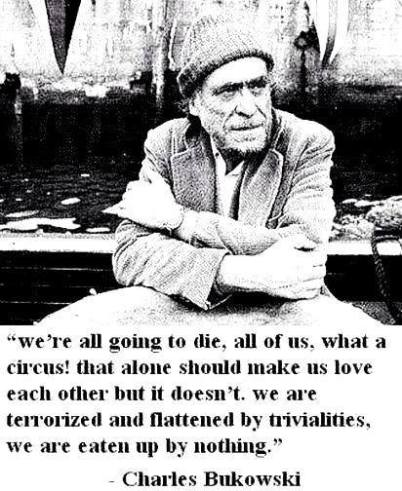
I remember that John F. Kennedy once said something similar
Yet now, fifty years later, we still act as if the planet was infinite, we had found a cure for death and we had given up about the fate of our children…
If there is one thing that drives me absolutely bananas, it’s people spreading misinformation via social media under the guise of “educating”. I’ve seen this happen in several ways – through infographics that twist data in ways that support a conclusion that is ultimately false, or else through “meaningful” quotes falsely attributed to various celebrities, or by cobbling together a few actual facts with statements that are patently untrue to create something that seems plausible on the surface but is, in fact, full of crap.
Yesterday, the official Facebook page of (noted misogynistandeugenicsenthusiast) Richard Dawkins’ Foundation for Reason and Science shared the following image to their 637,000 fans:
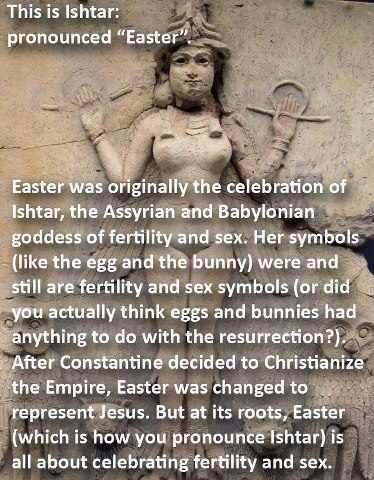 Neither Reasonable Nor Scientific
Naturally, their fans lapped this shit up; after all, this is the kind of thing they absolutely live for. Religious people! Being hypocritical! And crazy! And wrong! The 2,000+ comments were…
View original post 2,060 more words
From time to time I enjoy an odd episode of “JAG”.
The one I’m gong to tell you about now presented Harm Rabb and those around him with the classic dilemma of which comes first, the very ‘palpable’ individual member of the community or the distantly hazy but “extremely important” ‘common good’.
In the end even the self important CIA ‘common good-er’ rallied to the more mundane task of saving a child’s life at the expense of a longer range operation and this apparent change of attitude from the ‘CIA’ somehow raised my hopes that maybe ‘they’ are starting to get it:
– First of all that sacrificing yourself for the common good is heroic but sacrificing somebody else for something that you, or even an impressive crowd, consider to be of any importance is callous. Even more so if the sacrificed is innocent or the sacrifice is made against his wish. Does anyone remember of Baal, the hungry god in whose mouth young children were thrown to be engulfed by flames in the hope that the satiated Baal will stop tormenting his worshipers?
– Secondly this kind of operations usually backfire, even if for the moment ending in apparent success. Regular Joe, while not always as quick as it should be, figures out eventually that in these cases there always are two kind of people, who do not mingle. The ones who select those who get sacrificed and those who get the ax. And that he, Regular Joe, is always among the latter.
Do I need to remember you what happened in the end to the priests who fed Baal? I forgot that this legend isn’t so widespread… Maybe because the priests were eventually fed themselves to the ‘hungry statue’ and the commoners chose to forget the whole story, somewhat embarrassed for being fooled for so long?
This morning I watched on BBC a documentary with this title. A young Cambodian gets a helping hand from a Bangladeshi textile entrepreneur on her road to becoming a fashion designer. OK, so what?!? Nothing but a normal occurrence. In fact both are helping each other. Well…yes only five years ago the promising designer was scraping for food at the edges of the Phnom Penh garbage dump, unable to read or write. Scott Neeson was the one who gave her a helping hand and the whole story brought back to my mind an IMF study I’ve read recently: “Inequality and Unsustainable Growth: Two Sides of the Same Coin?” Inside are some interesting ideas about the dynamics between inequality and growth but, a lot more important and almost at the beginning, the reader stumbles upon the explanation for why the considerable efforts that have been spend towards this goal have brought so scarce results: “Over the long run, sustained growth is central to poverty reduction. The rapid growth seen in much of the world over the past few decades—notably, but not only, in China and India—has led to an unprecedented reduction in poverty. And, in general, increases in per capita income tend to translate into proportionate increases in income of the poor. As Dollar and Kraay (2002) memorably put it, ―Growth Is Good for the Poor.‖ All the more reason, then, to place sustainability of growth at the center of any poverty reduction strategy.” The point is that we’ve been chasing a ghost. What is ‘poverty reduction’? In order to do such thing one needs to define poverty, measure it and then come up with a grand strategy about how to solve a problem invented by ourselves. All of them arbitrary activities. Let me make myself perfectly clear. ‘Poverty’ is a problem indeed. Both for the poor themselves and for the society at large. Problems are to be solved but before starting doing so we should identify the real nature of the problem. Nowadays most of us agree that ‘poverty is a problem’ but when it comes to solving it we find ourselves divided into two camps. Some say this is an individual problem and those involved, the poor themselves, are the ones who should do something about it – work more that is. Some others consider that poverty is a social problem and should be solved by others but those directly involved, either by the government or by charitable organisations. In this camp we find quite a lot of people, from the ‘kind hearted’ who consider they have to help their fellow human beings to the ‘economically minded’ who say that by reducing poverty we’ll be able to increase consumption which, in turn, will induce economic growth. Both approaches are fundamentally flawed. How much help are we going to extend to the needy? What (long term) consequences is this all this help going to have? How much consumption is needed? What is the ‘optimum’ economic growth rate? I think we are missing the essential here. The real problem with the existence of poverty is the enormous waste it produces. Yes, waste, and the worst kind of waste. The waste of human potential. Poverty is, and always was, relative. Sreymom Ang, the promising fashion designer, was dirt poor when she lived on the fringes of the Phnom Penh’s garbage dump yet her chances for survival were far better then that of the most Europeans living three hundreds years ago. Her real problem was that she didn’t see any way out of a situation she (and those around her) saw as being desperate while for those Europeans it was ‘business as usual’. This very difference in attitude is crucial. Our forefathers did their best to improve their lot while most of today’s poor are feeling so depressed as to let things happen to them instead of having a more active approach. Right now I have a distinct feeling that the ‘let the poor fend for themselves’ people are polishing the ‘I told you so’ placards… Not so fast! As everybody who has been really depressed knows, it’s hard to ‘get out of it’ on your own and specially so when the deck of cards is set against you. So where I’m driving at? That we should treat this whole business as an efficiency problem instead of a poverty problem. A person with at least some (useful!!!) education is a lot more likely to be able to ‘fend for himself’ than a complete illiterate. Even more important he/she will be able to cooperate with others in order to produce and consume, efficiently, marketable goods and services. A person who knows that he/she will receive some help if in dire need will summon more easily the courage to start something, be it a new business, a new career or anything else. A person who has a reasonable expectation to be treated fairly by those around him/her is a lot more likely to come up into ‘the open’ than one who has a previous experience of being treated as a second (or third…) class citizen. As history teaches us, countries where the creative power of the people could find it easier to manifest itself and where a bigger proportion of the people were really free fared better than countries where the opposite situation prevailed. This is the only argument for which I am convinced that allowing for considerable human potential to go unused, because of crippling poverty but not exclusively, is more than an individual problem and that we’ll all be considerably better off by finding a way for a bigger and bigger proportion of the people living at one time on the face of the Earth to be able to do something meaningful. For them but also for the rest of us.

 nicichiarasa