Archives for posts with tag: authoritarianism

What might have Spain in common with Syria except for the first and last letters of their names?

Quite a lot and there are many more countries that belong to the same group: Portugal, Turkey, Ukraine, Thailand, South Korea, almost the entire Latin America and the list is far from being complete.

They all traversed a period of dictatorship during which a sizable portion of the population had left the poverty zone, entered the middle class and started to demand ‘political rights’. In some of those countries the political establishment of that day understood that it was in their own (personal) best interest to give up some of their political power and personal clout – and by doing so vastly increased the chances of long term stability in their respective countries – while in other instances the rulers clung jealously to power unwilling to cede even an iota of it.

And this is exactly why Chile, Portugal, Spain and South Korea are in a completely different situation than Syria while in Thailand, Turkey and Ukraine things are in full process of being sorted out, one way or another.

Image


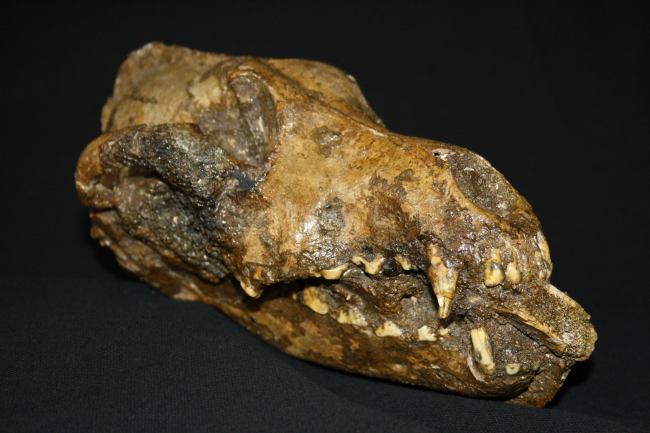
This 27,000-year-old dog skull unearthed in the Czech Republic has a mammoth bone fragment in its mouth, one of many discoveries that suggest Paleolithic people may have used dogs to hunt mammoths. 

Really? So we found a dead dog’s skull with a piece of mammoth bone between its teeth and we jump to the conclusion that men ‘may have used dogs to hunt mammoths’?

In fact the only certain thing that can be inferred for sure from this is that dogs, then as now, used to chew on bones.
And if we go on assuming things that might have happened what can stop us from asking ‘were mammoths bones toxic for ancient dogs, so poisonous in fact as to provoke instant death’?

Have you stopped laughing yet?

‘Cause this is no laughing matter. This is exactly how science works. Some people jump to conclusions, sometimes farfetched, and then try for decades to muster enough proof for their conclusions to be accepted by the ‘scientific community’ while others – earnestly, jokingly or sometimes even disrespectfully – try to prove them wrong.

The truth is that it doesn’t matter who’s right and who’s wrong, both sides are doing the excellent job of keeping alight the flame of knowledge.
Had one side, no matter which, given up its efforts, science as we know it – a dynamic process that churns out continuously vast quantities of new information only to be proven false or at least incomplete at a later time – would grind to a halt.
If the ‘enthusiasts’  would get the upper hand in no time they would drive ‘science’ so far away from the hard reality that what they would eventually propose as a ‘corpus of knowledge’ would be absolutely useless.
If the naysayers would be as ‘aggressive’ as I was in the beginning, get things out of context, just as I did, and then criticize the ‘findings’ grounded on a seemingly logical failure then the whole process would stop altogether. In these conditions further improvement in our understanding of the world would become practically impossible.

So let’s keep going as we are already used to, only a little less emphatically.
After all nobody is exactly right in the long time, right?

For those of you who want to learn more about how ancient people might have been using dogs to hunt mammoth, you have here a link to the article that inspired this post. It appeared in the Science magazine.

Image

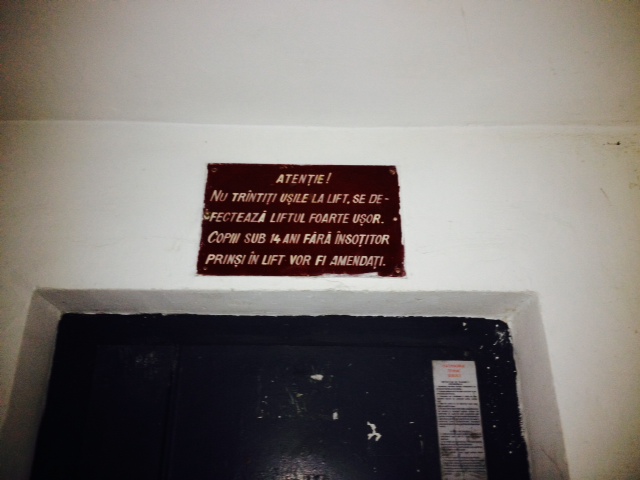
Atentie!
Nu trantiti usile la lift, se defecteaza liftul foarte usor.
Copii sub 14 ani fara insotitor prinsi in lift vor fi amendati.

Matei Visniec, unul dintre rarii jurnalisti care stiu care este diferenta intre ‘a reflecta realitatea’ si ‘a reflecta pe marginea realitatii’ intoarce pe dos intrebarea lui Caragiale si ne atrage atentia ca astazi lucrurile nu mai sunt nici macar atat de clare pe cat erau pe vremea lui Conu’ Iancu.

“Partid politic, cǎutam popor”

Cam asta ma roade si pe mine. Ce au incercat sa ne spuna, de fapt, aceia dintre concetatenii nostri cu drept de vot care au considerat necesar sa isi manifeste, in clar, optiunea?

Stiu, exista o multime de sondaje de opinie, ‘electorale’ sau nu, care incearca sa masoare starea de spirit a populatiei. Cred ca fiecare dintre noi a fost intrebat macar o data daca ‘este multumit cu directia in care se indreapta tara’.

Partea proasta cu sondajele astea este ca au o problema fundamentala, sufera din cauza unei erori ‘sistemice’. Sunt ‘proiectate’ de oameni, puse in practica de oameni iar datele cu care lucreaza provin tot de la oameni. Cam prea multa variabilitate pentru gustul meu.

Sunt la curent cu teoria din spatele acestor sondaje si sunt de acord ca daca sunt facute cu onestitate rezultatele obtinute pot fi remarcabil de corecte numai ca nu despre asta e vorba.

Cei care le proiecteaza sunt constienti de faptul ca cei care raspund sunt in mod inevitabil subiectivi: ‘de unde sa stiu eu daca m-oi duce la vot, daca ramane Mirela la mine in noaptea aia cine dracu’ se scoala inainte de 2, 3 dupa-amiaza …. si cine sunt astia…PMP… cred ca totusi ar trebui sa-i spun astuia ceva ca altfel ma ia de prost…”, ca si cei care le efectueaza sunt tot oameni  – la fel de plini de slabiciuni ca noi toti – si atunci folosesc tot felul de mecanisme de natura stochastica si psihologica de a tine fenomenele sub control: esantionare, chei de control, telefoane de verificare etc. Numai ca toate astea creaza o atmosfera destul de artificiala in jurul intregii intreprinderi, atmosfera care se aseaza ca o ceata peste nedeterminarea primordiala.
Cristian Parvulescu spunea in noaptea alegerilor la Digi24 ca ‘sondajele de opinie masoara mai degraba obsesiile sondorilor decat realitatea’. Eu n-as merge atat de departe insa e cert ca fiecare sondor masoara ce vrea el, ce i se pare lui a fi interesant. Ori pe linga faptul ca el se poate insela cu privire la importanta reala a vre-unui aspect s-ar putea ca sondorul respectiv sa nu aiba suficient de multi bani la dispozitie incat sa-si permita sa masoare tot ce i se pare interesant sau chiar ca el sa nu observe anumite lucruri care se vor dovedi in viitor a fi fost foarte interesante/importante.

Din toate aceste motive eu unul ma simt mult mai confortabil atunci cand analizez seturi de date obtinute pe cai ‘naturale’. Poate si pentru ca educatia mea ‘primara’ a fost de sorginte ‘politehnica’. (Nu ‘va radeti’, am auzit expresia asta la televizor, rostita de un politician convins ca isi depasise conditia de membru al ‘intelectualitatii tehnice’ si care acum incerca sa joace la ‘liga mare’: tocmai iesise de la o sedinta a comisiei de cultura, din Camera parca, si discuta ceva in contradictoriu cu niste ziaristi. Nu ma intrebati cine era, radeam prea tare ca sa mai fiu atent la chestii din astea vulgare.)
In orice caz, atunci cand oamenii se duc la vot (Mirela n-o fi ramas peste noapte sau s-or fi dus amandoi, de mana?) atunci nu se mai gandesc la ce ar putea spune ceilalti despre ei. Daca li se pare important se duc si gata. Nimic interpretabil in toata chestia asta. Tot asa, fiecare ‘intrebare’ de pe buletinul de vot este acolo pentru ca asa trebuia sa fie, formulata exact asa cum il cheama pe candidat/partid si  nu pentru ca cel care a proiectat cercetarea a considerat ca subiectul e suficient de important iar intrebarea trebuie formulata intr-un anume fel si nu in altul.
Esantionarea nu se mai face nici ea in functie de inspiratia proiectantului, diligenta operatorului si hazard. Votantul voteaza doar in functie de convingerea lui. Chiar si cei care o fac pentru bani sau alte favoruri o fac tot din convingere, n-am vazut inca pe nimeni dus la vot cu pistolul la ceafa. Bineinteles ca ar fi interesant de stiut cati voteaza in conditiile astea numai ca neavand date certe si nici scandaluri majore vom considera ca cei care voteaza ‘pe bani’ sunt o minoritate neglijabila.
Tot asa subiectele de campanie, adica ideile supuse aprobarii cetatenilor, nu sunt ‘scoase din palarie’ de vre-un (singur) deus ex-machina (sociolog/politolog) ci sunt rezultatul inspiratiei/transpiratiei mai multor echipe care, sau cel putin asa ar trebui sa fie, sunt foarte sensibile la nevoile reale ale societatii.

Acum ca am trecut cu bine – chiar nu v-ati plictisit inca? – de precizarile metodologice hai sa trecem la ‘fapte’. Sau mai bine spus la cifre. Datele sunt cele oferite de Biroul Electoral Central.

Interesul populatiei/prezenta la vot. 32%.
Cica slaba, sau in orice caz mai mica decat media europeana de 43%. Si totusi.

Prezenta la vot a fost calculata plecand de la niste liste electorale in care sunt ‘prezenti’ 18 219 749 de alegatori, adica cam tot atatia cati erau pe vremea cand USL-ul incerca, inca unit, sa-l debarce pe fostul ‘carmaci’ al Independentei. Unul din motivele nereusitei a fost si faptul ca nu s-au gandit sa perie listele inainte de a convoca referendumul. De ce n-or fi facut-o imediat dupa aia, si nici dupa ‘divort’… Dumnezeu cu mila. Le-o fi fost frica ca ar fi devenit evident ca s-au lasat dusi de manuta de tanti Europa atunci cand au facut pasul inapoi… Oricum, cifra vehiculata atunci, de vreo 16 milioane, pare mult mai aproape de un firesc al zilelor noastre. Iar in cazul asta ajungem la aproape 37% prezenta la vot. Inca departe de 42% dar nu chiar atat de departe ca 32%. Iar daca ne aducem aminte ca in restul Europei intre 5 si 25% la suta dintre voturi au fost indreptate catre eurosceptici, varianta indisponibila pentru alegatorul roman, diferenta devine aproape nesemnificativa.
Ar mai fi de discutat aici problema ‘boicotului electoral in semn de protest’ sugerat de ‘uniti-salvam’. N-am cum sa cuantific, cu nici un fel de aproximatie, influenta acestui apel asa ca ma voi abtine de la avansa vreo cifra dar oricum fiecare absenta ‘intentionata’ (in sensul participarii la boicot) este tot o dovada a interesului pentru actul electoral in general, chiar daca boicotul in sine nu are legatura cu ‘Europa’ ci cu dezgustul fata de modul in care se desfasoara viata politica de la noi. (Nu este momentul aici dar nu sunt de acord cu modul acesta de manifestare a dezacordului fata de ‘directia in care se indreapta lucrurile’)

Voturile nule. 5.83%! Nu-s cam multe? Hai sa spunem ca 1% dintre cei care s-au ostenit sa mearga la vot or fi fost destul de ‘nepriceputi’, dar nu mai multi. In general ‘nepriceputii’ nu prea au apasari ‘civice’ si oricum nici nu sunt chiar atat de multi pe cat vor unii sa ne faca sa credem. Si atunci? N-o fi cumva un semnal de tipul ‘Nici unul de pe lista asta nu prezinta suficienta incredere incat sa-l votez asa ca imi anulez votul. Dar aveti grija, suntem cu ochii pe voi!’?

Bine, mai e o varianta. S-ar putea ca unii primari, mai zelosi din fire, sa fi incolonat o parte dintre cei pe care ‘ii pastoresc’ si sa-i fi dus ‘de buna voie’ la vot iar unii dintre acestia sa-si fi anulat votul in semn de protest…

S-ar mai putea sa se mai fi intamplat inca ceva. Lumea o fi inceput sa inteleaga ca votul negativ, acela in urma caruia este ales ‘raul cel mai mic’ este de fapt o prostie. ‘Alesul’ interpreteaza voturile primite ca pe o ‘imputernicire in alb’, nimeni nu se gandeste ‘bai, m-au ales pe mine pentru ca au crezut ca eu sunt un pic mai putin prost/urat/hot decat contracandidatul meu’.

Voturi acordate partidelor minuscule/independentilor fara sanse. 4.88%!
Aici nu se poate spune daca sunt multe sau putine. In schimb aceste voturi pot fi interpretate ca avand doua ‘intelesuri’.
In primul rand ca cei care le-au dat n-au avut incredere in nici unul dintre partidele ‘mari’, iar in al doilea rand ca respectivul votant a ‘vazut ceva’ in acel candidat sau acea lista de candidati. Poate o idee din platforma ideologica sau exprimata de cineva de pe lista, poate o persoana anume. Ar fi pacat ca aceste informatii, pana la urma oferite cu generozitate de alegatori, sa ramana nebagate in seama.
Trebuie notat aici ca aproape toti dintre noi avem un fel de bucurie copilareasca atunci cand castiga cei cu care am votat fiecare dintre noi. Nu ma refer aici la bucuria ‘intelectuala’ ca a invins ideologia pe care o consideram noi cea mai potrivita sau la bucuria ‘etica’, cea care tanjeste dupa victoria canditatului cel mai bun ci pur si simplu la bucuria, copilareasca pana urma, a celui care a nimerit calul invingator. Tocmai din aceasta cauza a vota de la inceput cu cineva care nu are nici o sansa implica un anumit cost iar disponibilitatea de a plati acel cost plus efortul fizic de a se deplasa pana la sectia de votare da acestui gen de vot o greutate anume.

Voturi redistribuite. 15%! Daca le scadem pe cele acordate ‘minionilor’ (sub 1%) raman cam 10%

Astea sunt poate cele mai interesante, cel putin din punctul meu de vedere. Deci cam 10% dintre electoratul care a decis sa voteze valabil a incredintat votul sau unor liste care nu ofera vreo certitudine clara ca vor trece de pragul electoral dar care au o personalitate politica conturata suficient de clar incat sa aibe o notorietate suficienta incat alegatorii sa le tina minte si sa le recunoasca/aleaga. Asta ne spune ca acest gen de electorat este cam cel mai independent: voteaza de capul lui, nefiind conditionat nici macar de ‘nevoia de a face parte dintre invingatori’. Poate ca ar fi interesant de analizat ofertele politice, daca exista, propuse de fiecare dintre aceste partide.

In sfarsit am ajuns si la ‘cifrele mari’.
Rezultatul efectiv al votului a fost decis de 79.2% dintre cei care s-au ‘ostenit’ sa voteze. Am ajuns la cifra asta raportand voturile exprimate pentru partidele care au trecut de pragul electoral si intregul numar de voturi exprimate, inclusiv cele anulate.

Primul lucru care sare in ochi este ca Mircea Diaconu a fost mai ‘tare’ decat cea mai mare si disciplinata minoritate nationala din Romania si decat partidul sustinut la limita constitutiei de catre insusi presedintele tarii. (Va las pe voi sa decideti daca acea limita a fost incalcata sau nu). Nu prea e satisfacuta lumea, mai ales cei independenti in gandire, cu actualul establishment politic…

Si cu asta am ajuns la ceea ce numesc eu partide ‘centraliste’ si partide ‘difuze’.

Dupa cum le arata si numele partidele ‘centraliste’ au atat o organizare bine pusa la punct (primari, organizatii locale, etc.) dar si un mod de functionare conform caruia deciziile sunt luate mai degraba de activul central decat in urma consultarii ‘soldatilor’ de rand. In completare electoratul acestor partide tinde sa fie un electorat mai degraba ‘dependent’, nu atat material cat mai ales psihologic, de partidul respectiv. Iar pentru ca un partid sa devina ‘centralist’ este nevoie mai ales ca electoratul sau sa devina dependent de el decat ca partidul respectiv sa aiba o retea solida de primari si organizatii.

In mod evident paridele ‘difuze’ sunt cele ale caror electorat voteaza cu ele mai degraba dintr-o convingere atinsa pe cale rationala decat pentru motive de natura sentimentala sau ‘umorala’. Aceste partide nu sunt dependente de o retea de primari/organizatii dar nici nu beneficiaza de vre-un electorat stabil si cu atat mai putin de un asa numit ‘nucleu dur’. Evident ca asta nu inseamna ca nu exista si alegatori care voteaza rational cu partidele centraliste, consideratiile mele sunt de ordin statistic si oricum o convingere la care s-a ajuns pe cale rationala nu este neaparat mai buna decat una ‘umorala’. De exemplu alegerea raului cel mai mic se pretinde intotdeauna a fi rationala. Si chiar este rationala numai ca nu ia in considerare toate aspectele pertinente inainte de a incepe ca ‘cantareasca’ variantele supuse evaluarii.
Singura chestie cu adevarat importanta aici este faptul ca voturile ‘rationale’ sunt mult mai volatile decat cele ‘umorale’. Sa revenim.

Partide centraliste sunt PSD-UNPR-PC, PDL, UDMR si PRM iar PNL, PMP, FC, PER si Noua Republica sunt mai degraba partide difuze.

La PSD, UDMR si PRM lucrurile sunt evidente, nu cred ca mai este nevoie sa insist. Convingerile sunt clare, electorat captiv din belsug, organizare aproape militareasca.

PDL-ul este un caz foarte interesant care merita o analiza mai atenta. Desprins la inceput din FSN-ul originar (de fapt PDSR-ul lui Iliescu s-a desprins din FSN/PD-ul ramas cu Petre Roman) din cauza luptei pentru putere a continuat o vreme sa mearga paralel cu PDSR.
Amandoua partide ‘de lider’, amandoua de stanga, amandoua beneficiind de cate o buna organizare in teritoriu.
Totusi PD, devenit PDL, a dat o vreme impresia de a fi o varianta mult mai democratica a PDSR-ului. Lideri mai tineri, fara evidente conexiuni cu fostul PCR, o atmosfera mai degajata.
Iar cel mai remarcabil fapt a fost modul in care Basescu a reusit sa il duca din stanga in dreapta, din Internationala Socialista in care se afla inainte de alegerile din 2004 pana hat in PPE-ul in care s-a inscris in 2006, fara ca aceasta intoarcere a armelor sa provoace vre-un cutremur in partid. Inca nu mi-a atras nimani atentia ca pe vremea aia PDL-ul era condus de Boc, Basescu fiind deja presedinte?
Aceasta soliditate monolitica poate fi atribuita doar caracterului sau ‘centralist’, acesta fiind si singura explicatie posibila pentru cele 10% voturi pe care le-a obtinut acum in conditiile in care voturile anti-PSD-istilor convinsi, cei deranjati de alianta temporara dintre PNL si PSD, se puteau duce linistie la PMP, la FC sau chiar la Noua Republica, toate trei ‘sanctionate pozitiv’ de Basescu.

De ce e PNL partid difuz cu toate ca are o organizatie destul de puternica? Pentru ca cei care voteaza cu el o fac doar dupa o ‘matura’ chibzuinta, ‘chibzuinta’ care ii mai face cateodata sa stea comozi acasa sau chiar sa voteze umoral ‘anticomunist’ adica sa pedepseasca PNL-ul pentru alianta temporara cu PSD-ul…

De ce ar fi PMP, FC si Noua Republica partide difuze? In principal pentru ca nu prea au vreo organizare semnificativa in teren si nici vreo istorie care sa ne permita sa vorbim despre vre-un electorat captiv sau macar fidel. Toate trei fiind la prima evaluare electorala au luat doar atitea voturi cati oameni au reusit sa convinga cu argumente de ordin intelectual/rational.

Situatia PER-ului e clara, sper. Cei care voteaza acolo sunt fie rude ale membrilor de partid fie chiar au convingeri atat de ecologiste incat nu ii deranjeaza faptul ca voteaza degeaba din punctul de vedere al bucuriei ‘copilaresti’ despre care vorbeam mai devreme.

Unde vreau sa ajung cu polologhia asta?

La concluzii, unde altceva? De fapt chiar am ajuns.

Ideea e ca PSD-ul va avea mult de munca sa scoata mai multi oameni la vot decat a scos acum. Cam asta e, asta au putut, asta au scos. De unde si invitatia facuta PNL-ului de a reveni in USL. Si sa nu uitam ca erodarea partidului aflat la guvernare’ va produce in continuare efecte. Asta inseamna ca PSD-ul nu-si va putea permite inventarea vre-unui nou impozit sau altceva de genul asta, cel putin pana dupa prezidentiale.

Pe dreapta situatia e si mai incurcata. Aici se poate conta cu adevarat doar pe cele 10% ale PDL-ului. Problema care se pune e ‘vor putea anticomunistii furiosi sa treaca peste alianta pe care a facut-o PNL-ul cu PSD-ul pentru a-l debarca pe Basescu?’ Altfel o dreapta ‘scarbita’ nu va avea nici o sansa in fata nucleului dur al PSD-ului care va iesi disciplinat la vot.
Miscarea inspirata a lui Antonescu de a se muta la PPE va lua probabil apa ‘germana’ de la moara lui Basescu ceea ce ar trebui sa atenueze semnificativ lupta fratricida din aceasta zona a esichierului politic.

Chiar, voua nu vi s-a parut ciudat ca Basescu si Ponta au avut totusi trei lucruri in comun:

– Pactul de coabitare?!?
– Intensitatea cu care s-au certat intre ei, atat de convingator si de spectaculos incat n-a mai avut nimeni loc de ei ‘pe sticla’ iar dezbaterea electorala ce ar fi trebuit sa aiba loc pe teme europene s-a transformat in balacareala balcanica ad-hominem?
– Modul ingenios in care amandoi i-au dat la ‘gioale’ lui Antonescu, unul din stanga si altul din dreapta?

Pe de alta parte electoratul fidel PDL-ului a reusit sa treaca peste dezamagirea produsa de epoca Basescu. Acum daca suficient de multi simpatizanti ai dreaptei vor intelege ca USL –ul, cel votat de oameni la alegerile din 2012,  a fost mai degraba o constructie impotriva ‘baronilor locali’ decat orice altceva si ca asta a fost chiar motivul pentru care si destramat atat de repede: ‘baronii rosii’ impotriva carora este atat de pornit Antonescu n-au avut suficienta rabdare si s-au ‘dat in fapt’ atunci cand li s-a parut ca au agonisit suficienta putere.

Nota Bene. Fac vorbire aici despre ‘USL-ul votat de oameni la alegerile din 2012’ in sensul ca orice lucru, si cu atat mai mult o constructie sociala, facuta de oameni, are cel putin doua fete, doua laturi care nu sunt intotdeauna identice. Cateodata aproape ca nu seamana de loc intre ele.
Pe de o parte este fata reala, in cazul nostru intentiile reale ale fiecaruia dintre cei care au alcatuit USL-ul, iar cealalta fata este reprezentarea care apare in mintea celor din jurul acelei constructii. In cazul nostru imaginea pe care si-au facut-o despre USL cei care au votat pentru ca acesta sa ajunga la putere, cei care si-au pus sperantele in el. Sperante care au fost pana la urma inselate.
Lucrul extrem de interesant este ca USL-ul real si cel votat s-au identificat doar in momentul in care constructia sociala si politica s-a prabusit, atunci cand atat cei care au constituit USL-ul cat si cei care l-au votat au realizat ca acesta nu mai poate functiona in forma in care se afla la momentul respectiv.

Are people ever going to learn?


Really?

ever learning


Have you ever heard of ‘be careful what you wish for, lest it come true’?

Besides this being apparently false and nothing but a piece of propaganda I have a huge problem with: “Russia does not need minorities!”

Really? At one time or another every mainstream idea of today has been promoted by a minority. What if people along the history would have agreed with the ‘Putins’ of this world? Would we still proudly inhabit our old caves and feed on raw meat hunted down with bare hands? Would the Sun be still circling around the the Earth?

I understand the urge to find and follow a fatherly figure every time we get into trouble but shouldn’t we remember what happened last time when things were run by people who had so much confidence in their judgement as to refuse any advice?

alde Ceasca


How many times must history replay itself before we finally understand ‘live and let live’ and ‘ultimately you are solely responsible for yourself’?


Excellent analysis.
One two pronged mistake though.
Putin was raised in a completely different environment than Nixon and the Russian Silent Majority is rather different than the American one. Not that different as some might think but nevertheless different enough as to accept a lot more authoritarianism from Putin than their American counterpart accepted from Nixon. And Putin is only happy to deliver.
So no, I don’t think leaving him alone may accomplish much. If anything, this would reinforce Putin’s conviction that the West is nothing but a bunch of degenerated pussies. He is wrong, of course, but the fact that he makes again the same mistake Hitler did 70 years ago doesn’t bode well for anybody. East or West of the Urals.
And yes, it is extremely unfortunate that “intelligentsia liberals and Moscow yuppies are elitist snobs on a scale that would turn anyone into a Bolshevik. They even named their go-to glossy “Snob”— and they meant it. It’s not just the new rich who are elitist snobs — liberal journalist-dissident Elena Tregubova’s memoir on press censorship interweaves her contempt for Putin with her Muscovite contempt for what she called “aborigines,” those provincial Russian multitudes who occupy the rest of Russia’s eleven time zones. Tregubova flaunted her contempt for Russia’s “aborigines,” whom she mocked for being too poor and uncivilized to tell the difference between processed orange juice and her beloved fresh-squeezed orange juice. I’m not making that up either.”

You see, this is the real problem that needs fixing, And not only in Russia.

Most of you are probably aware that French was THE Lingua Franca until some 60 or 70 years ago, long after Britain had displaced France as the dominant world power.

Why? Because English is a lot more flexible than French and, as such, a lot more suitable as a medium for negotiation.
Why had we, as a species, waited for so long? Because until then international exchanges were, basically, more of an imperial nature than anything else. Only when people started to engage in meaningful negotiation medium became important. Orders can be given in any language, sooner or later the subordinate will figure out the message if the imperator is insistent enough but for meaningful negotiation to be possible the medium needs to be simultaneously expressive enough for the participants to be able to make themselves understood yet imprecise enough to leave room for ‘diplomatic’ manoeuvres.

Image


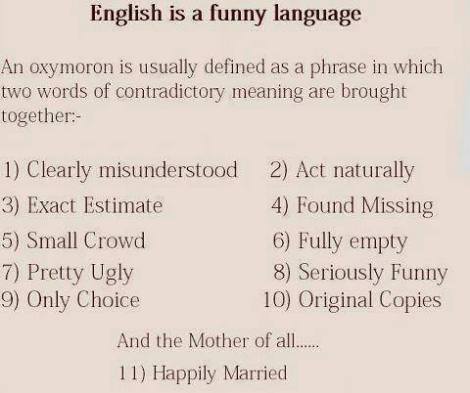
See what I mean?
The last entry is indeed the pinnacle of ambiguity, it is extremely descriptive and it can be simultaneously an oxymoron and a pleonasm, depending on which half of the couple is using it!

Here are some more examples from the FB wall where I found the picture:

Benjamin Adams: “In greek oxy means sharp. In English moron means dull. Oxymoron is an oxymoron.”

Matt Mailand: “civil war”

Reece Matthew Van Gameren “Clearly confused”

Travis Fox “Jumbo shrimp.”

Image

I share his concern about the huge social and economic effects produced by extreme wealth polarization but I don’t think that beating anybody may solve anything.
On the contrary, starting a fight instead of a dialog only compounds the problem and worsens the perspectives.
As to why the Icelanders where successful in what they did…this is indeed very simple.
They focused on the wrong doers, not on the 1%.
Belonging to the 1% is not a sin.
Trying to get/remain there by wrongful means is the place where problems are generated and it is here where we should concentrate our attention.

Image

Our admiration for Plato speaks volumes about who we are and about where we are on the historical ladder.

Toward the end of the astonishing period of Athenian creativity that furnished Western civilization with the greater part of its intellectual, artistic, and political wealth, Plato wrote The Republic, his discussion of the nature and meaning of justice and of the ideal state and its ruler.”

What had happened, back then, was that Athens had invented a certain kind of democracy (based on ample opportunities and relative abundance) and, using that political system, had build a very successful society.

In time, the system became perverted – mainly because pampered people loose their edge – and its future demise started to become apparent for the open minded thinkers. Among them, Socrates was one of the most vocal critics and had payed dearly for not keeping his mouth shut.

We should remember now, if we are to believe Plato’s words, that ‘the Republic’ is nothing but the faithful reproduction of an actual conversation. Socrates own thinking, in spirit and in words.

Let me take a break at this moment and remind you two things:

1. Rome, which had also started as a democracy, at some point had conquered the entire Greece – including Athens, discovered the works of Plato, admired them and, a little later, its political system also degenerated into authoritarianism and eventually failed miserably.

2. Western Europe had forgotten about Plato for more than a millennium and rediscovered him because the Arabs had preserved his work. Moreover until recently  only specialized scholars had any idea about who Plato was…

Back to the ruling process…

I’ll assume the translation was faithful and Plato really meant ‘rule’ as opposed to ‘govern’, ‘impose your own will upon the community’ instead of ‘putting in practice the will of the people’…

Now let me remind you that no matter how wise a ruler and how proficient a builder Pericles was, his reign ended the epoch of grandeur for Athens. After that, the great city had experienced a 2000 years decline…And here are some other interesting thoughts about that era: “There is no little irony in the fact that one of the things we most admire in the ancient Greeks is their love of freedom – and yet one of the chief manifestations of that love was their constant striving to control in some way the futures of their neighbors.” (Robin Waterfield, Athens, a History…)

So what was Plato really trying to say?

“The heaviest penalty for declining to rule is to be ruled by someone inferior to yourself.”

Well, I have no way of knowing exactly what went through his head when he was writing this but I can infer a thing or two from his words:

– He was speaking about an epoch were bona fide democracy was no longer the prevailing political system. Not only that he used ‘rule’ instead of ‘govern’ but, according to the written texts which have survived, the public offices were up for grabs and the ‘important’ person itself was the one to decide whether to ‘rule’ or to govern.

– People were rather arrogant at that time… who’s job was to decide who was ‘above’ and who was ‘below’? How come am “I” so sure that “I” am the most qualified (superior) to rule and that everybody else is/should be considered my inferior?

Then what made Athens, and then Rome, fall from the pinnacles where they had managed to climb while they governed themselves as democracies?

As for Plato maintaining that all he did was to ‘faithfully’ record Socrates’ words… allow me to have some doubts.

Socrates was asked to kill himself because of his teachings – ‘you should learn to think with your own head’ – were perceived, by the powerful-s of the day, as being dangerous for the younger generations.

Was it be possible that the same thinker might have uttered, as Plato pretended:

[Socrates]Then, I said, the business of us who are the founders of the State will be to compel the best minds to attain that knowledge which we have already shown to be the greatest of all-they must continue to ascend until they arrive at the good; but when they have ascended and seen enough we must not allow them to do as they do now.

[Glaucon] What do you mean?

[Socrates] I mean that they remain in the upper world: but this must not be allowed; they must be made to descend again among the prisoners in the cave, and partake of their labors and honors, whether they are worth having or not.

[Glaucon] But is not this unjust? he said; ought we to give them a worse life, when they might have a better?

[Socrates] You have again forgotten, my friend, I said, the intention of the legislator, who did not aim at making any one class in the State happy above the rest; the happiness was to be in the whole State, and he held the citizens together by persuasion and necessity, making them benefactors of the State, and therefore benefactors of one another; to this end he created them, not to please themselves, but to be his instruments in binding up the State.

There is absolutely no difference between this line of thinking and that which was taught by Marx to his followers:

The Communists, therefore, are on the one hand, practically, the most advanced and resolute section of the working-class parties of every country, that section which pushes forward all others; on the other hand, theoretically, they have over the great mass of the proletariat the advantage of clearly understanding the line of march, the conditions, and the ultimate general results of the proletarian movement.

The immediate aim of the Communists is the same as that of all other proletarian parties: formation of the proletariat into a class, overthrow of the bourgeois supremacy, conquest of political power by the proletariat.

The theoretical conclusions of the Communists are in no way based on ideas or principles that have been invented, or discovered, by this or that would-be universal reformer.

They merely express, in general terms, actual relations springing from an existing class struggle, from a historical movement going on under our very eyes. The abolition of existing property relations is not at all a distinctive feature of communism.

What we have here is nothing but two examples of extreme arrogance.

Both posit that ‘I (disguised as ‘the thinkers’/’communists’) know better than all of you so you’d better obey me. Or else.’

For both the State is instrument of oppression, not the expression of the free will of its inhabitants.

I refuse to accept that Socrates actually thought like that.

On the other hand Plato wrote his Republic during Pericles’ reign and Aristotle, Plato’s favorite pupil, was the teacher of Alexander the Great.
And no matter how many exploits Alexander had ‘committed’, we shouldn’t forget that he was nothing but yet another ruthless dictator. More successful than most but still a dictator. Same thing for Pericles. He was indeed a great builder and administrator but his reign marked the end of the Athenian democracy. Very soon after him the entire Greece had lost her independence and political significance.

All that was left was the Greek culture. The habit of thinking with one’s own head. Socrates’ legacy, not Plato’s.

PS.

Now what if Plato had written his dialogs as a warning rather than as a set of guidelines? ‘This will happen’ – historical facts were already clear enough, ‘if you do such and such things’.

It’s up to us, his readers, to choose what we consider to be the proper interpretation!

Which reminds me of the diehard Marxists who still believe ‘the bearded one’ was right and that his ideas had been badly put in practice by the likes of Lenin, Stalin, Pol Pot, Ceausescu…

Ce e nou in asta? Din cauza nenorocitului de Ceausescu care adusese tara intr-un asfel de hal incat copii prematuri sau bolnavi erau transfuzati cu sange testat superficial si in felul asta a aparut o intreaga generatie de bolnavi?

Pentru aceia dintre voi care nu stiu cum e cu SIDA asta, treaba sta cam asa.
Iei virusul, de cele mai multe ori prin contact sexual dar se poate si prin transfuzii sau pe alte cai, dupa cateva saptamani sau luni ai niste simptome ca de raceala si boala intra in latenta. In timp virusul se imprastie in intregul sistem imunitar si il slabeste in asa hal incat, netratat, bolnavul moare din cauza unor infectii cu germeni ‘oportunisti’ (prezenti in mod curent si de obicei nepericulosi) sau a unor cancere rare si ciudate.
Perversitatea acestui virus consta exact in faptul ca ‘adoarme’ vigilenta sistemului imunitar. In felul asta organismul nu mai recunoaste agresorii (virusul cu pricina isi face ‘un culcus’ chiar in interiorul sistemului imunitar, pe care il slabeste treptat) si apoi cade prada atacului patogenilor oportunisti.


Bine, numai ca eu nu la felul asta de SIDA ma gandeam acum.
La nivel societal rolul sistemului imunitar este jucat de triada libertate de exprimare (presa)/justitie/politie. In felul asta ies la iveala comportamentele aberante/antisociale ale acelora dintre noi care incearca sa o ia ‘pe scurtatura’ iar societatea poate sa se protejeze de efectele nefaste ale activitatii acestora. Pe termen lung toti avem are de castigat, tocmai prin mentinerea intregului mecanism in stare de functionare iar intr-o societate normala cei mai interesati de bunul mers al acestor mecanisme sunt chiar cei care au cel mai mult de pierdut daca totul se duce dracului.
Adica oamenii cu dare de mana care au de pierdut averile stranse cu greu si oamenii educati care inteleg ce se intampla.

Acum hai sa ne uitam in jur.

” “O parte semnificativă a presei este în continuare folosită de patroni ca armă în vederea obţinerii unor avantaje politice şi economice sau pentru a pune presiune pe justiţie”, se spune în raport, precizându-se că “politizarea discursului mediatic a fost evidenţiată de decizia unor jurnalişti de a migra în mediul politic şi de atacurile tot mai frecvente între oamenii din presă, în care predomină ameninţările, injuriile şi limbajul vulgar”.

În raportul ActiveWatch se spune şi că media îşi abandonează adeseori misiunea de a informa, în schimbul promovării unor mesaje favorabile intereselor unor entităţi private.

Totodată, conform raportului FreeEx, unele instituţii media folosesc abuziv dreptul la liberă exprimare pentru a intimida alte persoane/grupuri sociale/ justiţia/grupări politice, iar, pe de altă parte, “mai mulţi politicieni au cerut închiderea unor instituţii media”.

“Abaterile etice tot mai frecvente ale presei au fost sancţionate de instanţe, în baza noului Cod Civil”, se spune în raport.

Potrivit aceluiaşi raport, unele instituţii media şi unii oameni din presă îşi somează colegii de breaslă să nu mai relateze critic despre ei, ameninţând cu procese.”


Adica exact o parte dintre cei care au cel mai mult de pierdut, investitori si ‘oameni de cultura’, comploteaza pentru a deturna ‘triada de protectie’ de la functia ei fireasca – apararea intregului organism social – catre promovarea unor interese de grup.

SIDA, mâncați-aș!!!

Si noi, astialalti, stam ca fraierii si asteptam sa ne manance ‘oportunistii’ de cur.
OK, aia care fac treaba asta nu isi dau seama ca isi taie singuri creanga de sub picioare, cred ca vor putea fugi la timp din tara, or fi convinsi ca sunt deasupra ‘tutulor’… da’ chiar toti… parca a dat cineva cu praf de orbu’ gainilor … nu ne mai vine odata mintea cea de pe urma la cap…

PS 1. Pentru cine vrea sa citeasca intregul raport Active Watch, iata-l aici: http://www.activewatch.ro/ro/freeex/publicatii/raport-freeex-2013-video/