
Id, Ego, SuperEgo.
Freud.
Consciousness is the ulterior level of self-awareness.
Added by humans through languaged interaction.
Humberto Maturana.
AI is a function. A human developed computer application.
Built by cramming information available over the internet
into computer circuits sophisticated enough to defy human understanding.
Social Media
Some 70 000 years ago, people – human people, that is – have learned to articulate. To communicate in a symbolic manner.
The next step up from coordinating their moves while hunting.
Acting like a pack was inherited from their primate ancestors.
Active communication, speaking with the intent to teach, was a human addition.
Not without consequences.
They were already accomplished hunter-gatherers and skillful tool makers. Some researchers have unearthed evidence that they were also artists. They were painting on cave-walls some 20000 years before the modern humans, the Sapiens, had started to displace them.
They were our uncles, the Neanderthals.
But it was us, the Sapiens, who have survived. To tell the story…
Us being able to speak, to language our interactions, has had tremendous consequences.
The most important one, even if rarely mentioned, is the ‘shape’ of our consciences. And the depth of our consciousness.
Some 10000 ago, people have invented agriculture. Planting crops and raising animals.
Already conscious, they had figured out the ups of the whole thing.
Unfortunately – their rationality was just as bounded as our still is – they didn’t knew what was coming…
According to some researchers – and to my first hand observations – being able to grow your own food doesn’t necessarily mean you’ll live longer. Or better…
But society, as a whole, was able to leap forward!
It took our homo ancestors some 2 and a half million years to evolve from primates to cave-painting humans.
In another 50 000 years, our already speaking ancestors have invented agriculture. And built things like Stonehenge and the Great Pyramids.
You don’t need to speak in order to coordinate your actions while hunting. Wolfs do it ‘silently’.
But you need a different kind of coordination, a deeper one, if you want to build things. ‘You’, in this case, is ‘you, the people’.
When building things, the builders need coordinated thinking. Coordinated action is not enough.
Hence religion.
Reflexive self-awareness, developed in contrast to but in cooperation with the individuals comprising the community becomes a shared consciousness. A collection of cooperating individuals generate an entire space. Open-up a brand new ‘volume’. One full of human made opportunity and governed by culture.
Nota bene, competition is nothing but yet another form of cooperation. Of a deeper nature!
Some 500 years ago, our fore-fathers have invented Science.
While philosophy was a coordinated effort to make sense of things, science had been invented to coordinate knowledge with reality. While philosophy had sprouted naturally, as a consequence of how people used, and continue, to be, science had been born, intentionally, out of necessity.
Philosophy and religion have happened naturally, depending heavily on the particulars of when and where they happened to appear. Science was invented as a consequence of where the people involved had ‘opened their eyes’. As a consequence of the circumstances produced by the previous efforts.
Nowadays, in the technologically built circumstances we have prepared for ourselves, we are currently cramming already gathered knowledge – too much of which being nothing more than mere crap – through computer circuits so complicated that we no longer understand.
Hoping that the elusive AI we expect to be born as the result of our efforts will ….
Will what?!?
Make more sense? Of what we call ‘reality’?
Or makes us even richer? Well, make some of us even richer than they already are…
One caveat here.
While humankind, as a whole, has leapt forward each time, individual humans have had a more nuanced experience. Depending more on the circumstances each of them had been born into rather than on their individual efforts.
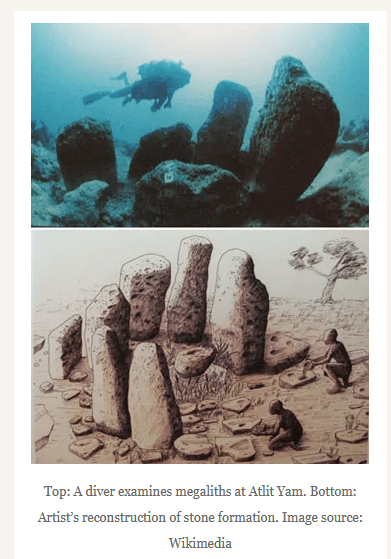
Yes, people who were able to grow their food had been able to build magnificent things. The Egyptian and the Mayan pyramids, for example. The Stonehenge and the Atlit Yam monuments.
But if we look closer… only a small number of agricultural societies have been able to generate remarkable things. And only for a limited time… The rest of the agricultural societies had experienced nothing but hard work. Sometimes, too many times, wasted at the whim of authoritarian rulers.
In fact, each and every such breakthroughs had been a blessing in disguise. To be experienced by others but those who had borne the brunt of them being introduced.
Those toiling the fields had to work harder than the foragers before them.
Those sweating in the factories had to work more hours, yearly speaking, than the peasants.
Currently, people working remotely – connected to a computer – can hardly escape off-line.
History is full of peasant uprisings and various revolutions.
None of which had accomplished anything.
We’d better have a talk with our alter-ego. Or pray…
We’re headed towards interesting times!
 nicichiarasa