
Do you really care about where your car was built?
No, but I am interested in how it works.
I need that in order to use it properly!
‘Ordinary matter’ is ‘lifeless’. Inanimate.
The rules which ‘shape’ the interactions between pieces/portions of the lifeless matter are the same ‘all over the place’. As far as we know, anyway.
The pieces/portions consisting of ordinary matter are more or less similar. There’s nothing to tell apart one proton from another. One rock from another one. One drop/bucket of water from the rest of the pond.
And there’s life.
‘Technically’, the living organisms are made from inanimate matter.
And, anyway, while ‘ordinariness’ is forever, life is temporary. Individual organisms have a limited lifespan, species evolve and life itself has appeared some time after the ordinary matter.
The rules which shape the interaction between the living organisms and their environment are species specific. Further more, individual sets of data set apart each individual belonging to each species. Which means that each species interacts in a specific manner with their environment while each individual organism does have its own particular ‘manner of doing things’. ‘Inside’ the species specific behavior but nevertheless particular.
Then there’s conscience.
Which conscience is nothing but a concept. Like everything else here.
Which concept, like all other concepts, has been coined by us. By us, conscient human beings.
The point being that we, conscient human beings, attempt to understand conscience by thinking about it.
Somewhat similar to looking inside an eye when attempting to understand sight. Or listening attempting to understand hearing.
Freud came up with the notion that studying what’s wrong, out of the ordinary, might help us to understand ‘normal’. But Freud was a psychologist…
Engineers prefer to ‘look from above’. To extricate themselves from the problem in order to see it ‘whole’. And I’m an engineer…
So, what is conscience?
An individual ability and a space/place.
There is life and there are individual living organisms.
Life goes on regardless of a number of individual organisms passing away. As long as one individual living organism continues to be alive, life itself will continue to exist.
Further more, regardless of how life might have appeared, presently it seems impossible to have life, the kind we have learned to appreciate, with only one species being alive. Let alone with only one living organism…
Same thing with conscience.
Humans become conscient through human interaction. Our ancestors had become conscient way before anybody was thinking about conscience. People who, in various circumstances, have had a limited interaction with other people struggle to develop a functional conscience. A full fledged one…
But humans are not exactly alone when it comes to being conscient.
Not exactly aware of their own selves, but still functionally ‘conscient’.
Being alive, individually speaking, means being able to:
Maintain the ‘structural identity of the organism’. As in keeping the inside in and the outside out.
Manage to breathe, eat, drink and excrete.
Life, as larger process, means successive generations of individual organisms transmitting the pertinent species specific genetic information to the next cohorts.
Maintaining the inside in, the outside out and managing to breathe, drink, eat and excrete means behaving in a conscious manner, albeit in a very limited sense.
This behavior being specific to ‘life’ and life being dependent on species specific information being passed from one generation to another means that human conscience – acceded by individual humans imbibing culturally specific information – is nothing but a particular example, maybe the most evolved one to date, of an otherwise widespread phenomenon. As a matter of fact, people who – for various reasons – are not ‘conscious’ – as in aware of themselves – continue to ‘breathe, eat, drink and excrete’. ‘Incompletely’ and only for a short while, if left unattended, but that’s another matter.
Furthermore, there is a ‘continuum of conscience’ starting from plants and culminating with the human awareness.
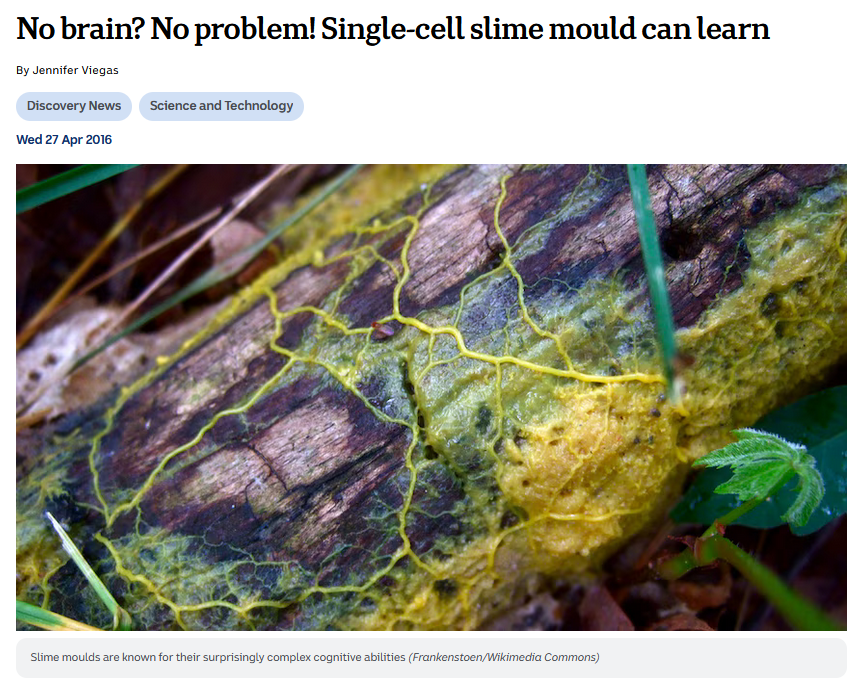
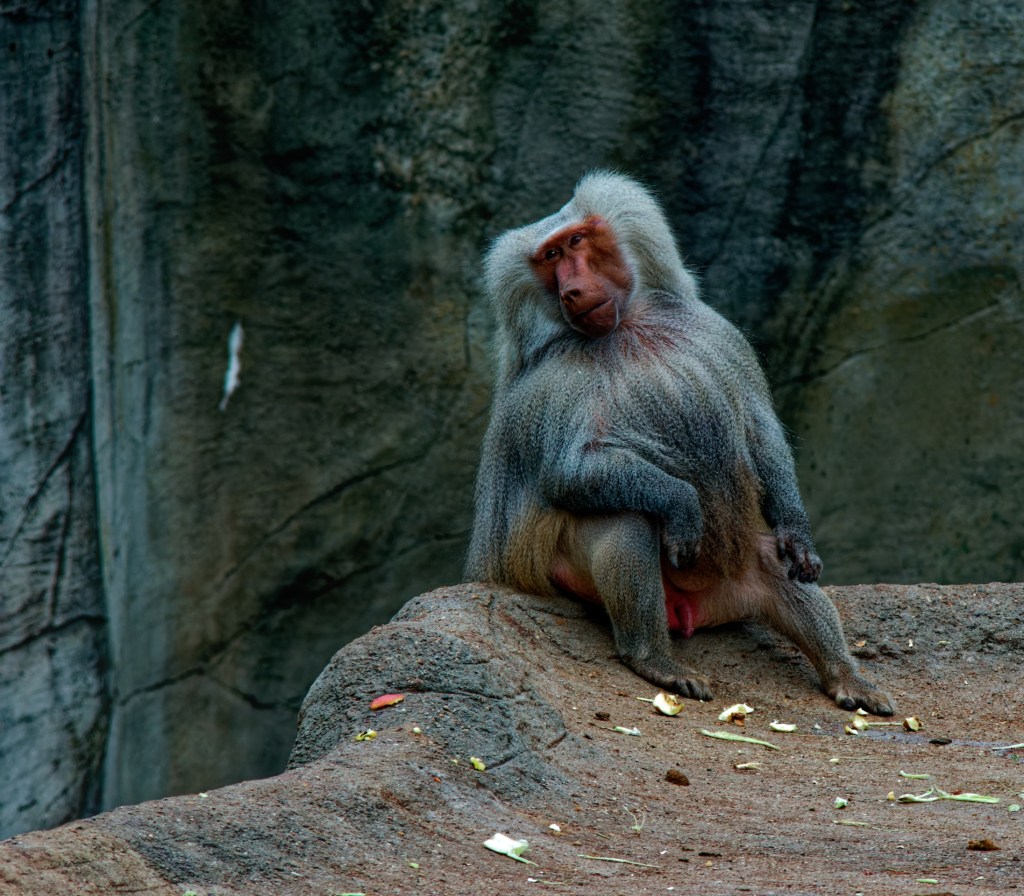
While plants and fungi manage to stay alive, animals display a widely nuanced repertoire of behavior. From the learning slime to our cousins, the apes.
 nicichiarasa