Archives for category: Psychology

AXN  a ‘dat’ “The Cave” cu Marcel Iures.

O pestera peste a carei intrare cei din vechime construisera o biserica pentru a izola ‘raul’ dinauntru de lumea noastra.
Cu treizeci de ani in urma niste oameni ‘fara Dumnezeu’ forteaza intrarea pentru a cauta comori si intalnesc ceva infricosator.

In zilele noastre pestera este redescoperita si o echipa pluridisciplinara incepe explorarea. Printre ei si niste scafandri americani trecuti prin ciur si darmon.
Dupa multe aventuri horror aflam ca in pestera sunt niste paraziti care intra in simbioza cu orice animal cazut inautru si il transforma ajutandu-l sa supravietuiasca dar in acelasi timp oferindu-i posibilitatea sa isi arate adevarata natura. Iar ultimii vizitatori nu fusesera chiar usa de biserica.
Unul dintre scafandri este contaminat si el dar controleaza efectele parazitului iar cu ajutorul simturilor exacerbate de acesta gaseste iesirea din pestera. Din pacate nu supravietuieste luptei finale cu ultimii supravietuitori din echipa de hoti de acum treizeci de ani.

In finalul filmului aflam ca biologul echipei de speologi fusese infectata si ea de paraziti si ca acestia incerca acum sa vada cum e in afara pesterii.

Sa fie acesti paraziti germenii coruptiei si filmul una dintre multele metafore care incearca sa ne spuna ca aceasta poate fi invinsa?
Sa fiu eu prea optimist?
I was watching an episode from ‘Ghost Whisperer’ on AXN when a certain (evil) character said: “All I have to do is convince them!”
And then I realized that in reality the devil is powerless. In order for anything evil to happen a human has to make the decision: the serpent only told them what to do, it was Adam and Eve who did bite into the apple.
And the same for any-other bad thing that comes into being. For one reason or another a wicked thought might come into my mind but it is my ‘reasonable’ self that ‘validates’ it and turns it into an action.

And then how come there are humans who feel free or even compelled ‘to do the right thing’ unto the other without his prior consent or sometimes even against his expressed refusal?
From baptizing the two weeks olds under the conviction that unbaptized toddlers go directly to hell if they happen to die to the innumerable rules and regulations imposed unto the unsuspicious citizen by the overbearing modern state.

In 1996 i-am ales pe Constantinescu si Conventia Democratica ca sa scapam de Iliescu si de PSDR.
Taranistii si PD-ul au crezut ca au ajuns acolo pe merit si s-au luat la cearta.
Taranistii practic au disparut iar PD-ul lui Petre Roman a suferit atatea transformari sub influenta lui Traian Basescu incat a devenit de nerecunoscut.
In 2000 l-am ales pe Iliescu ca nu cumva sa iasa Vadim si ne-am ales cu Nastase prim ministru. Si el a crezut ca a ajuns acolo pe merit.
In 2004 l-am ales pe Basescu ca nu cumva sa iasa Nastase. Sa mai spun ca si lui Basescu i s-a urcat la cap?
In 2008 treaba a fost destul de complicata, chestia ca e ca in 2009 PDL-ul a ajuns in sfarsit singur la guvernare. Acum stim ce a iesit din guvernarea aia si ce rezultate au obtinut la alegerile din 2012.
In 2012 USL a fost votat pentru ca a promis o schimbare politica majora si anume dezradacinarea coruptiei si scoaterea autoritarismului din politica. Nu astia au fost termenii care s-au vehiculat in campania electorala dar oamenii au votat avand exact aceste asteptari. Iar acesta a fost tot un fel de vot negativ.
Mie groaza sa ma gandesc la ce soarta va avea acel partid, din aceasta coalitie, care va fi perceput de populatie ca nerespectind promisiunea implicita de mai sus.

Bogdan Teodorescu, aseara la Antena 3
“Mihai, daca din 2014, dupa ce nu va mai fi presedinte, Basescu va mai avea influenta in viata publica romaneasca atunci problema este la noi, nu la el.”

Eu zic ca problema a fost la noi din totdeauna. Noi l-am ales. Si prima dar mai ales a doua oara!

PS. Azi dimineata am gasit asta in mail:

“Intr-una din zilele insorite ale lui ianuarie 2015, un batran soseste la intrarea in Palatul Cotroceni.
Se apropie de ofiterul de garda si ii spune:
– As vrea sa intru sa vorbesc cu presedintele Basescu.
Ofiterul il priveste bland pe batran si ii spune:
– Domnule, Basescu nu mai este presedinte si, deci, nu mai are resedinta aici.
Batranul ii spune ca e in regula si se indeparteaza incet de intrarea in Palat.
A doua zi, acelasi batran se indreapta catre intrarea in Palatul Cotroceni si se adreseaza ofiterului de garda (acelasi din ziua precedenta):
– As vrea sa intru sa vorbesc cu presedintele Basescu.
– Domnule, asa cum v-am spus si ieri, Basescu nu mai este presedinte si deci nu mai are resedinta aici.
Batranul ii multumeste si pleaca incet spre locuinta sa.
A treia zi batranul se duce din nou la intrarea in Palatul Cotroceni si se adreseaza aceluiasi ofiter de serviciu:
– As vrea sa intru sa vorbesc cu presedintele Basescu.
Iritat, ofiterul se incrunta usor la batran si ii spune:
– Domnule, este a treia zi consecutiva cand veniti aici si cereti sa vorbiti cu Basescu. V-am spus deja ca Basescu nu mai este presedinte si deci nu mai are resedinta aici. Nu intelegeti?
– Ba inteleg foarte bine, insa nu ma mai satur sa aud asta!!!
Atunci, Ofiterul ia pozitia drepti, il saluta respectuos pe batrin (ca pe un superior) si ii spune batranului:
– Atunci, ne vedem si maine, domnule!“

The story of a guy who faked madness to avoid serving time for a mugging and ended up in Broadmore, classified as a psycho-path

Poate nu mai inteleg eu…

Am ascultat versul din titlu pus pe note de Tudor Gheorghe. Cu ajutorul lui goagle am aflat ca ‘apartine’ lui Mircea Micu.
Urmeaza sa fie cantat in cadrul unui spectacol adresat tinerilor care stau tot timpul in fata calculatorului si care din cauza asta nu mai au timp sa citeasca poezie.

“A şti râzând, ca sânul tandru
Rotit în porţelan etern
Se surpă-n el pâna devine
Mormânt al laptelui matern.”

“Mormant al laptelui matern”.

All his life man, each of us that is, walks on a high wire trying to balance needs against wishes.

Neglecting the former gets him in conflict with his inner self while exaggerating with the later usually gets him in trouble with his fellow humans.
On the other hand over indulging one’s needs and giving up his wishes transforms an ordinary human being into another fat and lazy member of a herd destined to the slaughter-house.

Let me give you some examples.

Since no one is able to make it completely on his own everybody has the need to belong – to a family, a group of friends, a nation. Because everyone wants to be himself we all have the desire to be different.

We all need to eat but those who cannot control their desire for more and more ‘tasty’ food become fat.

Some of us buy cars in order to drive to work while others become bankrupt buying two-seater convertibles.

The easy way out of this is to consider needs as being ‘natural’, intrinsic to the human nature, and desires as being a product of one’s imagination. Abraham Maslow traveled this road and obtained some remarkable results, stacked into his famous pyramid. Only he failed to notice, or didn’t have time to elaborate on this – he died rather young – the social and cultural dimensions of what he called ‘needs’.

Society – and culture – largely determines what food is available, and the quality of the breathing air in the inner cities, but it’s each of us who says ‘I’ve had enough’ and stops eating or moves to the country-side.
Society sets the rules for gun ownership but it’s the individual who pulls, or not, the trigger.
Cultural norms have shifted a lot about what it means to belong and what kind of love is socially admissible but it’s the individual who falls in love or feels abandoned.
Now that we got this far I don’t think I need to explain that no one is able to build any kind of self esteem outside social intercourse nor the fact that each individual interprets in his own particular way the diverse reactions he elicits from those around him.

And, finally,  the self actualization! No matter how prolific one’s imagination or plentiful one’s resources that person cannot diverge too much from the cultural or societal norms or else he’ll end up in the loony bin …

Take care and mind that balancing pole – common sense that is!

Mornings are a very special time for me and my wife.
I drive her to work and those 15 minutes are a very good opportunity for us to empty our souls to each other.
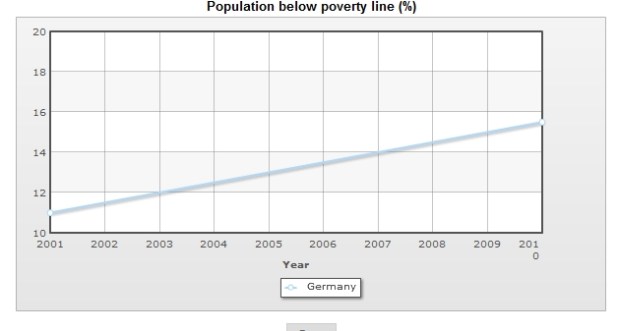
“I’m sad and disorientated” she said to me today. Yesterday she had found in her mail a newspaper article, in Romanian, about the 12 million Germans, 15% of the population, that are living at or under the poverty line and she had forwarded it to me. “Yeah, I know, who would have thought of this?”
“Well, I pity those people, of course, but I’m more concerned about what will happen here, in Romania!”
“?!?”
“You see, until I had read that article I nurtured the notion that if we clean up our act and start working really hard we may narrow, in time, the gap that separates us from the rest of Europe. But now, after finding out that even Germany is going southward… I don’t know anymore… I even started to wonder what kind of world is our son going to live in?!?”

Image

I looked into this a little deeper and I became even more worried: “Life in Europe’s “squeezed middle” ”  Please notice that this ‘news’ is already two and a half  years old!

She is right, my wife. Where are we going to?

Nowadays there is a heated debate about how much damage to the nature is acceptable in order for us to have a ‘thriving’ economy.

This way of thinking is very well illustrated by the following picture:Image

The caption says: “If you really think that economy is more important than nature then try holding your breath while counting your money”.

If we look a little deeper into all this we find out that initially economy – or oikonomia in ancient Greek – was the art of managing the resources needed by a household. Since then these resources came directly from the surrounding nature it ‘naturally follows’ that in those times there was no conflict between economy and nature: people took what ever they needed from where it grew or grazed, threw the garbage wherever around the camps and whenever things became too messy or the pastures/hunting grounds were exhausted people moved a little further, giving the nature an opportunity to heal its otherwise superficial wounds.
Later, as people moved into cities, their relationship with the nature became a little more complicated. If nature had a way of renewing itself periodically all went well. Egypt survives since 5000 years ago mainly because the Nile periodically cleanses and fertilizes the country. If not, and people overuses local resources, the fate of that particular civilization is doomed – the Mayan empire, for example.

A sudden change happened around three  hundred years ago: Europeans simultaneously learned advanced agricultural techniques enabling them to feed larger numbers of people, thus freeing a lot of ‘ work force’ that was swiftly employed by the industry, and invented fiat money – paper invested with value by the very entity that ‘printed’ it, the central banks.
‘Economy’ started to thrive only it no longer was about the old struggle for survival; it was gradually transformed into the modern economy: a playing ground where the ruthless fight for more and more money is constantly eating away both natural resources and the moral fiber of those implied in it.

Maybe it is high time for us to understand what is going on and to find a way to reintegrate nature into the economy as a resource that needs to last forever and not as an expendable one.

Sambata 5000 de biciclisti au cerut demisia lui Sorin Oprescu.
Pentru ca inca nu sunt suficiente piste pentru biciclisti, lucru pe care l-a promis in campania electorala.
Sunt de acord cu biciclistii (si eu mai merg din cand in cand pe doua roti, poate nu chiar atat de mult pe cat ar trebui) in ceea ce priveste pistele dar ‘demiterea’ mi se pare usor exagerata.
Nu ca as avea vreo prietenie pentru Oprescu. Nu-l cunosc, nu mi se pare ca ar fi facut ceva deosebit.
In schimb mi se pare ca revendicarile exagerate blocheaza comunicarea. Una e sa-i spui cuiva: “tine-ti promisiunea si vezi ca suntem cu ochii pe tine” si alta sa ii ceri aceluiasi demisia din prima, si asta pentru niste lucruri destul de relative.
In primul caz individul vizat, daca e normal la cap, va incerca, macar de forma, sa se tina de promisiune. In cel de al doilea va spune, linistit, ‘niste exagerati’. Iar ‘spectatorii’, adica votantii care nu sunt direct interesati de problema respectiva, vor fi de acord: ‘ietete, doar n-o sa-si dea demisia ditamai primarul doar pentru ca nu au astia pe unde sa se plimbe cu bicicleta’.

E adevarat ca de cind l-am ‘demis’ pe Ceausescu am ramas cu un sentiment placut de ‘impreuna se poate’ dar nu trebuie sa uitam totusi ca ‘demisia’ este ‘ultimul remediu’, nu primul.