
“For a proposition to be true, it is not enough for it to be logically correct.
It also has to make epistemological sense.”
Oscar Hoffman, 1930-2017
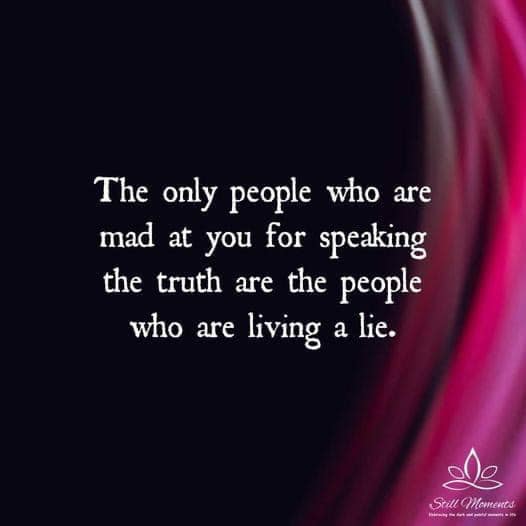
‘Only’ excludes. The rest, the un-excluded, become the chosen.
‘Mad’ is bad. Being mad is unreasonable. Being mad at ‘you’ is the worst.
The fact that ‘you’ are the target of their madness introduces a personal dimension and makes it easier for you to exclude the mad ones.
‘Speaking the truth’ is commendable. In all cultural environments. No exclusionary process is possible in this case. ‘You’, the one who is ostracized for speaking the truth, are the innocent victim here.
‘Living a lie’. By the time you have reached these words you have been already primed. Primed enough to accept, prima facie, that what these people live is actually a lie. There’s no chance left for you to be mistaken.
There’s a lot of psychology at work here.
It doesn’t really matter whether the person who had written this was using psychology to achieve a purpose or this phrase had just ‘happened to be’, the psychological aspects are still at work. Does it really matter whether the monkey understands how a rifle works? Or was it enough that the monkey had squeezed the trigger?
After so much priming, who has enough energy left to evaluate, again, who makes more sense? The ‘primed’ person itself or the ‘mad opponent/denier’? Whose ‘madness’ had already shrouded the primed person’s ability to behave in a reasonable manner?
‘Claiming the moral high ground’ does make a lot of tactical sense.
But is it right strategically?
Are our beliefs enough entitlement? Us believing in them makes them valid enough for us to impose them upon all the others? Simply because we can?

 nicichiarasa