
Big Bang 1.0 had been inconspicuous. There was nothing there to vibrate so sound could not travel. Also, there was no space so light had nowhere to travel to. On top of everything else, there was nobody there/then to notice.
What am I talking about? There even weren’t any ‘there’ nor ‘then’ at ‘that moment’…
Not for us, anyway!
Hence ‘Big Bang’ is a rather blatant misnomer.
Big Bang 2.0, the currently unfolding one, is an increasingly flashier event.
It began when we have started to talk. And developed conscience as a consequence. According to Humberto Maturana.
The first thing our ancestors had discovered was that they were heavily dependent.
On each other and on what we currently call ‘nature’.
Not having any of what we consider to be ‘scientific knowledge’ they didn’t know much about how things worked.
But they learned, slowly, to use fire.
How to make tools. And how to improve their dwellings.
All these things – fire, tools and protection from the elements – were auspicious circumstances for the first qualitative transformation of the genus. Not only our direct ancestors – Homo Sapiens – but also their cousins – Homo Neanderthalensis – had started to consider ‘the future’.
‘What is going to happen to me/us?’
This question, ‘am I going to eat this much/tasty again?’, demands three things.
A full belly, some time off and a (proto)conscience. At least some self awareness.
The fact that our ancestors, both the Sapiens and the Neanderthalensis, buried their dead and used tools to build/carve ‘jewelry’ strongly suggests that both of them did have a certain awareness/preoccupation about their own condition.
We don’t know whether they were ‘religious’ people.
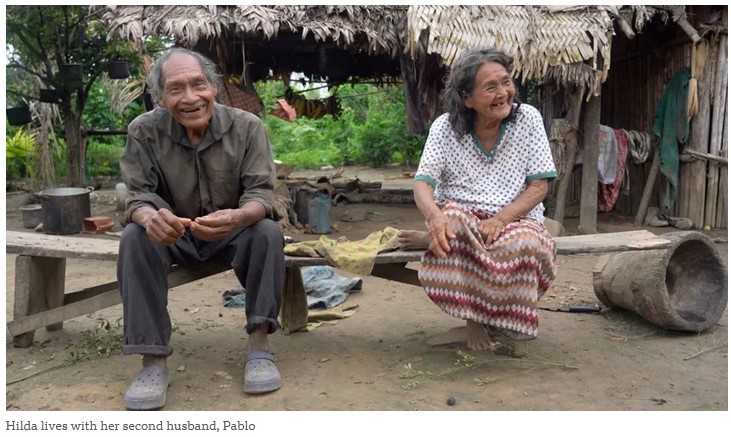
What we do know is what people very close to what was going on then were doing until recently. And some continue to do. Populations which until have been ‘discovered’ were living like our ancestors used to do. They used to thank their totems for the food they hunted. And they erected ‘altars’ to celebrate the movements of the Sun.
Which strongly suggests that ‘what am I going to eat tomorrow?’ was far more important to them than ‘how much longer am I going to live?’.
The way I see it – following Maslow’s cue – people who live in rather ‘undeveloped’ communities don’t have enough ‘time’ to think about ‘death’.
They are accustomed to it – death is a lot more present in their life than it is in ours – and they still haven’t solved the ‘basic needs’. Not to the tune of reaching the ‘re-actualization’ stage.
They do think about tomorrow but they do it in far more practical terms than we do it.
They are not afraid of death as they are of dying of hunger. Painfully. Or both.
It was us, the ‘civilized’ people, who have become afraid of dying.
Concerned about ‘redemption’.
Thirsty for ‘meaning’.
Which ‘meaning’ brings me back to where this post has started.
One of the experiments which have convinced Rosenblatt et all to develop the ‘Terror Management Theory’ involved a number of municipal judges. Half were ‘primed’ by making them think about death while the others were left ‘unprimed’. The primed ones had imposed tougher bonding conditions to similar fictional suspects.
The experimenters posited that death was so important to them that thinking of it changed the conclusions they derived from the information available to them. Which is more or less correct.
Yet this experiment suggests something even more interesting. To me, at least.
Death is, besides a biological phenomenon, a cultural construct. An artifact.
And the fact that the judges had to be primed in order to be influenced by ‘death’ is a strong suggestion that they were rather influenced by the artifact than by the biological phenomenon.
We do know that we’re gonna die.
But we don’t constantly think about it. Our mere mortality isn’t a constant presence in our mind.
For it doesn’t make sense. It doesn’t help any. A waste of brain power which brings no real benefit.
What we do think – those of us who have a full belly and enough spare time, only during some of that spare time – is ‘what’s all this fuss about?’
What’s the meaning of all this?
Of all this man-made terror which is creeping on more and more of us…
 nicichiarasa